Advent Candle Story: A Meaningful Tradition for the Season
The Advent candle story is more than a decorative ritual. It is a living narrative that invites families, churches, and communities to walk through a season of expectation, reflection, and preparation. While the centerpiece is often a circular Advent wreath bearing four lit candles, the deeper meaning lies in the season’s themes—hope, peace, joy, and love—unfolding through weekly lighting, shared reflections, and family conversations. In many homes, the Advent candle tradition becomes a rhythmic heartbeat for the weeks leading to Christmas, a time when everyday life slows enough to listen for the story beneath the noise of the season.
This article explores the Advent candle tradition from its historical roots to its modern expressions. It explains how the candles symbolize a spiritual journey, how different Christian traditions interpret the ritual, and how families can adapt the practice to fit their own rhythms while preserving its essential meaning. Whether you are new to the Advent candle narrative or looking to deepen an established practice, this guide offers practical ideas, thoughtful context, and a wealth of variations to consider.
The Origins of the Advent Candle Tradition
The Advent wreath originated in Europe, with its modern form most closely associated with 19th‑century Germany. The practice grew out of a desire to mark the weeks of waiting for Christmas in an outside-the-church setting and within homes and schools. The contemporary lighting pattern, with four candles encircling a greenery ring, has roots in the work of the German Protestant reformer and social innovator Johann Hinrich Wichern, who in the 1830s created a large wooden wreath to teach children about the Advent season. This early project used multiple small candles on a wheel, intended to illustrate how the light of Christ would gradually come into the world through the season.
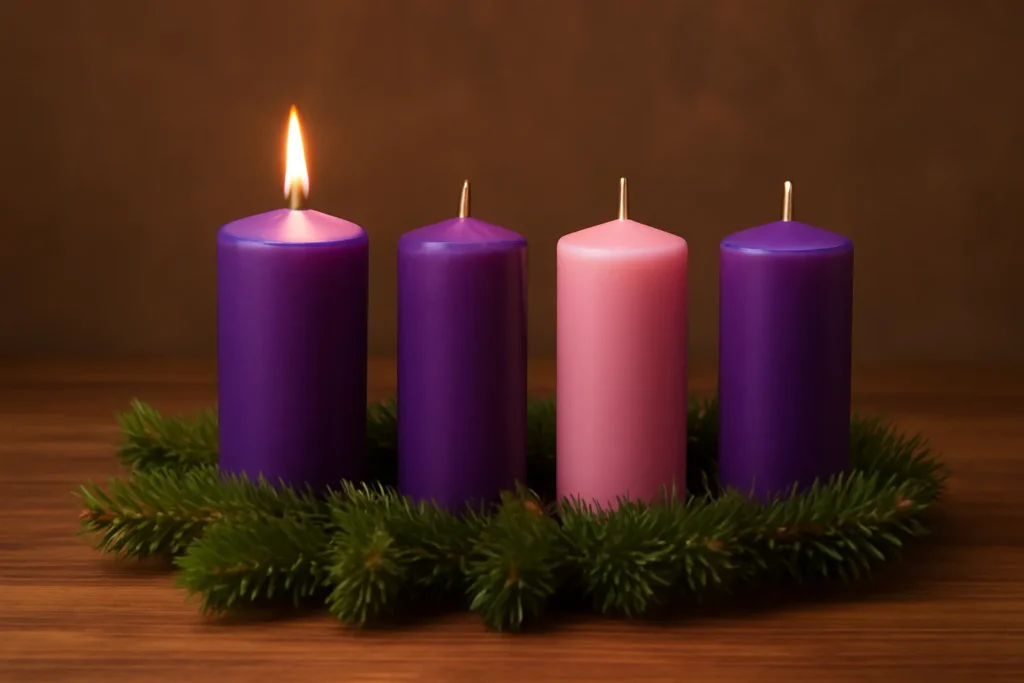
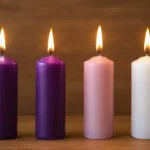
Over time, the practice evolved into a more portable, family-friendly form: a wreath or stand with four candles (three purple or violet ones and one pink or rose-colored candle) plus sometimes a central white “Christ candle.” The Advent candle story was recast into a weekly rhythm that could be practiced at home, in Sunday schools, or within congregational life. The symbolism remained simple yet profound: the world moves from waiting to celebration as the light grows stronger, week by week, until the Christ event is celebrated with fullness.
Structure and Symbolism: What the Candles Mean
Most Advent candle stories hinge on four candles that represent distinct, complementary themes. In many communities the colors themselves carry meaning: purple (or blue in some traditions) is associated with preparation and penitence, while the pink (or rose) candle signals joy in the midst of waiting. A growing number of churches and families also include a Christ candle in the center that is lit on Christmas Eve or Christmas Day to mark the arrival of Christ into the world.
Here are the standard symbols you’ll find in a typical Advent candle arrangement:
Hope (Prophecy Candle): The first candle reminds us that God’s promises are trustworthy and that the world longs for relief from suffering and injustice.
Peace (Bethlehem Candle): The second candle invites reflection on reconciliation, harmony, and the longing for wholeness among peoples and nations.
Joy (Shepherds’ Candle): The third candle, often pink or rose-colored, signals the shift from waiting to a growing sense of glad anticipation, even in the midst of life’s challenges.
Love (Angels’ Candle): The fourth candle points toward the self-giving love that arrives with the newborn Christ and calls followers to embody compassion in daily life.
In some traditions, the arrangement uses purple candles for weeks one, two, and four, with a pink candle for week three. Other settings opt for blue candles or a mix that aligns with particular liturgical calendars. The Advent candle narrative is thus flexible enough to honor local liturgical practices while preserving the core arc from longing to realization.
Variations in Candle Meaning
Different Christian denominations sometimes adjust the meanings assigned to each candle or give extra color to the symbolism. Some common variations:
In certain Anglican and Episcopal contexts, the four candles may be labeled as Hope, Preparation, Joy, and Love, with occasional emphasis on the role of grace in receiving the gift of Christ.
In some Orthodox Christian homes, a blue wreath replaces purple, while the sequence of lit candles emphasizes the theological emphasis of the season rather than strict color symbolism.
Some Catholic households include a Christ candle in the center and light it on Christmas Eve, representing the arrival of Jesus as the Light of the World.
Schools and community groups often adapt the meaning to reflect local concerns, such as justice, mercy, stewardship, or service, while keeping the four-week progression intact.
The Lighting Ritual: A Weekly Journey
The weekly lighting ritual is the heart of the Advent candle story. Each Sunday (or each day in some families) a candle is lit, accompanied by a short reflection, a prayer, or a piece of music. The practice invites deliberate pauses in the bustle of December, turning a calendar into a contemplative rhythm.
Week 1 – Hope: Light the first candle. Reflect on the promise of God’s intervention in the world and meditate on what hope means in daily life during difficult times.
Week 2 – Peace: Light the second candle in addition to the first. Consider ways to foster peace in relationships, workplaces, and communities, and let the light be a symbol of reconciliation and harmony.
Week 3 – Joy: Light the pink candle along with the first two. Celebrate joys small and large, and remember that joy persists even as life includes trials. Sing or read a passage that invites gladness in God’s work in history and in your own life.
Week 4 – Love: Light the final candle, and often the outer ring is completed. Reflect on the gift of love that comes through Christ and how love shapes acts of service and mercy toward others.
Some households practice a slightly different cadence, especially if they observe Advent using a calendar or devotional guide. In those cases, the sequence may emphasize gratitude for concrete gifts received during the week, or it may pair each week with a household decision—such as a family service project, a quiet hour of prayer, or a shared act of generosity. Regardless of the exact order, the trajectory remains a movement from anticipation to revelation: a journey from waiting to wonder.
Many families also include small rituals alongside the candles, such as lighting a glow from a single candle to previously lit ones, sharing a brief family story, or singing a favorite carol. This communal rhythm can strengthen family bonds and provide children with a tangible sense of time passing toward a meaningful celebration.
Christ Candle and The Season’s Climax
In many traditions, a Christ candle sits in the center of the wreath. It is not lit until Christmas Eve or Christmas Day, marking the culmination of the Advent story and symbolizing the arrival of Christ as the light entering a dark world. The moment of lighting the Christ candle is often a centerpiece of gatherings, lessons, and worship, offering a focal point for gratitude, awe, and recommitment to acts of service and love.
Some communities light the Christ candle during a special service in which the congregation reads Scripture passages that narrate the coming of Jesus, followed by prayers and songs. In other settings, the Christ candle is kept unlit until the final moments of Christmas Eve, a cinematic pause that heightens anticipation and reverence. Either approach can reinforce the idea that the season culminates not in a gift or a feast alone, but in the gift of divine presence among people.
Practical Guide: How to Use the Advent Candle Story at Home
Whether you are starting this practice for the first time or you want to enrich an established tradition, here is practical guidance to help you bring the Advent candle story to life in your home or community space.
Getting Started: Materials and Setup
Craft or purchase an Advent wreath or a circular centerpiece made from evergreen or interesting textures. If space is limited, a simple stand with four candles works well.
Choose the candle colors that match your tradition (purple/violet, pink/rose, blue, or a mix) and decide whether to add a central Christ candle.
Use sturdy, nonflammable holders and place the arrangement on a safe surface away from drafts and flammable decorations.
Prefer safe options: if you have young children or pets, consider LED or battery-powered candles to minimize risk while preserving the visual effect of the light.
Prepare a short weekly reflection, related Scripture passages, or a few lines of poetry to accompany each lighting.
First Steps for Families
Gather as a family on the chosen night (often Sunday evening). Read or recall a short passage related to the week’s theme.
Light the appropriate candle(s) and say a simple blessing or prayer that expresses gratitude for the gift of hope, peace, joy, or love.
Share a brief reflection: a personal story, a hymn verse, a question for discussion, or a moment of listening for God’s presence in daily life.
Close with a song, a blessing, or a commitment to a family activity that reflects the week’s theme (for example, performing a small act of service together).
Ways to Adapt for Kids and Schools
Use picture books or short stories that illustrate the four themes for younger children.
Create a simple journaling activity where kids draw or write about what hope, peace, joy, and love look like in their own lives.
In a classroom setting, pair the Advent candle practice with social studies or language arts—reading about different cultural traditions during Advent and writing reflective essays or poems.
Involve children in safe candle handling or in choosing the weekly reflection, with adult supervision and clear safety guidelines.
Educational and Community Aspects of the Advent Candle Story
The Advent candle narrative is not only a private devotional practice; it also has significant educational and communal dimensions. In schools, churches, and neighborhood centers, the candle story can teach history, liturgy, ethics, and art. It can foster intergenerational dialogue, as grandparents share memories of past Advents, parents model daily reflection for children, and peers contribute fresh perspectives to the weekly assessments of hope, peace, joy, and love.
In community settings, the Advent candle tradition can be linked to charitable activities. For example, a family or group might commit to a service project during Advent—such as collecting items for a food pantry, supporting a local shelter, or writing cards to people in need—turning the symbolism of light into concrete acts of mercy. The Advent candle story thus serves both as a spiritual practice and a civic invitation to participate in acts of generosity and solidarity.
One of the strengths of the Advent candle tradition is its capacity to be meaningful across diverse Christian contexts. While the core idea remains consistent—lighting candles that correspond to waiting, preparation, and eventual celebration—the way it is observed can vary significantly.
Catholic Traditions
In Catholic homes and parishes, the Advent wreath is a common focal point during the four Sundays of Advent. Catholic practice often includes formal prayers or Marian readings tied to each week and the eventual lighting of the Christ candle on Christmas Eve. The Rorate Mass—a traditional Advent liturgy held in the early morning with special readings from Isaiah—shares the spirit of anticipation that many families translate into the home devotion of lighting the candles.
Lutheran, Anglican, and Protestant Traditions
For many Lutherans and Anglicans, the four candles and their colors align with a liturgical calendar that emphasizes repentance, hope, joy, and love. The pink candle is often emphasized as a sign of the Jubilee of joy that arrives mid‑Advent. Sunday schools and congregational groups frequently include short readings from Scripture, a song, or a brief reflection that connects the candle’s theme to daily life and social concerns.
Orthodox and Other Traditions
In some Orthodox Christian homes and communities, Advent-style preparations may take a different shape, sometimes focusing on a period of fasting or contemplation rather than a wreath with candles. Some Orthodox families use an Advent calendar or a simple candle-lighting ritual that honors the coming feast of Christmas but with their own distinctive liturgical elements and saints’ days. The central message, however, remains: light entering darkness, and the world prepared for the divine gift of Christ.
Non-denominational and Secular Variants
Even outside explicitly Christian contexts, many families adopt an Advent candle practice as a seasonal ritual of reflection and gratitude. In secular settings, candles may symbolize universal values—hope, compassion, resilience, and community—without theological claims. Teachers, community organizers, and family therapists sometimes use the candle ritual to teach patience, focus, and shared responsibility during the busy holiday season.
Maintaining the Tradition: Safety, Craft, and Longevity
Like any practice that involves fire or open flame, safety is essential. If you choose to use real candles, place them on heat-resistant surfaces, away from flammable objects, and never leave burning candles unattended. If safety is a concern, consider LED candles that create a similar ambience without the risk. For families seeking a longer-lasting centerpiece, you can create a decorative advent wreath with permanent elements (candle holes or glass spheres that hold LED lights) that can be reused year after year.
Crafting an Advent wreath can itself be a meaningful activity that becomes part of the Advent candle story. Here are some simple craft ideas:
Assemble a wreath using evergreen branches, pinecones, dried oranges, or cinnamon sticks to evoke the scent and texture of the season.
Use four small glass holders for real or LED candles and place a larger holder or a single center glass for the Christ candle if you observe that variant.
Decorate with ribbons, symbols of peace (such as olive branches), or small cards with family commitments for the week.
For a classroom or community setting, invite participants to contribute a reflection card that expresses what each week’s theme means to them.
Maintenance is straightforward: check the candles regularly, trim wicks to reduce smoke, and clean any melted wax spills promptly. If you use real candles, keep a fire extinguisher or a baking-soda box handy as a precaution. If you use LEDs, ensure the battery compartments are accessible for replacements and that the lights remain bright and evenly distributed.
Advent Candle Stories as a Way of Teaching and Caring
Beyond ritual lighting, the Advent candle narrative serves as a framework for teaching about time, anticipation, and ethical living. It provides a structured space where families can discuss big questions in approachable terms. It also invites children to participate in the rhythm of a faith tradition, empowering them to contribute to the family’s spiritual life rather than simply observe it from the outside.
Educators and caregivers can use the four-week arc to connect to broader educational goals. For example:
In literature classes, students can compare the Advent candle story with other waiting narratives—apocalyptic hope in literature, or the hero’s journey in myth and modern fiction.
In history lessons, students can learn about the origins of the Advent wreath, its spread across Europe, and how different cultures have adopted the practice in their own ways.
In art projects, students can design their own wreaths, decorate cards that capture the themes of hope, peace, joy, and love, or create pop-up booklets explaining the symbolism.
In social-emotional education, the themes of hope, peace, joy, and love can be translated into actions: acts of service, reconciliation exercises, gratitude journals, and community outreach projects.
Frequently Asked Questions About the Advent Candle Story
What is the purpose of the Advent wreath and its candles?
The Advent wreath and its candles serve as a physical, visual countdown to Christmas while embedding the season’s themes into daily life. The candles symbolize the growing light of Christ and the community’s response to that light through hope, peace, joy, and love.
The pink candle marks a shift toward anticipation and joy during Advent. It signals a moment of celebratory relief within a season that has also included penitential or reflective elements. As with other colors, the choice of a pink candle is a tradition that varies by church and household, but many see it as a reminder that joy accompanies the nearing fulfillment of God’s promises.
Can I use an Advent wreath if my family is not religious?
Absolutely. Even for people who do not identify with a specific faith tradition, the Advent candle story can function as a secular ritual of gratitude, reflection, and community. The four themes—hope, peace, joy, and love—provide a framework for meaningful conversations, service projects, and family bonding during the holidays.
Is it necessary to light the Christ candle every year?
No. Practices vary. Some traditions light the Christ candle only on Christmas Eve or Christmas Day. Others include it as a daily reminder in the final week of Advent. The choice depends on local custom, family preference, and how you want to symbolize the transition from Advent waiting to Christmas celebration.
Conclusion: Living the Advent Candle Story All Season
The Advent candle story is a timeless invitation to slow down, reflect, and prepare the heart for a sacred moment. Its simplicity—four candles, a circle of greens, a central Christ candle—belies a rich depth of meaning that can accompany people of different ages and backgrounds through a season that is at once festive and contemplative. By engaging with the symbolism of hope, peace, joy, and love, communities can cultivate practices that extend beyond December: generosity, compassion, and a renewed sense of purpose throughout the year. Whether your tradition includes formal prayers and liturgy or a more informal family rhythm, the Advent candle tradition offers a practical and meaningful way to experience the story of waiting, light, and arrival.
As you consider your own Advent candle narrative, remember that its strength lies not in the candles alone but in the conversations, commitments, and acts of care it cultivates. The ritual is a doorway into shared meaning—a chance to invite light into the season and to let that light shape how we live, serve, and hope together.







Leave a Reply