Anabaptist View of Baptism: Key Beliefs, Practices, and History
Anabaptist View of Baptism: Key Beliefs, Practices, and History
The Anabaptist view of baptism centers on a conviction that baptism is not a mere family ritual or a cultural rite, but a deliberate, public declaration of faith by a conscious believer. It emerged in a turbulent era of the Reformation when questions about infant baptism, church membership, and the relationship between church and state were hotly debated. The Anabaptist position emphasizes a voluntary response to the gospel, a concrete expression of repentance and faith, and an identification with the crucified and risen Christ through the act of immersion in water. This article surveys the key beliefs, practices, and historical trajectories of Anabaptist baptism, while also noting the diversity within later Mennonite, Amish, and Hutterite traditions that trace their roots to this movement.
The baptismal convictions of the Anabaptists crystallized in the early 16th century, during the Swiss and southern German reform movements. Leaders such as Conrad Grebel and Felix Manz, along with other Swiss Brethren, argued that infant baptism did not meet the biblical criteria for baptism as a response to the gospel. They held that baptism belongs to those who can knowingly repent and confess faith in Jesus Christ, rather than to infants who cannot personally profess faith. This stance put them at odds with civil authorities and Reformers who supported infant baptism as part of the covenant community.
The label Anabaptist—meaning “re-baptizers” in the eyes of opponents—emerged from surrounding critics who perceived their practice as a radical break with mainstream church life. Yet the Anabaptists did not advocate anarchic rebellion; they aspired to a church of voluntary, regenerate members who governed themselves through biblical ethics, mutual accountability, and discipline. The Münster episode (the early 1530s) is often discussed as a watershed moment in public perception, though it is essential to note that many Anabaptist groups later distanced themselves from the violent actions that occurred there and instead emphasized nonviolence and peaceful witness.
Across regions and generations, a common thread connected diverse communities: baptism as a congregational act, practiced after genuine faith, and understood within a framework of discipleship and church belonging. The movement diversified in the decades that followed, producing distinct expressions that preserved core baptismal convictions while adapting to local cultures and social realities.
Theological Core: What Is Baptism For Anabaptists?
Believer's Baptism as a Personal Profession of Faith
At the heart of Anabaptist baptism is the conviction that baptism is for those who profess faith in Christ and who have personally embraced the gospel. It is not a ritual performed on infants or a symbolic gesture that can be detached from a life of discipleship. Instead, it is an outward sign of an inward trust in Jesus as Lord and Savior. In this sense, baptism testifies to a prior conversion experience—an inner turning from sin and a decision to follow Christ.
Mode and Significance
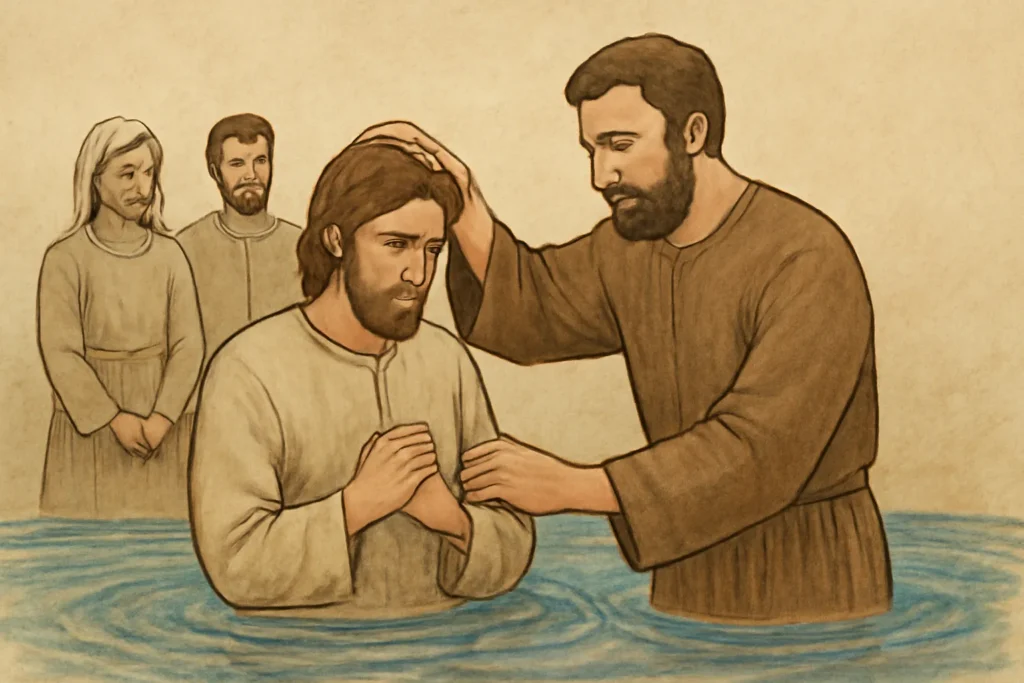
The most characteristic mode among historical Anabaptists has been b immersion, often in rivers, lakes, or baptismal pools. While other Christian groups may use sprinkling or pouring, the Anabaptist tradition has emphasized immersion as a symbol of dying to the old self and rising to new life in Christ. The immersion act is conceived as a participation in the biblical motifs of the death, burial, and resurrection of Jesus, signifying a spiritual crucifixion of the old self and a resurrection to new life.
Some Anabaptist writers also describe baptism as a covenantal sign within the gathered church. It marks not only personal faith but also entry into a community of believers who share a common confession and a common ethic. In this sense, baptism is both personal obedience and public admission to belonging to the body of Christ.
Subject: Who May Be Baptized
A defining claim is that only those who can consciously repent and confess faith are appropriate subjects for baptism. Infants and young children do not meet this criterion in the traditional Anabaptist understanding, because they cannot articulate a personal commitment to follow Jesus. This has led to a long-standing practice of adult or adolescent baptism after a period of instruction, catechesis, or personal faith experience.
Theological debates within Anabaptism sometimes explore the nuance of assent, conscience, and community discernment. Some communities require a formal period of faith formation or a profession of faith before baptism, while others emphasize the immediate readiness of a believer after a clear gospel proclamation. Nevertheless, the guiding principle remains consistent: baptism is for those who can consciously confess Christ, not for those who cannot make such a confession.
Baptism’s Place in the Church and Community
Baptism and Church Membership
For Anabaptists, baptism is integrally linked to church membership. Baptism is not merely a private spiritual milestone; it is the doorway into a visible, local congregation that governs life together through the authority of Scripture. The act signals that the baptized person will participate in the life, worship, ministry, and governance of the church. In many Anabaptist communities, baptism is accompanied by an explicit commitment to participate in the life of the church, submit to its leadership and discipline, and adhere to its gospel-centered ethics.
Discipline, Covenant, and Community Life
The practice of church discipline is historically associated with Anabaptist baptism. Because baptism is a public confession within the church, it also entails a commitment to uphold the standards of life and doctrine that define the covenant community. When a baptized believer deviates from shared commitments, the church seeks restorative discipline aimed at repentance and reconciliation. This dynamic reinforces the sense that baptism is not a private rite but a public, accountable covenant within the faith community.
Practice and Rituals
The baptismal rite in Anabaptist contexts typically unfolds as a deliberate sequence that foregrounds credibility, conversion, and communal witness. While local customs vary, the following elements recur in many practice traditions:
Gospel proclamation or a faith instruction that clarifies the meaning of repentance, faith, and baptism.
Profession of faith or an explicit confession by the candidate, often summarized in a simple statement like, “I believe in Jesus Christ as my Lord and Savior.”
Repentance and faith as prerequisites—evidence of turning away from sin and turning toward Christ.
Baptism by immersion in a body of water, symbolizing death to the old life and rising to new life in Christ.
Public declaration before the church—the community bearing witness to the person’s faith and commitment to follow Jesus.
Incorporation into the local church as a fully participating member with shared responsibilities and privileges.
Ongoing discipleship—a life of obedience, scriptural study, service, and mutual accountability within the Christian community.
Some communities emphasize a separate baptismal service, while others integrate baptism into regular Sunday gatherings or baptismal ceremonies near rivers or lakes. The ritual is often followed by a shared meal or fellowship, reinforcing the unity of the body of Christ. Across variations, the emphasis remains consistently on personal faith expressed in public baptism and on the baptismal act as an entry into a life of discipleship.
Infant Baptism: A Distinctive Position
A hallmark of Anabaptist theology is the rejection of infant baptism in favor of believer’s baptism. This position rests on several theological and biblical considerations:
Faith precedes baptism—since baptism is a response of faith, infants, who cannot articulate or assent to faith, are not appropriate subjects.
Autonomy of conscience—each person bears personal responsibility before God for repentance and faith, which cannot be transferred to an infant.
Discipleship and conversion—baptism is rightly understood as the public marking of a decision to follow Jesus, a decision that must be consciously embraced rather than assumed by family or tradition.
Historical continuity—the early church and many subsequent reform movements distinguished between infant baptism (which they did not endorse) and believer’s baptism (which they did endorse) as a sign of personal conversion and church membership.
Critics sometimes argue that this stance creates a two-stage process of entering the covenant community, but Anabaptists often respond that the biblical pattern emphasizes faith as the gate into the church and that baptism without faith fails to fulfill the biblical symbolism. In short, adult baptism and a public confession of faith are seen as biblically faithful expressions of the gospel.
Historical Diversity and Contemporary Expressions
Over time, the Anabaptist movement diversified into several well-known families, each shaping baptismal practice in distinctive ways:
Mennonites—emphasizing discipleship, pacifism, and community life; many Mennonite churches maintain a strong practice of believer’s baptism by immersion and place baptism within the context of church membership and discipline.
Amish—a more conservative branch that preserves a communal, Ordnung-based life; baptism remains a defining moment that signals formal membership in the plain, agrarian church community, with emphasis on lifelong obedience to the community’s rules.
Hutterites—an urban, communal branch that often practices baptism within the rhythms of a highly organized communal life; baptism remains a public witness to faith in a tightly knit church economy.
Beyond these large streams, there are smaller Anabaptist groups and independent congregations that maintain the core conviction of believer’s baptism by immersion and the connection between baptism, church membership, and discipleship. Even where practice varies—such as the timing of baptism (after catechesis or after a period of discernment), or the exact wording of the profession of faith—the underlying logic remains: baptism is for those who consciously trust in Christ and who desire to join a community that seeks to live out the gospel together.
Ethics, Discipleship, and Baptism
The Anabaptist view of baptism is inseparable from a robust ethic of discipleship. Baptism is not only a declaration of personal faith; it is an entry into a counter-cultural way of life that seeks holiness, reconciliation, and service. This synthesis of faith and conduct shapes how baptized believers engage with society, politics, and everyday relationships.
Nonviolence and pacifism—many Anabaptists hold that baptism commits a person to the path of nonviolence, nonresistance, and peaceful witness in a world marked by conflict.
Separation of church and state—baptism signals a life organized around the church’s spiritual authority rather than dominion through political power.
Simple lifestyle and mutual aid—the baptized participate in a community that practices mutual care, hospitality, and support for those in need, embodying the gospel in tangible ways.
Accountability and discipline—baptism is followed by ongoing accountability within the church, where fellow believers help one another grow in faith and address sin in a redemptive manner.
In these contexts, baptism becomes formation for mission—a sign that those who are baptized intend to bear witness to Christ through acts of mercy, truth-telling, and reconciliation in the wider society. Some communities emphasize evangelistic conviction tied to baptism as a personal choice, while others emphasize the baptismal rite as a communal process of making and sustaining disciples who shape family life, neighborly relations, and church governance.
Challenges and Debates in Anabaptist Traditions
The long arc of Anabaptist baptism has not been without tensions. Key debates include:
Age and discernment—how to balance the desire for deliberate faith formation with the needs of families and communities who value baptism as a rite of passage into mature faith.
Ecclesiology and ecumenism—how to relate to other Christian groups that practice infant baptism or hold different baptismal theologies, especially in contexts of pluralism and societal diversity.
Ritual expression and diversity—how different communities might adapt or preserve traditional baptismal forms while remaining faithful to core Anabaptist convictions.
Political engagement—how to translate baptismal ethics into practical action within democratic societies, including debates about war, conscience, and public service.
Despite these debates, the shared line remains: baptism is an intentional, faith-filled decision that unites the believer with Christ and with a local body of believers. The diversity of practice across Mennonite, Amish, Hutterite, and independent Anabaptist churches reflects a rhythm of life that honours scriptural teaching while engaging the realities of different cultures and times.
Notable Historical Figures and Texts
The shaping of Anabaptist baptism owes much to the writings and witness of several key figures and documents. The early Swiss Brethren articulated foundational ideas that would echo through centuries of church life. The Schleitheim Confession (1527), for example, set forth a series of baptism-related norms and church practices that became a touchstone for Anabaptist identity. Later reformers, like Menno Simons, helped consolidate a distinct Mennonite tradition that carried believers’ baptism, pacifism, and congregational governance into new cultural settings.
Jakob Ammann, whose leadership helped shape the Amish communion, emphasized a rigorous commitment to separation from secular power and a strong discipline within the faith community. Each of these figures contributed to a vision of baptism as both a personal turning to Christ and a public pledge to live under the guidance of the gospel within a defined community.
Across these voices, the baptismal tradition remained a living, debated, and evolving practice. The core claim persisted: baptism is the faithful response of a person who has embraced the gospel, and it is inseparable from belonging to a church that bears witness to Christ in word, deed, and community life.
Baptism as a Window into Anabaptist Identity
When one surveys the various strands of Anabaptist life, baptism appears as more than a rite. It is a symbol of voluntary commitment, a declaration of discipleship, and a concrete expression of church fellowship that persists amid persecution, migration, and social change. The act embodies a countercultural vision: a people ruled not by coercive power but by a gospel-shaped way of life that seeks peace, mutual aid, and truth-telling in communities and societies that often prize speed, status, or power.
For readers who want to understand the breadth of the Anabaptist approach to baptism, it helps to consider several variations in practice and emphasis:
Believer’s baptism by immersion as the central motif in most traditional circles, linked to a personal confession of faith.
Confirmation-era baptisms or catechetical pathways in some communities that teach faith formation before baptism, ensuring the candidate can articulate a clear testimony.
Congregational governance that ties baptism to church membership, baptismal vows, and ongoing accountability within the community.
Peaceful witness and nonviolence as ethical horizons that shape how baptized believers engage in social and political life.
For contemporary readers, the Anabaptist understanding of baptism invites a form of biblical literacy that reads not only the act itself, but also the community dynamics surrounding it. It invites questions such as:
What does it mean to profess faith in Christ in a world full of competing loyalties?
How can a local church model a baptism that emphasizes voluntary faith and public accountability without coercion?
In what ways does baptism shape a believer’s daily life—at home, at work, and in the civic sphere?
How does baptism relate to mission, social justice, and peacemaking in diverse cultural contexts?
Across these questions, the Anabaptist emphasis on baptism as a conscious response to the gospel remains a stable anchor. It invites believers to consider how a single rite can carry the weight of a lifelong journey of faith, repentance, and communal witness.
In sum, the Anabaptist view of baptism offers a distinctive and enduring voice within the broader Christian conversation about what baptism means, whom it is for, and how it shapes a life committed to Christ and to the community that bears witness to him in the world today.











Leave a Reply