Baptism Waters: Meaning, Significance, and Rituals Explained
The subject of baptism is inseparable from the water that represents cleansing, initiation, and a new life. In many religious traditions, the baptismal waters are more than a physical element; they are a symbol, a sign, and sometimes a conduit for grace, depending on who administers the rite and why. This article explores the meaning of the baptismal waters, their significance for individuals and communities, and the diverse rituals associated with this ancient practice. By tracing the symbolism, examining the practices across traditions, and reflecting on the ethical and practical dimensions of water in worship, we can gain a fuller understanding of why these waters of baptism have endured as a central rite for many believers.
The Symbolic Power of Water in Baptism
Water is a universal symbol with multiple layers of meaning. In the context of baptism, the baptismal waters carry a set of interwoven significances that have developed over centuries. They are not merely wetness; they are a sign of what is believed to occur within a person who enters the life of faith through this ritual. Three core ideas recur across traditions: cleansing, death and rebirth, and covenantal belonging.
Water as Purification
In many faith communities, the act of washing away sin or spiritual impurity is central. The purifying dimension of the baptismal waters evokes the ancient practice of ritual cleansing. While the specifics differ, the underlying intuition remains: water is a tangible agent that signals moral renewal and a fresh start. For some traditions, immersion fully submits the believer to this cleansing; for others, pouring or sprinkling represents the same spiritual outcome in a different ceremonial form.
Water as Death and Rebirth
A recurring motif is the death of the old self and the rebirth of the person into a new life in Christ or within a faith community. In many interpretations, the immersion experience symbolizes being lowered into the tomb with Christ and raised to new life, echoing the language of scripture about dying to sin and rising anew. The waters of baptism thus function as a dramatic, physical enactment of a spiritual reality: a passage from one state of existence to another.
Water as Covenant and Community
Water also carries covenantal resonance. The waters of baptism often coincide with promises made by the candidate or by the community on behalf of the candidate. In traditions that practice infant baptism, parents and sponsors vow to raise the child within the faith, while the community commits to nurture and teach. In adult or believer’s baptism, the candidate explicitly confesses faith and enters into a new relationship with God and with the church. In this way, the baptismal waters bind the person not only to God but to a people—the community that receives, teaches, and supports the new member year after year.
Across Christian and related religious contexts, the baptismal waters can be received in different modes, each with its own historical development and theological emphasis. Distinctions among immersion, affusion, and aspersion reflect both practical considerations and interpretive commitments about how grace is conveyed and witnessed.
Immersion
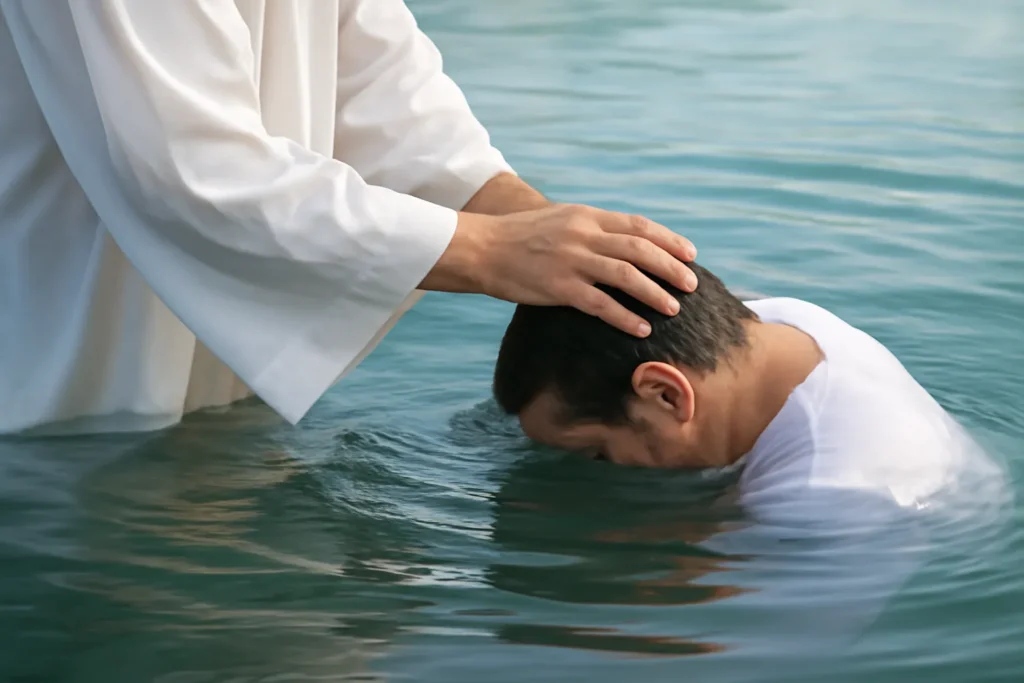
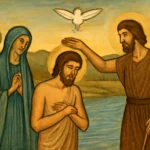
Immersion involves completely submerging the candidate under the water, typically in a font, pool, or river. This mode is especially prominent in groups that view baptism as a powerful symbol of dying with Christ and rising to new life. The physical act of going under the surface mirrors the depth of transformation, and the water’s return to the surface marks a visible sign of new identity. Immersion is common in many Baptist communities, some Pentecostal circles, and various non-denominational churches that emphasize believer’s baptism.
Affusion
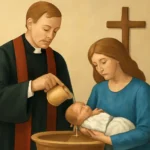
Affusion means pouring water over the candidate’s head or another part of the body. This method emphasizes the dispensing of grace through the water and allows for ongoing ministry to the person if immersion is impractical. It is widely used in many Anglican, Catholic, and Orthodox communities, among others. The key emphasis in affusion is not primarily the mechanics of how water is applied but the spiritual reality it represents: cleansing, incorporation into the body of Christ, and the reception of the Holy Spirit according to the tradition’s teaching.
Aspersion refers to sprinkling water on the candidate. While less common for adult believer’s baptism in some traditions, sparking is used in infant baptism in several denominations or in contexts where mobility, health, or space issues make immersion impractical. The symbolism remains consistent: washing, cleansing, and enrollment in a covenant people. For many worshiping communities, sparking serves as a practical and meaningful alternative without diminishing the sacramental significance of the rite.
The Water Itself: Source, Preparation, and Sacralization
Beyond how the water is applied, the provenance and treatment of the baptismal waters contribute to the ritual’s meaning. The sources can range from natural bodies of water to specially prepared fonts or basins. In some traditions, the water is blessed before use, imbuing it with a sense of being set apart for sacred purposes. In others, the emphasis is on the naming of the Triune God as the presiding authority: in the name of the Father, and of the Son, and of the Holy Spirit.
Sources of Water
Natural waters: Rivers, lakes, seas, or rain-fed pools that provide a powerful natural symbol of life and renewal. Many communities that practice immersion identify a specific body of water as their baptismal site, strengthening the experiential connection between the ritual and the local environment.
Fonts and basins: Fixed baptismal fonts in churches are often designed to evoke a sense of permanence and tradition. The font is a symbolic threshold, a visible reminder that the survivor passes from the ordinary world into the faith community.
Blessed or holy water: In some traditions, the water is blessed by a priest or bishop, which corresponds to the belief that the water has been made holy for the purpose of this sacramental act. This blessing underscores the communal involvement in the rite and the church’s authority to administer grace through material signs.
Prepared waters: Some communities mix water with oils, salt, or other symbolic elements to reflect dimensions of baptism such as healing, resilience, or purification for the journey ahead.
Regardless of the exact source, the sacramental character of the water—its consecration, its association with God’s grace, and its role in initiating a journey of faith—helps to anchor the rite in the lived experience of the worshiping community.
Rituals Across Traditions
The practice surrounding baptism is deeply shaped by historical, theological, and cultural contexts. Here is an overview of how the baptismal waters are integrated into rites across several major Christian families and related traditions, highlighting similarities and differences that illuminate the broader meaning of the act.
Use of a baptismal font or a basin that is often located near the church’s entrance, symbolizing entry into the Christian life.
In the Orthodox and some Catholic contexts, infants are commonly baptized by immersion in a single ceremony that may include triple immersion, followed by anointing with chrism (holy oil).
The rite is typically accompanied by renunciation of sin and profession of faith, an invocation of the Trinity, and sometimes the reception of other sacraments in close sequence.
In many places, parents and godparents stand in for the child, making vows and pledges to raise the child within the faith tradition.
In much of the Protestant world, baptism is viewed as a public profession of faith rather than an infusion of grace apart from personal response. The big emphasis is the confession of faith, often followed by the reception of the Holy Spirit.
Anglican and Lutheran communities often practice infant baptism alongside believer’s baptism for older converts, employing either immersion or affusion depending on local custom and theological emphasis.
All three forms—immersion, affusion, and aspersion—are accepted in different contexts, but the common thread is the invocation of Father, Son, and Spirit and incorporation into the church body.
For many Baptists and Anabaptists, baptism by believer’s confession and full immersion is central. The rite is typically performed after a person has made a conscious decision to follow Jesus and is considered the moment when faith becomes publicly observable.
Because baptism is seen as a conscious act of obedience to Christ, infant baptism is often rejected in favor of a later, voluntary confirmation of faith.
Communal oversight and accountability may accompany the baptism, reflecting a strong emphasis on the church as a covenant community.
Baptism is frequently experienced in conjunction with a broader outpouring of the Holy Spirit, including an emphasis on spiritual gifts and personal testimony.
Water rites are sometimes complemented by a separate laying on of hands or anointing, with spiritual renewal in view.
In some contexts, the water is taken from local sources, or from a font, and the ceremony emphasizes personal encounter with God in the present moment.
The Significance for Individuals and Communities
Beyond the theological statements, the baptismal waters have measurable effects on the lives of believers and the functioning of faith communities. They domesticate mystery into a shared, repeatable practice that marks a turning point in a person’s spiritual journey.
The rite often marks a shift in personal identity—from outsider or seeker to member of a faith community, or from a life oriented around self toward a life oriented around God and neighbor.
For many, the moment of contact with the water is a powerful symbol of renewal that reinforces habits of prayer, study, and service.
Even when baptism is not understood as conveying grace in every tradition, it remains a deeply meaningful signal of commitment and covenant fidelity.
Baptism is often a public entrance into a congregational mission, inviting others to welcome, nurture, and hold the new member accountable in love.
Rituals centered on water can strengthen a sense of belonging, solidarity, and shared purpose, especially within communities that emphasize social justice, mercy, or evangelism.
Annual or seasonal reaffirmations, or re-baptisms in certain traditions, highlight ongoing formation and the continuous formation of identity within a faith community.
Debates and Interpretations
As with any ancient rite, there are ongoing conversations about the proper meaning and practice of baptism. The questions people ask often reflect deeper theological convictions about grace, faith, and church authority.
Some traditions insist that baptism is an essential, saving sacrament that accompanies faith in Christ. In these views, the water rite is a divinely instituted means through which grace is imparted.
Other traditions treat baptism as a symbolic act that testifies to an inward transformation already accomplished by faith. In this perspective, the water is a sign rather than a conduit of grace.
Infant baptism emphasizes the corporate and covenantal dimension: the child is welcomed into the church and the family commits to nurture the child in faith.
Believer’s baptism emphasizes personal confession and voluntary discipleship: the candidate consciously chooses faith and is baptized as an outward expression of inner conviction.
These debates often shape how a community experiences the baptismal waters, their role in catechesis, and the rhythms of worship.
Proponents of immersion may argue that the full submersion outwardly mirrors the inward reality of death and new life.
Supporters of affusion or aspersion may contend that the essential act is the application of water in the name of the Trinity, and that the mode should serve pastoral and practical needs without diminishing the meaning of baptism.
In contemporary religious life, the ritual use of water invites reflection on moral and ecological responsibility. Water is not an unlimited resource, and communities that regularly practice water rites must consider sustainability, stewardship, and fairness in access to clean water.
Conversations around the baptismal waters can include a concern for water justice, especially in regions where water scarcity affects daily life.
Churches and other communities may adopt practices that honor ecological limits, such as using responsibly sourced water, recycling fonts, or reusing baptismal basins in a way that minimizes waste.
Pastoral care may extend to those who are drawn to baptism but lack reliable access to the necessary resources, ensuring that the rite remains inclusive and dignified for all who seek it.
While the core symbolism of the baptismal waters remains rooted in ancient tradition, contemporary worship communities continually interpret and adapt the rite to fit current realities. This evolution can reflect cultural context, pastoral needs, and ecological considerations.
Some congregations experiment with symbolic elements that accompany the water, such as light, song, or prayer stations that invite reflection on the meaning of baptism in modern life.
Technology may be used to share the experience, such as live streams of baptisms or online catechesis that prepare candidates for the rite, while preserving the integrity of the physical moment when water is applied.
In places where climate or infrastructure challenges immersion, authorities may emphasize affusion or aspersion as valid expressions of the same theological commitments, ensuring that the ritual remains accessible without compromising its significance.
The practice of baptizing with baptismal waters stretches across layers of community: the church as an institution, families as supportive units, and individuals as active participants in their own faith journeys. Each layer contributes to the fullness of the rite.
Church leadership: The clergy or designated leaders administer the rite, articulate its meaning, and provide ongoing formation for new members.
Families and sponsors: In infant baptisms, sponsors pledge to support the child's spiritual upbringing, and families commit to creating space for learning, worship, and service.
Individuals: The candidate’s or the parent’s personal faith journey shapes the interpretation and reception of the water rite, including how it is celebrated in daily life beyond the ceremony.
Across traditions, the water rite is grounded in Scripture and doctrinal statements that shape its authority and meaning. The sign acts as a bridge between ancient revelation and contemporary experience.
In many Christian theologies, baptism is linked to the Triune name—Father, Son, and Holy Spirit—signaling a threefold commitment: God’s grace, the believer’s faith response, and the community’s welcoming presence.
The image of water as life-giving and cleansing resonates with biblical motifs such as the Spirit’s stirring wind, the cleansing of the temple, and the renewal of the heart promised in prophetic writings.
Some traditions connect baptism to the ongoing life of the church—the ongoing transformation of the community as members live out the virtues and disciplines demonstrated in baptismal promises.
Scholars and theologians often note how language shapes the perception of baptism. Terms like immersion, affusion, sprinkling, font, oath, and vow each carry a slightly different emphasis. The choice of words in worship, catechesis, and liturgy can subtly influence how participants understand the rite—whether it is primarily a sign, a sacrifice, a means of grace, or a declaration of faith.
Because communities differ in how they understand baptism, the rite often varies depending on age and spiritual maturity. Some traditions emphasize infant baptism as the beginning of a lifelong journey in which the child grows into faith, while others reserve baptism for those who have consciously chosen to follow Christ. Each approach reveals a distinct emphasis on the relationship between grace, faith, and community.
Infant baptism emphasizes grace as a gift that the child receives through the church’s ministry and the family’s commitment, even before personal confession or discernment.
Believer’s baptism emphasizes personal consent, accountability, and a public declaration of faith.
Both approaches agree that baptism introduces the person into a new life and into a community with ongoing responsibilities for discipleship and service.
The baptismal waters do more than define a single rite; they shape language, practice, and identity across cultural contexts. The symbolism of water can be adapted to address contemporary concerns, including social justice, environmental stewardship, and interfaith dialogue. As communities encounter different cultural pressures, they may adjust the way baptism is described, celebrated, and integrated into education and mission work, while preserving the core meaning of initiation into a life of faith.
Across centuries and continents, the baptismal waters have remained a powerful ritual because they speak to fundamental human questions: Who am I? What commitments define my life? To whom do I belong? The rite of water, whether by immersion, affusion, or sprinkling, offers a tangible, memorable way to translate abstract beliefs into an embodied experience. It declares a verdict about belonging and purpose: that a person is welcomed into a community, cleansed by a grace beyond themselves, and invited to participate in a life of service, love, and faith.
As you consider the water in baptism—whether you view it as a sign, a sacrament, or a covenant—the essential point remains clear: the symbolism of baptism is not exhausted by the mechanics of how water is applied. The meaning lies in the witness it provides to the dying and rising life that faith asserts, in the communal promises that accompany the rite, and in the ongoing transformation it invites within the hearts and habits of those who come to the font seeking to live as followers of the way of Jesus, in fellowship with one another and in service to the world.
In this sense, the baptismal waters endure as a living metaphor—an invitation to continual renewal: to wash again in compassion, to rise again in hope, and to move again by grace toward the work of love in a broken world. Whether you experience baptism as a child welcomed into a covenant community or as an adult profession of faith, the waters bind you to a shared history, a communal vocation, and a future shaped by faith, hope, and charity. The river of faith may bend, but the current remains a steady call to live in the rhythm of the Spirit, to partner with others in the journey, and to strive for a life that echoes the deepest longing of the human heart: to belong, to be forgiven, and to become more fully the person you were made to be.






Leave a Reply