Introduction to Bible Purim: The Biblical Story of Esther and the Purim Festival
Bible Purim anchors a dramatic narrative from the Hebrew Bible—the story of Esther, Mordecai, and the peril that threatened the Jewish people in the Persian Empire. While the term Purim itself appears in later tradition as the name of the festival, in the biblical text it is closely tied to the theme of lots (the Hebrew pur) and to the moment when a dangerous plot against the Jews was thwarted. This article explores the biblical Purim story, how it became a festival, and why the tale remains a foundational reference for courage, identity, and communal resilience. It also surveys the ways in which the Purim festival is celebrated around the world today, drawing on the biblical core while recognizing centuries of rabbinic interpretation and cultural practice.
The biblical narrative of Esther: people, places, and plotlines
The Book of Esther centers on a young Jewish woman named Esther, who becomes queen in a Persian court under the reign of Ahasuerus (often identified with Xerxes I). The story unfolds in the capital city of Shushan (also spelled Susa), a major royal seat in the vast Persian Empire. The tale is marked by a series of bold choices, perilous confrontations, and a dramatic reversal that saves the Jewish people from annihilation.
Key characters and roles
Esther: A Jewish woman who becomes queen and courageously uses her influence to save her people.
Mordecai: Esther’s cousin and guardian, a loyal Jewish leader who refuses to bow to Haman and whose counsel shapes the crisis and its resolution.
Haman: The king’s vizier who schemes to exterminate all Jews in the empire by exploiting royal authority and bureaucratic power.
Ahasuerus (Xerxes): The king whose vanity and decision-making enable the plot but who also becomes a vehicle for Esther’s intervention.
Vashti: The queen who takes a stand earlier in the narrative, setting the stage for Esther’s opportunity (her removal leads to Esther’s entry into the royal sphere).
Plot milestones and turning points
Haman’s edict: Haman secures royal authorization to destroy, kill, and consume all Jews in the empire on a specific day, exploiting the population’s fear and the king’s authority.
Esther’s appeal: In a crisis moment, Esther risks her life by approaching the king uninvited, requesting that the king and Haman attend a banquet where she will reveal her plea.
Fasting and prayer: Before approaching the king, Esther calls for a communal fast among her people, recognizing the gravity of her mission and the need for divine support in a dangerous enterprise.
The pivotal proclamation: Esther uncovers Haman’s plot and identifies her own Jewish identity, signaling the moment when the tables begin to turn against the oppressor.
Mordecai’s edict and the Jews’ defense: The king authorizes the Jews to defend themselves on the appointed day, transforming the threat into an opportunity for deliverance.
Haman’s downfall: Haman is exposed and executed on the gallows he had prepared for Mordecai, sealing the reversal that defines Purim’s core message.
The deliverance and the celebration: The Jewish people are saved, and the festival of Purim emerges as a communal celebration of rescue, identity, and gratitude.
While the biblical Purim story is dramatic in its human drama, it is notable for its absence of overt references to a direct divine intervention in the narrative voice. Instead, the text presents a complex tapestry of providence: events unfold in a way that facilitates a fortunate outcome for the Jews, yet without explicit miracles described in the same way as other biblical narratives. This literary framework invites readers to consider how courage, cunning, communal solidarity, and the ambiguous workings of fate contribute to the preservation of a people under threat.
Chronology, geography, and the setting of the biblical Purim tale
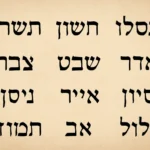
The action of the Esther story operates within the Persian Empire, a vast realm whose capital at Shushan functions as the political and cultural anchor for the plot. The lunar calendar employed in the narrative places the decisive events during the months associated with late winter and early spring, culminating in the festival days of Adar, with observances on the 14th and 15th of Adar. For urban geography, the city of Shushan is central; it is both the royal residence and the focal point for the interactions among the king, his advisors, Esther, Mordecai, and Haman.
The seasonal rhythm—fasting, feasting, and communal response—reflects a broader pattern in Purim: a period of peril (the threat against the Jews) followed by a sustained moment of relief and rejoicing. In the biblical text, the pivotal day of danger becomes a communal turning point, after which Jews take action to defend themselves and to celebrate their survival. The geography and timing emphasize how a local threat within a vast empire can be addressed through steadfast leadership, strategic decision-making, and a sense of collective purpose.
Thematic threads: providence, reversal, and identity in the Esther narrative
The story of Esther and Mordecai is profoundly thematic, offering several enduring ideas that continue to resonate in thePurim festival and in readers who study the biblical Purim narrative.
Providence and hidden guidance: Although God is not named explicitly in every scene, readers often interpret the events as guided by a hidden, protective force ensuring Jewish survival.
Reversal (hester panim and hinei tamid): The dramatic turn from danger to deliverance embodies a classic biblical pattern—what seems to be a calamity becomes an opportunity for communal rescue.
Identity and visibility: Esther’s decision to reveal her Jewish identity at a critical moment highlights questions about belonging, loyalty, and the responsibilities of leadership within minority communities.
Courage and intercession: Esther’s courageous approach to the king illustrates how personal risk, coupled with wise strategy, can alter the course of history for a people.
Community action: The fast and the collective defense show the power of communal solidarity and mutual support in the face of existential danger.
The Nazarene term for the festival—Purim—derives from the Hebrew pur, meaning lots. Haman’s choice of the day by casting lots becomes a grim, almost cruel, numerical anchor for the plot’s timing. The irony, of course, is that the very ritual of fate used by the antagonist becomes the catalyst for the Jews’ salvation. The narrative’s emphasis on human agency within divine sovereignty invites readers to consider the role of human courage, communal memory, and ethical response in times of crisis.
From text to festival: how Purim became a celebration
The biblical tale of Esther undoubtedly served as the seed for a broader religious and cultural memory. Over the centuries, Jewish sages and communities elaborated on the story, creating an annual festival that would energize faith, memory, and solidarity. The name of the festival, Purim, captures the decisive moment when the plot to destroy the Jews was thwarted and a new chapter of community celebration opened.
The core elements of the Purim festival—the reading of the Megillah, feasting, giving, and receiving gifts—grow out of the biblical core and are sustained by later rabbinic practice. The Megillah scroll that narrates the Esther story is read in synagogues with great enthusiasm. Among the crowd, listeners often use noisemakers called groggers to drown out the name of Haman during the reading, turning the ritual into an active, communal experience.
The traditional observances and rituals associated with Purim
Purim is one of the most distinctive and richly ritualized of Jewish holidays. The day is not marked by a prolonged period of fasting or penitential reflection but is instead a crescendo of joy, humor, and social connection. The following components highlight how the biblical story is commemorated in practice.
Megillah reading and public celebration
Reading the Megillah (the Scroll of Esther) in the evening and again the following morning. The narrative is read aloud in dramatic fashion, with the audience reacting to pivotal moments (such as Esther’s appearance, Haman’s schemes, and the reversal of fortune).
Groggers and audible responses: To nullify the evil figure of Haman in the storytelling, audiences use noisemakers, stampers, and shouting to blot out his name while the text is read.
Public celebration: After the Megillah, communities gather for communal meals, music, storytelling, and sometimes theatrical plays (purim plays) that reenact or reimagine elements of the Esther narrative.
Gifts and charity: mishloach manot and matnot la’evyonim
Mishloach manot: The exchange of food packages between friends and neighbors. Packages typically include at least two different food items and symbolize communal solidarity and the practical care of others during a period of celebration.
Matnot la’evyonim: Charitable gifts to the poor. Purim emphasizes social responsibility and ensuring that everyone can participate in the festival’s joys, especially those lacking means.
Se'udat Purim: the festive meal
A central component of Purim is the se’udat Purim—the festive meal shared with family and community. The meal is often lively, with music, songs, and expressions of gratitude for deliverance. It serves as a social hinge that reinforces communal bonds and a sense of shared history.
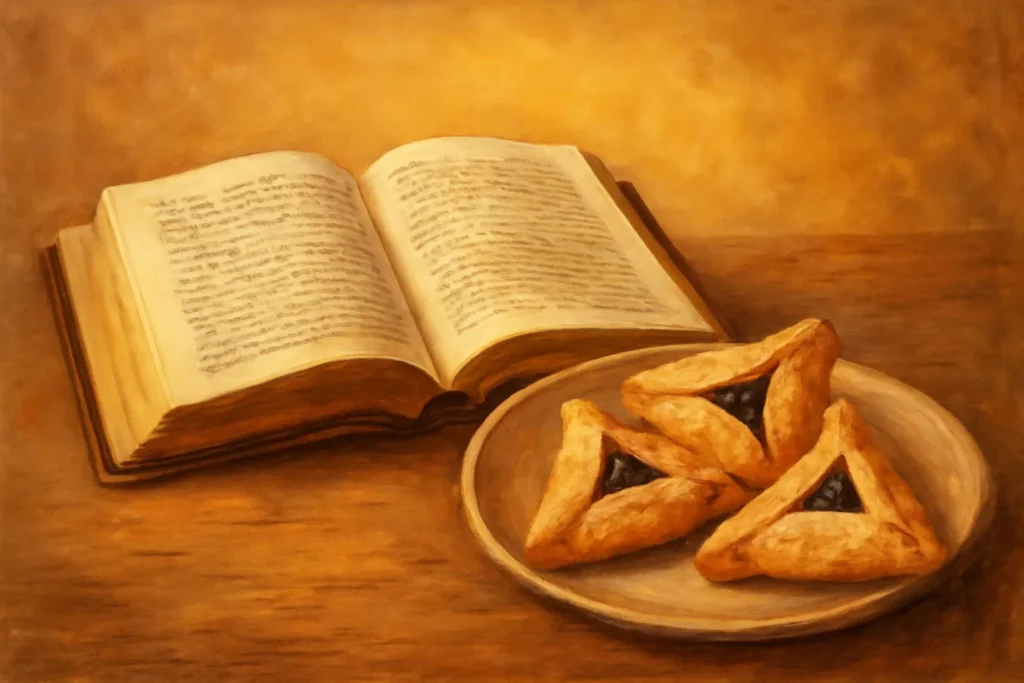
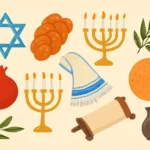
Hamantaschen (triangular pastries filled with fruit or poppy seeds) are perhaps the most iconic Purim delicacy. The triangular shape is commonly linked to the hat or ears of Haman, although regional variations exist. The cookie’s meaning can be understood as a playful memorial of the villain and a reminder of the narrative’s reversal.
Other seasonal foods accompany the celebration, reflecting regional culinary traditions and the celebratory spirit of Purim. Communities often pair sweets with savory dishes as a sign of joy and abundance.
Purim in history and culture: how the story shaped identity and memory
The Esther narrative, with its emphasis on identity, risk, and communal survival, has had a lasting influence on Jewish memory and cultural expression. The festival’s activities—reading, feasting, gifting, and charity—create a rhythm of remembrance that links past peril to present responsibility. In addition to religious practice, Purim has inspired a rich body of literature, theatre, and art that reinterprets the biblical episodes for new generations.
Women’s leadership and bravery: Esther’s ascent from a hidden identity to a decisive voice in royal politics serves as a model for female leadership and moral courage in the public sphere.
Global Jewish diaspora: Purim celebrations across different communities—Ashkenazi and Sephardi, as well as modern Jewish centers worldwide—reveal how a single biblical story can be adapted to diverse cultural settings while preserving its core themes.
Humor and resilience: Purim’s festive mood, playful traditions, and even parodic performance arts reflect a worldview where joy accompanies hardship and memory sustains resilience.
Purim in diverse contexts: biblical Purim and contemporary observance
The biblical Purim story continues to be studied not only as a religious narrative but also as a window into ancient political culture, social dynamics, and ethics. Christian readers who engage with the Book of Esther may view Purim as part of a broader biblical witness about courage, providence, and human responsibility. In Jewish contexts, Purim remains a living holiday—its rituals are practiced in synagogues, schools, homes, and community centers, often accompanied by performances that retell Esther’s courageous choices.
Historical and critical perspectives
The book’s tone and structure emphasize human action within a larger arc of divine intention, prompting readers to explore questions about how everyday decisions intersect with destiny.
The absence of explicit, overt miracles in Esther invites discussions on divine hiddenness and the belief that God’s presence may operate through human agents and communal action.
The festival’s liturgical forms—Megillah reading, Mishloach Manot, Matnot La’evyonim, Se’udat Purim—offer a practical framework for ethical conduct, social solidarity, and cultural memory that extends beyond religious settings.
Variations in practice: how Purim is observed around the world
Across communities, Purim takes on local flavors while preserving the essential biblical core. Differences in customs—such as the timing of readings, the species and varieties of food, or the emphasis on certain ritual acts—reflect historical developments, diaspora experiences, and contemporary needs.
Ashkenazi Purim customs: Traditional songs, Purim plays (purim spiel), and a strong emphasis on mishegas, humor, and the retelling of the Megillah with theatrical flair.
Sefardi and Mizrahi Purim customs: Distinct foods and liturgical melodies, with variations in ritual phrasing and ritual timing, while sharing the core acts of feasting and charity.
Modern adaptations: In some contexts, Purim serves as a platform for community service, educational outreach, and interfaith dialogue, extending the festival’s message of rescue and communal care beyond traditional boundaries.
Lessons and legacies: what Bible Purim teaches about leadership, courage, and community
The biblical Purim narrative offers enduring lessons that are relevant across generations. The story demonstrates that moral courage can alter the fate of a people. Esther’s careful strategic thinking—balancing discretion with bold action—illustrates principled leadership under pressure. Mordecai’s insistence on fidelity to his people’s identity highlights the value of communal memory and responsibility to the vulnerable within society. The festival’s rituals translate that memory into concrete acts of generosity and solidarity: to give food, to assist those in need, and to participate in a communal celebration that honors resilience.
In examining Purim’s biblical roots and its evolution into a global festival, readers discover a narrative that is both intimate and expansive. It speaks to the personal courage of an individual (Esther), the collective strength of a community (the Jewish people in the Persian Empire), and the ethical obligations that arise when danger threatens a vulnerable group. The story invites interpretation on many levels: historical, literary, theological, and practical.
Guided reading and study suggestions on Bible Purim
For readers seeking a structured approach to the Esther narrative and the Purim festival, here are practical avenues:
Primary text study: Read Esther chapters 1–10 to follow the plot arc in sequence, noting where courage, cunning, and communal action intersect.
Character analysis: Create brief profiles for Esther, Mordecai, Haman, and Ahasuerus, highlighting their motives, methods, and outcomes.
Thematic journals: Track themes of providence, reversal, identity, and community responsibility as you read, citing specific verses (for example, Esther 4:14 on “who knows whether you have come to your royal position for such a time as this?”).
Festival practice: If you observe Purim, explore how your community implements Megillah readings, Mishloach Manot, Matnot La’evyonim, and Se’udat Purim, and reflect on how these acts connect to the biblical narrative.
Conclusion: the enduring significance of Bible Purim
The biblical Purim story and the Purim festival together form a powerful argument for the resilience of a people in moments of peril. They illustrate that leadership, loyalty, and communal generosity can pivot the course of history. The story of Esther and Mordecai—a tale of deliverance born from courageous action—continues to inspire readers and communities to confront fear with solidarity, to honor memory through acts of charity, and to celebrate survival with a sense of joyful responsibility. Whether one approaches the tale as literature, as religious memory, or as a living cultural practice, the moral center remains clear: even in a vast and complicated empire, a brave choice by a single person can illuminate a people’s path to safety and dignity. This is the living legacy of Bible Purim—a reminder that courage, community, and conscience are potent forces for good in any era.




Leave a Reply