Christ Candle for Advent Wreath: How to Bless and Set Up
Christ Candle for Advent Wreath: How to Bless and Set Up
Advent is a season of preparation, anticipation, and blessing, and at the heart of many Christian homes is the Advent wreath with a central Christ Candle. The white or gold center candle represents the Incarnation—the coming of Jesus Christ into the world—and its lighting marks the culmination of the Advent journey. This article offers a thorough guide to understanding, blessing, and setting up the Christ Candle for Advent Wreath, along with practical steps for home use, variations across traditions, and ideas for family involvement. Whether you call it the Christ Candle, the White Candle, or the center candle, this central flame is a symbol of hope, light, and divine presence that invites reflection and joy during the weeks leading to Christmas.
Understanding the Christ Candle and Its Place in Advent
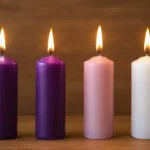
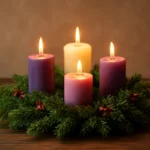
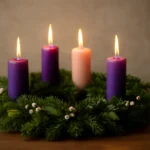
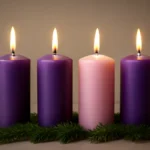
In many Christian households, the Christ Candle is the focal point of the Advent wreath, a ring of evergreen branches that traditionally holds four purple (or blue) candles and a central white Christ Candle. The seasonal symbolism is rich and layered. The evergreen wreath stands for eternal life; the four outer candles symbolize the four Sundays of Advent—each candle often matched with a theme such as hope, peace, joy, and love; and the center candle of Christ embodies the gift of Jesus that completes the Advent journey as Christmas draws near.
Different cultures and churches describe the same symbolism with varying words. Some call it the Advent center candle, others simply the white Christ light, and still others may refer to it as the Jesus candle or the Nativity Candle. A key thread in all these names is the idea of illumination—Jesus as the Light entering a world that longs for truth and grace. Keeping this in mind helps churches and families use the Christ Candle with reverence and clarity.
Components of the Advent Wreath
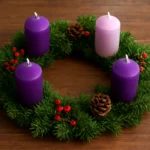
Before blessing or lighting, it helps to understand the physical setup. A typical Advent wreath for the home includes:
Evergreen wreath or ring: symbolizes enduring life and continuity through winter.
Four candles: usually purple or blue, representing the four Sundays of Advent and each theme (hope, peace, joy, love).
Christ Candle (center white candle): represents Jesus Christ, the light of the world.
Holder or votive cups to protect the flame and contain wax.
Optional elements such as ribbons, bells, or a centerpiece scene that echoes Christmas stories.
When arranging the wreath, consider safety and visibility: ensure the central white candle is accessible and stable; place the wreath on a non-flammable surface away from drafts; and use a sturdy holder to prevent tipping if you are using real candles. For families with small children or pets, or for homes with limited flame control, many people opt for LED candles or electric substitutes for a safer, long-lasting alternative to the traditional Christ Candle.
Different Names and Terminology for the Christ Candle
To widen the semantic reach of this topic, here are common variations you might encounter:
Christ Candle (center white candle)
White Candle or Jesus Candle
Center Candle of the Advent wreath
Nativity Candle (emphasizing the Nativity narrative)
Center Advent candle or center Advent light
All these terms point to the same theological idea: the Incarnation and the culmination of Advent in the coming of Christ. When writing or planning a family practice, you can choose the wording that feels most meaningful to your tradition while preserving the central symbolism of the light in the darkness.
Blessing the Christ Candle: Traditional Prayers and Modern Variations
The blessing of the Christ Candle is a moment of consecration in which the flame becomes a daily reminder of Jesus’ arrival and presence in the family’s life. Depending on your tradition, the blessing can be conducted by a priest, pastor, lay leader, or family member, and it may involve water, oil, or simply a prayer. Below are two general approaches you can adapt to fit your setting—one that reflects a Catholic/Anglican practice and one that aligns with a broader Protestant or non-denominational practice.
H3: A Catholic/Anglican-leaning blessing (template)
Note: If you belong to a church with formal liturgy, consult your pastor for an approved blessing. The following text is a flexible template suitable for a home setting or informal gathering.
“Lord God, we praise You for the gift of Your Son, Jesus Christ, the Light of the world. We bless this Christ Candle, that it may remind us of the Word made flesh and of the hope that comes with His birth. May this flame shine in our hearts and homes, guiding us toward mercy, truth, and peace. Bless our family as we prepare for Christmas, and grant us steadfast faith, patient hope, and joyful love as we wait for the fullness of Your kingdom. Through Christ our Lord. Amen.”
H3: A general, non-denominational or Protestant blessing (template)
Blessing for the center candle:
“Gracious God, we dedicate this Christ Candle as a sign of Your coming into our world. May its light remind us of Jesus, the Light who shines in the darkness and the darkness has not overcome it. Help us live in the glow of His love, share that light with our neighbors, and reflect Your grace in our homes and communities. May we prepare our hearts for Christmas with courage, compassion, and hope. Amen.”
Optional additions for a more ritualized scene include blessing with holy water or applying a small amount of anointing oil on the wick or on the base of the candle (or on the wreath frame) as a symbol of consecration. If you practice with oil, you might say: “As this oil seals the commitment to Christ, may the candle seal our hearts to His service.”
H3: Practical tips for blessing in the home
Prepare a quiet space free from distractions. Consider lighting a dim lamp or playing soft contemplative music to set a reverent mood.
Gather supplies: the Christ Candle, a lighter or matches, a holder, a small amount of holy water or oil if desired, and a printable or memorized blessing text.
Invite participation from children and adults alike. Reading a short portion of Scripture (for example, Isaiah 9:2, 6-7; John 1:9-14) before the blessing can anchor the moment in Scripture.
Declare the intent for the season: personal conversion, family harmony, outreach, or acts of service in light of Christ’s coming.
Setting Up the Advent Wreath at Home
Layout is more than aesthetics; it sets a rhythm for worship and family life. Here is a practical guide to arranging and preparing the Christ Candle for Advent Wreath in a typical home setting.
Choose a sturdy surface to place the wreath, away from heat sources, curtains, and high traffic. A well-lit table or mantel works well.
Position the wreath so that all five candles are clearly visible and accessible for lighting. If using a glass hurricane or a holder, ensure there is space for wax to pool without scorching nearby materials.
Secure the Christ Candle in the center holder or the wreath’s socket. The central candle is usually white and sits above the others, not behind them.
Arrange the outer candles in a symmetrical pattern around the center, with four purple (or blue) candles at the cardinal points or evenly spaced around the ring.
Prepare for lighting by keeping a long lighter or matches nearby, and consider a small tray for wax drips to protect the surface beneath.
If your tradition uses an LED or battery-operated Christ Candle, ensure the base is stable and that the switch is easily accessible. For those who prefer a purely symbolic approach, a decorative white ring or a battery-operated center LED can still faithfully represent the light of Christ without the fire risk.
Lighting Sequence and Family Practice
Many families light the Advent wreath as part of a weekly devotion. The lighting sequence typically mirrors the Advent themes and builds anticipation toward Christmas. Here is a practical pattern for a home setting using both the four outer candles and the central Christ Candle:
Week 1: Light the first purple candle (hope). Read a verse about hope and reflect on a hopeful expectation of God’s promises.
Week 2: Light the second purple candle (peace). Add a short prayer for peace within families, communities, and the wider world.
Week 3: Light the third purple candle (joy). Consider incorporating a moment of gratitude for joyful moments in daily life.
Week 4: Light the fourth purple candle (love). Invite family members to name ways they can show love to others during the coming week.
There are two common variants regarding the center candle:
Version A — After the fourth week, the center Christ Candle is lit, often together with the fourth purple candle or during Christmas Eve/Day services.
Version B — The center candle is lit on Christmas Eve or Christmas Day, symbolizing the birth of Christ and the arrival of “the Light” with the Nativity.
Regardless of the variant you choose, end each lighting moment with a short, focused prayer or a Scripture reading. This practice helps the household pause, listen, and connect with the meaning behind the flame.
H3: Practical tips for family participation
Assign roles to different family members. A child can light the next purple candle, a parent can offer a short reflection, and everyone can recite a simple one-line prayer.
Use a printed or memorized set of reflections for each week to maintain consistency, especially for children learning the rhythm of worship.
Include acts of service in the week between Sundays—for example, a small act of kindness or a donation drive inspired by the candle’s theme.
Safety, Materials, and Care for the Christ Candle
Safety and care should never be neglected when using real candles. The following guidelines help you enjoy the symbolic lighting without risk:
Supervise children around candles or switch to LED alternatives for safety.
Place on a heat-resistant surface and away from flammable objects like curtains or paper crafts.
Never leave burning candles unattended in a room; extinguish all flames before leaving the house or going to bed.
Trim wicks to about 1/4 inch (6 mm) to minimize smoke and ensure a steady, even burn.
Respect fragrance and allergies if you use scented candles—some family members may be sensitive to strong scents.
Consider alternatives such as LED or solar-powered center candles for ongoing use, especially in rooms with kids or pets.
Beyond safety, it’s wise to consider how to store the Christ Candle for next year. Keep the candle in a cool, dry place, away from direct sunlight to preserve wax integrity and fragrance. If you plan to reuse the same wreath, inspect the wreath ring and ensure the center candle is still a good fit for the next season.
Variations Across Traditions and Denominations
The Christ Candle for Advent Wreath is used across many Christian traditions, but the way it is blessed, lit, and interpreted can differ. Here are some broad patterns and notable differences:
H3: Catholic and Anglican traditions
In Catholic and Anglican households, the Advent wreath often features three purple candles and one pink or purple candle, with a central white Christ Candle. The blessing might occur during a family mass or home gathering, and the Christ Candle is typically lit on Christmas Eve or Christmas Day, symbolizing the arrival of the Light in the Nativity narrative. The focus tends to be on liturgical structure, Scriptural readings, and contemplative prayer surrounding the Advent themes.
H3: Protestant and evangelical families
Many Protestant traditions emphasize personal devotion with straightforward prayers, Scripture readings, and family involvement. The Christ Candle serves as a clear, tangible symbol that resonates with home-centered worship. The center candle may be lit on the fourth Sunday or on Christmas Eve/Day, depending on family preference and church custom. The practice is often simpler and more flexible, encouraging regular participation by all ages.
H3: Orthodox and other non-Western contexts
In some Orthodox or non-Western Christian communities, Advent wreaths are less common or adapted to local liturgical calendars. When used, the central candle often corresponds to the Nativity feast and the larger Christmas season, with emphasis on the Incarnation, the coming of Christ, and the unity of the Church in anticipation of Christmas celebrations.
H3: Variations in colors and symbolism
While purple (or blue) is typical for Advent, some families use different colors (e.g., blue, violet, pink). The center white Christ Candle remains the symbolic focus regardless of outer candle color. The themes associated with each outer candle—hope, peace, joy, and love—are broadly recognized, but families may adjust the accompanying readings and prayers to highlight local concerns or personal experiences.
Step-by-Step Guide: How to Bless and Set Up the Christ Candle for Advent Wreath
For those seeking a practical, repeatable process, here is a concise, step-by-step guide you can follow year after year. It combines blessing, setup, and a short devotional pattern that helps families enter into the season with intention.
Gather supplies: Christ Candle, four outer candles, a wreath holder or base, a lighter or matches, gloves (optional for handling hot wax), and a devotional guide or Scripture list.
Inspect the wreath: Check for stability and clean wax spills from prior years. Ensure the Christ Candle fits securely.
Place the wreath on a stable, heat-resistant surface. Consider a tray or placemat to catch wax drips.
Position the candles: Insert the four outer candles evenly around the ring, and place the Christ Candle in the center.
Blessing (optional step): If you’re following a formal blessing, perform it before lighting. You can use one of the blessing templates above or a version tailored by your church.
First lighting: On the first Sunday of Advent, light the first purple candle. If you have a family with candles, invite a child to light it and share a brief reflection.
Subsequent lighting: Each Sunday, light one additional purple candle in the sequence—two on the second Sunday, three on the third Sunday, four on the fourth Sunday—while optionally keeping the Christ Candle unlit until Christmas Eve/Day.
Center lighting: On Christmas Eve or Christmas Day (depending on your tradition), light the Christ Candle. You may keep it lit for the entire Christmas season or for the duration of your Advent celebration, as your tradition dictates.
Closing prayer: End the lighting with a short prayer or Scripture reading, and take a moment of silence to reflect on the light entering the world.
H3: A family-friendly sample sequence
The following sequence is designed for households with children and a simple rhythm of devotion:
Week 1: Light the first purple candle; read Isaiah 9:2 or John 1:5; offer a one-sentence reflection on hope.
Week 2: Light the second purple candle; read Luke 2:14; reflect on peace shared with family and neighbors.
Week 3: Light the third purple candle; read Romans 15:13; celebrate joy in ordinary moments.
Week 4: Light the fourth purple candle; read Matthew 1:23; consider love that accompanies Christ’s birth.
Christmas Eve/Day: Light the Christ Candle; read John 8:12 or John 1:9; pray for guidance to carry the light into the coming year.
Practical Ideas to Enrich Your Advent Practice
To make the Christ Candle practice more meaningful, consider adding these ideas to your Advent routine:
Incorporate Scripture memorization around Advent themes, such as verse segments tied to hope, peace, joy, and love.
Include acts of service in the weeks leading up to Christmas—for example, donate blankets, serve a neighbor, or support a local charity in the candle’s spirit of generosity.
Use family traditions like a “candle night” where a child helps distribute candles, or a story reading that centers on the Nativity narrative.
Adapt the ritual for digital gatherings if your family cannot meet in person. A shared online blessing and a synchronized lighting moment can still create a sense of unity.
For those who prefer a more contemplative approach, consider creating a quiet “candles and contemplation” night weekly, with a simple reflection and no discussion—allowing the flame to evoke personal prayer and silent listening for God’s voice.
H3: Using the Christ Candle in non-liturgical settings
Even in secular or interfaith households, the Christ Candle can be a powerful symbol of light amid darkness. In such contexts, you may emphasize universal themes like hope, generosity, and peace, and let the candle serve as a focal point for family conversations about values that transcend tradition.
Common Questions About the Christ Candle for Advent Wreath
Here are answers to questions people frequently ask when they begin to incorporate the Christ Candle into their Advent practice:
Is the Christ Candle always lit last? Not always. Some families light the center candle on Christmas Eve or Christmas Day, while others light it on the fourth Sunday or during the Christmas season. Choose a timing that fits your tradition and schedule.
Can I use LED candles? Yes. LED or battery-operated center candles are a popular and safe alternative, especially for homes with children or pets. The symbolism remains intact—the light of Christ still shines.
What if I have an irregular schedule? If Sundays don’t work, you can adapt the cadence to a weekly schedule that suits your family—an evening prayer night, a Friday reflection, or a weekend study that culminates with lighting the Christ Candle on a meaningful date.
What prayers or readings should accompany the lighting? You can use a short Scripture verse, a life-evoking prayer, or a family moment to reflect on how the light of Christ is seen in acts of mercy, generosity, and community. The key is to create a moment of shared focus, not a performance.
Frequently Asked Questions (FAQ)
Below are quick answers to practical questions you might have as you start using the Christ Candle on Advent wreaths at home:
What is the main symbol of the Christ Candle?
The center white candle represents Jesus Christ, the Light of the World, whose birth is the culmination of the Advent season.
When should I light the Christ Candle?
Typically on Christmas Eve or Christmas Day, or on the fourth Sunday of Advent, depending on tradition. It can also be lit on the first day of Christmas Week in some households.
Do I need to bless the Christ Candle every year?
Blessing is optional and depends on your tradition. Some families bless the central candle annually as a reaffirmation of dedication to Christ, while others may skip annual blessing if the candle is reused and the family follows a simple lighting ritual.
What if I don’t celebrate Christmas?
The symbolism of light and anticipation can still be meaningful. You can adapt the practice to reflect the season of waiting, gratitude, and generosity, using the center candle to symbolize a central light or hope for the season.
Conclusion: Embracing the Season with the Christ Candle
The Christ Candle for Advent Wreath serves as a luminous invitation into the Christmas story, a daily reminder that the Light of the World shines in the darkness and the darkness has not overcome it. By blessing, setting up, and regularly lighting the center candle, families may cultivate a rhythm of worship, reflection, and generosity that carries through the entire Advent season and into Christmas. Whether you adhere strictly to a liturgical form or adapt the practice for a family devotional, the core idea remains the same: the center light beckons us to remember, wait with hopeful expectation, and live lives that reflect Christ’s love in a world that longs for the light it offers.
May your Advent practice with the Christ Candle bring warmth to your home, clarity to your faith, and renewed hope as you prepare to celebrate the nativity and the mystery of God becoming human. If you’d like, you can download a printable blessing card, keep a journal of reflections for each week, or share your family’s Advent candle rituals in a local community group to encourage others in their own journey toward Christmas joy.






Leave a Reply