5 Candles Advent: A Guide to Lighting the Advent Wreath
5 Candles Advent: A Guide to Lighting the Advent Wreath
In this guide, you’ll find a comprehensive look at the five-candle Advent wreath and how to light and use it in homes, churches, and small communities. Whether you call it a five candles Advent tradition, a five-candle Advent wreath, or a five-candle Christmas countdown, the essential purpose remains the same: to prepare the heart for Christmas through anticipation, prayer, and reflection. This article offers practical guidance, symbolism, variations, and ready-to-use ideas so you can adapt the tradition to your context while keeping its richness intact.
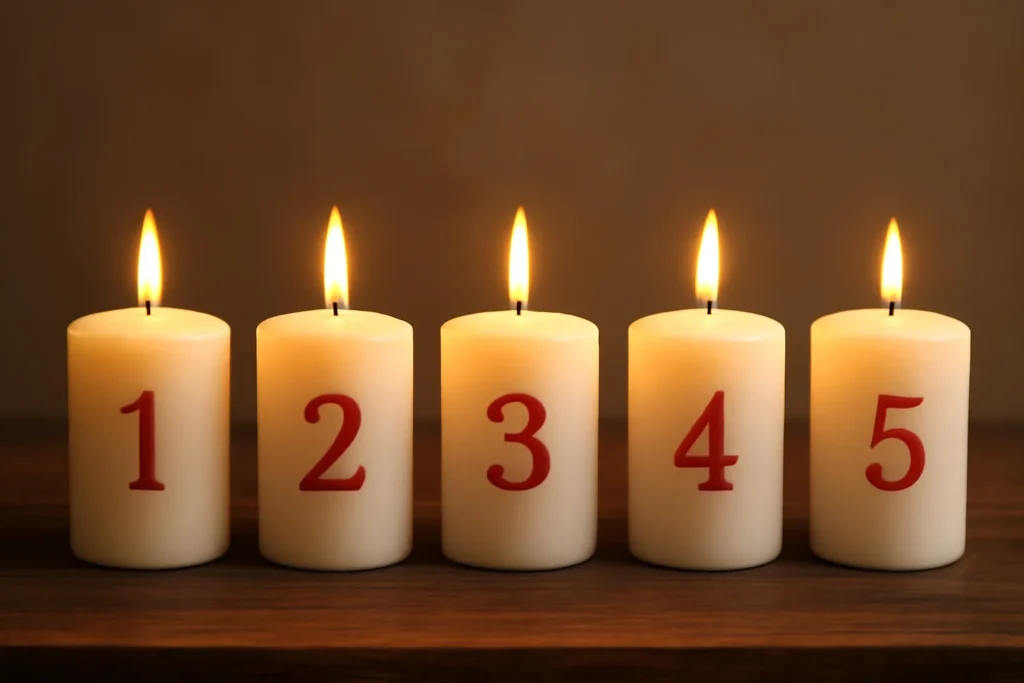
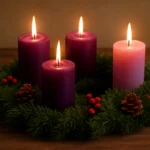
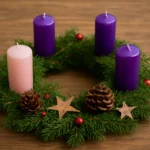
The Advent wreath is a circle of greenery with candles that mark the weeks leading up to Christmas. In its classic form, there are four candles around the ring, typically two purple, one pink, and one more purple, with a Christ candle at the center that is lit on Christmas Eve or Christmas Day. A five-candle Advent arrangement broadens this pattern, adding a fifth candle to the display and creating space for new symbolism or a revised liturgical sequence. The five-candle approach can be implemented in several ways, but it is most often used to emphasize a deliberate progression of themes across five weeks or to highlight the central message of Christ’s coming in a distinct way.
Across Christian communities and families, the five-candle Advent practice often blends liturgical structure with personal devotion. For some households, the fifth candle represents an extra layer of preparation, a focus on a particular virtue, or a broader call to serve those in need during the Advent season. For others, the five-candle version is a practical adaptation when a center Christ candle is included, bringing the total to five around the wreath. The key idea is to maintain intention: each Sunday is a moment of lighting, prayer, and memorizing a scriptural or devotional theme that aligns with the approaching feast of Christmas.
In contemporary usage, you may hear terms such as five candles Advent, five-candle Advent wreath, or five-candle symbolism used interchangeably. While the configurations differ, the underlying rhythm remains: a deliberate, weekly or biweekly act of lighting that invites contemplation, gratitude, and communal sharing. Below, you’ll find practical guidance for designing and using a five-candle Advent wreath in a way that respects tradition while accommodating different needs and spaces.
Origins and variations of the five-candle Advent practice
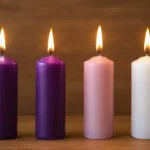
Traditionally, Advent begins the liturgical year with a wreath of greenery bearing four candles—three purple for the weeks of preparation and one pink for Gaudete Sunday, the middle Sunday of Advent when the mood shifts toward joy. The Christ candle sits at the center and is lit on Christmas Eve or Christmas Day. A five-candle version reinterprets this setup in one of two common ways:
Five candles around the wreath with a center candle: This is a natural extension where the outer ring houses four candles (often still blue-violet and pink) and a separate center candle stands as the Christ candle or a symbol of Christ’s light. When lit, it visually emphasizes the culmination of the Advent journey.
Five outer candles, no central candle: In some families or congregations, the tradition is adapted to have five distinct outer candles, one for each week, and no central white candle. In this arrangement, the fifth candle may be used for a concluding Christmas candle or as a symbolic fifth virtue or attribute to reflect the season.
The choice between these variants is often influenced by space, the number of participants, and the availability of different candle colors. Regardless of the exact layout, the goal remains the same: to create a meaningful, reflective routine that helps people slow down, anticipate, and celebrate the promise of Christmas. Throughout this article, you will find practical guidance for both common configurations, with notes on what to light when and how to engage the family or group in the devotion.
Designing and assembling a five-candle Advent wreath
Building a five-candle Advent wreath can be a wonderfully creative and meaningful project. Here are practical steps, materials, and design considerations to help you create a durable and visually resonant centerpiece:
Base and greenery: Use a sturdy wreath base (foam, wire, or a natural evergreen ring). Fresh greens provide aroma and vitality, while artificial greens offer longevity. Add accents such as pinecones, berries, seed pods, or ribbons to reflect your family’s taste.
Candles: Select five candles that fit your color scheme. Common choices include:
Four colored candles around the ring (often three purple and one pink), plus a center Christ candle (white).
Five colored candles around the ring (e.g., two purple, two pink/rose, and one white) for a five-week progression with no central candle.
Spacing and arrangement: Place the outer candles evenly around the ring. If using a center Christ candle, position it at the center with a protective holder or glass dish to prevent wax from dripping onto the greens. If using five outer candles, ensure even spacing and use a stable base or a sealing method to prevent tipping.
Hold and safety: Attach the candles securely using non-flammable holders or clips. Keep the wreath away from drafts, flammable decorations, and heat sources. Have a snuffer or extinguisher on hand and never leave burning candles unattended.
Color symbolism: If you choose purple and pink for the outer ring, preserve the traditional Advent color symbolism. If you opt for a five-candle home arrangement with five outer colors, you can tailor the meanings to your household: hope, preparation, joy, peace, and light/Christ’s coming.
Before you begin, gather these supplies: a wreath base, five candles, candle holders or tea-light cups, a wick trimmer, an extinguishing tool, a lighter or matches, a dish or plate to catch wax, and optional decorative elements. Once assembled, you can keep the wreath on a sturdy table or place it on a mount or stand that ensures it’s stable and viewable by all participants.
Lighting the five-candle Advent wreath: steps and order
Lighting rituals provide structure and rhythm to the Advent season. Depending on your configuration, you’ll follow one of these two common sequences. Both emphasize a prudent pace, with a focus on prayer and reflection after each lighting.
Variant A: Five candles around the ring with a central Christ candle
Week 1: Light Candle 1 and the Christ candle remains unlit for now (if you light the Christ candle only on Christmas Eve/Day). Begin with a short reading and a prayer about hope.
Week 2: Light Candle 2. Read about preparation and the coming of a savior.
Week 3 (Gaudete Sunday): Light Candle 3, the pink or rose candle, symbolizing joy. Pause for a sentiment of joy amid waiting.
Week 4: Light Candle 4, representing peace. Reflect on peace for the world and for personal life.
Christmas Eve/Day: Light the Christ candle (center) to celebrate the arrival of Christ, the light of the world. If you lit five outer candles, you may also light the fifth outer candle in this week as a concluding symbol of light coming into the world.
Variant B: Four outer candles plus a central Christ candle (the classic five-candle layout)
Week 1: Light the first outer candle and the Christ candle is still unlit. Begin with a meditation on hope.
Week 2: Light the second outer candle. Readings focus on preparation for the coming of the Lord.
Week 3 (Gaudete Sunday): Light the pink candle and the third outer candle; rejoice in the approaching celebration of Christ’s birth.
Week 4: Light the fourth outer candle. Reflect on peace in the world and in personal life.
Christmas Eve/Day: Light the center Christ candle to proclaim Christ’s birth and light into the world. If you prefer, you can also light the final outer candle in this final moment, then the center remains forever lit on Christmas Eve or Day in many households.
Whichever variant you choose, a simple pattern helps families stay consistent: begin with a short reading, light the designated candle(s), offer a brief reflection or prayer, and then sing a verse or two of a seasonal song. The goal is not to rush but to invite a sense of sacred time in the home as the Advent weeks unfold.
Symbolism and theology behind the five-candle approach
The four weeks of Advent traditionally map to virtues and hopes that prepare the heart for the coming Messiah. In the five-candle Advent practice, you can expand or reframe that symbolism in several meaningful ways:
Hope becomes the opening candle, inviting trust in God’s promises even in uncertain times.
Preparation remains central as you prepare room in your life for Christ’s arrival, often by confession, study, or acts of hospitality.
Joy is celebrated on Gaudete Sunday with the pink candle, signaling a turning point in the season toward gladness.
Peace invites reflection on reconciliation, calm, and the healing of divisions in families, communities, or the world.
Christ’s light (the fifth element in many five-candle layouts) culminates the season, underscoring that Advent is not just waiting but readiness for the Light that has come into the world.
In some communities, the fifth candle may be linked to the theme of loving service or justice, aligning with Advent’s call to prepare the way for the Lord by making room for the vulnerable. This flexibility allows households to connect Advent’s ancient prophecy with contemporary acts of mercy—feeding the hungry, welcoming strangers, and supporting the marginalized. The five-candle format, then, becomes a scaffold for both personal devotion and communal action.
Another layer of meaning comes from color symbolism. The combination of purple and pink maintains the traditional rhythm of penitence and rejoicing, while a white Christ candle (or a fifth color) highlights the day when the world encounters the light of Christ. In the five-candle arrangement, you can emphasize this turning point as a practical, visible reminder that the Christmas message is incarnate in the world today.
Creative ideas to engage with the five-candle Advent wreath
Advent is a season rich with possibilities for family, church, and community life. Here are practical ways to enrich your five-candle Advent practice:
Weekly devotions: Pair each weekly lighting with a short Scripture reading, a reflective question, and a brief prayer. Include a family member’s favorite Bible verse or a personal story related to the week’s theme.
Song and silence: After lighting, sing a verse of a Christmas carol or a contemporary Advent hymn. Then offer a minute of silence to listen for God’s word in the day ahead.
Scripture and reflection prompts: Use prompts like “Where have I shown hope today?” or “Whom can I serve this week?” to connect the candles to daily life.
Journaling: Encourage journaling for each candle: what the light represents, a related prayer, and a small action you can take that week.
Family service ideas: Plan a simple service project for Advent, such as gathering items for a food bank or coordinating a neighborhood gift drive. Tie the activity to the candle being lit that week.
Community connections: If you meet with a small group, rotate readings among members and invite someone to choose a carol or reflection for the week’s lighting.
Educational twists: For households with children, incorporate a small devotional activity, such as a craft or coloring page tied to the candle’s theme, to deepen understanding in a hands-on way.
Incorporating these ideas helps keep the practice engaging and meaningful across the weeks of Advent, rather than letting it become a routine ritual. The five-candle structure provides a flexible framework to build devotion around shared meals, storytelling, and acts of mercy.
Practical tips for hosting a five-candle Advent wreath at home or in small communities
Plan ahead: Decide on the candle arrangement (center Christ candle vs. five outer candles) and purchase materials a few weeks before Advent begins.
Safety first: Choose sturdy holders, keep wax height manageable, trim wicks to about 1/4 inch, and always supervise lit candles, especially with children present.
Accessibility: Place the wreath at a comfortable height and avoid placing it near drafts or flammable materials. Consider a lower table for easy viewing in a family setting.
Flexibility: If you are in a multi-generational home, allow different members to take turns leading the devotion and lighting.
Documentation: Keep a simple ritual sheet with the weekly candle order, the corresponding theme, suggested readings, and hymns. This helps maintain consistency year after year.
If you’re using a five-candle setup in a church or classroom, you can adapt the lighting sequence to the schedule of services, ensuring the sequence aligns with the parish’s liturgical calendar. A visible liturgical rhythm communicates the message of Advent to visitors or guests who may be new to the tradition.
Caring for and sustaining the five-candle Advent wreath
To ensure your five-candle Advent wreath lasts through the season, follow these practical care tips:
Wax management: Use drip protectors or glass holders to catch wax drips and prevent damage to greenery or surfaces.
Wick maintenance: Trim wicks regularly to prevent excessive smoke and uneven burning. Replace wicks if they become too short or charred.
Greenery refreshment: If you’re using fresh greens, keep the wreath hydrated and spray with water to maintain aroma and longevity. If greens wilt, you can top up with fresh greenery mid-season.
Storage: When not in use, store the wreath in a cool, dry place. If the centerpiece is on a movable stand, protect it from bumping to avoid tipping or wax spills.
Alternative lighting: For safety, consider LED candles as an option. They provide a similar visual effect with reduced fire risk, especially in households with young children or pets.
Whether you light real candles or substitute with safe alternatives, the emphasis is on the practice—taking time to pause, reflect, and anticipate the Christmas celebration.
Five-candle Advent across cultures and communities
Different Christian traditions adapt the five-candle idea in ways that reflect local practices and theology. Some churches place a central Christ candle and maintain a calm, contemplative liturgy; others emphasize social outreach, turning the candle-lighting moment into a call to action. In some homes, the fifth candle is linked to a specific theme such as justice or hospitality, inviting families to translate the season’s waiting into concrete acts of service. Regardless of region or denomination, the five-candle arrangement remains a tangible way to live Advent as a time of preparing the heart and welcoming the light that Christmas proclaims.
If you’re exploring this practice in a group setting, consider inviting participants to share a short personal reflection on what the week’s candle means to them. This simple sharing can deepen community connection and help participants recognize that Advent is not only a private journey but also a communal journey toward a shared hope.
Conclusion: Embracing the five-candle Advent invitation
The five candles Advent approach offers a flexible, meaningful way to mark the weeks of expectant preparation for Christmas. Whether you choose the configuration with a central Christ candle or a setup with five outer candles, the practice invites you to slow down, read Scripture, offer prayers, sing together, and perform acts of kindness. It makes the season tangible, turning abstract anticipation into daily acts of light. As you light each candle in turn, you declare that the long-awaited coming is near—and that you, your family or your community, are part of the story of the light entering the world.
May your five-candle Advent journey bring renewed hope, joy, peace, and love into your home, and may it prepare you to welcome the birth of Christ with open hearts and open hands.




Leave a Reply