Christian Flag Cross: Meaning, History, and Symbolism
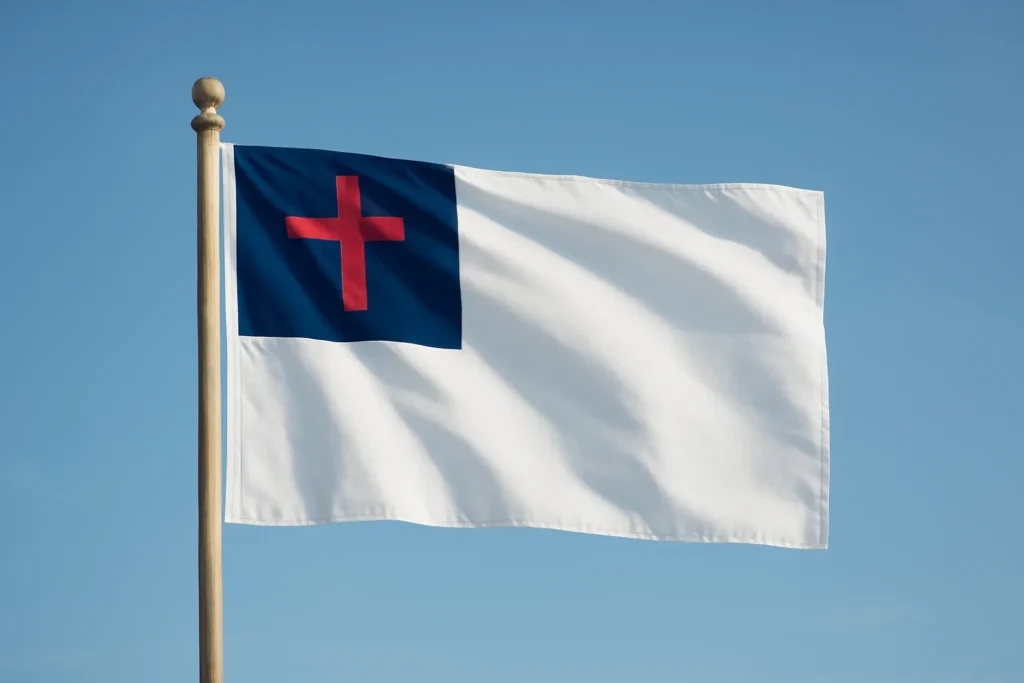
The Christian flag cross is a compact, highly recognizable emblem that appears on a white field with a blue canton containing a red cross. While its exact origins are debated in some circles, the symbol has become a staple in many churches, schools, and ministries around the world as a concise sign of Christian faith, discipleship, and heritage. In this article, we explore the meaning, history, and symbolism of the cross on the Christian flag, and we will use variations of the term to broaden the discussion—such as the cross on the Christian banner, the cruciform flag emblem, or the red cross within a blue canton.
Across denominations and traditions, the flag cross serves as a unifying visual cue. It is often employed in worship spaces, classroom settings, missionary events, and national or regional gatherings where Christians gather to denote a shared allegiance to the gospel. Although its design is simple, its theological depth invites reflection on who Christ is, what He has accomplished, and how believers live in light of that truth.
Meaning and Symbolism of the Cross on the Christian Flag
The cross symbol embedded in the blue canton is the central element of the Christian flag cross. Its arrangement on a white field with a blue canton communicates layered symbolism that has resonated for generations. Below are the core meanings embedded in the design, along with brief explanations for why these elements matter in Christian devotion and public witness.
The white field represents purity and moral integrity before God, as well as the peace that comes through faith in Christ. In Christian thought, white is frequently associated with cleansing and renewal—ideas tied to the forgiveness of sins and the new life that believers receive through the gospel. The white background also offers visual clarity, allowing the red cross to stand out and be read clearly by observers at any size or distance.
Blue Canton: Heaven, Truth, and the Church
The blue canton anchors the cross in a space that many interpreters associate with the heavens, divine truth, and steadfast faith. The canton acts as a sanctuary for the emblem, suggesting that the message of the cross is carried within a community of believers—the Church—while also pointing toward the eternal home that Christians anticipate. In practical terms, the blue field provides a distinct backdrop that makes the red cross highly legible, reinforcing the message when the flag is displayed in public or ceremonial settings.
Red Cross: Christ’s Sacrifice, Redemption, and Love
The red cross is the heart of the emblem. Red is traditionally linked to the blood of Christ and the sacrifice of atonement accomplished through His death on the cross. The cross itself is a universal sign of salvation, reconciliation, and divine love extended to humanity. In the context of the Christian flag cross, the red color underlines a narrative of salvation history—God reaching out to humanity, Christ’s atoning work, and the invitation to respond in faith.
Shape and Proportions: The Greek Cross and the Call to Holiness
The cross on the flag is commonly described as a cross with arms of equal length, often referred to in Christian art and theology as a Greek cross shape. The equal-armed form emphasizes balance, wholeness, and the completeness of the gospel. This cruciform form can be read as a reminder that the Christian life is a balanced call to worship, service, and sanctification—where belief and behavior are in harmony under Christ.
Placement and Visibility: A Public Witness
Because the cross sits within the blue canton, adjacent to the hoist edge on most renditions, the design is easy to recognize in parades, classrooms, or church lobbies. The deliberate placement communicates that the cross is central to the Christian life, while the white field and blue backdrop frame that central truth for clear public witness.
Cruciform Language and Theological Nuance
Beyond the literal colors, the language surrounding the cross on the flag invites believers to reflect on key theological ideas: grace, redemption, faith, and the call to witness. Some writers describe the emblem as a cruciform banner, highlighting the way the form of the cross mirrors the shape of Christian devotion: a life oriented toward Christ and outward toward the world in mission.
The exact origins of the Christian flag and the red cross within a blue canton have long been a subject of discussion among historians, theologians, and church archivists. While there are various legends and traditional narratives, a common thread is that the flag arose in the late 19th and early 20th centuries in the United States as a practical symbol for Christian education movements and church communities. The design is most often associated with the broader movement to establish a recognizable, portable banner for Christians that could be used in schools, Sunday schools, evangelistic campaigns, and religious conferences.
Origins and Early Adoption
The most widely recounted account attributes the flag’s design to advocates within the American Sunday School movement, with church leaders and educators seeking a simple, dignified emblem to represent the Christian faith in public settings. The blue canton and red cross within it were chosen to convey a sense of majesty and clarity, while the white field offered a neutral canvas suitable for display on a range of backgrounds. In many communities, the flag became a standard feature in Sunday school rooms and worship spaces, where it served both a didactic and devotional role.
As Christian communities adopted the flag across different regions and denominations, there emerged a common standard for the color palette (white field, blue canton, red cross) and the proportional relationship between the elements. This standardization helped the flag function as a shared sign of Christian identity across diverse groups, even as local congregations added their own tecniques for displaying the banner in processions, rallies, or school events.
Contemporary Reflections on History
In modern discussions, scholars and church historians often emphasize that the Christian flag cross is not tied to a single denomination or confessional framework. Rather, it represents a broad, ecumenical impulse toward a unified Christian witness. Some debates touch on how symbols are used in public life, the balance between tradition and adaptation, and how such emblems function in multi-faith or secular contexts. Yet many Christians continue to view the cross on the flag as a straightforward reminder of the gospel’s core claims and of the church’s calling to proclaim them publicly.
Key Milestones in the Symbol’s Diffusion
Late 19th to early 20th century: Emergence of the design in American Christian education circles; use in Sunday schools and church events grows.
Mid-20th century: The flag becomes a familiar symbol in churches across North America and parts of Europe and Asia, often used in youth programs, mission days, and evangelistic outreach.
Late 20th to early 21st century: The emblem appears in a variety of formats—print banners, digital graphics, classroom displays—while remaining a staple in many congregational settings.
Variations in Historical Accounts
It is important to note that different sources may present slightly different dates and attributions for the flag’s creation. Some accounts emphasize particular individuals or committees who promoted the symbol within their local churches, while others emphasize regional networks that helped spread the design. Regardless of a precise timeline, the central theme remains: a desire to provide a simple, memorable emblem that conveys core Christian truths about God, Christ, and faith communities.
Symbolism Across Denominations: A Shared Emblem with Diverse Meanings
While the cross on the Christian flag is widely recognized, its meaning has been interpreted through many denominational lenses. The emblem’s value often lies not in a single doctrinal statement but in its ability to act as a shared sign that facilitates worship, education, and collective identity. Below are some of the ways different Christian groups have related to the flag and its cruciform symbol.
Protestant Expressions: Unity in the Gospel
Among many Protestant churches, the flag cross is seen as a public affirmation of the gospel’s centrality. It symbolizes the belief that salvation is by grace through faith in Christ, rather than by human effort or ritual alone. The white field can be read as representing the purity of Christ's righteousness that believers are clothed with, while the blue canton can symbolize the church as the community called to bear witness to that truth.
Evangelical and Holiness Traditions: Mission and Discipleship
For evangelical communities, the red cross is often tied to the narrative of mission—Christ’s love extended to all nations. The flag can become a backdrop for mission celebrations, school events, and outreach efforts that emphasize sharing the good news of Jesus. The emblem’s clean lines and readable form make it effective in conveying a message of hope in both worship settings and public displays.
Mainline and Historic Churches: Continuity and Heritage
In historic or mainline communities, the Christian flag cross may be used to connect contemporary worship with a long thread of Christian tradition. The symbol can serve as a bridge linking generations—parents, pastors, teachers, and youth—through a shared emblem that carries memory and meaning. In this context, the cross also points to a narrative of continuity: God’s faithfulness across time and the church’s ongoing mission in the world.
In ecumenical settings, the cross on the flag can function as a unifying sign that transcends individual doctrinal lines. It becomes a common language for Christians from diverse backgrounds to gather for prayer, service, and learning. However, in some contexts, communities may choose to use alternative symbols or to contextualize the flag so that it respectfully reflects the local faith landscape.
Related Symbols and Variations: Broadening the Semantic Field
When discussing the Christian flag cross, it is helpful to acknowledge related symbols and variations that scholars and practitioners sometimes use to capture similar ideas. These variants can help readers appreciate the breadth of Christian iconography associated with banners and emblems.
Cross on a banner: A broader category referring to any flag or pennant bearing a cross as its central emblem. This can include different colors, shapes, or positions of the cross depending on tradition.
Cruciform banner: A term emphasizing the cross’s shape as a cruciform figure, underscoring the theology of the crucifixion and resurrection.
Greek cross symbolism: A cross with equal-length arms, which is a design element in many Christian flags and ecclesial banners.
Latin cross symbolism: Some discussions distinguish between crosses of different shapes; the Latin cross has a longer vertical arm, which can appear in other flag designs but is not the canonical form for the Christian flag cross.
Red cross iconography: In broader Christian iconography, red crosses or red cruciform marks appear in devotional art, missionary outreach materials, and youth programs to underscore sacrifice, love, and atonement.
These terms are used in scholarship and popular discourse to describe similar or overlapping concepts. For readers exploring church history or iconography, recognizing these variations helps prevent overgeneralization and fosters a nuanced understanding of how symbols communicate Christian faith in diverse contexts.
Iconography in Practice: Display, Use, and Care
The practical use of the cross on the Christian flag involves considerations of display, care, and context. The emblem is frequently used in educational settings, worship spaces, and community events because of its high visibility and straightforward message. The following notes offer a practical guide to how the symbol is commonly employed and maintained.
Display Guidelines
When displaying the flag cross, communities often ensure:
The flag is kept in good repair, with no frayed fabric or fading colors, to honor the symbol’s dignity.
Display places are chosen to avoid confusion with political or non-religious flags, maintaining a respectful separation when appropriate.
The flag is positioned at eye level or higher in ceremonial settings, allowing the cross to be clearly visible to the audience.
The flag is treated with reverence during worship or prayer times, reflecting its sacred significance for believers.
Educational Uses
In classrooms and Sunday schools, the emblem offers a tangible way to discuss core Christian beliefs. Teachers may pair lessons about the cross with Bible stories about Jesus’ life, death, and resurrection, encouraging students to connect symbol with Scripture and lived faith.
Creative Expressions
Across churches, artists and designers incorporate the cross emblem into banners, slides, and decorative elements that align with liturgical seasons or mission emphases. While keeping fidelity to the symbol’s core meaning, educators may adapt color accents or accompanying text to reflect themes such as grace, salvation, or witness.
Theological Reflections: What the Cross Teaches Believers Today
The red cross within the blue canton is more than a decorative mark; it invites ongoing reflection on the mysteries of Christian faith. The symbol prompts believers to examine the relationship between divine love, human response, and communal life. The following reflections highlight how the cross connected to the flag can guide discipleship and worship.
The Gospel Narrative in Visual Form
The emblem condenses a narrative best known from Scripture: God’s creation, humanity’s fall, Jesus Christ’s atoning death, resurrection, and the call to follow Him. In visual form, the cross becomes a compact catechism—an image that teachers and preachers can return to for teaching, memorization, and meditation.
Faith as Covenant and Community
The blue canton’s association with heaven and truth, together with the white field’s call to purity, underscores the Christian life as both an individual faith in Christ and a corporate covenant within a faith community. The emblem points believers toward personal devotion and communal responsibility—living out the gospel together in mission and service.
Hope and Redemption as Public Witness
In public settings—schools, parades, and community events—the flag cross communicates a message of hope, not mere allegiance. It invites observers to consider the redemptive work of Christ and the invitation to participate in God’s mission in the world, whether through acts of mercy, education, or evangelism.
Balance of Tradition and Transformation
The enduring presence of the Christian flag cross in congregational life reflects a balance between tradition and transformation. While the symbol has historical roots, its ongoing use in new contexts—sometimes with updated designs or inclusive messaging—suggests that Christian symbolism can remain meaningful while adapting to changing cultural landscapes.
Across centuries and across continents, the cross on the Christian flag has stood as a compact, visible articulation of Christian faith. Its white field, blue canton, and red cross combine to express a message that is simple to grasp yet rich in meaning: Christ’s love revealed in the cross, the purity of life offered to believers, and a hopeful call to live as a community that bears witness to the gospel. Whether viewed in a classroom, at a church ceremony, or during a community gathering, the emblem invites viewers to reflect on the central claim of Christianity: that in Jesus Christ, God has acted to redeem the world and to invite all people into fellowship with Him.
For readers who encounter the Christian flag cross for the first time, or for those seeking to explain it to others, the symbol can be a helpful entry point for deeper theological conversation. The cross is not simply a design; it is a compact theology printed on fabric. And as with many religious symbols, its meaning grows as it is used in worship, taught in classrooms, and lived out in acts of faith and service.
If you are designing materials, decorating a space, or preparing a lesson around the theme of the Christian flag cross, consider emphasizing the three core elements—the white field (purity and peace), the blue canton (heaven and truth), and the red cross (Christ’s sacrifice and grace). By doing so, you can help others encounter the emblem not merely as a symbol, but as a doorway into the story of salvation and the life of faith.










Leave a Reply