The year of Jubilee: meaning, laws, and Christian hope
The year of Jubilee: meaning, laws, and Christian hope
The year of Jubilee was a divinely commanded reset of Israel’s economic and social life every fiftieth year.
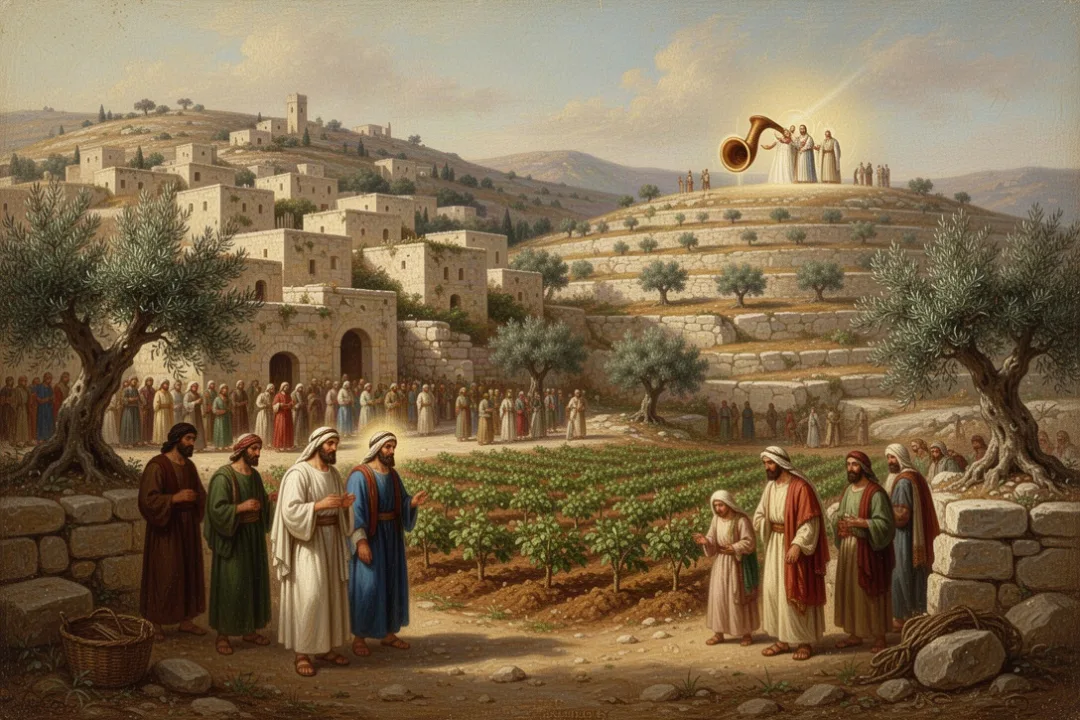
Its laws appear mainly in Leviticus 25, where God tells Israel to count seven cycles of seven years. After the forty-ninth year, the fiftieth year was to be set apart as a Jubilee, marked by the sounding of a ram’s horn and the proclamation of liberty throughout the land.
Jubilee was not simply a religious festival or a special holiday. It addressed land ownership, poverty, debt, servitude, rest, and family inheritance. The system recognized that economic hardship could become permanent unless society deliberately created a way back to stability.
The central instructions for Jubilee are found in Leviticus 25:8–55. Israel was to count seven periods of seven years, making forty-nine years. The next year, the fiftieth, was to be proclaimed holy and treated as a season of release.
The opening signal was the sound of a shofar, or ram’s horn, on the Day of Atonement. The announcement carried public and theological meaning: the people were not merely changing financial rules; they were acknowledging that God had authority over the land and the social order.
The main requirements included:
Proclaiming liberty to the inhabitants of the land.
Returning Israelite families to their ancestral property.
Releasing Israelite servants who had sold themselves because of severe poverty.
Allowing the land to rest from ordinary planting and harvesting.
Refusing to exploit an impoverished neighbor through excessive pricing or harsh treatment.
Jubilee built on the sabbatical year, which occurred every seventh year. During a sabbatical year, the land was also to rest, and Israel was not to farm it in the ordinary way. Jubilee extended that pattern of rest and release after seven sabbatical cycles.
Leviticus presents the land as belonging ultimately to God. Israelites were described not as absolute owners, but as residents and stewards who lived on land held under divine authority. That belief placed limits on what any individual could permanently do with property or with another member of the community.
Essential distinction: The Bible’s Jubilee legislation is not identical to every modern use of the word “jubilee.” Its specific laws concern Israel’s land, kinship, labor, and covenant life, while later religious and public traditions use the term more broadly.
How Jubilee addressed land, poverty, and servitude
The most distinctive economic rule concerned ancestral land. If an Israelite had to sell family property because of poverty, the sale was not meant to become permanent. The land was to return to the original family at Jubilee.
This rule reflected the importance of land in ancient Israel. Land was not merely an investment or a commodity. It provided a household’s food, livelihood, identity, and place within the covenant community. Losing it could threaten a family’s future for generations.
Because land was expected to return, its price was calculated according to the number of harvests remaining before Jubilee. A sale made shortly after Jubilee would involve more productive years and therefore carry a higher value. A sale made shortly before Jubilee would involve fewer harvests and should cost less.
That arrangement meant the transaction was understood as a temporary transfer of use, not an ordinary permanent sale. Leviticus instructs Israelites not to take unfair advantage of one another because the price should reflect the remaining years until restoration.
The legislation also addressed Israelites who had become so poor that they sold themselves to another Israelite. Such a person was not to be treated as a permanently owned slave. The text describes the person as a hired worker who could serve until the Jubilee, when release was required.
Family members and relatives were encouraged to redeem someone who had entered servitude through poverty before Jubilee arrived. The amount needed for redemption was tied to the remaining years of service, again treating the arrangement as limited and measurable rather than permanent.
These laws do not present a modern labor system, and they should not be read as though ancient servitude were identical to contemporary employment. The biblical text also contains different rules concerning non-Israelite slaves, a difficult aspect that must be acknowledged rather than ignored. Still, within Israel’s covenant community, Jubilee placed a limit on the permanent loss of a poor Israelite’s freedom and inheritance.
Jubilee also required attention to the condition of the poor during the years leading up to it. Leviticus warns against charging interest or making a profit from a fellow Israelite’s crisis. The purpose was not to eliminate every form of trade, but to prevent a neighbor’s poverty from becoming an opportunity for predatory gain.
The legislation assumes that poverty can happen even within a covenant community. Its response is not to blame every poor person or to treat wealth as proof of virtue. Instead, it creates legal boundaries around economic power and requires the community to preserve a path toward restoration.
Jubilee was more than a cancellation of debt
People often describe Jubilee as an ancient debt-cancellation program. That description captures part of its restorative purpose, but it is not fully precise. Leviticus 25 focuses explicitly on the return of land, the release of impoverished Israelites from service, fair valuation, and the land’s rest.
A separate law in Deuteronomy 15 describes the release of debts at the end of a seven-year period. That practice is related to Jubilee’s concern for economic mercy, but it is not the same timetable or legal passage. Careful readers should distinguish the seventh-year debt release from the fiftieth-year Jubilee.
The broader principle is clear: economic arrangements were not meant to erase human dignity or permanently destroy a family’s future. Jubilee interrupted the tendency of land, labor, and wealth to accumulate in ways that left vulnerable households with no realistic means of recovery.
Why Jubilee depended on Sabbath and covenant theology
Jubilee cannot be understood apart from the biblical idea of Sabbath. The weekly Sabbath declared that human beings were not created merely to work. The sabbatical year extended that principle to agriculture, and Jubilee applied it to property, labor, and social relationships.
Every seventh day, Israel was to stop ordinary labor. Every seventh year, the land was to rest. After seven groups of seven years, the people were to release land and servants. The pattern taught that time itself belonged to God and could not be controlled entirely by human production.
The land’s rest also required trust. Farmers could not rely on ordinary planting and harvesting during the sabbatical year or Jubilee. Leviticus 25 addresses the natural question of what the people would eat by promising sufficient provision from the preceding years.
This does not mean the system was economically effortless. Resting farmland, limiting sales, releasing servants, and protecting the poor would require planning and sacrifice. The commands challenged the assumption that security comes from maximizing production and retaining every possible asset.
Jubilee also expressed a covenant identity. Israel had been brought out of Egypt, so the people were not to recreate endless forms of bondage among themselves. Leviticus connects the release of Israelite servants with God’s deliverance and says that the Israelites belonged to God.
That claim established a limit on human ownership. An impoverished Israelite might enter service, but could not be treated as an ordinary possession without regard for the person’s relationship to God. Freedom was grounded in belonging to God, not merely in economic independence.
The land principle worked in a similar way. If God was the ultimate owner, wealthy families could not regard permanent accumulation as an unrestricted right. Property remained subject to divine commands, family inheritance, and the needs of the wider community.
Jubilee therefore joined several ideas that are often separated in modern discussions:
Worship: the year began with a sacred proclamation connected to the Day of Atonement.
Justice: the rules protected vulnerable families from permanent economic collapse.
Ecology: the land received regular periods of rest.
Family stability: ancestral property could return to its original household.
Freedom: poverty was not supposed to lead to permanent servitude within Israel.
Trust: the community had to depend on God rather than treating endless production as its only security.
The system also explains why the biblical prophets often connected worship with treatment of the poor. Religious observance could not be separated from economic conduct. A society might maintain ceremonies while violating the deeper purposes of justice, mercy, and release.
Did ancient Israel actually observe the year of Jubilee?
The Bible gives the Jubilee laws, but it does not provide an unambiguous historical record showing that Israel regularly carried them out. The absence of a clear record has led to continuing discussion among biblical scholars.
Some interpreters view Jubilee as legislation that was intended for actual social practice, even if the surviving historical books do not describe its implementation in detail. Others see it as an idealized legal vision that expressed what Israel’s society should become, whether or not rulers and landowners consistently followed it.
The prophetic books offer evidence that Israel often failed to honor related responsibilities. The prophets criticize exploitation, the seizure of land, the oppression of debtors, and the mistreatment of poor people. Those criticisms suggest that the biblical tradition knew the difference between the covenant ideal and social reality.
One especially relevant passage is Isaiah 61:1–2, which speaks of good news for the poor, freedom for captives, comfort for the brokenhearted, and the proclamation of the Lord’s favor. The language resembles Jubilee themes, although Isaiah does not simply reproduce every rule from Leviticus 25.
In Luke 4:16–21, Jesus reads from Isaiah in the synagogue and applies the passage to his own ministry. He announces good news to the poor, freedom, recovery, and the Lord’s favor. Christians have often understood this scene as a Jubilee-shaped declaration of Jesus’ mission.
The connection should be handled carefully. Luke does not state that Jesus was instituting a literal fiftieth-year land redistribution throughout Galilee. Instead, the passage uses Jubilee and prophetic imagery to describe release, healing, restoration, and God’s saving action.
Other New Testament passages also echo the moral direction of Jubilee. Jesus warns against treating wealth as ultimate security, teaches concern for the poor, and calls his followers to forgive debts and practice generosity. The early Christian community in Acts shares resources so that members in need are not abandoned.
These texts do not create a simple economic blueprint for every modern society. They do insist that Christian faith has consequences for how people treat possessions, workers, debtors, strangers, and the poor. Jubilee remains a powerful biblical lens for asking whether economic structures permit restoration or make disadvantage permanent.
What the year of Jubilee means for Christians today
For Christians, the year of Jubilee can be understood on several levels. It is first a biblical institution given to ancient Israel. It is also a picture of God’s concern for freedom and restoration. In the ministry of Jesus, its themes become part of a wider announcement of good news for people living under spiritual, social, and material burdens.
Christian traditions differ in how directly they apply the Jubilee laws. Some read them primarily as part of Israel’s unique covenant and legal history. Others emphasize their continuing ethical force, especially the concern for debt, land concentration, poverty, labor exploitation, and the possibility of a fresh start.
The most responsible application does not claim that a modern government can simply copy every ancient rule. Ancient Israel had a particular land system, tribal inheritance structure, and covenant identity that modern nations do not share. At the same time, the principles behind the rules can still raise serious questions about public and private responsibility.
Those questions include:
Can people recover from financial hardship, or does debt follow them indefinitely?
Do housing and land policies preserve family stability or make displacement permanent?
Are workers treated as people with dignity or merely as replaceable costs?
Does wealth create obligations toward neighbors in need?
Do religious communities offer practical restoration as well as spiritual language?
Are natural resources treated as possessions without limits or as gifts requiring stewardship?
In the Roman Catholic tradition, a Jubilee or Holy Year is a special period dedicated to pilgrimage, repentance, mercy, prayer, and renewal. This practice draws inspiration from the biblical Jubilee but is not the same institution as the land-and-servitude legislation in Leviticus.
The Catholic Holy Year traditionally includes opportunities for reconciliation, pilgrimage, acts of charity, and the Church’s teaching about indulgences under stated conditions. Those observances express spiritual renewal rather than a literal return of ancestral land in the ancient Israelite sense.
Other Christian communities may use Jubilee language for revival meetings, anniversary celebrations, debt relief campaigns, or initiatives serving the poor. Such uses can be meaningful when they retain the biblical themes of release, mercy, restoration, and responsibility, rather than using the word only as a label for celebration.
A practical reading: Jubilee asks faith communities to pair forgiveness and worship with concrete concern for people who are burdened by poverty, debt, displacement, exclusion, or unfair labor conditions.
How Jubilee differs from modern jubilee celebrations
In ordinary English, a jubilee may mean an anniversary that marks a long period of service or reign. A community may celebrate a church’s jubilee, a monarch’s jubilee, or a major organizational milestone. These celebrations share the idea of a significant cycle of time, but they do not automatically include the biblical requirements of release and restoration.
The biblical word is connected with the sounding of the horn that announced the special year. Over time, the term came to describe seasons of freedom, pardon, renewal, and public celebration. Its modern uses can therefore preserve part of the original meaning while leaving out the legal structure involving land and servants.
When a modern organization calls an event a jubilee, useful questions include:
What is being restored? Is the event only commemorating the past, or does it help people repair damaged relationships and circumstances?
Who benefits? Does the celebration include people who are poor, displaced, indebted, or excluded?
What kind of freedom is offered? Is there practical assistance, forgiveness, fair treatment, or only symbolic language?
What limits are placed on power? Does the occasion challenge exploitation, or does it simply praise success?
These questions preserve the ethical weight of Jubilee. A biblical Jubilee was not designed to make the powerful feel honored while leaving the vulnerable unchanged. It interrupted normal arrangements so families could recover, servants could be released, and the land could rest.
The year of Jubilee ultimately presents a vision of time directed toward renewed relationships rather than permanent accumulation. It reminds readers that land, labor, money, and social status are not the whole measure of human life. A just community must make room for return, repair, forgiveness, and a future beyond present hardship.
Its message remains demanding because restoration has a cost. Those with land, capital, influence, or control over employment may need to surrender some advantage so that others can regain stability. That tension is central to the biblical vision: freedom is not only the release of the oppressed, but also a call for the powerful to accept limits.
Read in its ancient setting and applied with care, Jubilee offers a durable framework for thinking about economic justice, spiritual renewal, environmental responsibility, and hope. It does not provide a shortcut around difficult policy questions. It does provide a moral test: a society should not treat preventable poverty and permanent exclusion as inevitable.
Frequently asked questions
Was the year of Jubilee every 49 or 50 years?
The Jubilee was proclaimed in the fiftieth year, after seven completed cycles of seven years. Since the forty-ninth year concluded the seventh cycle, the following year was designated the Jubilee. Biblical interpreters have discussed how this calendar worked alongside the ordinary sequence of years, but Leviticus 25 clearly presents the special year as the fiftieth year.
Did Jubilee cancel every debt in ancient Israel?
Not exactly. Leviticus 25 emphasizes the return of ancestral land, release from Israelite servitude, fair valuation, and rest for the land. Deuteronomy 15 describes a separate release of debts at the end of a seven-year period. Both laws express concern for the poor, but they should not be treated as one identical rule.
Is the Christian Holy Year the same as the biblical Jubilee?
No. The Christian Holy Year, especially in Catholic tradition, draws inspiration from biblical themes such as repentance, mercy, freedom, and renewal. It does not reproduce the ancient Israelite rules requiring ancestral land to return or Israelite servants to be released. It is a later religious practice with its own observances and meaning.
Where does Jesus connect his ministry with Jubilee?
The clearest connection appears in Luke 4:16–21, where Jesus reads from Isaiah about good news for the poor, freedom, healing, and the Lord’s favor. He presents these promises as fulfilled in his mission. The passage uses Jubilee-shaped prophetic language rather than announcing a literal fiftieth-year land redistribution.








Leave a Reply