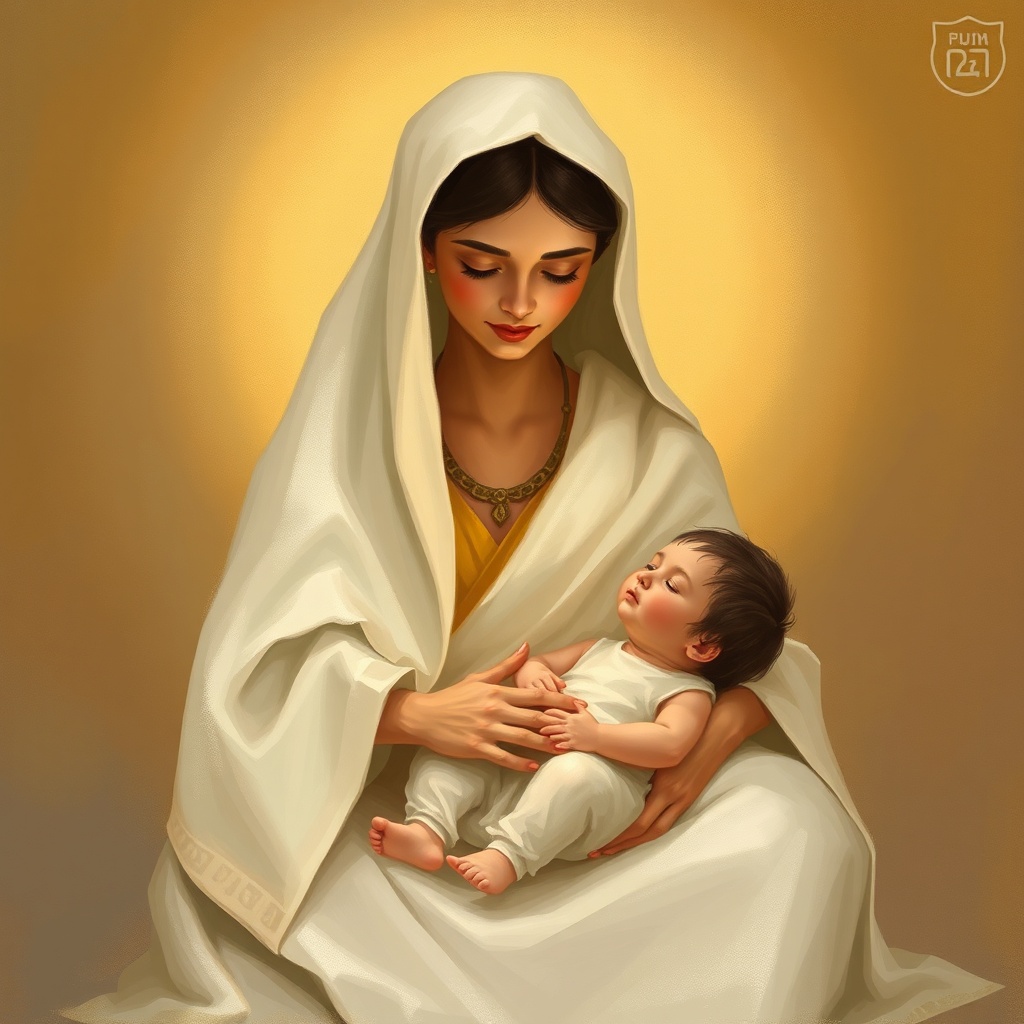
Puah: The Courageous Midwife Who Defied Pharaoh to Save Hebrew Infants
📅 13th century BCE, during the early period of Israelite captivity in Egypt · 📜 In Hebrew, 'Puah' (פועה) is often associated with 'splendid' or 'beautiful', possibly implying brightness or fruitful vitality.
PuahMidwifeCourageFaithExodus
But the midwives feared God and did not do as the king of Egypt commanded, but let the male children live.— Exodus 1:17
Puah was an Israelite midwife serving Pharaoh in Egypt during a time when Pharaoh had issued a decree to kill all male Hebrew infants to suppress the Israelite population. When Hebrew women gave birth, Puah and another midwife secretly disobeyed Pharaoh’s orders, fearing God more than the king. They allowed Hebrew boys to live, citing that Hebrew women were vigorous and gave birth before the midwife arrived. Their courageous act saved many lives and demonstrated faith and moral bravery in the face of royal tyranny. God commended their civil disobedience, and He rewarded them with families and favor. Their story highlights themes of divine justice, advocacy for the vulnerable, and the importance of conscience-driven action. Although unheralded by many, their silent bravery played a vital role in God's salvation plan through Moses’ lineage and Israel's eventual deliverance.
🏛️ Cultural & Historical Context
In ancient Egypt, women’s roles were primarily domestic, but midwives held significant influence in childbirth and healthcare. Their positions allowed them to observe, assist, and often influence birth outcomes and societal health. Egyptian society was hierarchical, emphasizing obedience to authority; however, women like Puah found ways to act morally within oppressive systems. The Hebrew midwives' story reveals a tension between obedience to earthly rulers and divine commandments, showcasing how individuals navigated cultural expectations while upholding ethical principles. Their actions reflect the complex dynamics of gender, obedience, and moral conviction in an ancient patriarchal context.
Puah's family background is not detailed in the Bible. She is identified as one of the Hebrew midwives serving Pharaoh’s command. Her specific husband is unnamed, and her children, if any, are not recorded in Scripture.
✨ Character Traits
CourageFaithfulnessDisobedience to unjust authorityRespect for human life
⛪ Theological Significance
Puah exemplifies the biblical theme of civil disobedience rooted in reverence for God's commandments over human authority. Her brave defiance foreshadows the importance of moral courage and trusting divine justice amid oppressive regimes. Her act of saving Hebrew infants contributed to God's ongoing plan for deliverance through Moses, emphasizing how faithful acts can serve divine purposes. Puah's story underscores that God's providence often works through quiet acts of righteousness, inspiring believers to prioritize divine law over unjust human orders. Her example encourages faith in God's sovereignty and the importance of advocating for life and justice.
📖 Lessons for Today
📖 Lesson 1
Standing up against injustice requires moral courage and faith in God’s higher authority.
📖 Lesson 2
Small acts of obedience to God’s commandments can have profound impacts on history and salvation.
📖 Lesson 3
Trust in divine justice often entails risking personal safety, as demonstrated by Puah’s actions.
🔗 Connections to Other Biblical Women
Puah's story connects with other biblical women who displayed courage and moral integrity, such as Shiphrah, her unnamed midwife partner, and later figures like the Hebrew women in Exodus and the prophetic women who challenged kings. Unlike women who are primarily defined by their reproductive roles, Puah exemplifies active resistance and faith. Her silent defiance complements stories of women like Deborah or Esther, who used their influence for justice, contrasting with women who passively endured oppression, highlighting diverse responses to injustice in biblical narratives.
Puah was an Egyptian Hebrew midwife who, along with Shiphrah, disobeyed Pharaoh’s command to kill Hebrew male infants, saving many lives during their service (Exodus 1:15-21).
Why is Puah considered an important biblical figure?
She exemplifies moral courage and civil disobedience rooted in reverence for God’s law, playing a crucial role in the salvation history of Israel.
What can modern readers learn from Puah’s story?
Her story teaches the importance of standing up against unjust authority with faith and moral conviction, even when facing risks to personal safety.
✨ Did You Know?
The name Puah is one of the few biblical women explicitly identified by name as midwives. Historically, her story underscores the significance of unsung heroes who quietly influence history through acts of faith and bravery, illustrating how small deeds can have divine importance.

 Por Mario Acevedo