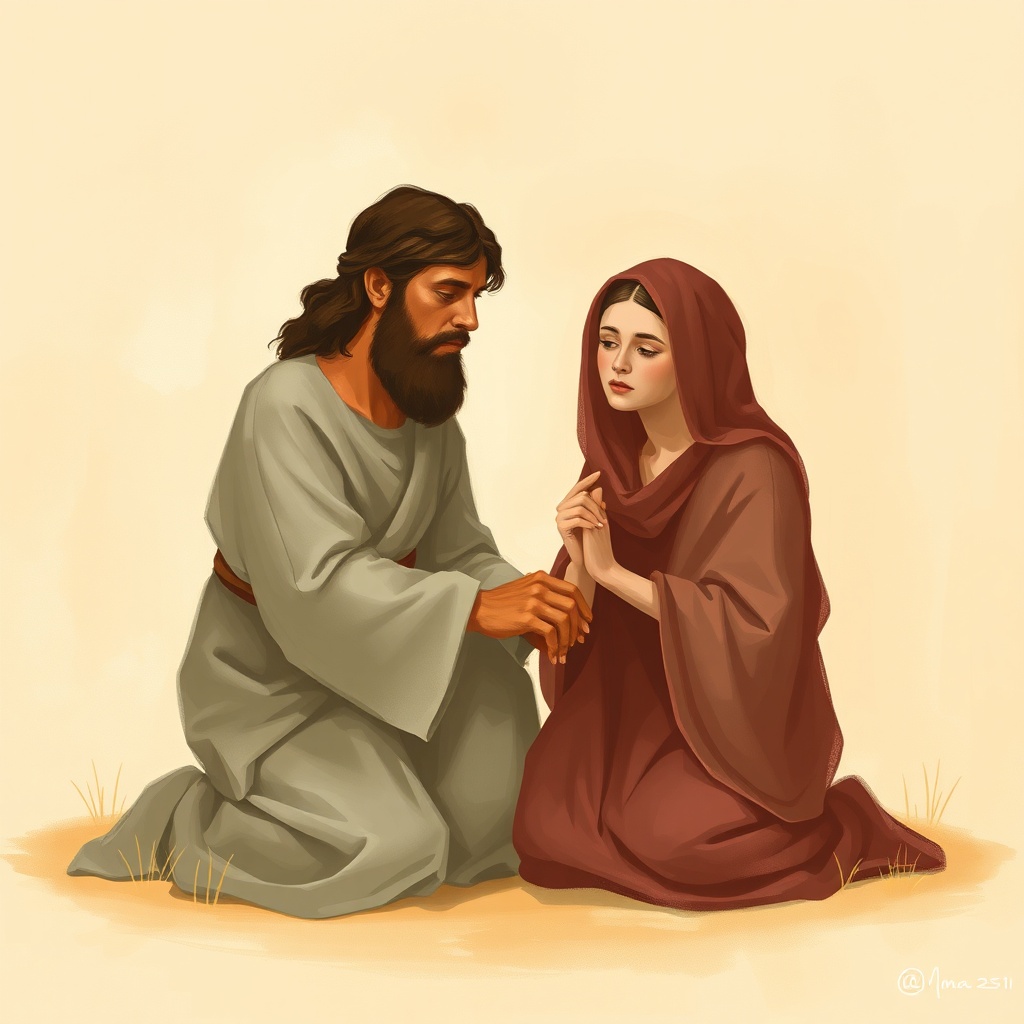
Bilhah: The Servant Woman and Matriarch in the Bible
📅 circa 18th-17th century BCE, Patriarchal Period · 📜 Bilhah's name in Hebrew (בִּלְהָה): possibly meaning 'bashful' or 'timid,' reflecting her subtle but pivotal role in Israel's lineage.
BilhahRachelIsaacPatriarchsWomen of the Bible
And she conceived again, and bore Jacob a second son. Then Leah said, 'I am happy, for the daughters will call me blessed.' So she called his name Naphtali.— Genesis 30:6
Bilhah entered biblical history as the servant of Rachel, Jacob’s beloved wife. When Rachel remained barren, she gave Bilhah to Jacob as a concubine to bear children on her behalf, following the customs of that era. Bilhah responded diligently, and her sons Dan and Naphtali became key patriarchs of two Israelite tribes. Her story highlights themes of longing, patience, and divine providence in a patriarchal context. Despite her servant status, Bilhah's contribution was crucial in Israel's tribal foundation, illustrating how God's plans often include the overlooked and underestimated. Her involvement exemplifies the complex family dynamics and the divine purpose woven into the lineage of Israel, emphasizing God's sovereignty and grace even through unconventional means.
🏛️ Cultural & Historical Context
In ancient Near Eastern cultures, women’s roles were largely centered around family, fertility, and obedience. Servants like Bilhah were integral to household and social arrangements, often serving as surrogates to fulfill familial desires for children. The practice of using concubines reflected the societal value placed on lineage and descendants, essential for inheritance and social status. Despite their lower social standing, servant women could influence history significantly, as Bilhah’s children became founding tribes of Israel. The era emphasized patriarchal authority, but biblical narratives subtly acknowledge the importance of women’s contributions, sometimes highlighting their resourcefulness and faith in divine plans.
Bilhah was a servant of Rachel, married to Jacob, and the mother of two of the twelve tribes: Dan and Naphtali. She was also sister to Zilpah, another of Jacob's concubines. Her parents are not mentioned in the Bible.
✨ Character Traits
LoyaltyHumilityFertilityEndurance
⛪ Theological Significance
Bilhah’s story underscores God's capacity to work through imperfect and unexpected circumstances. As a surrogate mother, her role illustrates themes of divine providence and divine choice beyond societal norms. Her significance in salvation history is seen in her contribution to the lineage of the twelve tribes, which foreshadows the fulfillment of God's promises to Israel. Her story invites reflection on humility, obedience, and God's inclusion of all people in His divine plan, demonstrating that divine grace often operates through humble and overlooked individuals in history.
📖 Lessons for Today
📖 Lesson 1
Humility and obedience can be powerful tools in fulfilling God’s purpose, even if one’s role seems minor or overlooked.
📖 Lesson 2
God’s plans often include people from unexpected places—servants and marginal figures can be part of His divine plan for salvation.
📖 Lesson 3
Patience and faith in God’s timing are essential during times of waiting or uncertainty.
🔗 Connections to Other Biblical Women
Bilhah's narrative shares themes with other biblical women like Hagar and Zilpah, who were also servant women or concubines. Unlike Sarah or Rebecca, Bilhah's role reflects a more subordinate status yet demonstrates how God’s plans transcend social hierarchies. Her story contrasts with women who held more prominent roles, yet highlights that divine purpose can involve those on the margins, emphasizing God's inclusive grace.
Bilhah was a servant of Rachel and a surrogate mother to Jacob, bearing him two sons—Dan and Naphtali—who became biblical tribes (Genesis 29-30).
What is the significance of Bilhah’s children?
Her children, Dan and Naphtali, are among the twelve tribes of Israel, making her an important matriarchal figure in Israel’s foundation.
What can we learn from Bilhah’s story?
Her story teaches that God’s plans often include humility and the overlooked. God works through all individuals, regardless of status, to accomplish His divine purposes.
✨ Did You Know?
The name Bilhah may be linked linguistically to words meaning 'to dance' or 'joyful,' which is ironic given her submissive role. Additionally, her lineage is directly connected to the tribe of Dan, whose territory was famously associated with the legend of the Levite's concubine and the subsequent civil war, highlighting her complex, far-reaching legacy.

 Por Mario Acevedo