Old Testament Women | Deuterocanonical Women | Symbolic Figures
Ichabod's Mother: The Tragic Woman of 1 Samuel 4
📅 12th century BCE, during the early Israelite monarchy · 📜 "Ichabod" means "Where is the glory?" in Hebrew, reflecting the loss of God's presence and glory.
IchabodSamuelBethlehemGod’s glory
And when she heard the news that the Ark of God was taken, she died, mourning and grieving with deep sorrow. (1 Samuel 4:19)— 1 Samuel 4:19
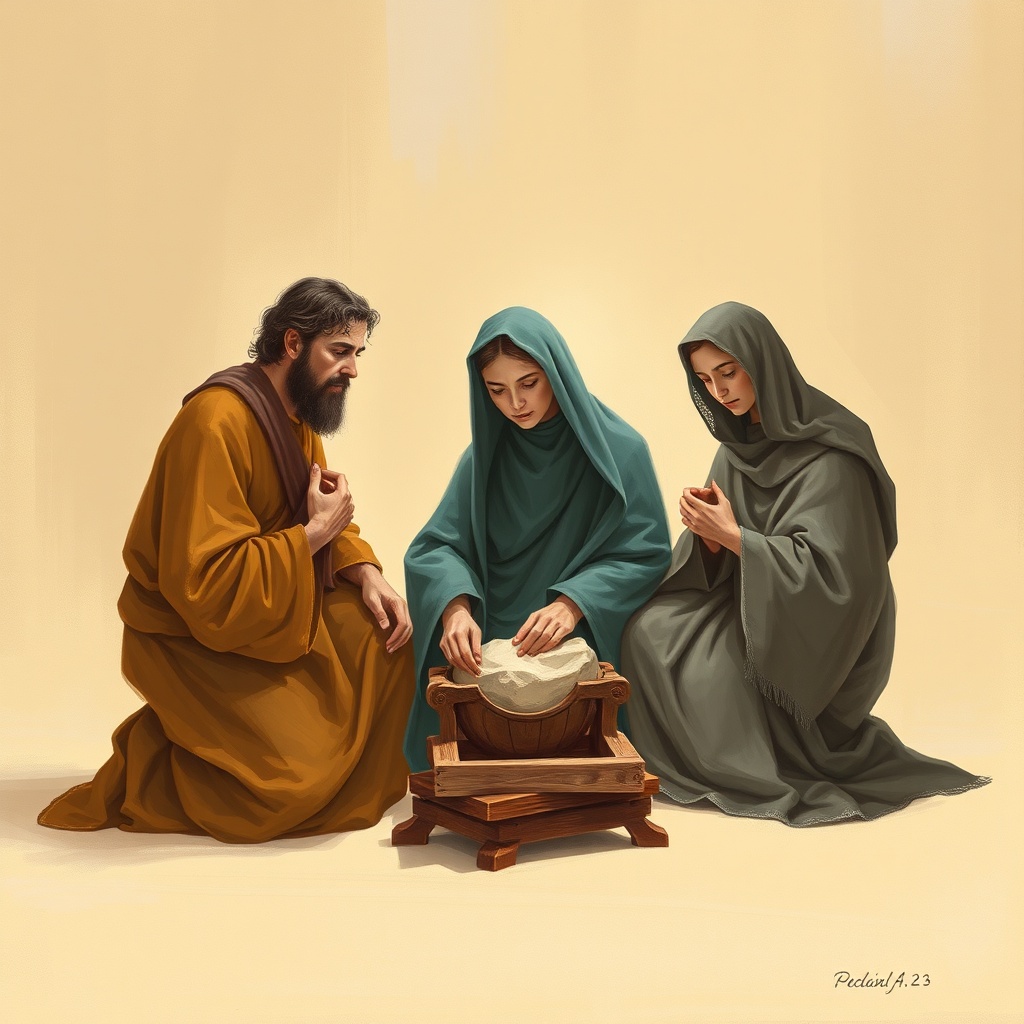
Ichabod’s mother remains unnamed in Scripture, mourning her husband Phinehas and her son Ichabod, after the Philistines captured the Ark of the Covenant. When she learned of her son's death and the Ark's capture, she went into labor, giving birth to Ichabod. Her subsequent grief symbolizes the profound loss of God's presence among Israel, as the Ark's absence marked a pivotal moment of national crisis. Her story underscores the devastating consequences of Israel's disobedience and serves as a cautionary tale about the importance of revering God's glory. Though her name is not recorded, her unwavering grief reflects the human cost of divine judgment, making her a poignant figure of sorrow and spiritual reflection amid Israel's tumultuous history.
🏛️ Cultural & Historical Context
During her time, women held roles centered around family, religious observance, and community support. The priestly family, to which she belonged, played a vital role in Israelite worship and leadership. Women's identities were often defined by their family roles, yet their stories rarely reached the biblical narrative’s forefront. In times of crisis, women’s responses—mourning, nurturing, support—highlight societal values. Her story also reflects the profound impact of national religious decline on individuals, emphasizing the intertwined nature of personal and communal faith. Her grief exemplifies the societal expectation of women to mourn and uphold religious faith in the face of divine judgment, illustrating their central role as emotional and spiritual anchors.
She was the wife of Phinehas, son of Eli the high priest; mother of Ichabod; related to the priestly family line, connected to Eli's household, with her story intertwined with the priestly and prophetic traditions.
✨ Character Traits
grief-strickenfaithfulmourningresigned
⛪ Theological Significance
Ichabod’s mother’s story highlights the devastating consequences of Israel’s rejection of God's presence. Her grief signifies the loss of divine favor and the importance of divine glory in national identity. Her sorrow underscores that disobedience has lasting spiritual and communal repercussions. Her narrative prompts believers to consider the centrality of God’s presence and the need for reverence and obedience. Her silent yet profound suffering demonstrates that God's glory is paramount, and when lost, it affects not only individuals but entire nations. Her story serves as a sobering reminder of the importance of maintaining a covenant relationship with God, emphasizing divine honor over human pursuits.
📖 Lessons for Today
📖 Lesson 1
Prioritize God’s glory above personal or national ambitions. Disobedience can lead to spiritual loss and despair.
📖 Lesson 2
Grief is a natural response to loss, but it also calls for reflection on our relationship with God. Trust in His sovereignty amidst difficulties.
📖 Lesson 3
Our actions impact future generations. Reverence for God’s presence should guide our decisions and conduct.
🔗 Connections to Other Biblical Women
Ichabod's mother contrasts with women like Hannah, who rejoiced in God's blessing, and Ruth, who showed faithfulness and hope. Unlike these women, her story reflects loss and mourning, emphasizing the diverse spiritual responses women have in Scripture. Her silent grief underscores the theme of divine judgment, contrasting with women who celebrate divine provision. Together, these women highlight different facets of faith, obedience, and trust in God's plan across biblical narratives.
Her name is not recorded, possibly emphasizing her role as a mourning figure representing national loss. Her story focuses on her grief rather than personal identity, highlighting the collective impact of Israel’s disobedience.
What does the name «Ichabod» signify?
The name «Ichabod» means «Where is the glory?» in Hebrew, symbolizing the absence of God’s presence following the Ark’s capture and Israel’s spiritual decline.
What can we learn from her story?
Her story teaches the importance of reverence for God’s glory and the consequences of spiritual disobedience. It also reminds believers to remain faithful and trust in God’s sovereignty during times of loss.
✨ Did You Know?
The name "Ichabod" became a symbol of national disgrace in Hebrew culture, later used in literature to denote loss or shame. Interestingly, archeological evidence suggests that the priestly family lineage, including the Philistine captors, played roles in shaping early Israelite history, linking her story to broader historical narratives.

 Por Mario Acevedo