Understanding the Subject: What Do Christians Mean by Demons?
In Christian thought, the idea of demonic beingsweaves through biblical narrative, church history, and lived spiritual practice. The term demons is used to describe powerful, personal agents of evil who oppose God, seek to undermine human flourishing, and tempt people away from right relationships with the Creator. This broad category is not a single uniform phenomenon in Scripture or tradition; rather, it includes unclean spirits, fallen angels, and other entities that function as adversaries to God’s purposes. For many believers, the topic of demonic power is not merely a matter of curiosity but a call to discernment, vigilance, and faithful response through Christ.
This article surveys biblical sources, theological reflections, and practical avenues for engaging with spiritual warfare in a way that is grounded in Scripture, responsive to pastoral need, and mindful of Christian unity. It is not a manual for sensationalism but a map of how Christians have understood and engaged with the reality of spiritual opposition across centuries.
Biblical Foundations: Demonology in the Old and New Testaments
Old Testament glimpses of hostile spiritual powers
The Old Testament contains fewer explicit discussions of personal demons compared with the New Testament, but it does present a world in which spiritual forces operate behind the scenes. In several books, hostile powers and malevolent spiritual personalities are assumed to exist, sometimes depicted as functioning behind idolatrous practices or as sources of calamity. For example, the prophets often confront false gods and spiritual claims that stand in opposition to the one true God. In this broader biblical frame, idolatry and spiritual deception become channels through which demonic influence can work, even if the biblical text does not always name individual demon personalities by a single term.
Christians have historically read these texts as laying a groundwork for a robust, if complex, understanding of spiritual opposition. The Old Testament prepares the stage for New Testament revelations about the person and work of Jesus, who would decisively address the problem of evil by anchoring it to God’s sovereignty, justice, and saving power.
New Testament portraits: Jesus, the apostles, and the exorcism ministry
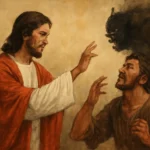
In the New Testament, demons appear as personal beings who oppose the reign of God and oppress or tempt people. Jesus’ ministry is marked by a distinctive pattern: he proclaims the kingdom, heals the sick, and confronts demonic power directly. In several Gospel scenes, Jesus frees people by rebuking, commanding, or expelling evil spirits, demonstrating that his authority over the spiritual realm surpasses any other power in creation. The exorcisms are not merely dramatic miracles; they are signs that the Messiah has come to defeat the powers that enslave humanity.
The Gospels use a range of terms to describe these beings, including demon, unclean spirit, and evil spirit. The word “legion” in the story of the Gerasene demoniac (Mark 5:1-20; Luke 8:26-39) points to a collective, organized spiritual oppression, while individual cases emphasize Jesus’ personal ministry to those who suffer. Across the Gospel accounts, Jesus’ authority is central: he speaks, and the demons obey; he restores dignity and community to those who are afflicted; and he reveals—through healing and deliverance—that the kingdom of God is breaking into history with transformative power.
Names, Classifications, and Theological Frames
Types and categories in biblical language
The biblical material presents a spectrum of demonic realities, without always offering a fixed taxonomy. Common categories include:
Unclean spirits—beings that oppress individuals or communities and are associated with ritual and moral pollution in the classical Jewish world.
Demonic powers or principalities—a broader description Paul later uses to speak of hostile spiritual forces range-wide, sometimes connected to social and political structures (Ephesians 6:12).
Fallen angels—angels who joined in rebellion against God and became agents of harm in human history, a framework the New Testament inherits from Jewish apocalyptic and early Christian tradition.
The diversity in language signals a broader reality: these beings are real in the sense that they influence human life, but they exist under God’s sovereignty and are ultimately subject to Christ’s authority.
Key biblical figures and motifs
Across the biblical storyline, certain motifs recur to illuminate the shape and purpose of demonic activity. These include:
Opposition to the divine mission of Jesus and the church
Temptation and deception as tools used to derail human flourishing
Oppression, possession, or spiritual bondage experienced by individuals and communities
Authority-based confrontations in which Jesus or his apostles command demons to depart
The recurring pattern is not merely dramatic but theological: the power of darkness is real, but it is not ultimate. Christians understand spiritual warfare as participation in the victory of Christ, accomplished through the gospel and sustained by the Spirit.
Jesus and Exorcism: The Gospels as a Classroom for Spiritual Authority
The ministry of Jesus provides some of the clearest biblical data on how Christians should understand and respond to demonic power. Exorcism narratives display a consistent logic: demons recognize Jesus’ authority, Jesus speaks with a commanding voice, victims are liberated, and witnesses respond with worship, awe, or mission.
Patterns of Jesus’ confrontations with demonic power
Authority through speech: Jesus often commands the demon to depart with a simple imperative, and the demon obeys immediately.
Public and private deliverance: Exorcisms occur both in public settings and in private encounters, illustrating that spiritual warfare touches individual lives as well as communities.
Transformation of persons: Exorcism is inseparable from healing, restoration of social ties, and the restoration of dignity to those who are marginalized.
The narratives emphasize that the power used against demon oppression is not human prowess or magical technique but the authority of the Son of God. This is a foundational claim for later Christian understandings of deliverance and spiritual warfare.
Apostolic Authority and Spiritual Warfare in the Early Church
The early Christians inherited and reframed Jesus’ exorcistic ministry. The apostolic church taught that Christ’s resurrection and enthronement furnished believers with real spiritual authority. The Epistles explain how Christians must conduct themselves in a world where invisible powers operate, urging steadfastness in faith, hope, and love while recognizing the ongoing reality of spiritual opposition.
Paul’s framework for spiritual conflict
The Apostle Paul does not spend chapters detailing every kind of demon, but he does offer a robust framework for understanding spiritual warfare. In Ephesians 6, believers are described as putting on the armor of God, standing firm against the schemes of the devil. The imagery includes truth, righteousness, the gospel of peace, faith, salvation, and the word of God as a defensive and offensive toolkit. In this lens, spiritual warfare is not primarily about sensational phenomena but about living in obedience to Christ in a world saturated with moral and spiritual challenges.
Where Paul says to «take up the shield of faith» and to «pray in the Spirit,» the emphasis is continuous discernment and reliance on divine assistance.
The church is urged to engage in prayer for one another, to grow in maturity, and to resist deception that can come through moral compromise or false teaching.
Classical and Contemporary Notions of Deliverance and Spiritual Warfare
Across history, Christians have understood deliverance in varied ways. In some eras, deliverance ministry was centralized in a formal rite and a recognized order of exorcists. In other periods and communities, deliverance is pursued through pastoral care, prayer, fasting, and spiritual discernment, with a careful emphasis on the dignity and autonomy of the afflicted person. Across these expressions, the consistent aim is to acknowledge the reality of spiritual opposition while pointing to Christ as the source of ultimate liberation.
Discernment: Identifying whether distress arises from spiritual oppression, personal sin, natural illness, or social factors.
Compassionate care: Providing safe, respectful, and comprehensive support for those who seek relief.
Christ-centered authority: Centering every approach on the reality of Jesus’ victory over the powers of darkness.
In many Protestant and evangelical contexts, deliverance ministries emphasize prayer, confession, accountability within a community, and the sustaining grace of the Holy Spirit. Catholic and Orthodox traditions have long incorporated structured rites of exorcism, especially for cases described as possession, while remaining vigilant against misapplication or sensational claims.
Demons in Christian History: Tradition and Theological Reflection
The church’s understanding of demonic beings has evolved through the voices of theologians, pastors, and mystics. Early church fathers wrestled with how to interpret the presence of evil in a world created good by God. They argued that demons are real intelligences who oppose God but are subject to his authority. Over the centuries, theologians sought to clarify the difference between possession, oppression, temptation, and moral failure, recognizing that not every disaster or illness is a demonic problem, yet acknowledging that spiritual powers can contribute to human suffering.
Patristic and medieval perspectives
Figures such as Augustine and Irenaeus helped shape a framework in which demons were real, intelligent beings who conspire against the divine plan. The monastic and sacramental traditions developed rites, disciplines, and practices that aimed to protect the soul and to assist those under spiritual burden.
In many Western Christian traditions, the rise of the modern era brought renewed attention to spiritual warfare as part of mission and personal discipleship. The ongoing debate about the nature and location of demonic activity—whether it primarily afflicts individuals, systems, or cultures—reflected broader questions about the interplay between spiritual realities and social life.
Modern Expressions and Contested Areas
In contemporary Christianity, discussions about demons and spiritual warfare span a wide spectrum. On one end are careful, Scripture-grounded approaches that emphasize discernment, pastoral care, and Christ-centered authority. On the other end are sensational or dramatic portrayals that risk trivializing real suffering or equating every misfortune with demonic influence.
Charismatic and Pentecostal perspectives
Within charismatic and Pentecostal communities, the language of deliverance remains vibrant. Advocates emphasize the ongoing activity of the Holy Spirit in liberating people from evil influences, as well as the necessity of personal repentance and communal accountability. In these settings, spiritual authority—grounded in the name and power of Jesus—guides exorcism or deliverance sessions, with care taken to maintain the dignity and safety of participants.
Catholic, Orthodox, and wider ecumenical approaches
The Catholic Church maintains a formal Rite of Exorcism, exercised under careful guidelines to distinguish possession from other forms of distress. The Orthodox tradition likewise holds exorcism as a sacramental practice within the liturgical life of the church. In ecumenical conversations, many communities emphasize the reality of spiritual warfare while promoting a prudent approach that stresses pastoral care, education, and the avoidance of spectacle.
Common Misunderstandings and Clarifications
As with any complex topic, misunderstandings about demons and spiritual warfare can mislead readers or believers. This section highlights several clarifications that faithful readers often find helpful.
Not all misfortune is demonic oppression. Personal sin, physical illness, systemic injustice, and natural processes can cause pain and hardship without requiring demonic causation.
Possession is rare and should be assessed carefully. In biblical terms, possession refers to a demon occupying and controlling a person in a way that is recognizably supernatural; many cases of distress are better understood as oppression or temptation.
Discernment is essential. Engaging in spiritual warfare without discernment can lead to fear, mislabeling, or harm. Scripture invites believers to test spirits against the truth of the gospel and to seek wise counsel.
Authority rests in Christ. The Christian life confronts evil not through human power alone but through the power of the risen Jesus, who has defeated the powers of darkness.
Practical Guidance for Readers: Engaging with Spiritual Warfare Today
For many Christians, a practical, Scripturally grounded approach to spiritual conflict is both comforting and challenging. Below are some core practices that have emerged across different Christian traditions as helpful and responsible modes of engagement.
Prayer and worship: Regular, humble communication with God aligns the believer with the Spirit’s work. Prayer is not a tool to manipulate spiritual forces but a posture of dependence on God’s grace and sovereignty.
Study of Scripture: Knowing the Bible well helps Christians recognize spiritual deception and ground discernment in truth.
Community and accountability: Spiritual warfare is not a solitary enterprise. Members of a local church can support one another, discern together, and offer care for those who are burdened.
Fasting and discipline: In various traditions, fasting accompanies prayer as a way to deepen dependence on God and to demonstrate seriousness about spiritual matters.
Pastoral care and discernment: When distress or disruptive phenomena occur, seeking competent pastoral guidance helps distinguish spiritual, psychological, and physical dimensions of suffering.
Terminology and Semantic Breadth: How Scholars and Preachers Talk About Demons
Across Christian literature, several terms convey related but distinct ideas. Embracing this semantic breadth helps readers appreciate the nuance within biblical and theological discussions.
Demonic beings—a broad descriptor for spiritual agents opposed to God.
Evil spirits—often used in Gospel texts to describe the beings that trouble people and are subject to Jesus’ authority.
Fallen angels—a theological frame that emphasizes the origin of these beings in a rebellion against God.
Unclean spirits—a term rooted in Jewish purity vocabulary that appears frequently in the Synoptic Gospels.
Spiritual powers—a broader, sometimes more structural reference to cosmic forces that influence social and political life (the idea reflected in Ephesians 6 and related writings).
Illustrative Case Studies: Demons in Biblical Narrative and Theological Reflection
To illuminate how Christians think about demons, consider a few representative scenes and themes.
Company with a demon-possessed man in the Gerasene territory (Mark 5:1-20; Luke 8:26-39): The story foregrounds Jesus’ authority over an entire realm of spiritual power, the healing of a broken social life, and the call to witness to God’s mercy.
Delivering a woman bent by a spirit (Luke 13:11-17): A case where spiritual oppression manifests in physical weakness, answered by Jesus with liberation and a challenge to religious complacency.
Beelzebul and the accusation of Beelzebub (Matthew 12:22-32): A teaching moment about the nature of spiritual opposition and the necessity of discerning the true source of divine power versus counterfeit powers.
Closing Reflections: Living with Hope in a World of Spiritual Opposition
Throughout the Christian tradition, the presence of demonic power is remembered not to discourage faith but to deepen dependence on Christ’s victory. The biblical record, the apostolic witness, and the historical church all converge on the core conviction that Jesus Christ is Lord over all powers. Believers are invited to resist evil through faith, to persevere in prayer, and to participate in God’s mission of healing, restoration, and reconciliation. Spiritual warfare is thus less about fear of unseen enemies and more about fidelity to the gospel, the thorough quieting of false claims, and the courageous commitment to live in light of God’s kingdom.
In sum, the Christian call is to recognize the reality of demonic influences without surrendering to sensationalism, to rely on the authority of Christ, and to engage creatively and compassionately in a life marked by prayer, truth, and service. By embracing a robust but measured approach to demonology—one that honors biblical data, respects historical wisdom, and responds to contemporary needs—readers can navigate the challenges of spiritual opposition with integrity, courage, and faith.
Final observations: the biblical narrative presents a coherent, if layered, picture of demonic reality. The church’s task is to proclaim the liberating rule of Christ, to minister to those who suffer under oppressive powers, and to cultivate a community where truth, mercy, and divine power work together for healing and wholeness. Whether one comes to these ideas from a Catholic, Orthodox, or Protestant tradition, the overarching aim remains the same: to honor God, to love neighbor, and to resist anything that obscures the image of God in human beings.

 Por Laura Jara