Defining Frontier Missions and the Meaning of the Term
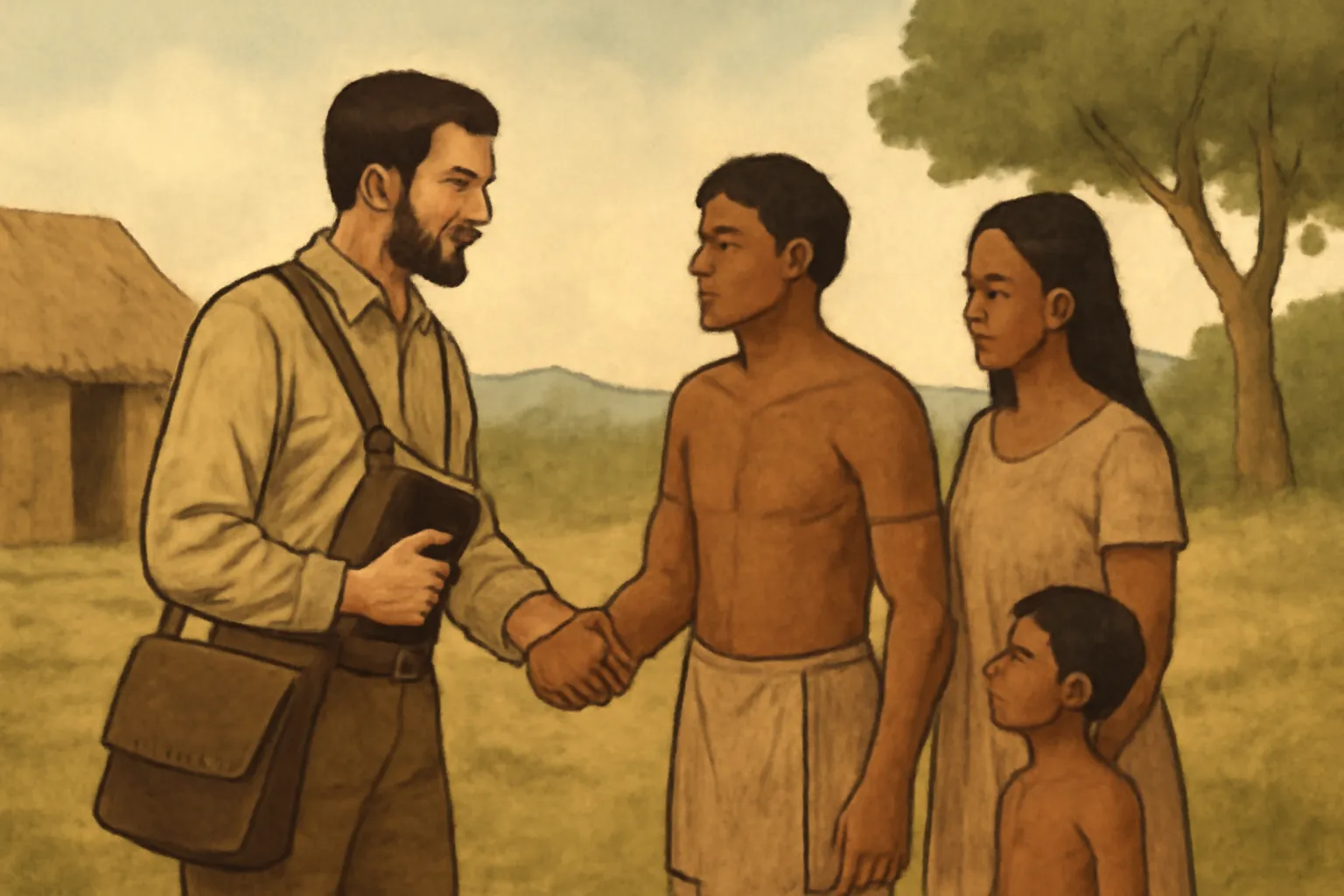
The phrase frontier missions is widely used to describe organized effort to bring aid, education, and often religious or social transformation to populations located on the edge of established cultural, political, or religious landscapes. In many contexts, this frontier is not a literal border but a sphere of limited access, limited resources, or historical isolation. When people discuss the meaning of frontier missions, they are typically weighing a combination of evangelistic aims, humanitarian outreach, cultural translation, and community development, all aimed at places or peoples that are underserved or geographically remote.
Variations of the phrase abound in public discourse and organizational rhetoric. You will encounter expressions such as frontier mission work, mission frontier activity, frontier outreach, and pioneer missions. Each variant emphasizes a slightly different aspect—whether it is the pioneering aspect of entering a new field, the outreach dimension to communities, or the humanitarian and educational support that often accompanies spiritual or cultural work. This article uses multiple terms to capture the semantic breadth of the subject while keeping attention on the core ideas: outreach to frontiers, service to underserved communities, and the pursuit of meaningful, respectful engagement.
The broader goal is not simply to describe a historical phenomenon but to analyze how frontier contexts shape strategy, ethics, partnerships, and long-term sustainability. In this sense, the topic spans history, cultural studies, mission theory, and development practice. As you read, you will see that the frontier missions meaning is not a fixed definition but a moving target that reflects changing frontiers—geographic, linguistic, religious, and social.
Historical Evolution of Frontier Missions
To understand the meaning of frontier missions, it helps to trace the historical arc of missionary activity that moved from established urban or ecclesial centers toward the edges of settled societies. The evolution can be divided into broad phases, each with distinct drivers, methods, and ethical debates.
Early encounters and frontier outreach in global history
In many traditions, the earliest frontier efforts arose alongside exploration and colonization. Missionaries traveled to borderlands between civilizations, seeking to translate texts, teach literacy, and establish churches or mission stations. The frontier in this sense was both physical and cultural: a place where languages differed, where medical and educational gaps were evident, and where social institutions were in flux. This historical pattern helps clarify how the frontier mission paradigm anchored itself in education, health, and cultural exchange alongside spiritual aims.
Industrial-age expansion and the consolidation of mission frontiers
In the 19th and early 20th centuries, expansionist movements—whether driven by empire, Christianity, or humanitarian reform—often created new frontiers demanding organized outreach. The frontier missions meaning during this era included establishing schools, language study and Bible translation, agriculture assistance, and village-based evangelism. The emphasis varied by organization and region, but the core idea remained consistent: go to places where traditional structures were insufficient to meet the population’s needs and where access to resources or cultural contact was limited.
Postcolonial and contemporary shifts
In the latter half of the 20th century and into the 21st, interpretations of frontier missions began to engage more deeply with issues of sovereignty, indigenous leadership, and decolonization. The frontier meaning in many communities now highlights partnerships with local churches and organizations, capacity-building, and respectful collaboration that honors indigenous agency. Contemporary discourse often contrasts traditional missionary models with community-owned initiatives, focusing on sustainable development, human development indices, and intercultural understanding as essential components of effective frontier work.
The narrative of frontier missions shifts across regions, cultures, and historical moments. While the underlying aim remains service and outreach, the methods, languages, and ethical considerations vary depending on local realities. The following subsections outline some common contexts and how they influence the meaning and practice of frontier missions.
Frontier outreach in rural and remote regions
In many countries, the frontier is defined by distance from urban centers, limited health care access, and scarce educational infrastructure. In these settings, frontier mission teams often combine spiritual programs with practical services such as medical clinics, clean water projects, literacy campaigns, and agricultural training. The frontier field in this context tends to be a cluster of villages or a valley district where language barriers, poverty, and logistical hurdles shape the strategy.
Cross-cultural and multilingual frontiers
When teams operate across language and culture, the meaning of frontier missions expands to include linguistic translation, intercultural education, and the formation of local leadership pipelines. Here, the mission frontier concept emphasizes mutual learning, agreements on shared goals, and long-term presence rather than short-term project cycles. The goal is to facilitate access to educational resources, healthcare information, and civic participation while being sensitive to local norms.
Urban frontiers and megacities
Although the term frontier often evokes remote areas, urban frontiers present a distinct set of challenges. Within megacities, marginalized neighborhoods may function as modern frontiers where access to language-specific resources, social services, and faith communities is uneven. In this arena, frontier missions may focus on diaspora communities, street-level outreach, partner-based social services, and community organizing that aligns with urban development goals.
Indigenous and traditional frontiers
For many indigenous communities, frontier work intersects with sovereignty, land rights, and culturally grounded knowledge systems. The frontier meaning here includes a respect for indigenous leadership, customary laws, and long-term language preservation efforts. Ethical frontier missions in these contexts foreground consent, co-creation of programs, and recognition of the community’s right to determine the nature and pace of engagement.
Goals, Core Activities, and What Frontier Missions Try to Achieve
Although the exact objectives differ by organization and context, frontier missions generally pursue a blend of spiritual, educational, health, and social development aims. The following list captures common elements of frontier mission work and illustrates how the frontier missions meaning often integrates multiple service modalities.
Core objectives and outcomes
Spiritual engagement and the dissemination of beliefs or moral frameworks shared with local communities, often conducted through teaching, dialogue, and worship activities.
Discipleship and leadership development by training long-term local leaders who can carry forward programs beyond the initial mission teams.
Education and literacy initiatives, including language learning, translation, school support, and child-education programs.
Healthcare access and preventive care, such as clinics, health education, vaccination drives, and hygiene campaigns.
Economic development through skill-building, microfinance, and sustainable agriculture or small business training.
Cultural translation and preservation—facilitating communication between communities and institutions while respecting local traditions and languages.
Activity domains that shape the field
Translation and literature work—creating and distributing books, Bible translations, literacy materials, and multilingual resources.
Community health—establishing clinics, health education programs, and preventative care in underserved areas.
Education and training—supporting schools, teacher training, and vocational programs.
Water, food security, and agriculture—installing wells, irrigation systems, and farming training to improve resilience.
Social services—care for orphans, the elderly, and vulnerable populations, often in collaboration with local partners.
Communication and media—using radio, print, or digital platforms to share messages and resources that align with community needs.
A growing emphasis in the frontier missions meaning is the shift toward partnerships with local churches, NGOs, and community groups. Long-term sustainability increasingly depends on local ownership, shared decision-making, and transparent governance. This approach reframes frontier work from a unilateral mission to a collaborative enterprise that honors local expertise and leadership.
Strategies, Methods, and the Challenges Frontier Missions Face
Effective frontier mission work requires thoughtful strategy that balances urgency with patience, urgency with cultural sensitivity, and spiritual aims with social outcomes. The following sections highlight common strategies and the obstacles often encountered in frontier contexts.
Strategic principles
Contextualization—adapting methods to fit local beliefs, languages, and social structures without compromising core values.
Participation—involving community members in planning, implementation, and evaluation from the outset.
Sustainability—building capacity so that programs endure beyond the presence of a single team.
Ethical engagement—prioritizing consent, dignity, and non-coercive outreach.
Holistic development—integrating spiritual aims with practical services to address the root causes of hardship.
Operational models
Station-based outreach—a fixed mission center that operates field programs from a central location.
Temporary or itinerant teams—teams that travel to multiple communities on defined cycles, often partnering with local groups.
Community-embedded teams—local leaders and workers who operate within the community with organizational support from partners outside.
Integrated development programs—programs that combine education, health care, and livelihood initiatives under a unified strategy.
Common challenges
Resource constraints—financing, materials, and specialized staff may be limited, particularly in hard-to-reach regions.
Cultural and religious sensitivities—navigating beliefs and practices that differ from those of the mission teams requires humility and careful listening.
Political and security risks—some frontier areas present safety concerns or regulatory hurdles that complicate operations.
Measuring impact—defining meaningful metrics for spiritual and social outcomes can be complex and context-dependent.
Evaluation and learning
Ongoing evaluation is crucial to understanding what works, what needs adjustment, and how to scale successful approaches. Learning loops, community feedback mechanisms, and collaboration with independent evaluators help ensure that frontier work remains accountable and responsive to local needs.
Contemporary Debates, Ethics, and the Frontier Mission Ethos
The contemporary landscape of frontier missions includes vigorous discussions about ethics, power dynamics, and the long-term health of communities engaged in cross-cultural partnerships. While many practitioners emphasize compassionate service and mutual learning, others critique traditional models as potentially colonial or asymmetric. This section surveys some of the core ethical questions that influence the frontier meaning in practice.
Consent, autonomy, and local leadership
A central ethical priority is ensuring that communities retain autonomy over what kinds of programs they want and how they are implemented. The frontier outreach concept increasingly centers on building local leadership capacity so that the community can own and direct initiatives rather than receiving programs as a limited-time intervention.
Cultural respect and adaptation
Respect for local cultures means avoiding coercive tactics, recognizing traditional knowledge, and integrating respectful insights from community elders and practitioners. In this frame, the frontier mission meaning encompasses not just dissemination of ideas but careful listening, co-creation, and the incorporation of local wisdom into program design.
Power dynamics and equitable partnerships
Partnerships that privilege outside organizations over local communities risk undermining trust. Ethical frontier practice seeks to create reciprocal relationships, equitable governance structures, and transparent accountability mechanisms. The goal is to align the frontier field activity with community-defined success rather than with external agendas.
Postcolonial reflections
Some scholars and practitioners invite ongoing reflection about how historical patterns of mission work relate to current reality. The meaning of frontier missions in a postcolonial frame includes deconstructing old narratives, elevating indigenous voices, and ensuring that benefits are shared broadly within communities.
Measuring the impact of frontier missions requires a nuanced approach that recognizes both spiritual and secular dimensions of effect. While some outcomes are tangible and quantitative, others are qualitative, relational, and long-term. A comprehensive assessment considers multiple lenses, including community well-being, leadership capacity, and the sustainability of programs.
Key indicators and evaluation approaches
Community health indicators such as vaccination rates, maternal health, and access to essential services.
Education metrics including literacy gains, school enrollment, and teacher training outcomes.
Leadership development—the presence of locally led initiatives, succession planning, and governance structures.
Economic resilience—improvements in income-earning opportunities, agricultural productivity, and access to markets.
Cultural vitality—language preservation, cultural restoration, and participation in local traditions.
Spiritual and social cohesion—the quality of interfaith dialogue, community trust, and shared social initiatives.
Case studies and impact narratives
Across regions, frontier missions have produced diverse stories of impact. Some communities report improved literacy and health outcomes alongside meaningful engagement with spiritual and ethical questions. Others emphasize the creation of sustainable institutions that outlast initial mission teams. Collecting and sharing these narratives helps illuminate what frontier missions meaning looks like in practice and why certain approaches succeed in particular settings.
Terminology, Semantics, and a Glossary of Frontier Mission Terms
The language used to describe frontier work matters because it shapes perceptions, expectations, and collaborations. The following glossary highlights common terms and their typical connotations within the field. The goal is to build semantic clarity around the frontier missions meaning and its related phrases.
Key terms and variations
Frontier missions — general term for outreach to new or hard-to-reach populations and regions, often blending spiritual, humanitarian, and educational work.
Frontier outreach — emphasis on direct engagement with communities at the edge of access, including evangelism and service projects.
Mission frontier — a conceptual space where mission work pushes into new terrain, whether geographic, linguistic, or cultural.
Pioneer missions — the initiating, first-mover aspect of entering a challenging field or region.
Unreached peoples — a term used in some missionary contexts to describe communities with limited access to the gospel or to social services; usage varies and is sometimes debated for sensitivity reasons.
Community partnerships — collaborations built with local organizations to share leadership and responsibility.
Contextualization — adapting methods to local context without compromising core aims.
Reading and interpretation tips
When evaluating materials about frontier missions, pay attention to who defines the «frontier,» what counts as success, and how local leadership is integrated. Look for explicit consent processes, evidence of mutual learning, and mechanisms for accountability. The frontier meaning shifts when communities shape the agenda and when long-term capacity building takes precedence over short-term outcomes.
Closing Reflections on the Frontier Missions Meaning
The frontier missions meaning is not a single, fixed definition but a spectrum of practices defined by context, relationships, and outcomes. Across regions and eras, the central thread remains a commitment to engage with communities at or beyond the boundaries of established systems, offering resources, partnership, and a path toward resilience. Individuals exploring this topic should approach it with curiosity, humility, and a readiness to learn from those who live in the frontiers every day.
For readers seeking a practical synthesis, the core ideas can be summarized as follows:
Frontier missions involve intentional engagement with communities at the periphery of access and opportunity.
Meaning and purpose emerge from a combination of service, partnership, and culturally informed practice.
Ethics and respect guide behavior, ensuring consent, dignity, and local leadership.
Sustainability requires building capacity that outlasts external presence.
Adaptability is essential as frontiers shift with social, political, and technological change.

 Por Laura Jara