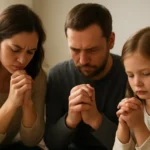
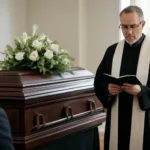
Prayers at funerals are a long-standing practice across cultures and faith traditions. They offer a structured space where
a community can acknowledge loss, name grief, celebrate life, and seek comfort. In many settings, a funeral
service that includes worshipful or reflective words can help those who mourn move from shock toward gradual
bearing of sorrow, while also honoring the person who has died. The practice is not only about asking for relief from pain;
it is also a way of naming gratitude, confessing uncertainty, and inviting endurance. Prayers at funerals are therefore
not mere recitations; they are living acts that connect memory, faith, community, and meaning in a time of transition.
In this article, we explore the meaning of funeral prayers, outline the main types you may encounter or choose to include,
and offer practical guidance on how to lead prayers in a funeral setting—whether you are a clergy member, a lay
leader, a family member, or a friend who wishes to contribute with care and clarity. You will also find a selection
of exemplar prayers and suggested language to adapt for diverse contexts. The aim is to provide accessible, respectful
guidance that honors both tradition and personal preference.
At its core, a funeral is a rite of passage. Prayers frame the moment with intention, marking the transition from
life to legacy, from personal grief to collective care, and from isolation to shared humanity. Several core purposes
recur across traditions:
Consolation: Acknowledging pain and offering a harbor of empathy for the bereaved.
Remembrance: Remembering the person who died—name by name, story by story, gift by gift.
Hope: Holding space for mystery, faith, or meaning beyond the immediate sorrow.
Communion: Bringing the gathered community into a common moment of prayer, reflection, or song.
Credence: Affirming beliefs the deceased held, or the values the family wishes to carry forward, such as generosity, kindness, or courage.
While some traditions center the prayers on the divine, others emphasize universal human experiences—grief, gratitude, and
gratitude for the life that touched others. In many modern services, these dimensions appear together in a thoughtful
blend of words, silence, readings, and music. Inclusive language and accessibility become essential, ensuring that
people from different backgrounds feel welcome to participate, reflect, and respond in their own way.
The rhythm of a prayerful moment matters. Short, focused prayers can offer relief and clarity, while longer
prayers or liturgical sequences may provide a sense of structure and ancient connection. The goal is not to overwhelm the
service with rhetoric, but to offer clear, compassionate language that resonates with those present.
Variations and Contexts: How Prayers at Funerals Look Across Traditions
Prayer at a funeral varies widely depending on religious tradition, cultural practice, and the preferences of the family.
Below are broad patterns and examples that illustrate the semantic breadth of funeral prayers. The intention is to honor
both rooted tradition and contemporary experience.
Catholic and Orthodox Christian context: Liturgy often includes collects, prayers of intercession, the Lord’s Prayer, and
the Prayer for the Dead or Commendation.
Prayers may be led by a priest or layperson with a strong sense of reverence and musical or liturgical cadence.
In Orthodox practice, there can be extended sequences of psalms, hymns, and a formal parsifal pattern that guides the community through grief toward consolation.
Protestant traditions: Prayers at funerals often include collected prayers of thanksgiving, confessional elements, and
prayers for the family. The emphasis may be on personal relationship with God, hope in the resurrection, and creative
language that speaks to contemporary mourners.
Jewish traditions: A funeral typically includes readings from scripture, El Malei Rachamim (the prayer for the soul),
and the Mourner’s Kaddish as a communal affirmation. The prayers emphasize remembrance, justice, and continuity with future generations.
Muslim funeral customs: Du’a (supplication) and recitations from the Qur’an may be offered at the graveside and during
the service. The focus is on mercy, forgiveness, and the acceptance of God’s will.
Hindu and Buddhist practices: Prayers may range from mantra recitation to verses about the cycle of life and rebirth,
with attention to the departed soul’s journey and the well-being of those left behind.
Secular or humanist services: Prayers may be replaced by reflective readings, poetry, or thoughtful statements
about meaning, gratitude, and the impact of the person’s life—especially when participants hold varied beliefs about the divine.
Across these contexts, you will find a common thread: a ritualized space that invites participants to stand with one another in
their grief, to lift up memories, and to find language for what is otherwise hard to say. The specific texts and actions
vary, but the aspiration to name pain honestly while offering care remains a unifying principle.
Common Types of Prayers at Funerals
Prayers at funerals can be categorized by their function within the service. The following types appear regularly in many
services, though not every funeral will include all of them.
Intercessory Prayers
Intercessory prayers are requests for God, or a higher power, to act on behalf of the deceased, the bereaved, and the wider
community. They can ask for peace for the grieving, comfort for relatives, strength for caregivers, and justice
or mercy for the departed.
Liturgical Prayers
These are prayers that follow a formal order, often drawn from a tradition’s liturgy. They provide rhythm, predictability,
and a sense of continuity with generations past. Liturgical prayers can be short or extended and may be led by clergy or
lay leaders depending on the setting.
Prayers of Consolation
Consolation prayers acknowledge sorrow while offering companionship. They hold the space for people to grieve together and to
recognize the legitimacy of staying with pain before moving toward healing.
Prayers for the Departed (Committal Prayers)
These prayers focus on the person who has died—honoring their life, seeking blessing for their memory, or affirming
the community’s commitment to carrying forward what they stood for. They may occur at the graveside or within the service.
Prayers of Remembrance
Remembrance prayers are explicit acts of naming the person’s life—qualities, relationships, and moments that changed others.
They often include language that invites attendees to remember and to reflect on their own connections with the deceased.
Closing Blessings and Dismissals
A closing blessing or benediction offers a sense of completion and move toward routine life after the service. These prayers
may invoke peace for the bereaved, strength for the days ahead, and gratitude for the witness of the gathered community.
Faith-Specific Examples worth Knowing
To better understand how diverse traditions shape funeral prayers, here are a few representative examples (note: family
preference and local custom will guide what is appropriate in any given service):
Scripture-based prayers or psalm fragments that speak to mortality, mercy, and God’s steadfast love.
Prayer of gratitude for the deceased’s life—recognizing acts of kindness, mentorship, or service.
Supplications for peace within the community, within families, and within the person who has died.
How to Lead Prayers at a Funeral
If you are leading prayers—whether as a clergy member, a family member, or a layperson—there are practical steps that can
help you shape a service that is meaningful and respectful. The following framework is designed to be adaptable
across settings, faiths, and levels of formality.
Before the Service: Listening and Planning
Meet with the family or officiant to understand preferences, beliefs, and values for the service.
Discuss whether prayers will be spoken, sung, chanted, or accompanied by music, and how much time to allocate.
Identify any texts or prayers that should be included or avoided due to religious or cultural considerations.
Decide who will lead which parts of the service and whether lay leaders will participate in reading or recitation.
Use clear, compassionate language that is accessible to a diverse audience. Avoid overly esoteric phrasing unless it faithfully reflects the tradition.
Be mindful of pauses and silence. Moments of quiet can be powerful for reflection and tears to surface.
Principle of inclusivity: invite participation where appropriate and offer alternatives (spoken, sung, or silent) for those who do not speak aloud.
Be aware of timing: a typical funeral service may include a brief opening, one or more prayers or readings, a eulogy or reflections, and a closing blessing.
Crafting Texts: Customization and Sensitivity
When you write or adapt prayers for a funeral, consider the person’s life and the family’s needs:
Highlight personal stories and values that mattered to the deceased.
Balance solemnity with moments of gratitude and warmth to reflect the person’s personality.
Offer language that is reassuring and not dismissive of grief.
Respect time limits and the flow of the service to avoid fatigue for mourners.
Involving the Congregation: Participation and Comfort
Consider including a -responsive prayer where the leader speaks and the congregation responds with a simple phrase or refrain.
Provide options for participation—reading a passage aloud, praying silently, or singing a verse from a hymn.
Offer a moment for shared memory by inviting attendees to recall a memory or to name the person aloud if appropriate.
Contingencies: Diversity, Respect, and Accessibility
Prepare alternatives for a service with a broader audience, including languages other than the primary service language or shorter versions of texts.
Ensure that the service is accessible to people with different abilities or comfort levels with religious language.
Encourage family members to participate in a way that is authentic and comfortable for them, whether that means spoken prayers, readings, or quiet contemplation.
Sample Prayers: Texts You Can Adapt
The following sample prayers are designed to be starting points. You can adapt them to reflect particular beliefs,
personalities, or cultural contexts. Each sample uses language that is concise, dignified, and suitable for a
congregational setting. You can present them as standalone prayers, or weave them into readings and songs.
Opening Prayer for Comfort
God of comfort, we gather in sorrow to honor the life of [Name]. Be near to us
in our grief; walk with us through this moment of loss. Help us to listen for Your peace, to speak words that heal,
and to find strength in one another. May Your presence fill this room with mercy, courage, and tenderness. Amen.
Prayer for the Family and Friends
Gracious Source of hope, surround the family and all who mourn with Your compassion. Grant them patience
in their sorrow, courage for each new day, and the assurance that they are not alone. Let the memories of [Name]
bring light in dark times, and may the bonds of love deepen as they share stories, tears, and laughter. Amen.
Prayer for the Deceased
Eternal God, we entrust to Your care the soul of [Name], whose life touched so many. Grant rest to the
departed, and may Your mercy reconcile every wound of mortality. May the memory of [Name] be a blessing to those who
remain, and may they be enabled to live with gentleness, generosity, and purpose. Amen.
Prayer of Gratitude
Thank you, God, for the gift of life that was shared through [Name]. For friendship, patience, and kindness;
for the quiet daily acts of care; for the resilience that carried family and community through difficult times. We give thanks
for the ways [Name] taught us to love, and we commit to living with the same courage and compassion. Amen.
Ever-present Creator, bring healing to those who suffer, consolation to those who grieve, and hope to all who doubt.
May the memory of [Name] inspire us to pursue justice, to practice mercy, and to hold fast to one another in love.
May peace be with us until the day when sorrow shall be no more. Amen.
Closing Blessing
May the God of love bless you and keep you. May the light of Your face shine upon you and bring you peace. May strength
sustain you in days ahead, and may you feel the presence of those who have gone before you as a memory that guides and sustains.
In the name of the One who gathers all, Amen.
Sample Structure: A Simple Lay-Led Funeral Prayer Flow
Arrival and welcome — brief opening by the leader, a moment of silence, and an invitation to prayerful presence.
Opening prayer — a short invocation or reflection to center the gathered community.
Readings and prayers — one or two readings, followed by a brief intercessory or consolation prayer.
Remembrance — invitations to name the deceased or share a memory, if appropriate.
Prayers for the community — prayers that address the family, friends, and all who mourn.
Committal and blessing — final prayers or blessing, with a clear closing moment.
This outline can be adjusted to fit a faith tradition or a secular memorial. The key is to maintain a clear progression
from grief toward comfort, from memory toward meaning, and from individual loss toward communal support.
Practical Tips for Leaders and Families
Prepare in advance and coordinate with the officiant or clergy about the approved texts and the intended order of prayers.
Practice aloud to ensure comfortable pacing, pronunciation, and phrasing that respects all participants.
Use inclusive language and avoid assumptions about beliefs, language, or ritual preferences.
Respect silence and allow space for reflection—silence can be as meaningful as spoken words.
Offer alternatives for those who cannot participate verbally—printed prayers, projected texts, or instrumental interludes can be meaningful substitutes.
When planning, consider the tone and setting—a funeral may be solemn, joyful, contemplative, or a blend of these.
The goal is to provide a sanctuary for grief while offering a way forward that honors the person who has died and supports those who remain.
Conclusion: The Living Practice of Funeral Prayers
Prayers at funerals serve as a bridge between what is lost and what is to be carried forward. They provide a framework for
expressing love, naming fear, and naming gratitude in ways that can be heard by diverse listeners. Whether drawn from a
long-standing liturgy, spoken anew by a lay leader, or offered in a quiet moment of reflection, funeral prayers are acts of care shaped by memory, faith, and community. By approaching these moments with sensitivity, clarity, and
generosity, you can facilitate a service that honors the deceased and helps the bereaved begin the work of healing.
If you are preparing to lead prayers at a funeral, remember that authenticity and respect matter most.
Your words should reflect the life of the person being remembered, the needs of those who mourn, and the beliefs that
hold the community together. The prayers may be brief or expansive, traditional or contemporary, but their aim remains
the same: to name grief, invite grace, and bear witness to the enduring connections of love.

 Por Laura Jara