7 Things Jesus Said from the Cross: Meaning, Context, and Lessons
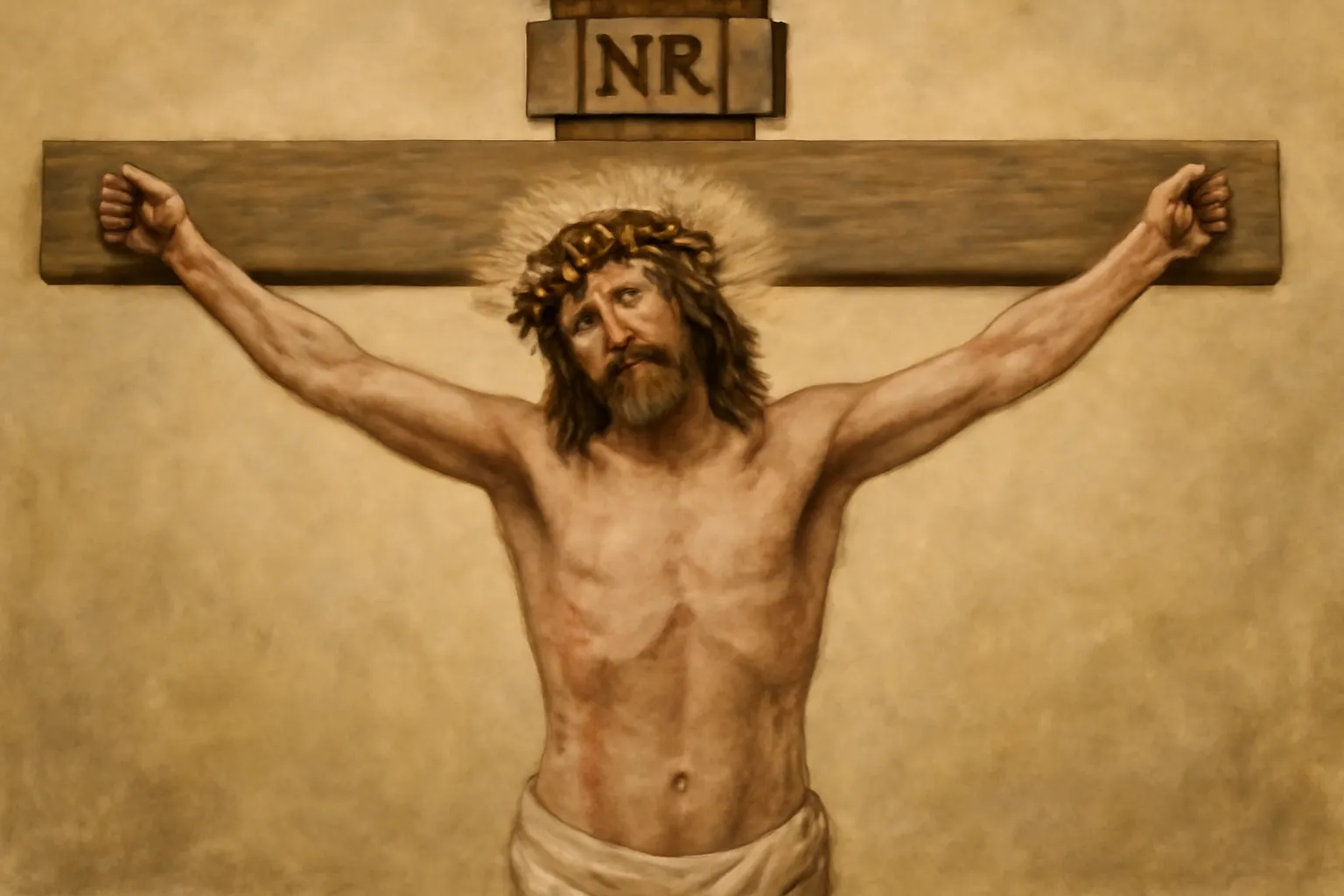
The crucifixion of Jesus is narrated in all four Gospels, but the record that is most commonly summarized
into a compact phrase is the set of seven distinct utterances he spoke while hanging on the cross. These
seven sayings—often labeled as the “seven sayings from the cross,” the “seven phrases spoken on Golgotha,”
or the “seven words from Calvary”—offer a cross-section of Jesus’ concerns in his final moments: forgiveness,
salvation, care for others, the experience of suffering, and ultimate surrender. This article explores each
of the seven cross-utterances individually, unpacking their historical context, their theological meaning, and
the practical lessons they offer for readers today.
Before diving in, it is helpful to note that different Bible translations and traditions present these utterances
with small variations in wording and order. Some lists follow a slightly different sequence, and the terms
used to describe these phrases include sayings, phrases, and words. Regardless of the label, the core content remains consistent: Jesus speaks from the cross
to address God, to speak to others, and to model faithful humanity under extreme suffering.
Terminology and variations
Some readers encounter the seven cross-utterances as a seamless continuity of Luke and John’s gospel
narratives. Others encounter a slightly different ordering, especially between the Gospel of Luke and the Gospel
of John.
The Greek term commonly translated as “It is finished” is tetelestai, a word with financial
and covenant implications, meaning that a debt has been paid in full or a covenant obligation has been fulfilled.
The phrase “paradise” in Luke 23:43 reflects Jewish and Greco-Roman concepts of a blessed place after death, and
many Bible scholars see it as pointing to the immediate presence of God with the promise of future restoration.
1) “Father, forgive them, for they do not know what they are doing.”
“Father, forgive them, for they do not know what they are doing.” — Luke 23:34
Context
This first utterance is spoken as Jesus endures the crowd’s taunts, the soldiers’ violence, and
the heavy burden of the moment. In this line, Jesus addresses God the Father while still in the cruciform,
praying mercy over those who are responsible for the act against him. The scene unfolds in the midst of
hostility, yet Jesus does not withhold prayer on behalf of his executors.
Meaning
Theologically, this saying emphasizes unmerited mercy and the scope of God’s love toward
sinners. It foregrounds forgiveness as a defining characteristic of Jesus’ mission and demonstrates the
radical nature of grace: forgiveness offered before repentance or restitution is possible, and
forgiveness is extended even to those who appear to be fully responsible for wrong.
Lessons for today
Practice forgiveness even toward those who hurt you, especially when the wrong is done systemically or violently.
Recognize that ignorance or misunderstanding can accompany harm; this does not erase responsibility, but it helps shape a posture of mercy.
Engage in intercessory prayer as a spiritual discipline, trusting that God’s mercy works in ways we cannot fully measure.
Cross-references and reflections
Luke 23:34; Matthew 6:12–15; 1 John 1:9
Explores how forgiveness is not simply a private virtue but a transformative force in communities under strain.
2) “Truly, I say to you, today you will be with me in paradise.”
“Truly, I say to you, today you will be with me in paradise.” — Luke 23:43
Context
This saying is directed to the penitent thief who recognizes Jesus as Lord even as he is dying. The exchange
occurs on the cross between Jesus and one of the criminals crucified alongside him. In the midst of judgment and
suffering, Jesus extends a promise of companionship in God’s presence after death, not a reward earned by works.
The declaration signals that salvation is accessible by grace through faith, even at the last moment.
It underscores the bold claim that salvation is not based on length of life or flawless performance but on
acknowledging Jesus’ lordship and placing trust in him at a moment of brokenness.
Trust in the sufficiency and reach of God’s grace—no one is beyond the possibility of salvation.
Understand that repentance does not have to be elaborate or prolonged; institutional boundaries do not bar a sincere turn to Christ at the end of life.
Emphasize communal inclusion: the Gospel breaks down barriers, inviting people into the presence of God regardless of past.
Cross-references and reflections
Luke 23:39–43; Ephesians 2:8–9
Jesus’ words invite readers to reflect on how mercy operates in crowded, painful moments and what it means to extend grace to others.
3) “Woman, behold your son. Behold your mother.”
“Woman, behold your son. Behold your mother.” — John 19:26–27
Context
In this moment, Jesus entrusts his mother Mary to the beloved disciple as if creating a new family
unit within the church [the faith community] in the wake of his death. The phrase encapsulates a
spiritual rearrangement of kinship boundaries: the church becomes a “household of faith” that
cares for the vulnerable.
Meaning
Jesus’ directive demonstrates that care within the church is a form of spiritual provision.
It also frames Mary and John as representatives of the broader church—an institution designed to nurture
and sustain those who are left vulnerable by loss and upheaval.
Lessons for today
See the church as a family on mission that bears one another’s burdens, especially in times of need.
Honor and safeguard the vulnerable—widows, orphans, the elderly, and those without close kin.
Recognize the practical dimension of discipleship: faith is lived out in the daily care of others, not only in private devotion.
Cross-references and reflections
John 19:26–27; Galatians 6:2; 1 Timothy 5:3–8
This saying invites contemplation of how communities form spiritual households that mirror God’s own care.
“My God, my God, why have you forsaken me?” — Matthew 27:46; Mark 15:34
Context
Jesus quotes Psalm 22:1, situating his crucifixion within the larger scriptural narrative of lament,
suffering, and faithfulness under trial. The cry expresses a moment of felt abandonment, yet it
also resonates with a tradition of lament that ultimately gives way to trust.
Meaning
Theologically, this utterance communicates that Jesus bore the weight of humanity’s sin and
its consequences in a way that caused him to experience deep estrangement from God as a substitute
on behalf of others. It is not a cry of ultimate disbelief but a profound moment of identification with all
who endure spiritual and existential distress.
Lessons for today
Allow space for lament in faith communities; honest questions can coexist with trust in God.
See suffering as a shared experience with the divine—Jesus does not abandon us in pain; he enters into it with us.
Hold onto the truth that even in despair, the arc of the biblical narrative moves toward restoration and hope.
Cross-references and reflections
Psalm 22; Hebrews 4:15–16; Romans 8:26–34
Contemplating this cry invites readers to explore how lament and faithfulness work together in prayer.
5) “I thirst.”
“I thirst.” — John 19:28
Context
Jesus’ statement here is brief yet deeply human. It emphasizes the severity of physical torture and
dehydration that accompanies crucifixion. It also occurs in the specific Johannine account where
the moment is tied to the offering of sour wine, which both underscores suffering and, for some readers,
hints at fulfillment of Scripture.
Beyond the literal thirst, this saying reveals the fullness of Jesus’ humanity—that
he experiences bodily need and thirst as any other person would. At the same time, it points to a
broader biblical pattern in which thirst becomes a metaphor for spiritual longing—yet God’s gracious
provision is on the horizon.
Lessons for today
Affirm that God meets our physical and spiritual needs in time and in ways that may not be dramatic but are deeply real.
Hold space for people who are suffering or isolated; a small act of care can be a meaningful form of hospitality.
Recognize the link between suffering and hope—the longing for relief can illuminate the path toward trust in God’s plan.
Cross-references and reflections
Psalm 63:1; John 4:13–14; Revelation 7:16–17
Interpreting this line invites readers to reflect on how longing moves toward sustenance—whether physical, relational, or spiritual.
6) “It is finished.”
“It is finished.” — John 19:30
Context
As the crucifixion culminates, Jesus declares that his required work on behalf of humanity has reached its
completion. The phrase signals the closing of the salvific mission in the concrete sense of providing
forgiveness of sins, reconciliation with God, and the inauguration of a new covenant order.
Theologically, the cross accomplishes salvation—not as a mere example of suffering, but as the
decisive act that makes grace widely available. The word tetelestai communicates a finished
debt, a fulfilled prophecy, and the beginning of a new era in which God’s people live in light of what
Christ has accomplished.
Lessons for today
Trust in the completed work of Christ rather than relying on human effort to secure righteousness.
Remember that the Christian life flows from what Jesus has already accomplished, not from striving to earn
God’s favor anew every day.
Let the finish of the cross recalibrate priorities: worship, mission, and service flow from a finished work, not from
a perpetual striving for approval.
Cross-references and reflections
Hebrews 9:11–14; Galatians 5:1; Romans 3:21–26
Contemplating “It is finished” invites readers to consider how the cross shapes perseverance and hope in trials.
7) “Father, into your hands I commend my spirit.”
“Father, into your hands I commend my spirit.” — Luke 23:46
Context
In the final moment of life on the cross, Jesus prays a prayer of trust and surrender to the Father.
This cry echoes the psalm-based tradition of prayer at the hour of death—inviting readers to witness a
model of faithful surrender that is grounded in relationship with God.
Meaning
The statement highlights trustful submission and confidence in God’s care.
It also connects Jesus’ death to the Spirit’s work in bringing life, as he entrusts his spirit to the Father
with the language of intimate relationship rather than fear.
Lessons for today
Let go of fear and place your life in God’s hands even in moments of intense difficulty.
See prayer as a form of surrender—an ongoing practice that deepens trust and aligns desires with God’s purposes.
Embrace the continuity between Jesus’ death and the Spirit’s work in the life of the believer—death as a doorway
to new life in union with God.
Cross-references and reflections
Psalm 31:5; Luke 23:46; Romans 8:38–39
This final utterance invites readers to reflect on how the act of surrender shapes Christian hope: a life given into God’s hands is a life entrusted to grace.
Putting the seven cross sayings into life today
Reading the seven phrases Jesus spoke from the cross invites a holistic consideration of mercy, grace, faith,
and community. Each saying offers a distinct lens on how God engages human suffering and how followers
of Jesus are called to respond. Taken together, they illuminate a path of compassionate action, robust faith,
and steadfast trust in God, even in the dirge of pain.
A practical synthesis of the lessons might be organized around a few overarching themes:
Mercy and forgiveness under pressure: cultivate forgiveness in places where harm is most acute.
Grace to the end: believe that salvation is available at all stages of life, and that God’s grace is not
exhausted by our failures.
Care within the faith community: honor the vulnerable and commit to supporting one another as family in Christ.
Solidarity in suffering: acknowledge the reality of pain and imitate Jesus’ vulnerability in prayer and lament.
Hope grounded in completion: rest in the sufficiency of Christ’s finished work and live in light of it.
Trust in God’s hands: practice a daily posture of surrender, acknowledging God’s sovereignty amid uncertainty.
Questions for reflection and study
How does forgiveness from the cross shape how you respond to people who have harmed you?
In what ways does the promise of paradise challenge or reinforce your understanding of salvation?
What does it mean to care for the vulnerable within your own community today?
How can lament and trust coexist in your personal worship and corporate prayer?
How does recognizing Jesus’ humanity affect your approach to suffering and intercession?
Glossary of key terms
Forgiveness: letting go of resentment toward someone who has harmed you, with a commitment to reconciliation when possible.
Paradise: a term for the presence of God after death, often used to describe a blessed state beyond this life.
Dokoration? Just a placeholder to emphasize that terms vary—keep in mind the nuances of biblical vocabulary and translation.
Tetelestai: Greek for “it is finished”—the sense of something completed, paid in full, or fulfilled.
Final notes: variations in translation and practice
Readers may encounter small differences in how the seven cross sayings are ordered or phrased across
English translations. Some traditions present the phrases in a slightly different sequence, and the
wording can emphasize different shades of meaning (for example, rendering paradise as
a direct promise of companionship with Christ versus a more spatial sense of presence with God). Yet the
essential truth remains: Jesus speaks words that shape forgiveness, salvation, communal care, human vulnerability,
enduring faith, and trustful surrender. When you read these seven sayings side by side, you see a deliberately
crafted arc that moves from mercy to hope to human care to the final surrender.
For those who teach or study these sayings in a classroom, a devotional setting, or a sermon series,
it can be valuable to pair the seven phrases with:
Key biblical parallels (for example, Psalm 22, Psalm 69, and other laments) that illuminate the quotations.
Historical-cultural context about crucifixion practices in the first century.
Prayerful responses that can be used in personal devotion or congregational worship, such as intercession, lament, and praise.
In the end, the seven cross sayings invite believers to a posture that is not merely intellectual
assent but a lived and embodied trust in God—the God who forgives, who saves, who cares for the vulnerable,
who bears humanity’s pain, who satisfies spiritual longing, who completes the work of salvation, and who
welcomes us into eternal life. This is not merely a historical account; it is a living pattern for faithful
living that continues to challenge, comfort, and transform those who encounter it.
Would you like a guided study plan?
If you’re looking to explore these seven cross sayings in a structured way, here is a simple plan you can adapt:
Read the seven sayings in parallel across Luke and John (or in a parallel Bible) to notice how each Gospel
presents the moment from its own perspective.
Reflect on a corresponding personal situation for each saying: a moment where you need forgiveness,
grace, care for someone else, a time of lament, a moment of longing, a realization of completion, and a choice
to surrender.
Pray through a devotional sequence that uses each saying as a starting point for intercession, thanksgiving, and
confession.
End with a community discussion or journaling prompt about how to embody these lessons in daily life and
in service to others.
The cross, and the seven statements Jesus makes there, remain among the most powerful and practical texts
in Christian spiritual practice. They are not just theological propositions; they are invitations to live
by mercy, hope, and courage—even in the midst of pain.

 Por Laura Jara