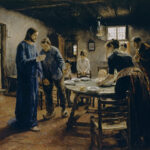
Catholic Prayer Before Eating: A Practical Guide to Mealtime Blessings
Mealtime is more than a pause for nourishment; it is a ritual of gratitude that grounds a family
or community in the rhythm of faith. In the Catholic tradition, a mealtime blessing invites
God’s blessing on the food we are about to receive and on the hands that prepared it, while also teaching
children and adults alike the language of thankfulness, dependence on God, and shared generosity.
A grace before meals is typically brief, spoken aloud at the table, and often led by one person
for the sake of unity. Though simple in form, these prayers carry a deep sense of belonging to Christ’s
Body—both as a spiritual family and as members who live out their faith in everyday life. This article offers
a practical guide to understanding, using, and adapting Catholic mealtime prayers across different settings,
seasons, and ages, while preserving reverence, fidelity, and accessibility.
What is a Catholic mealtime blessing?
A Catholic mealtime blessing is a prayer of blessing spoken before food and drink. Its core
elements typically include:
Address to God (honoring the Creator who provides);
Thanksgiving for the gifts of creation and labor that sustain us;
Petition for blessing of the meal and of those who partake;
Invocation of Christ or the Church’s maternal and paternal care (depending on tradition);
Amen—the ceremonial assent and sharing in the grace received.
In the Catholic Church, the blessing before meals is not a sacramental itself, but it is a discipled
practice that aligns daily life with the Eucharistic perspective: food is a sign of God’s generosity,
and the table becomes a place where virtue—gratitude, generosity, temperance—is learned and practiced.
Historical and theological context
The practice of praying before meals has roots in early Christian hospitality, where meals were occasions of
sharing the Word and praising God. Over the centuries, Catholic families urbanized and diversified in
their prayer life, but the canonical form of the mealtime blessing commonly used in
Catholic homes has remained a powerful shorthand for conversion of everyday life into a prayerful act.
Theologically, a blessing at table recalls the Eucharist in its most essential sense: bread
and cup, created by God and transformed in Christ, become signs through which the faithful are nourished and
formed as the Body of Christ. The words “through Christ our Lord” tie the meal to the
salvific work of Jesus and situate gratitude within the larger covenant of salvation.
For families, schools, parishes, and hospitals, the mealtime blessing can be a concrete moment of discipline and tenderness: quiet, posture, and a shared expectation that everyone at the table
pauses to acknowledge God’s provision. When done with intention, this practice becomes a formative habit that
shapes how people speak about nourishment, work, and service to others.
Traditional form of the mealtime blessing
The most widely recognized traditional form in English-speaking Catholic communities is:
“Bless us, O Lord, and these thy gifts, which we are about to receive from thy bounty, through Christ our
Lord. Amen.”
This single sentence encapsulates several theological ideas:
The call to God in prayer at the outset of a meal;
The recognition of God as giver of food, not merely as a natural fact;
The anticipation of reception—we are about to receive these gifts with gratitude;
The through Christ our Lord framing, which ties daily sustenance to the mysteries of the
Incarnation and Redemption;
The Amen that seals the petition and unites participants in a common stance of faith.
The traditional form is deeply resonant, but variations can better fit different families, ages, languages, or
circumstances while preserving the same core meaning.
Below are several variations commonly used across Catholic households. Each variation keeps the essential
structure—invocation, thanksgiving, petition, and assent—while offering different lengths, tones, or emphases.
Traditional long form: “Bless us, O Lord, and these thy gifts, which we are about to receive from thy bounty,
through Christ our Lord. Amen.” This form is best for family meals when there is time to pause, reflect, and
offer a short meditation about gratitude or charity.
Notes: Use this form when you want to center the meal in a solemn rhythm or when guests join the table.
Short form: “Bless us, O Lord, and these thy gifts, which we are about to receive from thy bounty. Amen.”
Notes: Ideal for younger children or for busy meals. It keeps the essential elements while reducing length.
Be present at our table, Lord variation: “Be present at our table, Lord; be here and everywhere adored; these mercies and thy gifts, which we are about
to receive from thy bounty, through Christ our Lord. Amen.”
Notes: This version adds a poetic invitation to the Lord to be present with us, a form often found in
monastic or traditional family settings. It emphasizes the table as a place of intimate encounter with God.
Seasonal or festive variation (for Christmas, Easter, or solemn meals): “Bless us, O Lord, and these thy gifts, which we are about to receive from thy bounty, especially in this
season of joy; through Christ our Lord. Amen.”
Notes: Add a line that speaks to the season or to the feast day, while keeping the core structure intact.
Children’s friendly version: “Dear God, thank you for this food and for our family. Please help us to share with others who are hungry.
Bless this meal in Jesus’ name. Amen.”
Notes: This version foregrounds gratitude, generosity, and a simple appeal appropriate for kids while
staying connected to Catholic language if language is kept consistent with Catholic vocabulary.
Latin-inspired version (for bilingual families or those studying Latin): “Deus, benedic hoc cibum, et haec munera, quae ad mensam ponuntur, per Christum Dominum nostrum. Amen.”
Notes: Latin versions can deepen liturgical awareness and connect families with the Church’s traditional
heritage. If used in a bilingual home, consider providing an English rendering alongside the Latin text.
Spanish-English bilingual version: “Bendice, Señor, esta mesa y estos dones que vamos a recibir; gracias por tu amor. Bless us, O Lord, and these thy gifts, which we are about to receive from thy bounty, through Christ our Lord. Amen.”
Notes: In multilingual households, offering a version that alternates languages can improve participation and
reverence while honoring cultural diversity.
Charity-enhanced variation (optional addition to invoke social concern): “Bless us, O Lord, and these thy gifts, which we are about to receive from thy bounty. May we share our
abundance with those in need today, through Christ our Lord. Amen.”
Notes: This version keeps the standard structure but adds an explicit reminder of solidarity with the hungry
and the poor. It is especially suitable for households committed to social justice and charitable works.
Modern or adaptive variations: “We thank you, Lord, for this food and for everyone gathered here. May this meal nourish our bodies and our love for
one another, through Christ our Lord. Amen.”
Notes: Contemporary language can help families, schools, or communities who prefer natural speech while remaining within Catholic
faith vocabulary.
In practice, many families combine elements from several variations depending on the occasion. The important thing is
to keep the core intention: gratitude, recognition of God’s provision, and a sense of connection to the Eucharist and to the wider faith community.
Practical guidance for leading the blessing
Whether you are leading prayer at home, in a school cafeteria, or in a parish meal, these practical steps can help
make the blessing meaningful and smooth:
Pause briefly before the meal to settle the room and invite everyone to join in. A moment of stillness
helps those who are distracted to prepare their hearts for prayer.
Choose a leader—one person at the table may lead, or you can rotate leadership among family members or students.
Speak clearly and slowly, with a warm, calm tone. The goal is accessibility for children as well as reverence for adults.
Face the direction of the table and bow or fold hands in a posture of respect, if appropriate to your family
or community’s custom. Some families prefer hands joined, others folded in prayer; what matters is intentionality.
Include a brief pause for personal or communal intention—a sentence or two about thanksgiving, a request for peace,
or a memory of someone in need, if appropriate to the setting.
End with Amen to seal the prayer and begin the meal in unity.
For gatherings with children, it can be helpful to offer a short explanation afterwards: “Today we prayed for those who lack food; we remember them with love and look for ways to help.”
Simple explanations reinforce that prayer has a concrete impact on behavior, generosity, and daily choices.
Prayers for different contexts and settings
The Catholic tradition recognizes that mealtime prayer appears in many settings. Here are some practical variants tailored
to common environments:
Home meals—a family ritual that can be brief or extended, depending on time and the number of participants.
School cafeterias or parish halls—a communal blessing with a single leader or a rotate-and-pray method that
respects secular or multi-faith environments while inviting Catholic participation.
Hospital meals—a quiet, concise blessing that acknowledges healing, peace, and the care of medical staff.
Group or retreat meals—seasonal variants or longer prayers may be used, perhaps followed by a short reflection
on gratitude and service.
When leading prayers in varied contexts, consider tone, pace, and inclusivity. The goal
is to invite participation rather than to create a barrier; if guests are unfamiliar with Catholic language, offer a simple
version or provide a brief explanation before beginning.
Practical tips for teaching children and new practitioners
Teaching children to pray before meals is an opportunity to cultivate memory and virtue. Here are practical ideas:
Start early: begin the practice with toddlers by saying the blessing together and explaining its meaning in simple terms.
Use visuals: a small card with the text, or a family prayer book, can help children follow along.
Keep it flexible: allow a moment for children to offer a personal gratitude (e.g., for a friend’s visit or a favorite fruit).
Make it a habit: consistency matters more than length. Even a short prayer done with sincerity becomes meaningful over time.
Incorporate teaching moments: after prayer, briefly discuss themes like gratitude, generosity, or the dignity of work and labor that produced the meal.
For households with an interest in liturgical heritage, including Latin prayers or references to liturgical tradition can
enrich the experience. A Latin version can be used alongside the vernacular prayer, or as a special observance on feast days or
in catechetical settings. A typical Latin form to accompany the English text might be used in a bilingual family:
“Deus, benedic hoc cibum, et haec munera, quae ad mensam ponuntur, per Christum Dominum nostrum. Amen.”
Beyond Latin, the Catholic tradition also invites reflection on the mystery of the Eucharist and the fellowship of the Church at table. Latin can serve as a bridge to liturgical memory and to ecumenical
conversations about shared beliefs in God’s providence and communal care.
Consistency is key to turning a prayer into a living habit. Here are ideas to integrate mealtime blessings into daily rhythms:
Schedule regular meals at roughly the same times to create a dependable moment of prayer alongside eating.
Make space for gratitude: invite each person to name a small thing they are thankful for before the prayer, even if briefly.
Link prayer to service: after the prayer, consider a brief moment to commit to one small act of generosity (donating to a food drive, helping a neighbor, etc.).
Adapt to seasons: allow a seasonal line or intention (e.g., for harvest in autumn, for peace during Advent).
Respect varying needs: for households with different faiths or beliefs, offer a respectful, inclusive version that honors Catholic language while inviting participation from all present.
Common questions and practical answers
Below are some quick considerations that families and communities often find helpful when implementing mealtime prayer:
Is mealtime prayer mandatory? The Catholic Church does not mandate a legal obligation, but it is strongly encouraged as a healthy, sacred habit that aligns daily life with God’s grace. It is exemplary practice for families and communities seeking to cultivate virtue and gratitude.
What if someone forgets to pray? In a kind, patient setting, gently remind and invite participation next time. The goal is not perfection but ongoing formation.
What if some participants are non-Catholic or non-religious? Offer a brief, inclusive version that retains respect for the practice, or switch to a secular but grateful acknowledgment of nourishment and community if necessary, while keeping the option open for individuals to join in the Catholic blessing as desired.
How long should the blessing take? For families, 15–45 seconds is typical; in larger gatherings or school settings, a shorter form may be preferred to accommodate the rhythm of the meal.
Final reflections: prayer as a practice of gratitude and stewardship
A Catholic mealtime blessing is more than a formula; it is a practice of gratitude that shapes
how people speak about food, labor, and community. It invites us to acknowledge that our sustenance is a gift, that others may be hungry, and that we are called to respond in charity. The mealtime prayer thus serves as a daily reminder of the Church’s social teaching: we are stewards of creation and members of one human family.
Whether you choose the classic form or a modern variation, let your mealtime prayer be a bridge between the sacred and the ordinary. In the quiet of a dining room, turn the act of eating into an act of faith, love, and hope. Through this simple practice, families and communities learn to proclaim with their hearts and their lips that all good things come from God, and that in giving thanks we become more attentive to the needs of others.
Resources for further study
If you wish to explore deeper connections between mealtime prayers and Catholic teaching, consider consulting:
The Catechism of the Catholic Church, especially sections on prayer and the Eucharist.
Documents from the United States Conference of Catholic Bishops (USCCB) on family prayer and catechesis.
Various Catholic prayer books and catechetical resources that provide age-appropriate versions for children and adults alike.
Liturgical texts or a parish grain store of blessings used at community meals for practical templates.
In sum, a Catholic prayer before eating is a practical, spiritually enriching practice that can be adapted to
any family, school, or parish setting. It binds together gratitude for food, reverence for God, and attention to one’s neighbors.
By introducing variations that reflect language, culture, age, and circumstance, the mealtime blessing continues to be a living tradition—one that sustains faith and fosters generous hearts at every table.

 Por Laura Jara