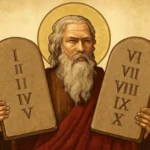
The First Commandment sits at the very foundation of the biblical moral framework. It is the opening line of the Decalogue—the core of the Ten Commandments—whose purpose is to establish the priority of God in the life of the believer. In most biblical traditions, this commandment is stated succinctly as You shall have no other gods before me. Beyond the literal words, this injunction expresses a broader summons: to orient every dimension of life—thought, will, desires, and actions—around the worship of the one true God.
For many Christians, this commandment is more than a prohibition against polytheism. It is a call to exclusive devotion and to a relationship rooted in covenant faithfulness. The idea of worshiping the Lord alone implies that nothing—no other beings, ideas, or possessions—should assume the place of ultimate authority or affection in the heart.
The First Commandment appears in two closely related places in Scripture: Exodus 20 and Deuteronomy 5. In Exodus, the commandment begins the Decalogue and is followed by prohibitions that address the issue of idols and carved images. In Deuteronomy, the same core commandment is reaffirmed as part of Moses’ farewell reiteration to the people before entering the Promised Land.
Exodus 20:3 — “You shall have no other gods before me.”
Exodus 20:4–5 — “You shall not make for yourself a carved image, or any likeness of anything that is in heaven above, or that is on the earth beneath… You shall not bow down to them or serve them.”
Deuteronomy 5:7 — “You shall have no other gods before me.”
Deuteronomy 5:8–9 — “You shall not make for yourself a carved image… You shall not bow down to them or serve them.”
Across traditions, the exact wording and the way these verses are numbered may vary, but the underlying sentiment remains consistent: God’s primacy is non-negotiable, and devotion to Him excludes rival loyalties.
Key Themes in the First Commandment
When exploring the meaning of the First Commandment Bible, several central themes emerge that illuminate both ancient intent and contemporary application:
Monotheism as the bedrock of faith: The commandment announces that there is one supreme ruler and ruler of all—God. This reinforces a worldview in which worship is directed to a single divine Being.
Exclusive worship vs. syncretism: The text invites believers to avoid blending the worship of the Living God with other deities, practices, or philosophies that could dilute loyalty.
Covenant loyalty and identity: In the biblical context, obedience to this commandment is part of a larger covenant relationship between God and His people, shaping communal life, ethics, and mission.
Idolatry in broadened terms: The prohibition extends beyond carved statues to anything that takes the place of God in the heart—whether money, power, success, beauty, or technology.
Worship as lifestyle: The commandment invites a holistic approach to life—thoughts, desires, time, and resources redirected toward honoring God.
In short, the First Commandment is not only a legal stipulation but also a spiritual invitation: to center life on God as the ultimate authority and object of love.
Different Christian traditions number and understand the commandments in slightly different ways, which can affect how the First Commandment Bible is taught and practiced. Here are some broad, representative distinctions:
Catholic and Orthodox perspectives: In these traditions, the First Commandment emphasizes God’s exclusive lordship and includes a nuanced view of idols. The second commandment (often understood as prohibiting carved images) is counted as a separate commandment in Catholic and Orthodox enumerations, whereas some Protestant groups combine the two into a broader single commandment. Regardless of numbering, the core principle remains unchanged: worship God alone.
Protestant viewpoints: Many Protestant communities place emphasis on the clarity of God’s exclusivity and the call to avoid every form of idolatry, with varying interpretations of what constitutes an “idol.” For several Reform traditions, the focus is on the heart’s allegiance and the dangers of substituting created things for the Creator.
Lutheran and Reformed voices: These streams typically stress the First Commandment as a boundary for true covenant faithfulness, paired with practical guidance about how to order life in light of God’s sovereignty.
Jewish tradition: While the Decalogue is central, Jewish exegesis places particular emphasis on the Shema (see the next section) as a daily affirmation of God’s unity and sovereignty, which complements the spirit of the First Commandment by foregrounding exclusive devotion in daily prayer and practice.
In Jewish and Christian contexts, a related but distinct proclamation informs the way believers think about God’s oneness and loyalty. The Shema, found in Deuteronomy 6:4—“Hear, O Israel: The Lord our God, the Lord is one”—is often regarded as a concise expression of the same monotheistic orientation at the heart of the First Commandment. While not a substitute for the Ten Commandments, the Shema deepens the practical response to the commandment by centering daily faith around God’s singular nature.
For readers exploring the First Commandment Bible, seeing this connection helps illuminate how ancient worship was meant to shape everything from private devotion to public life. The Shema underscores the biblical conviction that God’s unity should dominate the way believers think, speak, act, and relate to others.
Observing the First Commandment in contemporary life involves not only avoiding overt idolatry but also cultivating a sustained disposition of devotion to God. Below are practical strategies that apply to individuals, families, and faith communities.
Personal devotion and worship
Begin a daily rhythm of prayer and Scripture reading focused on God’s character—His holiness, faithfulness, and sovereignty.
Practice reflection on God’s primacy in daily decisions, from time management to financial choices to media consumption.
Use meaningful, sincere worship that centers God’s glory, whether through singing, journaling, or meditative practice.
Encourage conversations in families and congregations about what it means to honor God above all else in everyday life.
Support communities that resist pressure toward idolatry—whether consumerism, status, or power—by inviting accountability and mutual encouragement.
Promote acts of mercy and justice as expressions of devotion to God, reflecting a life oriented to the Creator rather than to self-interest.
Ethics of desire and vulnerability to idols
Identify modern “false gods” that compete for affection or loyalty—wealth, status, fame, technology, or even a political ideology—and examine how they shape choices and priorities.
Develop practices that re-center life on God when these desires surface, such as fasting, Sabbath-keeping, or intentional gratitude.
Teach and model the discipline of contentment, avoiding the idea that happiness depends on the next purchase, upgrade, or achievement.
Establish household routines that invite God’s presence—family prayer times, Scripture reading together, and a shared reflection on how to live out the First Commandment in daily chores and responsibilities.
Set boundaries around media and online activities to prevent the accumulation of competing loyalties.
Designate spaces or times for contemplation, worship, and service, making the home a beacon of exclusive devotion.
Several misperceptions about the First Commandment can obscure its real meaning. Clarifying these helps believers apply the commandment without legalism or inaction.
It prohibits all images or art in every context: Not all traditions forbid imagery. Some faith communities use sacred art or icons to direct the heart toward God, while others practice a stricter form of iconoclasm. The essential point remains: God’s primacy, not mere form, governs worship.
It bans all emotions or loves: The commandment does not condemn love or affection per se. It calls for love to be rightly ordered toward God as the supreme good, with healthy loves for family, neighbor, and creation flowing from that allegiance.
It prevents anyone from appreciating beauty or wealth: Appreciation for beauty or wealth is not inherently idolatrous. Idolatry arises when such things displace God as the center of trust and ultimate devotion.
It is only about personal salvation: While central to individual faith, the First Commandment also shapes communal life, ethical behavior, and the mission of God’s people in the world.
It is a distant, ancient rule: The call to exclusive worship remains timely in a pluralistic world where conflicting loyalties constantly press for attention and allegiance.
In today’s world, the temptations to substitute material security or digital immersion for God are present in everyday routines. The challenge is not simply to avoid “bad” idols but to cultivate a vibrant, vulnerable, truthful relationship with the Living God. Here are ways to approach life with a firm, practical posture toward the First Commandment.
Prioritize God in time and resources: Regularly assess how time, money, and energy are allocated. Do these align with the worship of the One True God?
Guard the mind against competing loyalties: Be mindful of how media, consumer culture, or political fervor can shape identity. Ground choices in a faithful understanding of who God is and who we are in relation to Him.
Foster humility and repentance: When loyalties drift, practice repentance and reorientation toward God, not away from Him in cynicism or despair.
Some readers hear the phrase “First Commandment” and worry it is a constraint. In the biblical texture, however, exclusive devotion to God is ultimately emancipating. It liberates from the tyranny of idols—things that pretend to satisfy but fail to deliver lasting joy. By rooting identity in God, a person experiences a stable center for life’s decisions, a framework for ethics, and a durable source of hope.
What exactly does “no other gods before me” require?
It requires allegiance to the one God alone and rejects divided worship that would place competitors—whether other deities, philosophies, or life-activities—at the center of faith.
Is owning possessions or enjoying art a form of idolatry?
Not inherently. Idolatry occurs when possessions or art occupy the supreme place in one’s heart, eclipsing God’s rightful authority and centrality.
How does this commandment relate to other commandments about worship and reverence?
It sets the overarching framework for how all other commandments are prioritized, especially those about honoring God’s name, keeping the Sabbath, and avoiding practices that would compromise exclusive worship.
The First Commandment Bible invites believers to a way of life characterized by trust in God, worship of God, and loyalty to God that shapes personal holiness and public witness. When individuals and communities emphasize God’s singular lordship, they become more capable of serving others, resisting the subtle seductions of idols, and embodying a hope that transcends the current moment.
If you are exploring this topic for study, teaching, or personal growth, consider this practical takeaway: make the First Commandment not a distant principle but a present practice. Reflect on how your daily choices—what you read, what you watch, how you spend your time, and how you treat others—echo God’s primacy. Let the commandment be less about rules and more about a relationship that orders every dimension of life toward the glory of the one true God.
Note: Throughout this article, you may have seen references to different expressions such as the “First Commandment,” “1st Commandment,” “First Commandment of the Bible,” and similar variations. All of these phrases point to the same biblical commandment and its enduring significance for faith, worship, and daily living.

 Por Laura Jara