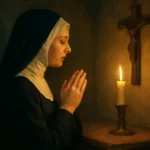
In the Catholic tradition, the night is not a time of mere stopping; it is a sacred moment when a believer can rest in God’s presence, review the day with honesty, ask for mercy, and entrust the night to divine care.
A thoughtful routine of nighttime prayers can become a steady compass for the soul—cooling anxieties,
orienting the conscience, and preparing the heart for the gift of sleep. This article offers a practical guide to several
forms of Catholic nighttime prayer, from the liturgical practice known as Compline to flexible
personal and family routines. It is designed to be adaptable—whether you are single, married, parenting children,
or praying with a faith community.
What is night prayer in the Catholic tradition?
Night prayer, in its formal sense, has long been part of the Liturgy of the Hours (the official
daily prayer of the Catholic Church). The final prayer of the day is traditionally called Compline.
Compline is designed to seal the day with gratitude, forgiveness, and trust in God’s protection through the night.
Beyond the formal liturgy, Catholic Christians also practice personal night prayers, family bedtime
prayers, and occasional devotions such as saying the Rosary in the evening or praying short intercessions for loved
ones. The throughline in all these forms is a movement from thanksgiving to repentance, to intercession, and finally
to peace and trust in God’s watchfulness.
Why pray at night? Benefits of a bedtime prayer routine
Grace before sleep: Night prayers help us place the day into God’s hands, acknowledging our limits and
inviting divine mercy to shape our rest.
Peace and rest: A gentle, contemplative practice can ease stress, calm anxious thoughts, and improve
the quality of sleep.
Soul care: It invites ongoing conversion and honesty—acknowledging mistakes, asking forgiveness, and
seeking transformation for tomorrow.
Protection and care: Traditional Night Prayer often asks for guardian angels and the Holy Family to
watch over us during waking and sleeping hours.
Consistency: A reliable routine builds spiritual memory. Regular practice helps prayer become
a habit rather than a sporadic act.
Core components of Catholic nighttime prayer
Although there are many variations, a meaningful night prayer generally follows a recognizable arc:
Opening gesture and invocation: The Sign of the Cross or a brief invocation to the Holy Trinity and a
gentle invitation for God’s presence to accompany the night.
Gratitude and reflection: A short inventory or examen of the day, noting God’s blessings and any
moments of fault or omission.
Confession or contrition: A sincere acknowledgment of sins or failings, with a readiness to seek
forgiveness and to amend, if needed.
Petitions: Intercessions for loved ones, the Church, the world, and personal needs, followed by
expressions of trust in God’s care.
Scripture, canticle or psalm: A brief Scriptural passage, a Psalm, or a Canticle (such as the
Magnificat or Nunc Dimittis) to sanctify the night with sacred words.
Lord’s prayer and concluding blessing: The Our Father, a concluding prayer of blessing, and a
request for a peaceful night.
Below are common practical patterns you can adopt. Each pattern can be adapted to time available—
from a quick 5-minute pause to a more contemplative 15–20 minute reflection.
Opening and grounding prayers
Sign of the Cross and a short invocation: «In the name of the Father, and of the Son, and of the Holy Spirit.
Amen.»
Invocation: A brief statement like “Come, Holy Spirit; fill my night with clarity and grace.”
Thank God for the day’s blessings—family moments, work done with integrity, acts of kindness, and opportunities
for growth.
Notice where the day fell short: deliberate sins, lost opportunities for mercy, or moments of impatience. Offer
contrition and ask for God’s mercy.
Intercessions
Pray for your loved ones, for the poor and marginalized, for Church leaders, for safety, for peace, and for
guidance in decisions you will face tomorrow.
Scripture, canticle, or psalm
A short scriptural reading (1–3 verses) or a psalm. If you choose a canticle, you might pick the Magnificat
(the Song of Mary) or the Nunc Dimittis (the Song of Simeon) as a nighttime blessing for the day’s end.
Concluding prayer and blessing
A concluding prayer for trust—like asking for a restful sleep and protection through the night.
The Our Father or another familiar prayer, followed by a blessing or the blessing of sleep.
Variations of nighttime prayers
1) Compline (the official Night Prayer of the Liturgy of the Hours)
Compline has a distinct structure that varies slightly across liturgical settings (Roman, monastic
traditions, or adapted local practice). It typically includes:
Opening verse and confession of sins, if desired.
Psalmody (one or more short psalms) interwoven with canticles and a brief canticle (often the Canticle of Simeon).
Thanksgiving and intercessions.
Reading (in some traditions, a short scripture reading) and a responsory or concluding prayer.
Final blessing, asking for a peaceful night and God’s protection with the angels.
If you are using Compline in a parish or retreat setting, you may follow the published prayers for that date. In a
home setting, you can adapt the structure to create a simple but faithful version that preserves the character of
night prayer.
2) Personal night prayer
When praying alone, you can tailor your practice to personal needs, energy, and time. A compact version might
include:
Opening glimpse of God and a quick reminder of your day’s gifts.
Examen: ask, “Where did I notice God’s presence today? Where did I fall short?”
Two or three intercessions for people you love or current concerns.
A brief scripture reflection (one verse or a single line from a Psalm).
Closing prayer or the Our Father, followed by a quiet moment of surrender to sleep.
3) Family nighttime prayer
In a family, night prayers can be a short, shared ritual that strengthens bonds and fosters spiritual
conversation. A family routine might include:
The Sign of the Cross together and a brief blessing for each family member.
A short reading relevant to daily life or a family virtue (patience, generosity, gratitude).
Simple intercessions for the family, neighbors, and those in need.
Group recitation of the Our Father and a closing blessing with a candle or crucifix present.
Some families or individuals pray the Rosary in the evening. The Rosary can be prayed slowly, with
contemplation of the mysteries that reflect light and darkness, healing and hope. An evening Rosary might focus on
the Luminous or Joyful mysteries as a way to end the day with gratitude and
steadfast faith.
5) Bedtime prayers for children
A child’s nighttime prayer can be warm and simple. Consider a routine that includes:
A short blessing for the child and a couple of kind words about what made the day special.
A friendly reminder to forgive and be forgiven, followed by a short, comforting prayer for safety and sleep.
A child-friendly meditation on God’s love, often using a favorite image (the blue sky, a guardian angel, or a guardian
saint) to anchor trust.
A practical, step-by-step nightly routine you can try
Below is a user-friendly blueprint that you can adjust to your schedule, personality, and spiritual tradition.
It emphasizes intention, not length.
Prepare the space: dim the lights, put away screens, light a small candle if you wish, and create a calm
environment that invites prayer rather than distraction.
Begin with a sign of blessing: make the Sign of the Cross, invite God’s presence, and name one thing
you are grateful for from the day.
Review the day: offer a brief examen—thank God for the good, acknowledge what needs mercy, and consider what
tomorrow asks you to become.
Offer intercessions: lift up family, friends, leaders, the wounded, and the marginalized; entrust
to God the concerns you carry about tomorrow.
Read one short Scripture passage or recite a Psalm or Canticle for evening reflection.
Pray the Our Father or a short closing prayer of surrender to God’s care, followed by a blessing for
yourself and others.
End with silence: a moment of stillness, listening for God’s small, gentle voice as you prepare to sleep.
You can extend or shorten this routine. The goal is consistency and honesty—to
bring your day to a close in truth and hope, and to invite God to be with you through the night.
Sample short nightly prayer you can use tonight
In neighborhoods and bedrooms around the world, believers offer a simple prayer like this:
«Dear God, thank you for today’s blessings, for the people I love, and for your mercy. I ask forgiveness for the times I
hurt others or hurt you with my thoughts or actions. Please watch over me tonight, guard my sleep, and refresh me with
your peace. May I wake tomorrow ready to love you and my neighbor more fully. Amen.»
Sample longer Compline-inspired night prayer (adaptable for home use)
This version is designed to resemble liturgical Compline while remaining suitable for personal use.
You can read it aloud or pray it in your heart.
Opening: In the name of the Father, and of the Son, and of the Holy Spirit. Amen.
Opening prayer: O God, come to my assistance. Lord, make haste to help me. Jesus, Mary, and Joseph, be with me tonight.
Scripture or psalm: A short verse or a verse from a Psalm that speaks of God’s faithfulness and protection.
Examen (brief): For this day, where did I show love? Where did I fail? What can I do tomorrow to love more?
Contrition: I am sorry for the times I chose fear over faith, anger over patience, and pride over humility. Please forgive me.
Intercessions: For family, friends, parish, the hungry and sick, and those who suffer in our world.
Canticle or hymn: The Canticle of Simeon (Nunc Dimittis) or the Magnificat, offered as a blessing on the night.
Our Father and a final blessing: Our Father, who art in heaven…; may the Lord bless us, defend us from all danger, and bring us to life everlasting. Amen.
Texts and prayer choices: building your library
A practical night prayer practice often benefits from a few reliable textual anchors. Here are some suggested
resources and types of prayers you might encounter in Catholic tradition:
Compline prayers from the Liturgy of the Hours, adapted for home use. Many parishes publish a simplified
version for congregants to pray after evening Mass or at home.
Psalm selections: short Psalms (for example, Psalms 4, 91, 134) and a canticle such as the Magnificat
or the Nunc Dimittis.
Intercessions for peace and mercy: petitions that reflect current needs in your community or world.
Personal Examen guides: brief questions that help you reflect on daily actions and motives.
Children’s bedtime prayers: simplified versions of the same themes tailored to younger hearts.
Choose one psalm or one canticle for a calm, predictable night rhythm.
Keep a small prayer book or notebook to record intentions and reflections, so you can revisit
them peacefully in future nights.
Rotate through different prayers to keep the practice vibrant—comparing a formal Compline with a simpler personal
prayer can be spiritually enriching.
Tips for making nighttime prayer a lasting habit
Consistency beats length: even a short daily time of prayer anchors your day. It’s better to pray for
five minutes every night than for an extended session twice a week.
Prepare the night before: gather a rosary, a Bible, a small candle, and a prayer card where you can
see it. Simple reminders help you begin when you are tired.
Avoid rushing: give yourself permission to slow down. Night prayers benefit from a slower pace and a more
contemplative mind.
Guard the sacred space: limit digital distractions; dim lighting; consider a physical space dedicated for prayer.
Make it accessible for all ages: involve children with a candle, a picture, or a short line from a
story; invite them to name someone they will pray for.
Use meaningful phrases: you don’t need elaborate words; real, heartfelt phrases carry more weight
than ornate language.
Common pitfalls and how to avoid them
Trying to pray when you are overtired or distracted—pause and come back later or shorten the session.
Turning night prayer into a lecture to God rather than a conversation—try to listen as well as speak.
Complication over simplicity—choose one or two elements you can repeat regularly, instead of an overly ambitious
routine that becomes discouraging.
Involving others in your nighttime prayer life
Pray with a spouse or family member; coordinated prayer strengthens bonds and shared faith.
Invite a friend to join the routine a few nights a week; you can exchange short reflections or scripture passages.
Join a local prayer group or parish evening devotion to reinforce the sense that your night prayer is part of a larger
faith community.
Catholic nighttime prayers are more than a ritual; they are a spiritual posture—an ongoing decision to
entrust today and tomorrow to God’s mercy, to seek forgiveness, and to invite divine peace into the deepest hours of
the night. Whether you practice the formal Compline, or cultivate a flexible personal or family
routine, the practice can become a sanctuary in which you discover renewed hope, inner healing, and a clearer
sense of direction for the days ahead.
If you are beginning this practice, remember that patience with yourself is part of the journey. Your
prayers may feel brief or imperfect at first, but the habit itself becomes a living bridge between your ordinary life and
God’s extraordinary love. May your nights be lit by trust, guarded by mercy, and opened to the grace that comes with
sleep—a grace that prepares the heart to greet a new dawn with courage and generosity.

 Por Laura Jara