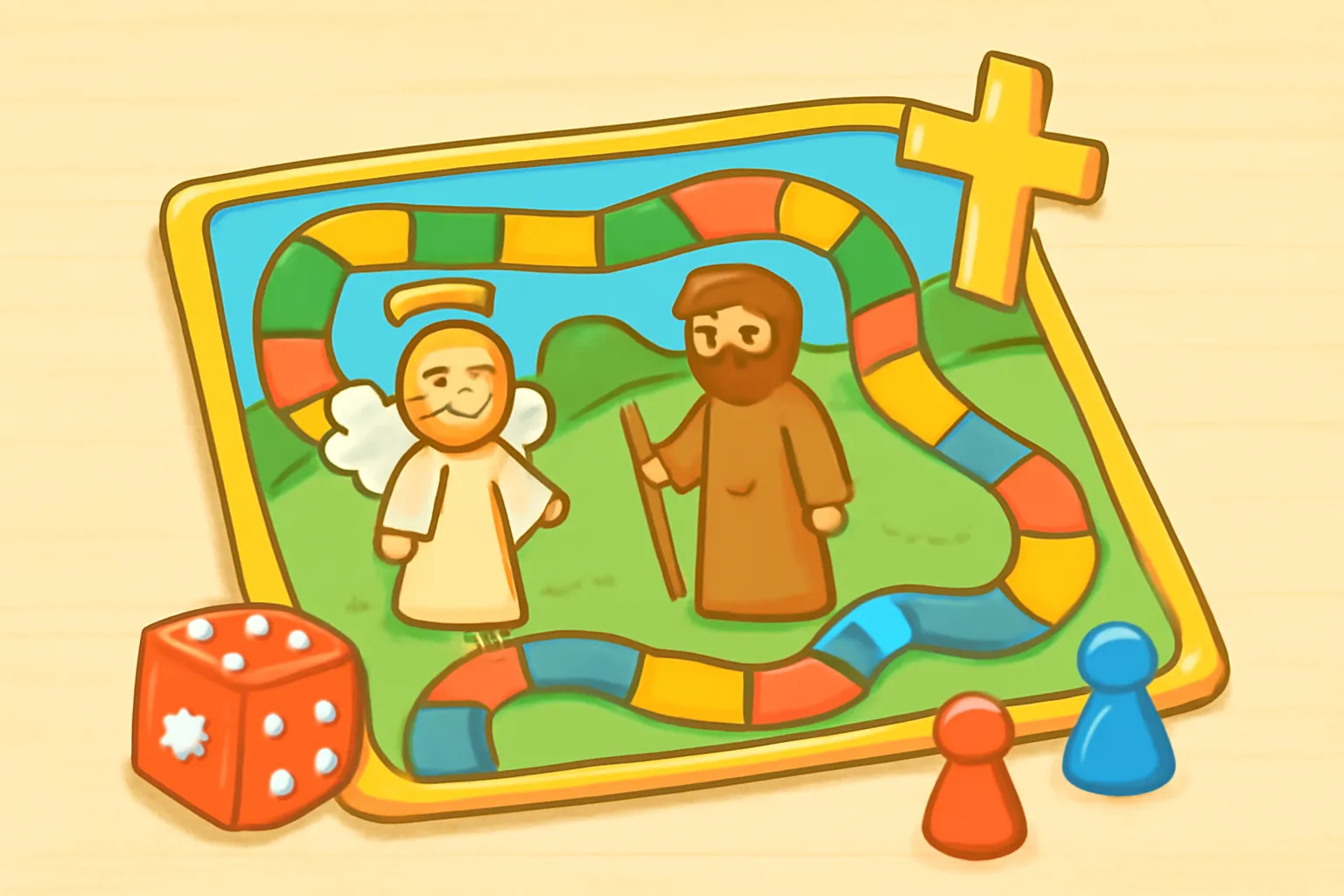
Exploring Bible Story Games offers a dynamic way to bring timeless narratives to life for children. These activities blend play with faith-based learning, helping kids understand Bible stories, memorize key verses, and reflect on values such as kindness, courage, and humility. When used well, Bible story games become a bridge between sacred texts and daily life, turning lessons into memorable experiences your children will carry with them long after the game ends.
Engaging children through hands-on learning makes biblical concepts more accessible. Games encourage active participation, collaboration, and critical thinking, while also catering to different learning styles—kinesthetic, visual, and auditory. The goals of Bible story games often include:
Comprehension: understanding the sequence of events, motives, and outcomes in Bible stories.
Memory: recalling verses, characters, and key details.
Character formation: identifying virtues and vices demonstrated by biblical figures.
Empathy: stepping into the feelings and choices of others within a story.
Cooperation: working with peers to achieve a shared goal.
Creativity: expressing insights through drama, art, and storytelling.
With thoughtful planning, Bible story games can be inclusive, adaptable to different ages, and sensitive to diverse faith backgrounds. The key is to balance play with purpose, keeping the focus on the learning goals while retaining the joy of play.
Active and Dramatic Bible Story Games
Movement-based and role-playing activities help children internalize narratives through action. These games are especially effective for younger kids or for larger groups where energy can be directed toward shared storytelling. Below are several ideas you can adapt to your setting, whether at home, Sunday school, or a church camp.
Creation Jumpstart: Creation Day Relay
Overview: A fast-paced relay game that introduces the six days of creation (and the seventh day of rest) through quick tasks. This activity reinforces the sequence and significance of each day.
What you need: Cones or markers for six stations, a start/finish line, cards with simple creation prompts (light, sky, land, plants, sun/moon/stars, animals), a timer, optional props (fruit, toy animals, fabric for water).
Split children into teams. Each team lines up behind their start line.
At each station, a prompt card is drawn. The team completes a quick task related to that creation day (for example, “plant a seed” at the plant station or “place a sun at the sky” using a toy or paper cutout).
After completing the task, team members tag the next person in line to run to the next station.
The first team to complete all six days (plus a rest-day prompt) wins.
Learning goals: recall of the order of creation, understanding that God spoke creation into being, and teamwork. Adapt the tasks for younger children by focusing on matching and simple actions; for older kids, add brief questions about what each day reveals about God’s character.
Noah’s Ark Animal Parade
Overview: A parade-style activity that duplicates the idea of gathering pairs of animals and marching to the ark. It reinforces memory and categorization while celebrating diversity in creation.
What you need: Animal cards (pairs), a tambourine or music for marching, a long piece of cloth or a faux “ark” area, space to move.
Place animal cards face down in a grid. Students take turns flipping two cards to find matching pairs.
When a pair is found, the student places the cards in the “ark” area and leads the class in a short march or chant about Noah and the ark.
If no match is found, flip the cards back over and the next student takes a turn.
Learning goals: memory for details, early categorization skills, and a simple grasp of the flood narrative. For variations, you can add a brief retelling prompt after a pair is found (e.g., “What two things did Noah bring into the ark?”).
Moses and the Red Sea Relay
Overview: A teamwork challenge that visualizes the miracle of the Red Sea parting, emphasizing courage and faith.
What you need: A long line of blue fabric or paper to represent water, markers to create a “sea” path, a staff prop, and biblically themed creeds or prompts at stations.
Split into two teams. Each team must cross the “sea” by stepping on the blue fabric at designated stepping points.
Parting the Red Sea: At a signal, teams move the “sea” aside (pull back the fabric) to reveal a safe crossing path. The team then crosses on the path.
At the far end, participants retell a short element of the Moses story or share what a leader can learn from Moses’ faith.
Learning goals: understanding of lead-follow dynamics, faith under pressure, and the relational leadership qualities of Moses. Emphasize safety and ensure soft, padded surfaces for running.
David and Goliath Target Practice
Overview: A safe, skill-building activity that introduces the story’s theme of faith and courage through target practice.
What you need: Foam balls or soft discs, a cardboard or lightweight wooden target (painted with stripes or a silhouette of a giant), markers for scoring.
Set up targets at varying distances. Have each participant take a turn trying to hit the target.
Briefly narrate the David and Goliath story and invite kids to discuss what made David brave.
Record scores and celebrate attempts, highlighting the courage shown rather than only success in hitting the target.
Learning goals: confidence, reflection on faith and courage, and the idea that small choices can have big effects. Adapt the difficulty by adjusting distance or replacing targets with simple shapes for younger children.
Memory, Quizzes, and Thematic Challenges
Memory games and knowledge challenges help solidify details from Bible stories and encourage healthy competition in a faith-centered context. The activities below blend recall with gentle learning goals and can be used as warm-ups, mid-session energizers, or closing reflections.
Bible Story Memory Match
Overview: A classic memory card game where players match story cards with corresponding event descriptions or verse snippets.
What you need: A set of paired cards (one card with a scene or character, the other with a brief description or a relevant verse reference).
Shuffle and lay cards face down in a grid.
Players take turns flipping two cards at a time, trying to find matching pairs (scene with its description or verse).
When a match is found, the player keeps the pair and takes another turn.
Learning goals: memory skills, story association, and verse familiarity. For younger children, use larger images and shorter texts; for older kids, include more complex verses or deeper explanations.
Parable Pictionary
Overview: A drawing game focused on parables or moral lessons. Kids illustrate the story’s main point while teammates guess the parable.
What you need: Whiteboard or paper, markers, and a list of parable prompts (e.g., the Good Samaritan, the Lost Sheep, the Mustard Seed).
One player draws a scene representing a parable without using words or letters.
The rest of the team guesses the parable based on the drawing within a time limit.
Switch players after each round.
Learning goals: comprehension of parables, visual interpretation, and group communication skills. Encourage respectful discussion about the moral lessons after each round.
Bible Story Timeline Sort
Overview: A sequencing activity where kids place events in the correct order to reinforce narrative flow and cause-and-effect reasoning.
What you need: Event cards with key moments from a single Bible story or from a group of related stories, a timeline strip or floor space marked with numbers.
Provide an initial example by placing a known sequence on the timeline.
Have the children arrange the remaining event cards in the correct order.
Read the story together and confirm the proper sequence, adding extra context as needed.
Learning goals: narrative sequencing, attention to detail, and memory reinforcement. Use smaller sequences for younger kids and longer, more complex timelines for older children.
Crafty and Visual Bible Story Activities
Craft-based activities are excellent for creating tangible reminders of Bible stories. They offer a creative outlet while reinforcing the message and details of the narrative.
Story Stones and Visual Symbols
Overview: Paint or draw simple symbols on smooth stones that represent elements of a Bible story. Stones become portable storytelling prompts for future discussions.
What you need: Smooth stones or pebbles, acrylic paints or markers, sealant, a list of symbols (e.g., a fish for Jesus’ miracles, a boat for Noah, a staff for Moses).
Choose a story and brainstorm key symbols that represent its themes or characters.
Decorate stones with the appropriate symbols. Allow time to dry and seal the paint.
Use the stones in future storytelling sessions; kids can draw a stone from a bag and retell the associated part of the story.
Learning goals: symbolic thinking, memory, and personal engagement with Scripture. Stones can be used over months to build a visual library of biblical themes.
Story Dioramas: Scenes from Scripture
Overview: Dioramas give kids a tactile way to represent a scene, encouraging attention to detail, spatial reasoning, and collaborative storytelling.
What you need: Shoeboxes or cardboard, construction paper, glue, scissors, small figures or printable cutouts, color supplies.
Assign each child a scene (e.g., Creation, Noah’s Ark, David and Goliath, the Nativity).
Children create a diorama using the supplied materials, focusing on key elements and characters.
Ask each child or group to present their scene, explaining the choices they made and how the event unfolded.
Learning goals: attention to narrative details, creativity, and public speaking skills. Provide alternatives for kids who prefer not to build a diorama—storytelling cards or digital slides can be a substitute.
Color-Coded Verses and Illustration Journals
Overview: A journaling activity that combines color-coding and illustration to reinforce memory and personal reflection on Scripture.
What you need: Notebooks or loose sheets, colored pencils or markers, a selected set of verses, sticky notes for quick prompts.
Assign a verse or short passage to each child. Give them a color that represents the theme (e.g., blue for trust, red for courage).
Children color-code the verses and illustrate a scene or emotion associated with the passage in their journal.
Periodically, invite kids to share their pages and discuss how the verses apply to everyday life.
Learning goals: engagement with Scripture through creative expression, personal application, and verse retention. This activity also suits children who prefer quiet, reflective tasks.
Storytelling tools transform Bible narratives into collaborative, interactive experiences. Story dice, prompt cards, and circle retelling help children practice narration, sequencing, and ethical reasoning while staying rooted in Scripture.
Story Dice: Roll-and-Relate
Overview: A set of dice with pictures or prompts that prompt children to add to a narrative or connect a verse to a character’s choice.
What you need: A set of story dice (or make your own with blank dice and stickers), a whiteboard or notebook for retelling, optional verse reference cards.
Roll the dice to determine a direction in the story (e.g., “a challenge, a choice, a friend, a miracle”).
Participants take turns adding a sentence or action to the growing story, guided by the prompt.
After several rounds, relate the final narrative to a Bible story and discuss the moral of the tale.
Learning goals: narrative construction, making connections between events, and oral communication. Use this format to practice retelling biblical episodes with a modern twist.
Parable Cards: Quick Reflections
Overview: A deck of cards featuring parables, key symbols, and reflection questions designed to spark discussion and moral reasoning.
What you need: A deck of parable cards (either printed or homemade) and a discussion guide with prompts like “What does this parable teach about mercy?”
Draw a card and read the parable’s title or a brief summary.
Respond to the prompt on the card by sharing a personal connection or a practical application.
Encourage respectful dialogue and invite kids to propose a modern scenario that aligns with the parable’s lesson.
Learning goals: ethical reasoning, empathy, and the ability to apply biblical principles to contemporary life.
Group Projects and Family Night Ideas
Group activities create community and give families a shared rhythm of faith-filled fun. The following ideas can be used in Sunday school, family evenings, or church events, and they are designed to be scalable for various group sizes.
Seasonal Bible Story Stations
Overview: Create themed activity stations around a story or a section of Scripture. Families rotate through stations in a structured format, exploring elements from multiple angles.
What you need: A set of stations (e.g., Creation, Exodus, Psalms of Praise, Jesus’ Miracles), simple station guides, supplies for each station (craft materials, movement activities, or storytelling prompts).
Prepare the stations with clear goals and safety considerations. Assign a facilitator to each station.
Families rotate through stations in small groups, spending 8–12 minutes at each stop.
Wrap up with a short family reflection or shared prayer service, summarizing what was learned across the stations.
Learning goals: cross-disciplinary understanding (narrative, art, movement), social interaction, and spiritual reflection. This format works well for church camps, VBS, or regular family nights.
Service-Learning Script and Activity Pack
Overview: Combine a short scripture-based play with a community-service task to reinforce applying faith to life outside the church walls.
What you need: A short script adapted from a parable or biblical event, props for the play, and a simple service project (e.g., making care bags, writing letters to isolated neighbors, or assembling snack kits).
Rehearse a brief script focused on a specific theme (compassion, generosity, or forgiveness).
Perform the skit for an audience (parents, other groups, or in a church foyer).
Engage in a service project together as a practical application of the lesson learned in the play.
Learning goals: moral action, teamwork, and real-world application of biblical values. Highlight that faith is lived out through acts of service.
Bible story games should be adaptable to different ages and settings. What works for preschoolers may need simplification for older children, while older kids may benefit from more complex challenges and deeper reflection. Here are practical guidelines to tailor activities to your group:
Preschoolers: Shorter activities, plenty of modeling, and a strong emphasis on sensory experiences. Use simple narratives, large visuals, and gentle, supervised movement.
Early elementary: Add a bit more structure with clear instructions, longer storytelling segments, and opportunities for children to retell the story in their own words or through a drawing.
Upper elementary: Introduce more open-ended questions, longer memory challenges, and activities that require planning and collaboration, such as designing a small service project.
Other practical tips include:
Set clear behavioral expectations and a simple safety plan for physical activities.
Provide alternatives for children with sensory or mobility needs; every activity should be adaptable to different abilities.
Balance competitive elements with collaborative ones to ensure a positive, faith-centered tone.
Use diverse Bible stories that reflect different cultures and perspectives to broaden understanding and respect.
Creating Thematic Units: A Practical Blueprint
If you’re a teacher or group leader planning a series, consider organizing Bible story games into thematic units. A two- to four-week unit can cover a single theme (e.g., Courage in the Bible) or a chronological arc (Creation to the Exodus). Here are components to include in a cohesive unit:
Theme declaration: Explain the core lesson (e.g., trusting God in difficult times) and how the activities will reflect that theme.
Story selection: Choose a sequence of stories that illustrate the theme. For Courage, you might include David and Goliath, Daniel in the Lion’s Den, and Shadrach, Meshach, and Abednego.
Activity mix: Plan a blend of games, crafts, memory activities, and a service or mission project that ties to the week’s message.
Reflection time: End each session with a short discussion or prayer that invites kids to apply what they learned to their own lives.
Facilitating Bible Story Games with Care
Facilitating these activities requires sensitivity and a thoughtful approach to faith, culture, and child development. Consider these best practices:
Honor diverse backgrounds: Some families may have different levels of familiarity with biblical texts. Provide clear, non-pressured explanations and invite questions without pressuring belief.
Focus on the message, not just the activity: Ensure every game connects back to a biblical truth or value. Debrief after activities to bridge play and learning.
Be mindful of safety: Prioritize physical safety for movement-based games and offer non-physical alternatives when needed.
Encourage participation: Create a welcoming environment where every child can contribute, regardless of skill level. Pair quieter children with patient teammates to boost confidence.
Beyond Entertainment: The Educational Benefits
Effective Bible story games do more than entertain. They foster a multidisciplinary learning experience that combines literacy, art, history, and ethics. Some of the lasting benefits include:
Textual engagement: Kids encounter verses and narratives in varied formats, reinforcing reading and comprehension skills.
Critical thinking: Analyzing parables or decisions within a story helps children discern motives, consequences, and moral implications.
Ethical reasoning: Group discussions about choices in stories cultivate empathy and responsible decision-making.
Creativity: Art, storytelling, and dramatization stretch imagination while keeping faith at the core.
Community and belonging: Shared activities foster a sense of belonging and mutual encouragement within families and church communities.
Digital and Tabletop Extensions
While hands-on activities are the heart of Bible story games, you can extend learning with digital tools and tabletop experiences that align with the same themes. Consider these options as complements rather than replacements:
Story-driven apps and e-books: Select age-appropriate apps that reinforce biblical narratives through interactive storytelling, quizzes, and reflective prompts.
Tabletop card games: Create or customize card games that mirror parables, miracles, or biblical events. These can be played during family nights or Sunday school settings.
Online scavenger hunts: Design safe, scripture-focused scavenger hunts that lead kids through stories and verses, encouraging teamwork and digital literacy.
Bible Story Games offer a vibrant way to embed spiritual truths into children’s everyday lives. By combining movement, memory, crafts, drama, and thoughtful reflection, these activities transform familiar stories into living experiences. The ultimate aim is not only to memorize events but to cultivate wholesome character, a love for Scripture, and a disposition to live out one’s faith with courage, kindness, and integrity. Whether you are guiding a Sunday school class, a family game night, or a summer camp, these games provide versatile, meaningful ways to explore Bible narratives with energy, joy, and purpose.

 Por Laura Jara