Baptism at Home: A Step-by-Step Guide to Performing a Personal Baptism Safely
Many Christians see baptism as a sacred rite that publicly declares faith and marks a new beginning within the spiritual family. For some families and individuals, circumstances—whether practical, logistical, or devotional—make an at‑home baptism a meaningful alternative to a church ceremony. This article provides a comprehensive, practical guide to conducting a personal baptism at home in a way that emphasizes reverence, safety, and spiritual integrity. It explores theological considerations, planning steps, safety practices, and a clear, step‑by‑step process you can adapt to different Christian traditions. You will find variations in language and practice throughout, reflecting the diversity of approaches to baptism at home while keeping the focus on intention, consent, and community blessing.
Understanding the practice: why families consider at-home baptism
The meaning of baptism in different traditions
Baptism has different theological emphases across denominations. In some traditions, it is a sacrament administered by ordained clergy, symbolizing cleansing from sin, regeneration, and entry into the body of Christ. In others, baptism is still a public declaration of faith and a rite of initiation that may be performed with lay leadership or within the family context, provided certain guidelines are followed. When you pursue a home baptism, you are aligning the ceremony with personal devotion, family involvement, and a desire for a meaningful ritual that speaks to your home community. It’s important to understand your denomination’s teaching on who may administer baptism and whether any church oversight is required.
When an at‑home baptism is appropriate
There is a genuine desire to celebrate faith at a location that holds deep meaning for the person being baptized or for the family.
Access to a church facility is limited due to distance, health, or scheduling, yet the rite remains central to spiritual life.
A local congregation or spiritual mentor supports the decision and provides guidance to ensure doctrinal alignment and liturgical dignity.
All participants understand the symbolism and purpose of the rite, and consent to their roles in the ceremony.
Legal, cultural, and community considerations
While baptism is a religious rite, practical matters still matter. Consider the following:
Check with your faith community about any records, certificates, or liturgical requirements related to at‑home baptism.
Acknowledge safety, especially with water use and space setup, to prevent accidents during the rite.
Respect the dignity of the ceremony by emphasizing prayer, vows, and blessing, rather than simply a ritual act.
Be mindful of any local regulations related to gatherings, especially if many people, or children, are present.
Planning for a safe and meaningful at‑home baptism
Thorough planning helps ensure that the ceremony is both safe and spiritually enriching. Below are essential planning considerations, with practical steps you can follow to prepare a home baptism that honors tradition while staying sensitive to the home environment.
Permissions, witnesses, and accountability
Identify an authority or mentor in your faith community who can advise on the rite and, if required, authorize the ceremony.
Decide who will be present as witnesses. In many traditions, two or three witnesses are customary to attest to the sincerity and form of the vow.
Ensure that the person being baptized consents freely, with understanding of what the rite represents, especially if the candidate is a minor with parental consent.
Choosing the setting, time, and layout
Select a space that can be prepared with minimal disruption and where water use can be managed safely (kitchen, bathroom, or a room with a waterproof surface).
Choose a time when the participants can focus, away from distractions and noise, to convey the solemn nature of the rite.
Prepare a simple and respectful setup: a clean area, a basin or tub for water, towels, and a chair or kneeling area if immersion is part of the plan.
Water, materials, and attire
Decide on the method of baptism: immersion, pouring, or sprinkling, in keeping with your tradition and practical safety considerations.
Use clean water at a comfortable temperature (neither hot nor icy cold). If immersion is used, ensure the space can accommodate a controlled, shallow immersion without risk of slipping or slipping hazards.
Have the necessary items on hand: basin, pitcher or cup for pouring, towels, a white cloth or robe, and any symbolic items such as oil for anointing (if your tradition includes it) and a candle for lighting symbolism.
Wear modest, appropriate clothing that is easily removable if full immersion is chosen, or provide a white garment to symbolize purity if that is part of your tradition.
Scripture, prayers, and vows
Prepare a short reading from Scripture that speaks to baptismal themes such as cleansing, new life, and being joined to Christ or the church.
Draft a brief set of vows or affirmations appropriate to the tradition and the personal faith journey of the candidate.
Plan a closing blessing and a short prayer for the Holy Spirit’s guidance in the new life begun through baptism.
Documentation and follow‑up
Decide how to document the ceremony. This could include recordings of the vows, a written certificate, or a simple letter noting the date and participants.
Consider how the baptism will be acknowledged within the wider faith community—through church records, a devotional pamphlet, or a confirmation of the sacrament in a church setting.
Plan a simple post‑baptism practice, such as a family meal of thanksgiving or a time of reflection with a devotional reading.
Environment and safety considerations for at‑home baptism
The safety of all involved is essential. A well‑planned, careful setup reduces risk and helps participants focus on the meaning of the rite. Here are practical safety guidelines tailored to an at‑home setting.
Water safety and venue setup
Ensure the water source is stable and uncontaminated, with clean containers and a way to keep the area dry and non‑slippery.
Prevent slips by laying down non‑slip mats, using towels to absorb splashes, and keeping cords and objects away from the immersion area.
Have an accessible way to support anyone who might feel lightheaded or unsteady during the rite. A sturdy chair or a wall for balance can be helpful.
Be mindful of temperature: water should be comfortably warm but not hot, to avoid burns or discomfort.
Hygiene, privacy, and respect
Maintain hygiene by using clean containers and fresh water for each participant if multiple people are involved.
Respect privacy and dignity: ensure the space is quiet, with minimal interruptions, and that personal conversations remain confidential within the ceremony group.
Appropriate attire and modesty should be observed; dress choices should support the solemn nature of the ceremony.
Accessibility and inclusion
Adapt the ceremony for individuals with different needs. For someone who cannot undergo full immersion due to medical reasons, consider a pouring or sprinkling rite with symbolic meaning and the same vows and prayers.
Involve family members or mentors who can provide guidance, support, and reassurance to a candidate who is nervous or uncertain.
Step-by-step: a practical, at‑home baptism guide
Below is a clear, practical sequence you can follow, with variants for immersion, pouring, or sprinkling. Adapt the language and actions to fit your tradition while preserving the core elements of baptism: public profession of faith, cleansing or blessing, and entry into the faith community.
Clarify the rite type: Decide whether you will perform immersion, pouring, or sprinkling. Each method has symbolic significance, and your tradition may guide this choice.
Gather witnesses: Invite 2–3 trusted witnesses who can attest to the sincerity of the candidate and the integrity of the rite. They serve as a community sign of accountability and support.
Prepare the candidate: If the person being baptized is a minor, obtain parental consent and involve guardians in the planning. For adults, ensure informed consent and explain the meaning of the vows and the blessing.
Set the space: Create a quiet, respectful atmosphere. Arrange a basin or tub, towels, a chair, and a place for prayer or readings. Ensure everyone can move safely around the area.
Prepare the water: Fill the basin with the appropriate amount of water for the chosen method. If immersing, test the depth to ensure safety and comfort; if pouring or sprinkling, ensure the container is stable and easy to handle.
Dress the participants: Have the candidate wear an appropriate garment or a simple white garment to symbolize new life. Provide towels and a change of clothes if needed.
Begin with prayer: Open the ceremony with a prayer for blessing, guidance, and the presence of the Holy Spirit. Invite the witnesses to join in this moment.
Read relevant scriptures: Choose a short passage that speaks to cleansing, new life, or God’s promise (for example, passages about washing, renewal, or the Spirit).
State the vows: The candidate (and possibly the witnesses) recites or affirms a prepared set of vows or statements of faith.
Perform the rite:
Immersion: Gently lower the candidate into the water, ensuring a safe, brief immersion, then raise them slowly and cradle them in a towel.
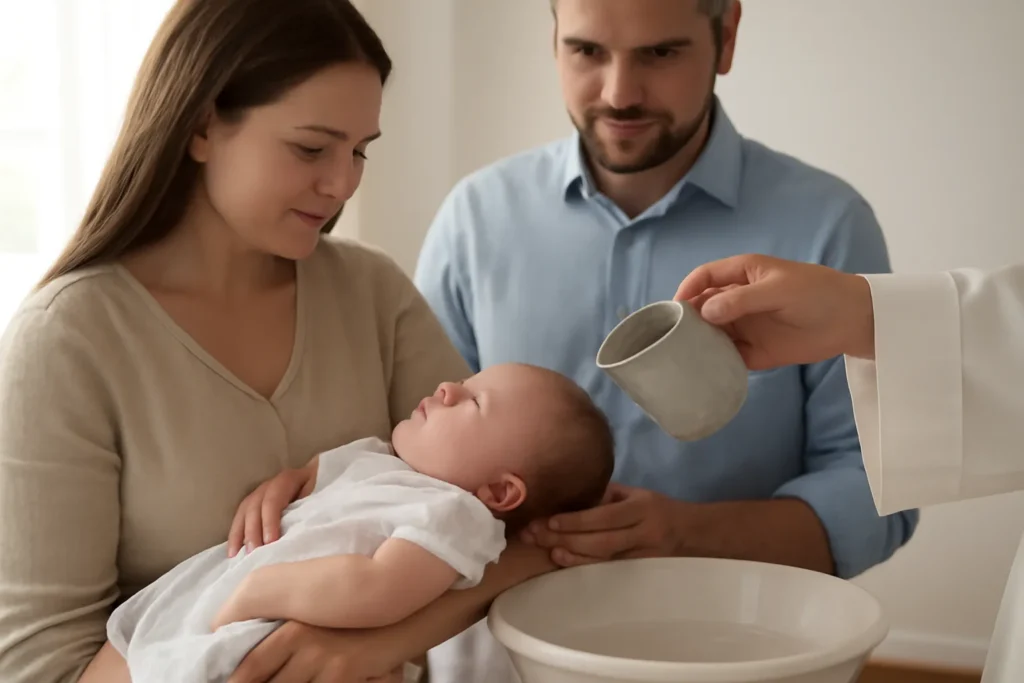
Pouring: Pour water on the head in the form of a blessing on the person, moving from the forehead to the sides as a sign of cleansing and welcome.
Sprinkling: Sprinkle water on the head as a sign of cleansing and renewal, using a gentle, steady motion over the crown of the head.
Pronounce the blessing: Offer a blessing over the candidate, invoking the Spirit to guide their life in the faith and to unite them with the community of believers.
Close the rite: End with a prayer of thanksgiving, a call to ongoing faith, and a note about the next steps in the faith journey (membership, baptismal certificate, or church affiliation, as appropriate).
Post‑ritual steps: Help the candidate dry off, change clothes if needed, and share a moment of reflection or a short devotional. If your tradition includes a certificate or record, prepare and sign it in the presence of witnesses.
Documentation and celebration: Consider recording the date, participants, and a brief summary of the vows. Share a simple blessing or a gratitude moment with family after the ceremony.
Texts, prayers, and symbolism you might use or customize
A well‑prepared set of words helps frame the ceremony in a meaningful, scriptural, and personal way. Depending on your tradition, you may incorporate the following elements:
Scriptural readings: Short passages that speak to cleansing, new life, and God’s faithfulness (for example, passages about washing, renewal, or the Spirit’s work).
Affirmations of faith: Simple, age‑appropriate declarations of belief and intention to follow Christ and participate in the church community.
Prayers of blessing: Acknowledgments that the Holy Spirit would dwell within the candidate and empower their daily life in faith.
Symbolic elements: Oil for anointing (if part of your tradition), a white garment as a symbol of purity, a lighted candle representing guidance, and a prayer shawl or cloth for warmth and shelter.
Aftercare: nurturing the new life begun through baptism
A baptism at home is not a one‑time event but the beginning of a journey. After the ceremony, consider practical and spiritual next steps to support the new life in faith.
Spiritual nurture
Invite the new believer to ongoing devotional practices, such as daily prayer, Bible reading, or a short weekly reflection with the family.
Encourage participation in a faith community. If practical, arrange a baptismal companion or sponsor to support the person in their journey.
Plan a follow‑up gathering or family devotional time to reinforce the meaning of the vows and to celebrate the baptism together.
Documentation and community acknowledgment
Maintain a simple record of the ceremony, including the date, location, participants, and the vows made. This can be a personal keepsake or shared with the faith community as appropriate.
Provide a certificate or written note if your tradition issues baptismal certificates; ensure it is stored with care and respect.
Share the milestone with the broader faith community through your church or denomination’s preferred channels, if applicable.
Common questions about at‑home baptism
Many families have similar questions when considering an at‑home baptism. Below are answers to some frequently asked questions, presented to help you navigate practical, theological, and logistical concerns.
Is at‑home baptism legally or doctrinally acceptable?
The acceptability of a baptism at home varies by denomination and local practice. Some traditions require ordination or church oversight, while others permit lay leadership with appropriate guidance. Always consult your church leadership or a trusted spiritual mentor to ensure your plan aligns with doctrine and any required church protocols.
What if the candidate cannot be immersed due to health or safety concerns?
Many traditions allow for a pouring or sprinkling as a valid alternative to immersion. The key is to preserve the symbolism of cleansing, new life, and entry into the faith community, while ensuring the candidate’s safety and dignity.
How do you choose witnesses and ensure accountability?
Select witnesses who understand the significance of the rite and can attest to the ceremony’s integrity. They should be mature, trusted members of the faith community who can speak to the sincerity of the vows and the conduct of the ceremony.
What about record‑keeping and church correspondence?
Ask your faith leader or the church office what records are needed. Some traditions maintain baptismal registers or certificates. If you plan to share this milestone with a local congregation, coordinate with them to ensure proper documentation and reception.
While the core elements of baptism—confession of faith, a cleansing or blessing, and entry into the faith family—remain central, you can adapt the ritual to fit your context. Here are some variations you might encounter or choose to implement in an at‑home setting:
Family‑centered baptism: A ceremony that involves siblings, parents, and extended family members in prayers, readings, and the vows, highlighting intergenerational faith sharing.
Minimalist or symbolic ceremony: For homes with limited space or for personal reflection, focusing on a short prayer, a single reading, and a symbolic act of cleansing or blessing.
Rituals of renewal: Emphasizing repentance, gratitude, and recommitment as part of the baptismal journey, suitable for individuals who are reaffirming their faith.
Interfaith or multi‑religious considerations: If a mixed religious household desires a non‑liturgical welcome while maintaining respect for each tradition, you can design a ceremony that honors core values without contradicting any tradition.
Baptism at home can be a profoundly meaningful expression of faith, commitment, and community when approached with thoughtful planning, doctrinal alignment, and practical safety. Whether you call it an at‑home baptism, a baptism at home setting, or a domestic baptism, the essential elements are the same: a sincere profession of faith, a cleansing or blessing symbolizing new life, and a welcoming into the body of believers. By preparing carefully—considering theological context, securing consent and witnesses, arranging a safe environment, and following a clear, respectful step‑by‑step process—you can conduct a personal baptism that is both safe and deeply meaningful for the participant and the family as a whole.
Guidance from your local church or denomination’s official resources on baptism and rites performed outside the church building.
Scholarly or devotional books on baptismal theology that discuss immersion, pouring, and sprinkling across traditions.
Prayers, readings, and liturgical templates that can be customized for an at‑home baptism.
Hymns and spiritual songs that reflect themes of cleansing, new life, and initiation into the faith community.
Safety checklists and practical home‑improvement tips for creating a safe, respectful ceremony space.
Remember: the most important element of any baptism is the intent of the heart and a commitment to live out the faith in daily life. By honoring the sacred character of the rite, ensuring appropriate guidance, and prioritizing safety and reverence, you can affirm a lifelong journey of faith that begins in the warmth and wholeness of a home setting.







Leave a Reply