A Look Back at the Last Supper: Origins, Context, and Meaning
The Last Supper is more than a single painting; it is a defining moment in the history of art, religion, and intellectual culture. Its roots lie in a biblical event—the moment when Jesus Christ reveals that one among his closest followers will betray him—but the depiction grew into a complex masterpiece that has shaped how generations imagine sacred meals, mystical communities, and human emotion. This article explores the history of the scene, the symbolism embedded in Leonardo da Vinci’s interpretation, and the deeper meaning behind what many call the pinnacle of the Renaissance in painting. From its commission in a Milanese cloister to the modern efforts to conserve it, the Last Supper invites viewers to consider not only what is happening on the surface but what the scene communicates about faith, doubt, and a world in the middle of dramatic change.
Historical Roots: The Last Supper in Scripture and Tradition
The term Last Supper is rooted in the Gospel narratives of Matthew, Mark, Luke, and John, which describe Jesus sharing bread and wine with his apostles before his arrest and crucifixion. In the New Testament accounts, this meal marks a turning point—an institution of the Eucharist, a ritual that would become central to Christian worship. Across centuries, artists and theologians have treated this final meal as more than a historical event; it became a living symbol of community, betrayal, sacrifice, and redemption.
In medieval and early Renaissance art, depictions of the supper often focused on the moment of revelation or the drama of the apostles’ reactions. By Leonardo’s time, conceptions of space, light, and psychology allowed for deeper explorations of character, emotion, and conversation. The idea of painting a single, decisive moment—what some scholars call the instantaneous “snapshot” of a scene—found a powerful new expression in the Milanese walls where this iconic composition would endure for centuries.
The biblical event provides a narrative frame for examining loyalty, fear, and fidelity among close companions.
The cultural climate of the late 15th century fostered a shift toward human-centered portrayals of sacred figures, combining reverence with accessible human emotion.
The artwork’s setting in a Dominican or monastic context links prayer, contemplation, and communal meals in a way that resonates with both liturgical practice and daily life.
Commission, Location, and the Artist: Why this particular Last Supper exists
The commission for Leonardo da Vinci’s Last Supper came from a specific patron and a particular urban environment. In Milan, Ludovico Sforza, the Duke of Milan, asked the artist to decorate the dining hall of the Convent of Santa Maria delle Grazie, a space intended for contemplative meals and spiritual reflection. The choice of theme—the moment Jesus reveals that one of the Twelve will betray him—was charged with theological weight and dramatic potential.
The painting occupies a long, narrow refectory wall in the church-abbey complex known today as Santa Maria delle Grazie in Milan. The location was chosen not merely for its visibility but for the way the scene could be experienced by visitors entering the room from the dining corridor. This spatial arrangement influenced Leonardo’s approach to composition, perspective, and the rhythm of the figures.
Leonardo’s approach to the project
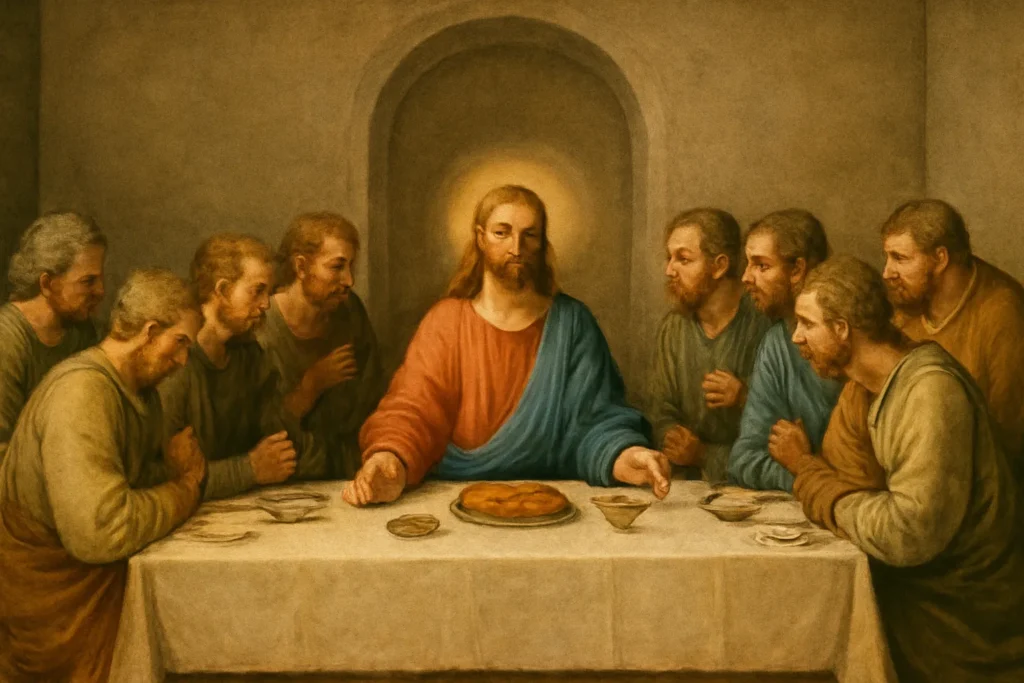
Leonardo’s execution of the Last Supper is often described as an experiment in technique and visual storytelling. He eschewed the more rigid, hierarchical depictions common in earlier Sacred Scenes to present a dynamic, narrative-driven interaction among the Apostles. Rather than a static group portrait, the painting unfolds as a sequence of responses to Christ’s announcement, with each apostle displaying a distinct demeanor—shock, questioning, astonishment, or sadness. This fluidity allowed for a nuanced portrayal of group psychology, a hallmark of the High Renaissance.
The dimensions of the mural—approximately 4.6 meters tall by 8.8 meters wide—combined with Leonardo’s single-point perspective, create a theatrical stage in which the central figure of Christ anchors the whole composition. The viewer stands in a particular position, and the architecture of the room, including windows behind the figures, reinforces a sense of depth and order that mirrors the spiritual order the scene suggests.
Technique, Style, and Innovations: How Leonardo Built the Masterpiece
The Last Supper is celebrated not only for its composition but for the provocative choices in technique that set it apart from many contemporaries. Leonardo’s materials, method, and handling of paint combined to create effects that scholars still discuss with passion. The experimental mixture of tempera and oil on plaster, rather than traditional lime wash fresco, was intended to achieve a more vibrant color and a more flexible surface for the dramatic figures. However, this approach also made the mural exceptionally fragile and susceptible to deterioration over time.
Materials and technique
The work’s surface reveals Leonardo’s interest in color modulation and layered light. While some earlier frescoes relied on a seamless, dry, matte finish, Leonardo’s solution allowed for subtle tonal shifts and intricate rendering of textures—from the robes to the skin tones. The trade-off was durability. The painting’s surface has suffered from the humidity, the plaster’s chemistry, and the environmental changes of centuries, leading to successive restorations in the modern era.
Composition and geometric logic
A defining feature of this masterpiece is its triangular composition centered on Christ. The vanishing point is positioned at Jesus’s head, creating a visual anchor that draws the viewer into the scene. The twelve apostles are arranged in four groups of three along two long rows, which reinforces the sense of movement and reaction as a living, breathing moment is captured. The architecture of the room—three windows across the back wall, the ceiling crossbeams, and the line of seats—works in concert with the figures to invite contemplation about both the scene and its symbolism.
Light, shadow, and psychological depth
Leonardo’s use of sfumato—the soft blending of tones that eliminates sharp outlines—adds a dreamlike quality to the faces and hands of the Apostles. This technique heightens the emotional resonance of the moment, allowing the viewer to sense a spectrum of feelings from incredulity to alarm. The interplay of light across faces and drapery is not merely decorative; it encodes character, allegiance, and even fault lines within the group.
Iconographic details and symbolic cues
Beyond the central action, certain visual cues carry symbolic weight. For example, the Friends of Christ are not merely reacting in isolation; their postures, gestures, and distribition across the panels suggest a coded dialogue about loyalty, faith, and the ultimate destiny of the group. The bread, the communal plate, and the cup of wine—while representing a sacred rite—also function as a theological language about covenant, sacrifice, and the continuity of the Church.
Symbolism in the Last Supper: Key Visual Motifs and Meanings
The language of symbols and hidden meaning in Leonardo’s Last Supper has fascinated scholars for centuries. The scene operates on multiple levels: it narrates a Biblical turning point, it embodies Renaissance humanist ideals, and it encodes profound questions about community, responsibility, and the fragility of trust. The following elements are often highlighted as central to the painting’s symbolism.
Triads, groups, and balance
The apostles are not arranged haphazardly; they appear in four groups of three, a choice that echoes the triadic structure found in sacred iconography. This arrangement fosters a sense of harmony and order, even as the mood becomes charged with tension. The triads also reflect medieval and Renaissance numerology, where the number three carries symbolic resonance—completeness, the Trinity, and the human-divine union present in a sacred meal.
Christ at the center: authority and humanity
Christ’s central placement is deliberate. He is calm but engaged, a figure of spiritual authority whose demeanor contrasts with the varied reactions of the Apostles. The portrayal captures the paradox of the divine presence among fallible humanity: the Redeemer who offers grace while acknowledging the betrayal that is to come. This juxtaposition invites viewers to reflect on faith’s durability in times of crisis.
Judas Iscariot: betrayal and shadow
Judas occupies a distinct position within the composition. In many versions of the story, he is shown with a more withdrawn posture, sometimes near the shadows or a door, and frequently with a bag of silver as a subtext to his impending betrayal. Leonardo’s treatment of Judas—often read as a somber, almost isolated figure—helps emphasize the moral complexity of the moment: even amidst a community bound by ritual and friendship, treachery can emerge.
The long dining table, the rows of chairs, and the architectural setting are more than background. They frame the action as a communal event—an actual shared meal rather than a purely symbolic or ornamental scene. The windows behind the figures create a luminous backdrop that might symbolize divine light or the unfolding world beyond the room’s walls. The space itself becomes a character in the drama, guiding our interpretation of the moment as both ordinary and extraordinary.
Meaning and Interpretation: What Leonardo’s Masterpiece Says About Faith, Knowledge, and Humanism
Over the centuries, critics, theologians, and artists have offered varied readings of the Last Supper. Some emphasize its religious drama—the betrayal, the institution of the Eucharist, and the quest for spiritual meaning. Others highlight the Renaissance humanist project—the elevation of human figure, emotion, and inquiry within sacred topics. Still others focus on the painting’s legacy as a visual laboratory for ideas about perception, psychology, and the capacity of art to reveal inner life.
Religious significance and ritual resonance
The Last Supper anchors Christian liturgy and devotion. By presenting the moment of betrayal in a vivid, emotionally charged way, Leonardo invites believers to consider the complexities of discipleship: the tension between fidelity and frailty, between communal faith and personal doubt. The painting makes the Eucharist—an essential rite—visible in its most intimate, human dimensions, reminding the viewer that sacred rituals are enacted among real people with real feelings.
Humanist echoes: the dignity of the human face
In the late 15th century, Renaissance humanism celebrated human reason, curiosity, and the dignity of individual experience. Leonardo’s Last Supper embodies this spirit by turning a sacred scene into a study of character. Each apostle’s reaction is a kind of psychological portrait. The faces, gestures, and conversations encoded in the composition invite viewers to engage with the drama on a personal level, recognizing themselves in the spectrum of responses to crisis.
Symbolic geometry and the language of sight
The geometry of the scene—the triangular composition, the vanishing point at Christ’s face, and the alignment of windows and ceiling—translates spiritual ideas into a visual grammar. The viewer’s gaze is guided toward the center, echoing the theological focus on Christ as the source of meaning and salvation. This geometric logic reinforces not only aesthetic balance but also a worldview in which order and purpose can be perceived even in moments of upheaval.
Historical influence and continued debate
The drama surrounding the Last Supper—its creation, its deterioration, and its restorations—has shaped art history as much as the painting itself. Scholars debate the exact sequence of Leonardo’s decisions, the physical conditions that led to deterioration, and the extent to which later restorations altered the original appearance. The ongoing conversation about interpretation—what is being communicated, to whom, and under what circumstances—keeps the painting alive in modern culture.
Conservation, Legacy, and Modern Context
The Last Supper has endured more than seven centuries of human attention, weather, and societal change. The work’s fragility, combined with its fame, has made conservation a central concern. In the 20th and 21st centuries, a series of delicate restorations sought to stabilize the mural while preserving Leonardo’s original intent as much as possible. The fresco’s long-term survivability required controlling humidity, temperature, and light exposure in a way that respects the delicate balance behind the plaster and pigment.
Conservation history: a brief timeline
Over the years, experts have undertaken multiple interventions to prevent further loss. These efforts involve meticulous cleaning, consolidation of flaking areas, and careful repainting where necessary. Each intervention aims to preserve the painting’s original composition and the emotional resonance of the figures, while acknowledging the reality that the mural’s surface has changed since Leonardo’s time.
Modern display strategies—such as controlled lighting, climate stabilization, and protective glazing—help minimize environmental stress while allowing visitors to experience the work in a setting that mirrors its original reverence. In this way, the Last Supper remains a living artifact rather than a static relic of the past.
Beyond its church walls, this iconic scene has entered global culture. The Last Supper has inspired countless reproductions, parodies, and reinterpretations in film, literature, and visual arts. It is a touchstone for discussions about fidelity to religious tradition, the intersection of science and art, and the ways in which great works of art can communicate across generations. Each reinterpretation invites new audiences to consider not only what is depicted but what it means to see, interpret, and remember.
Variations in Interpretation: How Different Views Treat the Final Supper
Across cultures and eras, the Last Supper has been imagined in multiple ways. Some scholars emphasize its narrative clarity, while others focus on the psychological depth of the Apostles. The scene has also inspired non-religious readings: it is understood as an exploration of trust, authority, and the moral choices that shape a group’s destiny. Different artistic schools have responded to the same moment with distinctive stylistic choices—ranging from solemn and restrained to bold and experimental—yet all converge on a common encounter with the power of a single decisive moment captured in paint.
In certain modern interpretations, the scene is read as a study in leadership, where the reactions of the Apostles illuminate the fragility of human will under pressure.
In others, the focus is on the transformative moment of sharing bread and wine, emphasizing the ritual as a living practice rather than a historical event.
In still others, the Last Supper is treated as a spiritual allegory for unity and the moral complexity of community life.
Educational value: teaching the scene today
For students of art history, theology, and cultural studies, the Last Supper offers a rich case study in how a single image can carry layered meanings. By examining composition, symbol, and historical context, learners gain insight into Renaissance innovations, the role of patrons, the relationship between sacred narrative and public display, and the enduring question of how great artwork communicates with viewers across time.
What This Means for Modern Audiences
The enduring appeal of the Last Supper is not merely due to its fame. It is the way Leonardo’s Masterpiece condenses drama, faith, and human psychology into a single moment where the sacred and the ordinary collide. From a visitor’s first sight of the mural to a scholar’s careful analysis of its technical details, the scene invites a disciplined curiosity about how art can reflect, refract, and even transform belief and perception.
For contemporary viewers, the Last Supper remains a powerful reminder of how communities must navigate uncertainty, how authority can be questioned, and how shared rituals provide a sense of continuity even in the face of betrayal. The painting’s lasting influence lies not only in its geometric precision or painterly technique but in its ability to provoke reflection on what binds a group—whether it is faith, friendship, or shared purpose—and what can happen when that bond is tested.
In studying this Last Supper across generations, readers can appreciate how a single work of art can function as a portal to history, philosophy, theology, and the practical craft of painting. Leonardo’s approach—grounded in observation, empathy, and a bold command of space—continues to offer a compelling model for those who seek to understand not just the image, but the people, ideas, and institutions that gave rise to such a landmark achievement.
In Summary: The Last Supper as a Convergence of History, Symbolism, and Meaning
The journey of Leonardo da Vinci’s Last Supper—from a commission in a Milanese refectory to a global symbol of artistic genius—illustrates how a composition can crystallize centuries of religious narrative, humanist thought, and technical invention. The painting’s history is as important as its imagery; its symbolism is as instructive as its beauty. The meaning behind Leonardo’s Masterpiece rests in the way it invites viewers to observe not only the moment of betrayal but the entire arc of community life: the way people respond under pressure, how rituals sustain memory, and how a shared meal can become a testament to faith, doubt, and the search for truth.
Whether approached as scripture in paint, as a demonstration of Renaissance innovation, or as a study in emotional realism, the Last Supper remains a living work of art. It encourages ongoing dialogue about how art communicates across time, how we read the faces and gestures of others, and how a single scene—recounted in centuries of interpretation—can continue to illuminate the human condition. In this sense, Leonardo’s creation is not only a historical artifact but a perpetual invitation to reexamine perception, belief, and belonging in the modern world.






Leave a Reply