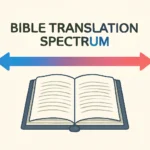
Choosing a Bible that is easy to read can make a big difference in daily devotional time, public reading, or personal study. The landscape of English Bible translations ranges from tightly controlled, formal language to dynamic, natural-sounding phrasing. This article explains what makes a Bible readable, highlights translations commonly regarded as user-friendly, and offers practical tips to maximize readability without sacrificing meaning or integrity.
Readability in a Bible is not a single feature but a combination of factors that affect how smoothly the text flows, how quickly ideas are grasped, and how comfortable it is to read aloud. Here are the key elements to consider:
Language and vocabulary: Everyday, familiar words reduce guesswork about unfamiliar terms. Short, crisp sentences help with comprehension.
Sentence length and structure: Translations that minimize long, complex sentences tend to be easier to follow, especially for newer readers or younger audiences.
Translation philosophy: Dynamic equivalence (thought-for-thought) aims for natural meaning in contemporary language; formal equivalence (word-for-word) emphasizes closer adherence to original wording but can be harder to read aloud.
Layout and typography: Larger fonts, generous line spacing, clear paragraph breaks, and readable verse numbering improve readability, especially for beginners or readers with visual challenges.
Cross-references and study aids: Helpful footnotes, glossaries, and maps can clarify difficult passages without cluttering the main text.
Consistency and inclusivity: Modern spellings, inclusive language where appropriate, and consistent terminology reduce distractions while reading.
Read-aloud quality: For sermons, devotionals, or family reading, a translation that sounds natural when spoken can be a major advantage.
Different readers have different needs. A devotional reader might prioritize readability and flow over strict word-for-word fidelity, while a student studying biblical languages may tolerate more complex phrasing in exchange for closer alignment with original texts. The goal is to find a balance that fits your purpose, your reading level, and your personal preferences.
Popular easy-to-read translations
Below are translations that are widely recognized for their accessible language and reader-friendly design. For each, you’ll find a brief overview of what makes it easy to read, as well as typical uses and strengths. Consider reading a sample page from any translation you’re evaluating to determine which voice resonates with you.
New International Version (NIV)
The NIV is often described as a balanced translation that sits between formal and dynamic equivalence. It aims to be faithful to the original texts while presenting them in clear, natural English. The result is a text that is easy to understand in everyday reading, public worship, and study alike.
Strengths: natural cadence, broad accessibility, strong readability for a wide audience.
Best for: general reading, family devotionals, and church services where clear communication is important.
Considerations: occasionally blends phrases to capture meaning, which may require brief study notes for precise nuance.
New Living Translation (NLT)
The NLT is purposefully designed for readability and flow. It uses dynamic equivalence to translate thought and meaning into contemporary English, often resulting in shorter sentences and a more conversational tone.
Strengths: exceptionally readable, excellent for new believers and those seeking devotional clarity.
Best for: newcomers to the Bible, family Bible time, and literature-like reading.
Considerations: as a dynamic-equivalence translation, some precise wording choices differ from more literal texts.
Contemporary English Version (CEV) / Common English Bible (CEB)
The CEV and its successor family, including CEB, are rooted in clear, modern English with straightforward syntax. They favor accessibility and practical understanding over dense historical phrasing.
Strengths: plain language, short sentences, minimal jargon, great for readers who want to grasp the meaning quickly.
Best for: readers who want a quick, straightforward read; youth and ESL learners often benefit.
Considerations: occasionally sacrifices liturgical or literary nuances found in more formal translations.
Good News Translation (GNT) / Today’s English Version (TEV)
The GNT, also known as TEV, emphasizes simple, everyday language. It is widely used in outreach contexts and is popular for its accessible syntax and vocabulary.
Strengths: exceptional readability; strong presence in educational and missionary contexts.
Best for: early readers, children’s programs, and introductory Bible study.
Considerations: some readers may encounter translation choices that reflect older or regional usage; check notes for context.
Easy-to-Read Version (ERV)
The ERV is explicitly crafted for readability, with short sentences and a focus on plain, natural language. It is a helpful option for readers who want simplicity without sacrificing essential meaning.
Strengths: predictable sentence length, glossaries, and straightforward phrasing.
Best for: readers who prefer a very accessible text, youth groups, or inclusive reading plans.
Considerations: as an intentionally simple text, it may not capture all nuanced renderings found in more literal translations.
Common English Bible (CEB)
The CEB seeks to balance readability with fidelity, using contemporary language that still respects the Bible’s literary features. It’s part of a broader effort to produce a version accessible to a broad audience without losing depth.
Best for: devotional reading, community Bible studies, and inclusive Bible reading programs.
Considerations: may differ from more traditional wording in some passages; consult study notes for context when needed.
Christian Standard Bible (CSB)
The CSB is recognized for its readability paired with careful accuracy. It aims to be faithful to the original languages while maintaining a smooth, accessible prose style that performs well in both personal reading and teaching contexts.
Best for: in-depth study with reliable readability, sermon preparation, and classroom use.
Considerations: may be slightly less familiar to readers who are used to older translations, but widely adopted in many churches.
New Century Version (NCV)
The NCV emphasizes simple, direct language and is often praised for youth-friendly readability and accessibility for beginning readers or those returning to the Bible after a long break.
Strengths: concise wording, high accessibility, suited for public reading and family devotionals.
Best for: early readers, ESL learners, and readers seeking a streamlined, easy-to-follow text.
Considerations: less literal in some places; check notes if you need precise wording for study.
The Message (MSG) – a paraphrase
The Message is a paraphrase rather than a formal translation. It is crafted to convey the feel and flow of the original texts in contemporary, idiomatic English. For readers who want a fresh, literary read or a bridge to Scripture, MSG can be a compelling option.
Strengths: highly readable, vivid, fresh, and engaging; excellent for weekend devotions or literary reflection.
Best for: readers seeking a creative, less literal rendering, or for walks through Scripture to spark imagination.
Considerations: not ideal for precise study or word-for-word comparison; use alongside more literal translations for research.
In addition to these, there are other translations valued for readability in various contexts. Some readers also explore REB (Revised English Bible) and related modern updates of older texts to balance accessibility with fidelity. It can be helpful to compare at least two translations side by side to gauge how different approaches impact understanding.
When evaluating a translation for readability, consider your audience and purpose—whether you’re reading aloud in a family setting, studying for a classroom lesson, or seeking personal daily devotions. Each translation has a distinctive voice, and the choice often comes down to which balance of readability and fidelity feels right for you.
Variations of easy-to-read Bibles: a broader semantic view
Beyond individual translations, there are several variations and formats designed to maximize readability in different contexts. Here are a few to consider, each with its own advantages:
Devotional Bibles that pair a readable translation with short reflections, prayers, or devotional prompts. These are especially helpful for daily quiet times and for building a reading habit.
Reader’s Bibles that present the text in large print, with generous margins, larger font sizes, and line spacing to reduce eye strain.
Study Bibles featuring readable base text alongside helpful notes, maps, timelines, and word studies, so readability and depth go hand in hand.
Audiobib**les and listening Bibles that allow readers to hear the text in clear, natural speech. Listening can improve comprehension and retention, especially when the material is lengthy or dense.
Illustrated and kid-friendly editions that use colorful design, simplified language, and visual aids to support learning for children and families.
In practical terms, you might choose a readable translation such as NIV or NLT for daily reading, then switch to CSB or ESV (which leans toward formal equivalence) for in-depth study. Or you might pair a paraphrase like The Message with a more literal text to gain both accessibility and accuracy in different reading sessions.
Tips for improving readability: practical steps you can take
Whether you are introducing a new reader to the Bible or trying to maintain a sustainable reading habit yourself, these practical tips can help maximize readability without sacrificing meaning.
Match the translation to your goal: use a readable translation for daily devotions and newcomer-friendly study; reserve a more literal translation for careful word studies.
Experiment with multiple translations: reading a passage in two or three translations can illuminate nuance and clarify difficult passages.
Consider format and layout: large print, generous margins, and ample line spacing reduce eye strain and improve focus during longer reading sessions.
Use audio resources: listening to a Bible chapter while following along in a readable text can reinforce understanding and aid recall.
Keep a readable study routine: set a realistic goal (e.g., 10–15 minutes per day, or 1–2 chapters) and use a fixed time to build consistency.
Take advantage of study aids: glossaries, footnotes, maps, and brief introductions to each book help you situate passages without interrupting flow.
Read in context: focus on paragraphs and sections rather than isolated verses to capture meaning and intent.
Use reading plans: year-long or thematic plans can provide motivation and structure, reducing the likelihood of skipping days.
Practical memorization methods: a few concise verses memorized weekly can anchor understanding and make readability more meaningful over time.
Adapt to your environment: if you read aloud in a group, a translation with clear cadence can improve comprehension for everyone present.
How to choose the right Bible for readability
Choosing the right Bible depends on purpose, reading level, and context. Here is a practical guide to help you decide:
Identify your primary use: devotional reading, public teaching, in-depth study, or outreach. Different goals favor different translations and formats.
Assess your comfort with language: if you prefer modern, everyday language, prioritize translations like NIV, NLT, CEV/CEB, or ERV. If you want closer linguistic ties to the original languages, consider a more literal translation as a companion to a readable one.
Consider your reading level and environment: for younger readers or ESL learners, ERV or NCV can be especially approachable; for group settings with varied ages, a widely accepted translation like the NIV or CSB often works well.
Look at readability features: font size, line breaks, paragraph formatting, and presence of devotional features or study notes can influence how easy a text is to engage with on a regular basis.
Test-drive a few options: read a sample page from multiple translations to gauge rhythm, tone, and how the words feel when spoken aloud.
Remember that no single translation is perfect for every situation. The best choice often involves a combination approach: a readable base text for daily reading, supplemented by other translations or study resources as needed for deeper understanding.
Here are some concise recommendations tailored to common reader profiles. These are not rigid rules, but practical starting points based on readability and utility.
New readers and families: NIV, NLT, or CEV provide welcoming language and good public-reading cadence. Consider pairing with a devotional Bible for guided reflection.
Young readers and ESL learners: ERV or NCV offer straightforward wording and predictable structure, often with helpful labels and glossaries.
In-depth study with clear language: CSB or NIV combine readability with solid scholarly reliability, especially when used with robust study notes.
High exposure to public reading: NIV or CSB are common choices in many churches due to familiarity and comfortable cadence.
Preference for a literary, contemporary feel: The Message can inspire reflection, especially alongside a more literal counterpart for study.
Common questions about readable Bibles
Readers often ask: which translation should I start with, how do I balance readability with accuracy, and what about study materials? Here are quick answers to help you navigate common concerns.
Is readability more important than accuracy? Ideally, you want both: a translation that communicates meaning clearly and preserves essential nuance. Use a readable translation for daily reading and consult more literal translations for precise study.
Do paraphrases count as legitimate Bibles? Paraphrases like The Message are valuable for certain tasks—imaginative reading, devotional exploration, or bridging to more literal translations. They are best used in combination with translations that aim for closer fidelity to original languages for study.
How can I practice reading better? Start with a predictable routine, choose a format that reduces friction (large print, easy-to-navigate layout), and vary translations to reinforce understanding. Consider listening to audio versions to reinforce reading.
What about inclusivity and gender language? Many modern translations incorporate inclusive language where it supports clarity without changing essential theological meanings. Look for notes or translator philosophy sections if you want to understand specific choices.
Conclusion: finding the right balance for readability and meaning
Selecting a Bible that is easy to read involves balancing readability with accuracy and choosing formats that fit your reading style, environment, and goals. The translations highlighted in this article—NIV, NLT, CEV/CEB, GNT/TEV, ERV, NCV, CSB, and considerations of paraphrase options like The Message—represent a spectrum of approaches to accessibility. By understanding the underlying translation philosophy and the practical features that enhance readability, you can assemble a reading toolkit that supports regular engagement with the text, fosters comprehension, and deepens your understanding of Scripture.
Remember: the best Bible for readability is the one you will actually read with consistency. If you keep returning to a translation that speaks clearly to you, you’ll likely experience stronger engagement, better retention, and a richer spiritual experience over time.

 Por Laura Jara