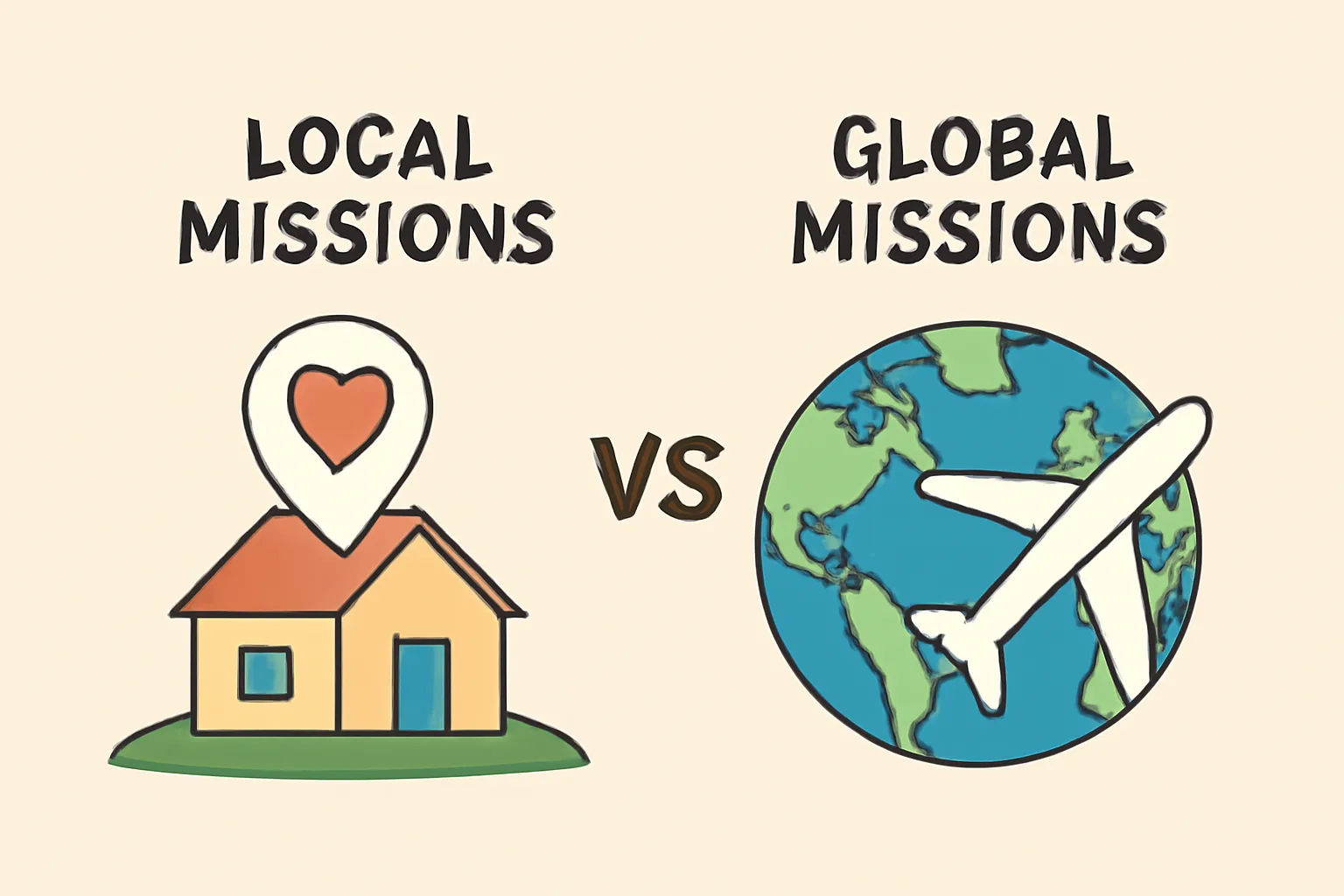
Local Missions vs Global Missions: A Comprehensive Comparison of Community Impact and Global Outreach
Defining the landscape: what do we mean by neighborhood-focused work and international outreach?
In discussions about mission work, people often encounter two broad categories: local missions and global missions. While both are driven by a desire to serve others, they operate at different scales, engage different ecosystems, and measure success through distinct lenses. Local or community-based missions typically concentrate on immediate surroundings—neighborhoods, towns, or counties—where impact is tangible, visible, and often rapid. Global or international missions, by contrast, connect communities across borders, cultures, and languages, aiming to address shared human needs through transnational partnerships and long-term commitments.
The terms themselves are often used interchangeably in casual conversation, but a careful look reveals a spectrum of approaches. Some initiatives emphasize community empowerment and sustainable development at the grassroots level, while others emphasize cross-border collaboration and global solidarity. Across both modalities, organizers must wrestle with questions of equity, local ownership, resource allocation, and long-term viability. In practice, effective missions frequently blend elements of both local and global strategies, creating a bridge between immediate relief or transformation and lasting systemic change.
Local missions and neighborhood impact: what happens on the ground
Local missions are often rooted in an intimate knowledge of a community’s assets, gaps, and rhythms. They tend to mobilize nearby volunteers, tap into locally available resources, and respond quickly to present needs. Because the work is proximate, organizers can observe progress in real time, adjust plans with less friction, and build trust through repeated, visible interaction.
Core characteristics of community-centered efforts
Timeliness: quick responses to urgent needs such as food insecurity, shelter, or emergency relief after a disaster.
Accessibility: services are easier to access for residents who may lack transportation or language assistance elsewhere.
Relationship-building: sustained engagement with local families, schools, churches, and nonprofit partners strengthens social networks.
Capacity-building: programs often emphasize skills training, financial literacy, or small-business development to enable self-reliance.
Cultural alignment: initiatives are designed with sensitivity to local norms, traditions, and power dynamics.
Common activities in neighborhood missions
Food banks, pantry distribution, and nutrition education
After-school programs, tutoring, and mentorship
Housing support, neighborhood improvement projects, and safe-space initiatives
Health screenings, vaccination drives, and mental health first aid
Small grants and micro-lending circles that catalyze local entrepreneurship
Impact metrics for local work
Number of individuals or families served per month
Retention and follow-up rates for participants in ongoing programs
Capacity gains, such as the number of volunteers trained or new partnerships formed
Short-term improvements in access to housing, nutrition, or healthcare
Community feedback on trust, safety, and social cohesion
A quintessential strength of local missions is their alignment with place-based needs. When a program emerges from listening sessions, school partnerships, and neighborhood councils, it often has credibility that opens doors to additional resources. However, the proximity can also surface challenges: limited funding, reliance on a small group of local champions, and the constant demand for volunteers can create sustainability pressures. The healthiest neighborhood initiatives acknowledge these constraints openly and plan for continuity through diversified funding, governance structures, and leadership development.
Global missions and international outreach: connecting communities across borders
Global missions unfold on a broader canvas, linking communities through partnerships that transcend national borders. These efforts often involve a mix of technical expertise, humanitarian relief, and long-range development projects. The aim is to address systemic challenges—such as poverty, literacy disparities, or access to clean water—by leveraging knowledge transfer, technology, and coordinated action among diverse stakeholders, including churches, NGOs, universities, corporations, and government agencies.
Typical modes of international engagement
Partnership programs: long-term collaborations with counterpart organizations in other countries, emphasizing mutual learning and shared governance.
Technical assistance: training, coaching, and support for local professionals to build local capacity and local ownership of projects.
Disaster response and resilience: rapid deployment teams and preparedness programs that operate across multiple regions.
Educational exchange: scholarships, student exchange, and capacity-building initiatives that cross-cultural lines.
Infrastructure development: water systems, clinics, schools, and energy projects designed to be culturally appropriate and maintainable by local communities.
Impact considerations in global missions
Scale and reach: how many communities are touched and how deeply changes are felt
Sustainability: are projects designed to be self-sustaining after external support ends
Equity and partnership dynamics: do local partners have leadership, decision-making power, and governance oversight
Cross-cultural humility: how well programs respect local knowledge, languages, and social norms
Risk management: political, security, and environmental risks that affect program continuity
Global missions can ignite transformative changes that are not feasible from a purely local scope. For example, a water access project in a drought-prone region may require cross-border funding, technology transfer, and expertise from engineers who have faced similar challenges elsewhere. Yet the most effective international programs avoid a top-down mindset. Instead, they emphasize shared leadership, local co-design, and ownership by partner communities, recognizing that lasting impact comes from empowering local actors to steward outcomes.
Comparative lenses: core dimensions that shape outcomes
Scale, scope, and pace
Local missions operate at a pace and scale that often align with community rhythms. They can pivot quickly, adjust messaging, and mobilize volunteers in days or weeks. In contrast, global missions grapple with the complexity of cross-cultural dynamics, international regulations, and multi-year planning cycles. While their scope can be broader, the tempo of change may be slower due to the necessity of multi-stakeholder alignment and long-term capacity-building.
Resource ecosystems and funding models
Neighborhood-based efforts frequently depend on small donors, faith-based networks, and local philanthropy. Global initiatives typically engage an international donor base, corporate sponsors, and grant-making foundations. A robust strategy acknowledges diversified funding and transparent governance to withstand fluctuations and maintain focus on core outcomes.
Engagement and participation patterns
Local work emphasizes direct service delivery and everyday interactions that generate trust. Global programs emphasize partnerships, knowledge exchange, and technology-enabled solutions. The most efficacious approaches blend both: direct service that meets immediate need while building a bridge to durable, scalable systems through international collaboration.
Ethics, power dynamics, and cultural humility
A critical comparison point is how programs handle power and voice. Local missions must ensure that residents are not merely beneficiaries but co-creators. Global work must respect sovereignty, resist neocolonial impulses, and avoid imposing external models. Ethical practice in both domains rests on community consent, transparent reporting, and shared decision-making.
Blending approaches: strategies for synergy between local and global missions
Mutual learning and reciprocal value
A truly integrated approach treats local and global work as complementary rather than competitive. Local teams bring intimate knowledge of community needs, while international collaborations offer access to technical expertise, diverse perspectives, and scalable resources. Programs that create two-way learning—where local insights inform international strategies and global practices enrich local programs—tend to be more resilient.
Design principles for balanced programs
Start with a clear needs assessment that centers community voices, both locally and among international partners.
Build sustainable capacity through training, leadership development, and institutional strengthening.
Establish shared governance and transparent accountability mechanisms across all partners.
Prioritize cultural responsiveness and language access in all activities.
Plan for long-term continuity, including exit strategies and handover processes to local leadership.
Co-managed programs where local organizations lead implementation with international partners providing technical support.
Exchange fellowships and internships that allow practitioners to learn from each other on equal footing.
Hybrid funding approaches that mix local fundraising with international grants to diversify risk.
Knowledge platforms (online training, open data) that share best practices across borders while addressing local specifics.
Monitoring and evaluation across scales
Effective measurement requires both place-based indicators (e.g., improved school attendance in a district) and system-wide metrics (e.g., increased local governance capacity or reduced disease burden across a region). Programs should articulate a theory of change that connects activities to outcomes at multiple levels and use participatory evaluation methods that involve community members in interpretation and learning.
Case studies: hypothetical scenarios that illuminate local vs global dynamics
Case Study A: A city neighborhood revitalization project
In a mid-sized city, a coalition of churches, schools, and neighborhood associations launches a local missions initiative focused on housing stability, youth mentorship, and access to healthy food. Community members help design the program, recruit volunteers, and co-fund several activities. Over two years, the neighborhood association reports a measurable decrease in eviction rates, improved student performance indicators, and stronger social ties among residents.
Key decisions: local leadership elected from within the community; program modest in scale but deeply owned by residents.
Strengths: high resident trust, rapid adjustment to changing needs, clear accountability to local stakeholders.
Risks: funding volatility, reliance on a core group of volunteers, potential gaps in geographic coverage without expansion.
Case Study B: Cross-border water access initiative
An international NGO partners with a community-based organization in a drought-prone region. The plan combines engineering expertise with local knowledge to install sustainable water systems. The effort includes training for maintenance, a student exchange program for local engineers, and ongoing governance by a regional council that includes community members. The project scales to neighboring communities and is designed to be maintained by local staff after the international partner reduces active involvement.
Key decisions: invest in local maintenance capacity from the outset; data-sharing protocols established to ensure transparency.
Strengths: durable infrastructure, local ownership of operations, transferable knowledge across communities.
Risks: external funding cycles impacting maintenance budgets; need for ongoing local capacity to manage complex systems.
Case Study C: Literacy initiative with global collaboration
A network of universities collaborates with a rural education nonprofit to develop multilingual learning materials, teacher training, and digital resources. The approach combines on-the-ground pilot programs with online courses and regional teacher exchanges. Community feedback informs iterative improvements, and a local educational authority adopts the program as part of its standard curriculum.
Key decisions: co-creation of content with local teachers; pathways for local institutions to own curriculum materials.
Strengths: expansive reach, evidence-based pedagogy, capacity-building for educators.
Risks: cultural adaptation challenges, dependence on technology access, need for secure data management.
Practical guidance for organizations choosing a path or blending approaches
Questions to ask when deciding between local emphasis and global engagement
Where is the greatest need, and who should own the solution?
What resources are available locally, and what can international partners contribute?
What is the expected timeline for outcomes, and how do short-term activities align with long-term development?
How will success be measured in a way that respects community voices and yields learning for all partners?
How can risk be shared and managed across borders while preserving local autonomy?
A practical checklist for program design
Define a clear theory of change that links activities to outcomes at both local and global scales.
Map stakeholders, including community voices, partner organizations, funders, and governing bodies.
Prioritize sustainability from the outset by building capacity and planning for handover.
Establish transparent accountability mechanisms to all stakeholders.
Invest in cultural humility training for staff and volunteers, and implement language access strategies.
Develop a diversified funding plan that reduces reliance on any single source.
Maintain flexible goals that can adapt to changing circumstances while preserving core mission outcomes.
Effective collaborations require clarity about roles, decision-making authority, and accountability. Governance structures should include input from local community representatives and, where appropriate, regional or national partner organizations. Clear memoranda of understanding, shared metrics, and regular joint reviews help keep collaborations aligned with agreed-upon values and objectives.
Ethics, culture, and responsibility in all scales of mission work
Respectful engagement and community ownership
Across both levels, respect for local knowledge and leadership matters. Community ownership means local actors control priorities, budgets, and monitoring processes. Consent, dignity, and rights should guide every step—from planning sessions to program evaluation.
Deconstructing paternalism and power imbalances
History shows that well-intentioned interventions can inadvertently reproduce dependency or marginalize local voices. Mission leaders must actively counteract these dynamics by inviting local partners to set agendas, share governance duties, and benefit equitably from outcomes. This approach aligns with ethical practice and improves long-term impact.
Equity, inclusion, and accessibility
Inclusive programs consider gender, age, disability, and linguistic diversity. Equitable access to resources ensures that marginalized groups are not left behind and that benefits are distributed with fairness and transparency.
Resource stewardship, risk, and resilience
Resource management in local and global contexts
Local efforts often optimize resource use through community volunteer networks and in-kind contributions. Global programs frequently rely on cross-border funding and tenders. A prudent plan blends cost-effectiveness, transparency, and accountability to maximize impact while safeguarding against waste or fraud.
Political and regulatory risk: ensure compliance and maintain good relations with authorities.
Security and safety risk: establish safety protocols for volunteers and staff, especially in unstable regions.
Environmental risk: account for climate-related impacts on projects such as water systems or agriculture.
Financial risk: diversify funding streams, maintain emergency reserves, and practice prudent budgeting.
Communities, technology, and the changing horizon
The future of missions—whether local, global, or a blend—will be shaped by how organizations use technology, data, and community partnerships. Digital tools can enable better needs assessments, real-time monitoring, and scalable education programs. However, technology must remain human-centered and accessible to all participants. Data privacy, consent, and culturally appropriate design are essential components of ethical modern mission work.
Remote training and coaching through online platforms can expand reach but requires reliable connectivity.
Open data and shared dashboards support transparency and learning across partners.
Tech-driven solutions must respect local contexts; not every community has the same infrastructure or literacy levels.
Long-term outlook: resilient partnerships and community-led growth
The durable path forward emphasizes local leadership development, equitable partnerships, and shared accountability. When communities themselves steer projects with support from global collaborators, the outcomes tend to endure beyond the presence of external actors.
Closing reflections: crafting a philosophy for effective missions
Local missions and global missions are not mutually exclusive domains but two ends of a spectrum. A robust approach recognizes that immediate, place-based action can coexist with ambitious, cross-border initiatives. The most enduring transformations occur where local relevance meets global learning, where communities are empowered to define success and partners provide resources, expertise, and networks to realize that vision. Organizations that articulate a clear theory of change, commit to ethical practice, and invest in genuine capacity-building are better positioned to create lasting impact—whether the work happens in a neighborhood block or across continents.

 Por Laura Jara