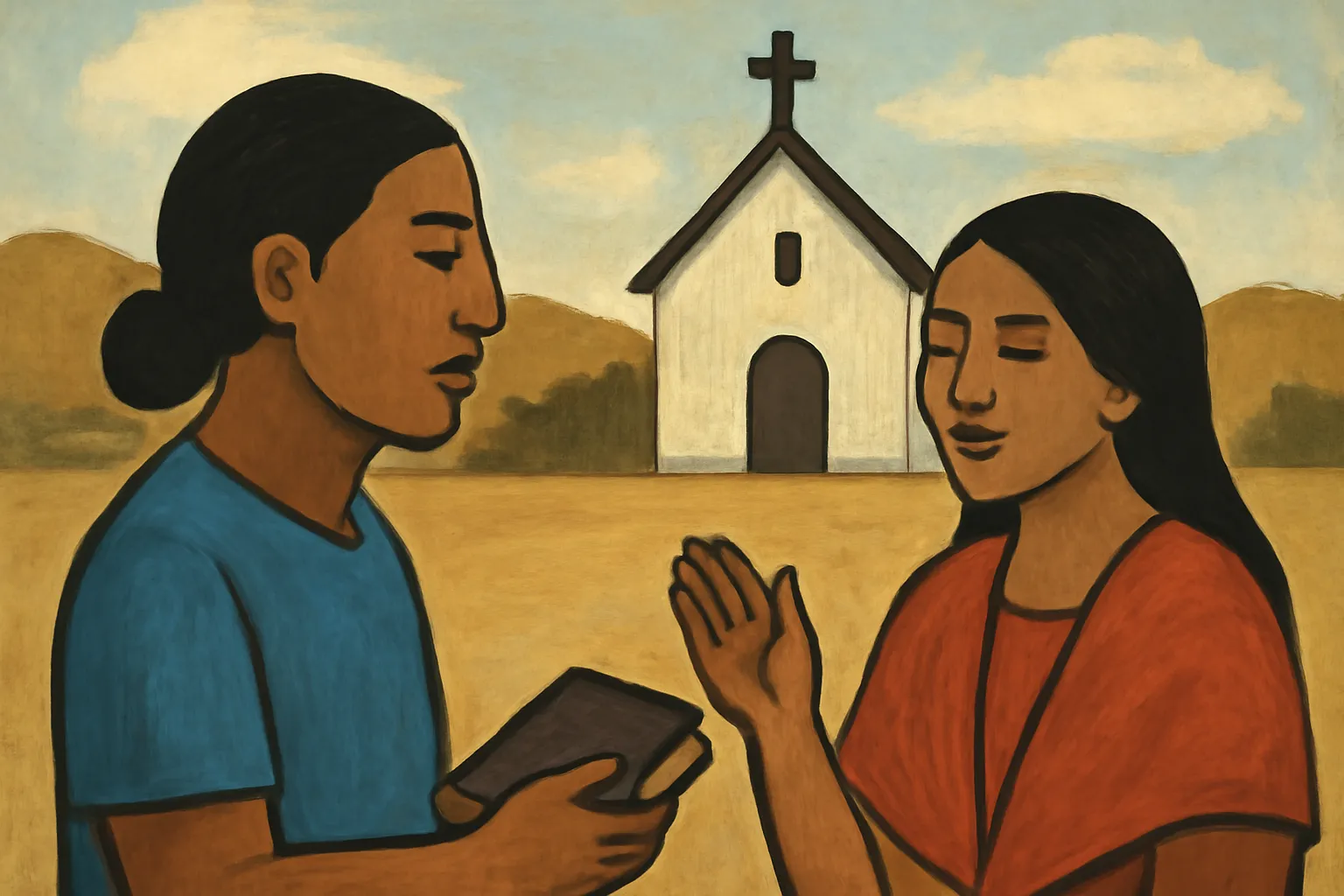
Indigenous church planting is best understood not merely as a transfer of programs, but as a transformation of
mission into a living, local expression of faith. In its most practical sense, it means that the efforts to
establish new faith communities are rooted in the culture, language, and social fabric of the people they serve.
When teams commit to an incarnational approach and pursue genuine contextualization,
they create churches that speak in the idioms and rhythms of everyday life. This is where the term indigenous church planting expands beyond geography to describe a process in which
leadership, ownership, and governance are placed squarely in the hands of local believers.
The core idea can be framed with several key phrases that recur across successful movements: autonomous local churches, local ownership, reproducible models, and sustainable growth.
In practice, this means designing a framework that can be owned by a community and replicated in neighboring
villages, towns, or districts without depending on constant outside intervention. The aim is not simply to plant a
church quickly, but to establish a network of self-sustaining congregations that contribute to long-term vitality.
Principles for a Sustainable Indigenous Approach
While every context shapes a unique strategy, certain guiding principles consistently produce stronger
indigenous church planting outcomes. Below are principles that have proven effective across diverse environments, from
rural regions to urban neighborhoods.
Contextualization: translate not only language but also practices into culturally meaningful forms without compromising core beliefs.
Local leadership: prioritize leadership development among local believers who know the community’s social networks and needs.
Ownership: share decision-making with local partners so ownership rests with the community rather than one visiting team.
Reproducibility: design the planting process to be easily taught and modeled by new teams within the same cultural milieu.
Sustainability: build financial and organizational systems that endure beyond short-term missions or grants.
Friendship and trust: cultivate relationships with community leaders, neighbors, and institutions as the soil in which churches grow.
A practical consequence of these principles is the shift from a “program mindset” to a “community health approach.” In other
words, the success of the endeavor is judged by indicators that matter to the people themselves—wide participation,
durable leadership pipelines, and visible social contribution—rather than by the number of services offered or buildings
established.
Contextualization and Culture in Planting Movements
Contextualization is not cosmetic adaptation; it is a rigorous discipline that examines language, norms,
honor/shame dynamics, and transmission channels for faith. When teams pursue this depth, they protect the integrity of
the message while making it accessible. Strategies in this area include:
Learning the local language variants and idioms that express spiritual truths in a way that resonates with daily life.
Adapting worship forms to align with local music, art, and storytelling traditions rather than importing foreign styles.
Designing leadership pipelines that reflect the community’s gender roles, family structures, and decision-making processes—while maintaining clear ethical and theological standards.
Aligning church planting with local social structures, such as community councils, guilds, or neighborhood associations, to enable natural collaboration.
Contextualization also means recognizing that a given community may carry historical experiences with outsiders, missions, or
institutions. A responsible indigenous approach seeks reconciliation and trust by involving community mentors, elders, and
respected lay leaders in planning and mentoring. In many places, this shifts leadership from a temporary pastor to a long-term
local team that can sustain, reproduce, and multiply when the going gets tough.
The language choices around proclamation and teaching have a profound effect on retention and retention. When possible, linguistic continuity is honored, and communities are invited to translate key materials themselves.
This fosters ownership and ensures that theological concepts are expressed in terms that people use in daily conversation.
It also opens doors for children and youth to participate meaningfully in worship and leadership as families model faith at home.
Leadership Development and Ownership
A hallmark of indigenous church planting is the deliberate development of leadership within the community.
Rather than importing leaders or templates from outside, efforts emphasize mentorship, ownership, and capacity building.
Creating a Sustainable Leadership Pipeline
Identify potential leaders through active listening to community needs and personal character.
Provide practical training that blends theological education with cultural stewardship and community service.
Establish a coaching network in which seasoned local leaders mentor emerging ones, creating a culture of mutual accountability.
Leadership development should include structures for succession planning, governance training, and financial stewardship.
When local teams can manage finances, outreach, and pastoral care, the church network gains resilience and credibility
within the broader community.
Governance that Reflects Local Values
Build a governance framework that mirrors local customs for consensus, accountability, and transparency, while preserving clear roles for pastoral oversight.
Encourage participatory decision-making in congregational life, including budgeting, outreach priorities, and ministry roles.
In many contexts, female leadership within indigenous church planting movements has proven vital for social
transformation and broad participation. Encouraging practical pathways for women to lead and serve—without compromising
theological integrity—can amplify reach and deepen trust with families and communities.
Strategies for Reproducible Growth
Reproducibility is not a gimmick; it is a design principle that enables a movement to expand in a steady, healthy way.
The concept centers on short, implementable planting kits that can be taught, copied, and adapted in new settings without
losing fidelity to core beliefs.
Planting Kits and Replicable Models
Develop a compact planting kit that includes a simple vision, a few core values, a baptism or initiation pathway, and a
basic leadership training outline.
Encourage partner churches and communities to adopt a shared glossary of terms, symbols, and rituals that maintain unity while
allowing local flavor.
Use a modular approach to church planting: from house churches to neighborhood congregations to regional networks, with a
defined progression path.
Multiplication Tactics that Respect Context
Prioritize small, mission-focused teams that can work in households or clusters without requiring large infrastructure.
Place emphasis on multiplying leaders who can launch new communities rather than expanding a single institution.
Respect social boundaries and create safe spaces for people to explore faith, ask questions, and participate in meaningful service.
A successful indigenous church planting movement often emphasizes homegrown sustainability—where each new
congregation generates its own resources and contributes to the broader network. This reduces dependence on outside funding
and strengthens the sense that the movement belongs to the community itself.
Training and Equipping Local Leaders
Training is not merely a set of lectures; it is an experiential process that blends theological study with practical
ministry skills. In the best cases, local leaders emerge who can teach, shepherd, and disciple others with confidence.
Core Components of Training
Theology with a practical focus: a robust but approachable catechesis that translates faith into everyday decisions.
Discipleship and mentorship: ongoing relationships that model spiritual practices such as prayer, fasting, and hospitality.
Community engagement: training on how to listen to neighbors, identify needs, and respond with service and gospel clarity.
Pastoral care: practical skills for visiting families, crisis response, and referral networks for counseling or social services.
It is also important to build local mentor networks that can be sustained by the community. A robust mentorship
culture helps new church plants weather leadership transitions, doctrinal questions, and social pressures. In the long run, a
well-supported cohort of mentors can become the backbone of a broader mission movement that keeps growing.
Educational Pathways and Accreditation
Offer accessible, contextual training tracks that acknowledge local education levels and time constraints.
Provide pathways for credentialing that are valued locally, whether through formal associations, denominational bodies, or community-led councils.
Resource Mobilization and Stewardship
Financial resources should equip the church-planting movement without compromising its integrity. Strong resource stewardship
helps ensure that new communities can sustain themselves and eventually contribute to the broader network.
Community-Driven Financing
Encourage small, regular giving among members and families, linked to a shared vision for the future.
Develop transparent budgeting processes and publish concise financial reports to build trust.
Explore income-generating activities that align with local skills and needs, such as social enterprise ventures that benefit the church and the community.
External funding can be a catalyst, but it should be used with clear accountability and a plan for eventual transition to
local stewardship. Movements that persist over generations usually move toward financial self-reliance while
maintaining healthy partnerships with mission allies who respect local leadership and decision-making authority.
Community Engagement and Social Impact
Indigenous church planting thrives where churches become integrated into the daily life of the community. This means more
than evangelism; it means service, advocacy, and tangible improvement in people’s lives.
Addressing Real Needs
Active involvement in education, health, and social welfare initiatives that reflect the community’s most pressing concerns.
Partnerships with local schools, clinics, and NGOs to amplify positive impact while maintaining the church’s spiritual identity.
Advocacy and social transformation that aligns with the gospel’s call to justice, dignity, and mercy.
A movement that links spiritual formation with social empowerment often experiences healthier growth. When people see that a
new congregation is a reliable neighbor—offering care, practical help, and a welcoming community—the likelihood of sustained, organic growth rises.
Technology, Media, and Communication in Planting Efforts
In many communities, technology and media are powerful tools to amplify the reach of indigenous church planting without eroding
local authenticity. Strategic use of digital and traditional media can support training, outreach, and fellowship.
Smart Communication Practices
Use local channels—community radio, social media groups, messaging apps—as well as in-person gatherings to disseminate
information and invite participation.
Leverage storytelling that reflects local narratives, testimonies, and accomplishments of the church-planting movement.
Provide accessible multimedia resources in the community’s languages, and offer audio or video formats for different literacy levels.
Digital tools can be employed to coach new plantings, share best practices, and coordinate service projects. However, the emphasis
should remain on relationship-building and tangible presence, ensuring that technology serves persons rather than replacing them.
Measuring Impact and Learning
Instead of relying solely on attendance figures, effective indigenous movements measure impact with a broader set of indicators that
reflect health, vitality, and replication. Ongoing learning is essential so that strategies can adapt to changing contexts without
losing their core identity.
Balanced Metrics for Growth
Health of local leadership pipelines: number of trained leaders, mentors, and succession plans in place.
Participation rates across age groups, including youth and families, to gauge multi-generational engagement.
Discipleship outcomes: depth of spiritual practices, adoption of house-based or small-group disciplines, and ongoing ownership.
Community impact: improvements in education, health, and social services initiated or supported by the church network.
Reproduction rate: number of new congregations launched within a defined period and the speed at which they become self-sustaining.
Regular evaluations—both qualitative and quantitative—inform adjustments that keep the movement coherent and locally owned.
Crucially, feedback loops should include community voices, not just program metrics. When people feel heard and see real
changes, trust grows, and the risk of mission fatigue decreases.
Case Studies and Real-World Examples
Across regions and cultures, indigenous church planting strategies have yielded diverse patterns of success. Some
exemplars emphasize rapid multiplication through small house gatherings, while others build resilient networks anchored in
neighborhood ministries. Here are generalized patterns drawn from multiple contexts:
Case Pattern A: Rural Village Planting
A core team from within the village begins with relational outreach, serving needs and listening to concerns.
The initial gathering evolves into a small group, then a home-based worship space, and eventually a community church with a local leadership team.
Leadership development is tightly coupled with service projects that address tangible needs—water, sanitation, education—creating visible value.
Case Pattern B: Urban Neighborhood Network
In dense urban contexts, multiple micro-congregations form around apartments or block associations.
Each micro-congregation maintains distinct cultural expressions while sharing a common leadership hub that coordinates outreach and discipleship.
Technology plays a stronger role for connection and training, yet personal relationships remain the heart of community life.
These patterns illustrate that the goal is not uniformity but intentional diversity under a shared mission. An effective
indigenous church planting movement adapts its methods to local realities while maintaining a coherent theological and ethical
framework.
Common Pitfalls and How to Avoid Them
Even well-intentioned efforts can stumble. Being aware of possible pitfalls helps teams stay on track toward healthy growth.
Pitfall: Overreliance on Outside Funding
Avoid creating dependency by developing local fundraising capacity and transparent budgeting from the outset.
Frame external support as a catalyst for indigenous leadership rather than a substitute for it.
Pitfall: Cultural Insensitivity
Engage cultural experts, elders, and community members in planning and decision-making.
Pause to listen when feedback indicates that a practice or form is inappropriate or harmful to relationships.
Pitfall: Fragmentation without Unity
Establish clear channels of accountability and shared values that unify diverse local expressions under a common mission.
Promote regular collaboration and mutual support among new churches to avoid unhealthy competition or isolation.
Those who study and practice indigenous church planting often rely on a toolbox of practical resources to guide
implementation. The following items frequently prove useful:
Contextual catechisms and simple doctrinal summaries tailored to local languages and concepts.
Discipleship guides that emphasize multiplication and leadership development in compact, repeatable formats.
Community assessment tools that identify needs, existing networks, and potential partnerships.
Mentor networks and coaching frameworks that connect seasoned leaders with emerging ones.
A well-stocked toolkit helps local teams remain focused on mission while equipping them to respond to changing
conditions. The most effective tool, however, remains people: patient, relational, and faithful leadership in daily life.
Why Indigenous Church Planting Matters for the Global Church
The strategy of indigenous church planting reflects a broader shift in global mission thinking: away from
dependence on expatriate leadership toward robust, locally governed movements that embody cross-cultural respect and
contextual integrity. When local churches take ownership, they become better at contextualizing the gospel, engaging with
neighbors, and sustaining growth beyond the lifespan of any one mission initiative.
The value of this approach is not solely numerical. It harnesses the deepest rhythms of community life—hospitality,
language, storytelling, family networks, and reciprocal care—to form faith communities that endure. In the long term, indigenous church planting is about lasting transformation: communities that gain the capacity to welcome, nurture,
and send, establishing a chain of faith that extends across generations.

 Por Laura Jara