Seven Sins Book: Complete Guide to Themes, Analysis, and Reception
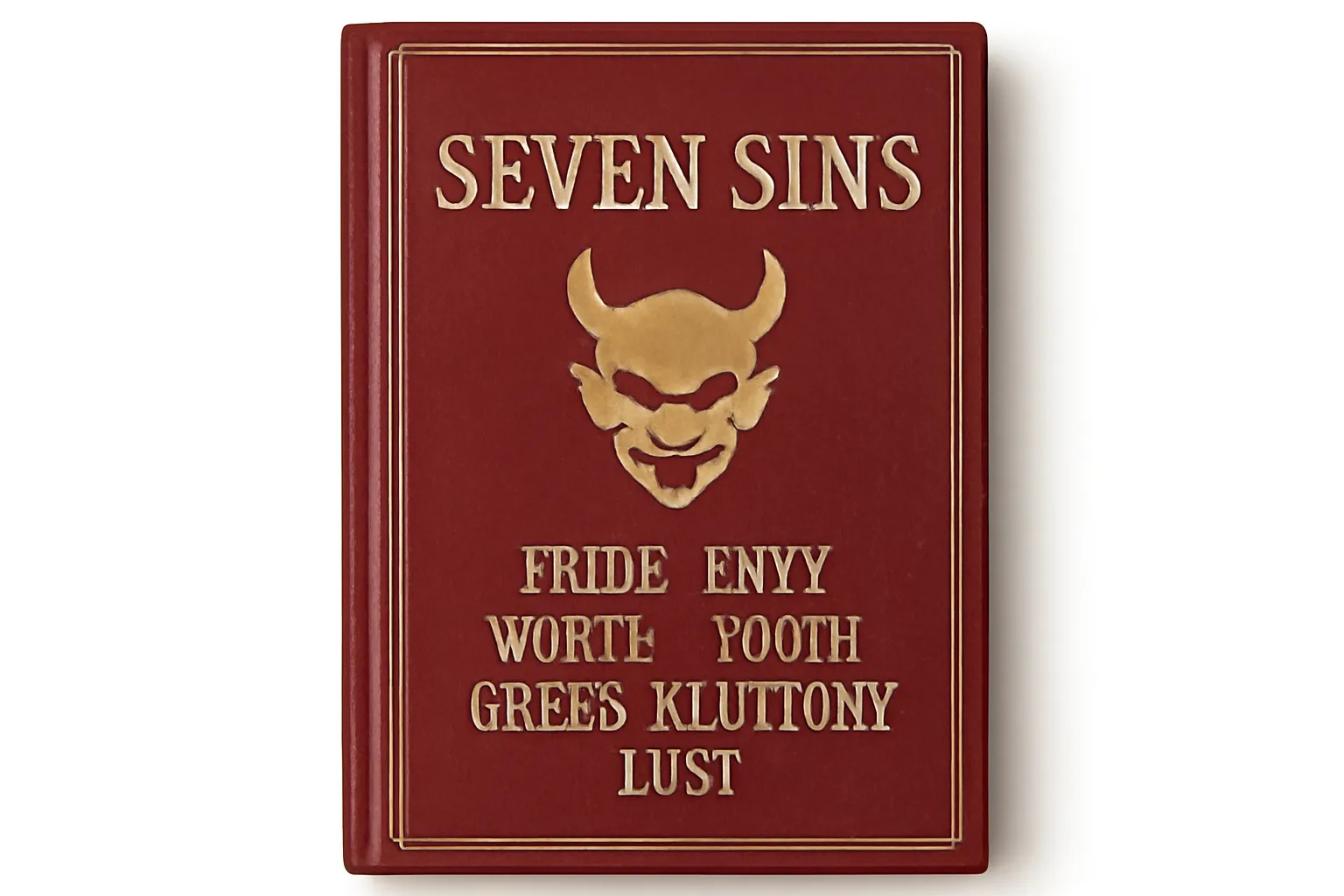
The Seven Sins Book (a title that hints at the classic list of vices or a modern literary exploration of the same idea) invites readers into a structured examination of human behavior, morality, and society. Whether the book in question frames its material around the seven deadly sins—pride, greed, lust, envy, gluttony, wrath, and sloth—or uses a contemporary set of transgressions inspired by that framework, the work typically engages readers with a blend of narrative craft, philosophical inquiry, and cultural critique. This guide provides a comprehensive tour through the themes, analysis, and reception surrounding the seven sins book, using a flexible approach that accounts for how various authors and editions have presented the material. Throughout, you will encounter phrases like the seven sins volume, the work on seven vices, or this book about the seven deadly sins as synonyms for a broad literary project rather than a single fixed text.
Overview of the Seven Sins Book
At its core, the Seven Sins Book is a project about temptation, choice, and consequence. Depending on the edition, it might present a sequence of stories, essays, or symbolic vignettes—each one dedicated to one of the canonical vices or to a modern analogue. The collection often alternates between close, character-driven scenes and wider, societal reflections, inviting readers to consider how vice operates at the level of the individual, the community, and the institution.
A typical reading experience within the seven sins collection follows a deliberate arc: it introduces a vice in a recognizably human form, traces its effects on relationships and structures, and then probes possibilities for transformation or accountability. Some editions foreground a single central character whose life is refracted through the seven dispositions, while others present seven distinct voices, each speaking from a different social or cultural perspective. Despite these variations, the phenomenon of moral testing remains a unifying thread across the book.
Structure: often divided into seven sections or chapters, each dedicated to a specific vice.
Genres: blends of fiction, lyrical prose, philosophical essay, and social critique.
Scope: from intimate interiors to broad social systems, such as economics, religion, and politics.
Core Themes in the Seven Sins Book
The landscape of themes in the seven sins book is wide, but several threads recur with particular intensity. Understanding these themes helps readers situate the work within a longer tradition of moral inquiry while also appreciating the unique choices made by the author or editors.
Morality, Temperance, and the Boundaries of Virtue
A central concern is how morality is negotiated in everyday life. The book often tests whether virtue is a fixed state or a series of dynamic decisions made under pressure. Readers encounter questions such as: Can a person be virtuous in one domain of life while failing in another? What counts as temperance when desire, ambition, and fear pull the mind in different directions? Some chapters explicitly contrast moral absolutism with pragmatic ethics, showing that ethical life is often a matter of navigating gray zones rather than adhering to a single rulebook.
Temptation, Free Will, and Agency
The interplay of temptation and free will drives much of the narrative energy in the book. Scenes of temptation are rarely sensational; instead, they are rendered as ordinary choices that accumulate into a larger arc. The book often foregrounds the idea that individuals possess substantial, albeit constrained, agency. By tracing the consequences of decisions made under pressure, the text invites readers to scrutinize the moral weight of both deliberate acts and neglected duties.
In many versions, the seven sins volume doubles as a social mirror. It maps how vice stalks institutions—such as family, education, law, and finance—and shows how structural pressures can amplify or suppress personal culpability. This social critique sometimes appears through a historical lens, situating the sins within particular eras of transformation, or through a contemporary lens, examining modern phenomena like consumer culture, digital distraction, or political polarization.
Redemption, Mercy, and Transformation
A recurring aim is not merely to condemn but to illuminate paths toward redemption and transformation. The seven sins book often closes with moments of accountability, empathy, or reconciliation, suggesting that moral life remains a project of growth rather than a finished verdict. Even when the book refuses easy fixes, it frequently offers anchors for hope—whether through community, ritual, self-understanding, or acts of generosity.
Symbolism and Imagery
Thematic symbolism runs through the entire work, converting abstract vice into tangible motifs. Common devices include light vs. darkness, ascent vs. decline, wealth and hunger as signs of moral imbalance, and bodies or spaces that reflect internal states. These motifs help readers see how vice manifests in concrete terms and how characters negotiate these signs in practical ways.
Narrative Structure and Stylistic Approach
The seven sins narrative often experiments with form to reflect its thematic concerns. The following elements frequently appear across editions:
Voice and Point of View
The book may employ a single, intimate narrator, a chorus of voices, or shifting points of view to reveal the many facets of each vice. A close, first-person voice can intensify moral tension, while a variegated POV can illustrate how different communities interpret the same temptation.
Temporal Structure
Time may be linear, fragmented, or cyclical. Some chapters echo older literary forms—parables, psalms, or courtly tale conventions—while others adopt a modern, brisk tempo. The handling of time often mirrors the moral stakes: a single misstep may reverberate across years, or a long arc of choices may lead to a sudden inflection point.
Intersections of Prose and Verse
The book sometimes blends prose and stylized verse or includes lyrical interludes that distill a vice into a concentrated ethical question. This hybridity can intensify emotional resonance and invite readers to pause for reflection between narrative beats.
Structure within a Theme
A common approach is a seven-part frame, with each section dedicated to one vice, followed by a concluding examination that stitches the strands together. In other editions, the sequence might be non-linear, or some vices may be revisited from multiple angles to emphasize paradoxes and interdependencies.
Character and Persona Analysis
Even when the seven sins book is not a character-centric novel, it often creates archetypal or composite figures whose experiences illuminate each vice. Readers may encounter protagonists, antagonists, or communal portraits that embody particular moral tensions. The following patterns appear with notable frequency:
Protagonists shaped by vanity, whose self-regard distorts relationships and judgment.
Greedy figures who equate accumulation with worth and who confront the fragility of wealth or status.
Characters driven by lust that expose the vulnerabilities of intimacy, consent, and consent-based power dynamics.
Envious narrators who view others as threats to their own identity or social standing.
Gluttonous episodes that reveal how desire for abundance can morph into excess or moral fatigue.
Wrathful arcs that test the limits of forgiveness and the boundaries of justice.
Sloth as avoidance—not just physical inertia but moral withdrawal or refusal to act in the face of need.
Regardless of the exact configuration, the book tends to foreground how the vice in focus distorts perception, fosters miscommunication, and complicates relationships. Even secondary characters react to the central vice with a spectrum of responses—tolerance, condemnation, complicity, or compassionate intervention—showing that moral ecosystems are collaborative rather than solitary in character.
Historical Context, Authorial Intent, and Textual Legacy
The reception and interpretation of the Seven Sins Book are deeply shaped by historical moment and the author’s aims. Editions that engage with the longstanding moral tradition surrounding the seven deadly sins tend to emphasize theological or philosophical inquiry, while more contemporary takes might foreground psychology, social critique, or gender and power dynamics.
Authorial Intent and Theoretical Lenses
Critics often explore questions such as: What is the author trying to accomplish through a work arranged around vices? Is the aim corrective (to warn or reform), liberating (to critique moralism), or ambiguous (to reveal the complexity of moral judgment)? Readers bring to the text diverse lenses—psychoanalytic, feminist, postcolonial, phenomenological—that illuminate different facets of the project.
Historical Influences
The book frequently bears the imprint of its era—whether it draws on classical didactic traditions, Renaissance moralizing, Enlightenment critique, or postmodern skepticism. The historical moment can determine which sins are foregrounded, how redemption is imagined, and how the narrative negotiates authority, sacred or secular.
Reception varies widely. Some editions are celebrated for their moral nuance, technical virtuosity, and empathetic portrayals, while others are criticized for moral ambiguity or for privileging a particular worldview. Across decades, readers and scholars often engage in dialogue about the limits and possibilities of moral storytelling, debating whether vice can ever be addressed without oversimplification.
Reception, Criticism, and Scholarly Debate
The critical conversation surrounding the Seven Sins Book is rich and multifaceted. Below are some of the dominant strands in reception history and scholarly discourse.
Ethical pluralism in interpretation: different readers may identify with different vices and derive distinct ethical insights from the same passages.
Gender and power readings: certain critiques examine how gendered violence, control, or complicity are depicted within the vice narratives.
Religious imagery and secular critique: some analyses foreground theological motifs, while others argue for a secular, humanist reading of moral questions.
Psychological depth: psychoanalytic readings explore how the characters’ interior lives reveal unconscious drives, defense mechanisms, and transference patterns.
Social justice perspectives: scholars consider how the book portrays systemic inequalities and whether it challenges or reinforces social hierarchies.
In terms of reception, some readers praise the work for its disciplined structure and humane curiosity, while others critique it for moral ambiguity or for not offering a clear program of reform. The book’s legacy often rests on its ability to provoke ongoing discussion rather than to deliver definitive answers, reinforcing the sense that moral inquiry is an open-ended process.
Beyond the page, the seven sins book has influenced a wide range of media and discourse. While not every edition lends itself to adaptation, the core ideas have inspired films, stage works, visual art, and classroom curricula. The following points sketch how the work has resonated beyond its original form.
Adaptations in theater or screen often reimagine each vice as a separate scene or chapter, highlighting contemporary resonances in a public-facing format.
Educational use as a tool for teaching ethics, rhetoric, and literary analysis in high school and university settings.
Intertexts drawing on classical tragedies, modern novels, or religious writings to illuminate how authors treat vice and virtue across genres.
Cultural conversations about vice, virtue, and responsibility in politics, media, and everyday life.
The work’s influence is often felt in how it invites readers to hold two truths in tension: that human beings are capable of both remarkable generosity and troubling self-regard, and that the moral life remains a continuous effort rather than a single verdict.
Practical Reading Guide and Discussion Questions
For readers approaching the seven sins book, several practical strategies help maximize understanding and engagement. The following list offers oriented steps and prompts that can be used individually or in a group discussion.
Map the structure: identify whether the work follows a seven-part frame, a cyclical pattern, or a mosaic of distinct voices.
Annotate motives: note what each vice reveals about character, society, and the narrator’s own beliefs.
Track symbolism: make a glossary of recurring symbols (light vs. dark, hunger, confinement, ornamentation) and how they evolve.
Compare perspectives: if multiple narrators or viewpoints exist, compare how each perceives the same events and what biases emerge.
Discuss redemption: identify scenes or passages that offer meditations on forgiveness, repair, or change.
Contextualize: connect the book to historical periods or cultural debates relevant to the edition you are reading.
Discussion questions to spark conversation:
How does the portrayal of each vice illuminate universal human concerns versus culturally specific anxieties?
Does the book propose a barrier between vice and virtue that is solvable, or does it suggest that moral life is inherently complex?
In what ways do the characters’ actions challenge readerly assumptions about blame and responsibility?
What role do community and institutions play in either enabling or mitigating vice?
Comparative Perspectives: How This Work Stands with Other Treatments of Vice
When placed alongside other works exploring vice, the Seven Sins Book participates in a long tradition of moral storytelling. Here are a few comparative angles that scholars and readers often consider.
Accessibility vs. complexity: some works prioritize lucid ethical instruction, while others pursue ambiguous moral landscapes that resist neat answers.
Religious framing: the influence of theological vocabulary can be decisive in some editions, whereas secular versions emphasize humanistic critique.
Modernity and vice: contemporary retellings may reframe ancient sins to address digital temptation, algorithmic influence, or global capitalism.
Gendered reading: feminist analyses often question how women and men are depicted within the vice narratives and what this reveals about power structures.
In sum, the seven sins book is part of a vibrant ecosystem of literary and rhetorical experiments that take vice as a lens to examine what it means to live with others. Its lasting value lies in sparking productive dialogue about ethics, desire, and social responsibility.
Reading the Seven Sins Book in the present moment offers more than a contemplation of vice for vice’s sake. It invites readers to reflect on the stakes of everyday choices, the pressures exerted by institutions, and the possibility of ethical renewal. Whether you approach the work as a piece of literature, a moral philosophy text, or a cultural document, you will likely find that the book’s insistence on facing difficult truths is both challenging and constructive.
For educators, this work provides a rich platform for discussion about moral reasoning, narrative technique, and critical interpretation. For students and general readers, it presents a pathway to deeper self-understanding and a more nuanced appreciation of how stories about fault and faultlessness can illuminate what it means to live with others in a complex world.
In the end, the strength of the Seven Sins Book—and the reason it endures in conversations about literature and ethics—is its capacity to render the familiar questions of virtue and temptation in fresh, provocative forms. It remains, across editions and interpretations, a mirror and a guide: a mirror that shows us ourselves, and a guide that helps us navigate the moral landscapes we inhabit every day.

 Por Laura Jara