Across the pages of Scripture, the thread that binds diverse narratives together is not merely what happens to people, but how they respond to God in the face of uncertainty. Trusting God is more than a creed or a momentary decision; it is a habitual posture—an active reliance on God’s character, promises, and faithfulness even when the path is unclear. These stories invite readers into a conversation about fear, doubt, delay, and danger, then gently redirect the gaze toward the One who sees every road and knows every turn. In this article, we explore Bible stories on trusting God from both the Old and New Testaments, highlighting the timeless lessons they teach about courage, obedience, patience, and hope.
The goal is not merely to retell ancient events but to draw out practical truths that can shape how we live today. Each story features a central moment of trust—often tested by trial—through which God reveals His nature: trustworthy, sovereign, compassionate, and good. By learning from these accounts, readers gain a richer vocabulary for faith and a clearer pattern for facing personal trials with confidence in God’s ultimate plan.
Old Testament Foundations: Stories of Trust
Abraham and Isaac: Trust Beyond Understanding
One of the clearest demonstrations of faith in Scripture is Abraham’s readiness to offer Isaac, the promised son, in obedience to God. Genesis 22 narrates a heart-stopping moment: a father prepared to surrender what he has waited for decades because God called him to trust without demanding explanations. In this story, trust is not passive fatalism but active surrender to a higher plan. The unraveling question—“Will God provide?”—becomes the hinge on which Abraham’s faith swings. And God does provide, not as a test that destroys but as a revelation of ultimate provision: a ram caught in the thicket and, more profoundly, the foreshadowing of the Father’s willingness to give the greatest gift for the world.
Key lesson: Trust grows when we align our understanding with God’s promises, even if what we expect cannot be fully explained in the moment.
Practical takeaway: In moments of uncertainty, articulate your questions to God, then step forward in obedience, knowing that He honors faithful hearts.
Noah: Faith That Builds Against the Winds of Skepticism
Noah’s Ark stands as a monumental act of trust in a world that had rejected righteousness. For decades, Noah built according to a divine blueprint while the surrounding culture mocked the idea of rain and judgment. Yet Noah persisted in faith, obeying God’s instructions with meticulous care. The flood came, and after days of fear and refuge within the ark, the earth was renewed, signaling a new beginning for humanity. This story highlights that true trust is not mere optimism but obedience carried to completion, even when the consequences seem disproportionate to human expectations.
Key lesson: Trust often requires patient endurance and consistent obedience in the face of societal scorn or doubt.
Practical takeaway: Build your life on God’s revealed will, not the shifting winds of popular opinion.
Joseph: Trust Through Betrayal Toward God’s Higher Plan
Joseph’s arc—from sold into slavery by jealous brothers to rising as a trusted administrator in Egypt—shows trust in a long, winding road. His brothers betray him, Potiphar’s wife falsely accuses him, and he languishes in prison. Yet through every twist, Joseph remains oriented toward God’s sovereignty. When famine tests the land, Joseph’s wisdom, grounded in faith, saves many lives and eventually reconciles his family. The narrative demonstrates that trust is not a single moment of courage but a sustained reliance on God’s providence, even when circumstances are stacked against you.
Key lesson: God’s purposes often unfold through difficult seasons; trust grows as you see Him work in hidden places.
Practical takeaway: In seasons of delay or hardship, remind yourself of past mercies and lean on divine wisdom rather than relying solely on human insight.
The Exodus narrative centers on a pivotal moment when the Red Sea looms large and Pharaoh’s army presses in. God’s instruction to Moses—“Stretch out your hand over the sea”—appears reckless until the waters part, making a way where there was no visible way. It is in these moments that trust is perfected: the people must walk forward into a future they cannot see, yet they advance because God has promised deliverance. The crossing is less about a dramatic miracle than about a renewed confidence in God’s presence as a guiding pillar through the wilderness.
Key lesson: Trust grows when obedience aligns with a trustworthy God, even when outcomes are uncertain.
Practical takeaway: Seek God’s word before acting; let His guidance shape bold, hopeful action, not reckless bravado.
Daniel and Company: Courage in a Secular World
Daniel in the Lions’ Den: Confidence Under Pressure
In the life of Daniel, trust is tested by political intrigue and public policy that clashes with faith. Thrown into the lions’ den for praying to his God, Daniel does not manipulate outcomes but remains steadfast in his devotion. His deliverance is not merely a miracle but a testimony to the power of unwavering trust: God’s omnipotence protects those who honor Him, and He uses even hostile forces to accomplish His purposes.
Key lesson: When facing hostile environments, a consistent life of prayer and fidelity to God’s commands cultivates courage and peace.
Practical takeaway: Maintain integrity in daily choices; let your consistency be a beacon that points others to God’s faithfulness.
The Fiery Furnace: A Fiery Test of Faith
Shadrach, Meshach, and Abednego face a furnace calibrated to force worship of a political idol. Their response—refusing to bow, declaring confidence in God, and trusting Him to deliver or not deliver—captures a radical form of faith. The outcome—being preserved in fire without being consumed—illustrates that God’s presence accompanies His people in even the fiercest trials. Their statement, “Our God whom we serve is able to deliver us… but even if He does not,” crystallizes a trust that remains intact whether or not the desired outcome occurs.
Key lesson: True trust does not depend on a preferred outcome; it rests on God’s character and His sovereignty over life and death.
Practical takeaway: In the face of pressure, choose fidelity to God above all else, and anchor your hope in His ultimate sovereignty.
Conquest, Covenant, and Providence: Joshua and Ruth
Joshua: Marching by Faith
The conquest of Jericho is less about strategy and more about trust in God’s promises. The people follow a seemingly unlikely plan—marching around the city with trumpets and a shout—yet the result is a divine victory. This story underscores a crucial principle: trust may require unconventional obedience, and God often uses ordinary means to accomplish extraordinary ends. When the walls fall, the people celebrate not merely a military triumph but the affirmation that God remains faithful to His word.
Key lesson: God’s methods may defy human logic, but obedience unlocks His provision.
Practical takeaway: When God calls you to an unusual step, pursue it with confidence in His plan, not just with enthusiasm for the outcome.
Ruth and Naomi: Trust through Loss and Providence
The book of Ruth centers on a journey from sorrow to provision, guided by steadfast faith and quiet trust. Naomi’s lament, Ruth’s loyal love, and Boaz’s generosity illustrate how trust extends beyond personal comfort to covenant belonging and community restoration. Ruth’s famous vow—“Where you go, I will go; your people shall be my people; your God my God”—becomes a powerful confession of trust that leads to a redemptive resolution. In this narrative, trust isn’t only about personal safety; it is about aligning one’s life with God’s larger redemptive plan for a broken world.
Key lesson: Trust grows through humble faithfulness, communal faith, and willingness to walk into the unknown for the sake of others.
Practical takeaway: cultivate a posture of loyal, practical faith in ordinary relationships and ordinary tasks as seeds of divine providence.
Elijah: Trust in Times of Scarcity and Victory
Elijah and the Widow of Zarephath: Faith in Scarce Provisions
In the novel scene of Elijah and the widow, faith is tested in a drought-stricken land. The widow’s last meal becomes the stage for God’s economy of abundance as she complies with Elijah’s unconventional instruction to trust God first. The miracle of provision—an ongoing supply of flour and oil—emphasizes that God’s faithfulness transcends scarcity. The trust demonstrated here is not in the miracle alone but in obeying God’s prompts even at personal cost.
Key lesson: God invites radical generosity and obedience, and He replies with sustenance that exceeds expectations.
Practical takeaway: When resources are limited, prioritize obedience to God’s leading, and trust Him to supply what you truly need.
Elijah on Mount Carmel: Victory Through Dependence on God
In the dramatic confrontation on Mount Carmel, the true God demonstrates superiority over false prophets. Elijah’s trust in the power of prayer and God’s sovereignty leads to a public demonstration: fire from heaven consumes the burnt offering, while the altar of Baal remains unmoved. This episode reinforces the principle that genuine trust is not about the loudness of declarations but about aligning one’s life with the One true God, who answers prayer in accord with His perfect purposes.
Key lesson: Trust anchors worship, devotion, and perseverance even when competing voices demand allegiance.
Practical takeaway: When spiritual pressure mounts, ground your prayers in faith that God alone is the giver of true power and life.
Job and the Psalms: Trust in Suffering and in Praise
Job: Trust when Suffering Stings
The book of Job centers on a man who endures profound loss, physical affliction, and social derision while seeking to understand his circumstances. Job’s initial candor—questioning, lamenting, and wrestling with God—transforms into a deeper trust: not a simplistic formula that “things will be okay,” but a confident admission that God is righteous, wise, and just, even when his ways are beyond human explanation. The culminating affirmation that “though he slay me, I will hope in Him” captures a resilient trust that refuses to collapse under pressure.
Key lesson: Honest questioning is not a lack of faith; it can be a path toward a stronger, more informed trust.
Practical takeaway: Bring your questions to God in prayer, then let His response shape a deeper faith, not a superficial cure.
David: Trust in God’s Deliverance and Kingly Calling
David and Goliath: Courage Anchored in God’s Name
In the famous confrontation with Goliath, David’s confidence rests not in stone, sling, or human prowess but in the name of the Lord of hosts. His trust is twofold: he believes God’s past faithfulness and also trusts God’s future faithfulness to act in the present crisis. This narrative models fearless dependence on God when the odds are clearly stacked against you.
Key lesson: Bold trust emerges when we remember the character of God and the history of His faithfulness in our lives.
Practical takeaway: Face intimidating challenges by naming God’s past mercies and leaning into prayerful courage rather than personal strength alone.
David’s Trials: Trust Across the Range of Human Experience
Later chapters of David’s life reveal the complexity of trust amid leadership responsibilities, family conflict, and personal failure. Even as David falters, his heart repeatedly returns to God. When examined as a whole, his life teaches that trust is not a one-time decision but a continuous pattern—a person who stumbles can still be restored by turning again to the God who forgives and sustains. His psalms of trust, even when written from the depths, are powerful reminders that God remembers and helps those who depend on Him.
Key lesson: Trust is resilient; it can grow through mistakes and still be refined into a deeper relationship with God.
Practical takeaway: When you fall short, confess, re-center your life on God, and pursue renewed trust in His leadership.
New Testament Foundations: Jesus, the Disciples, and the Early Church
Jesus Calming the Storm: Trust in the Master’s Authority
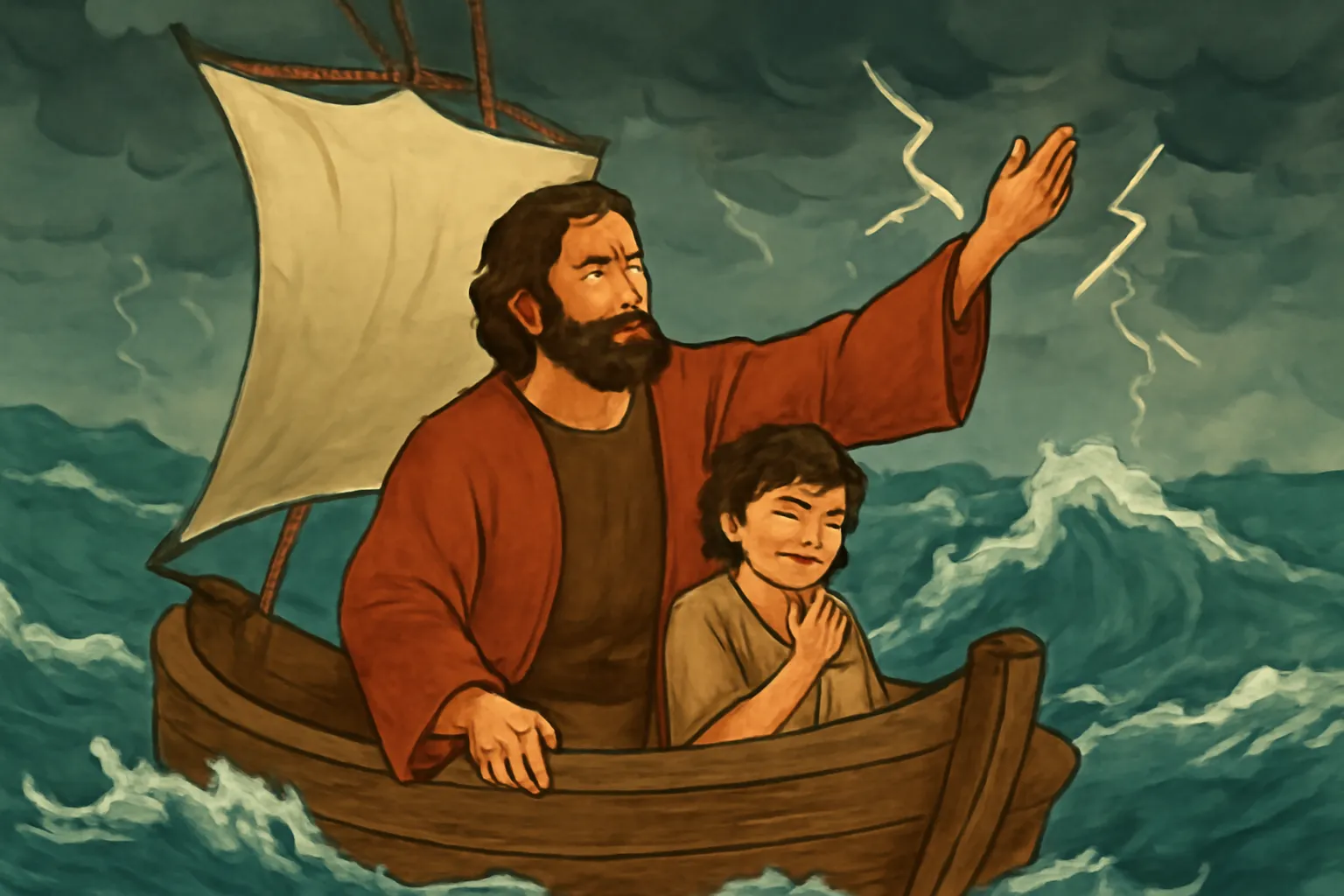
In the gospel narratives, the scene of Jesus calming the raging sea reveals the divine authority Jesus wields over nature, inviting His followers into a trust shaped by His identity. The disciples’ fear gives way to astonishment as they witness calm after prayer and presence. The lesson is not merely about weather or miracle; it is about recognizing Jesus as the one who sustains life, controls chaos, and invites his followers into a peace that surpasses ordinary understanding.
Key lesson: Trust matures when we align faith with the perception of who Jesus is—Master over every element of life.
Practical takeaway: In moments of turmoil, bring the situation to Jesus in prayer, allow His presence to anchor your heart, and act with calm obedience.
The crucifixion story, and the resurrection that follows, is the theological climax of trust in the New Testament. Jesus embodies ultimate trust—doing the Father’s will even when the cost is immeasurable. His prayers in Gethsemane reveal authentic struggle, yet the obedience of faith prevails. The core of this narrative is not only sacrifice but surrender: trusting God’s redemptive plan, even when it requires walking through the darkest night to bring light to the world.
Key lesson: Trust is deeply relational and rooted in God’s redemptive purposes for humanity.
Practical takeaway: Let the example of Christ shape your response to suffering: endure with fidelity, hope, and prayerful dependence on the Father.
Apostolic Trust: Paul and the Early Church
Paul in Shipwreck and Persecution: Trust Under Duress
The apostle Paul faced shipwrecks, imprisonment, beatings, and constant peril for the sake of the Gospel. Yet his letters reveal a heart anchored in a God who is faithful to fulfill His promises. Paul’s perspective turns adversity into opportunity for grace to be displayed through weakness, and his confidence is not in the absence of danger but in the presence of God who sustains through it all. The narrative invites readers to see trials as occasions for spiritual growth and witness.
Key lesson: Trust grows strongest where fear is greatest, when faith remains focused on God’s promises rather than on immediate relief.
Practical takeaway: When facing trials, recount God’s faithfulness in the past, seek community for support, and press forward with purposeful mission.
Trust in Trials: Early Christian Patience and Hope
The letters of the New Testament repeatedly urge believers to endure with patience, to bless those who persecute, to rejoice in hope, and to persevere in prayer. This cadence of exhortation reflects a trust that is not circumstantial but spiritual—a trust that anchors the Christian life in the risen Christ and the promise of eternal life. The church’s early experience of trial became a witness to a different kind of power—one that sustains even when human authorities oppose it.
Key lesson: Trust is contagious when communities exhibit grace, perseverance, and steadfast faith in the face of opposition.
Practical takeaway: Build trust in community through shared disciplines—prayer, Scripture, and mutual encouragement—especially during hardship.
Living the Lessons Today: Practical Paths for Trust
Pray with honesty and expectancy: The biblical pattern often begins with honest conversation with God—present your fears, questions, and hopes, then listen for His gentle direction.
Recall God’s faithfulness: Create a personal archive of answered prayers and testimonies that remind you of God’s steady care in the past.
Obey in small things: Trust builds as you practice obedience in ordinary, daily decisions—the small yes can prepare you for bigger calls.
Choose righteous conduct under pressure: When the pressure is on, demonstrate integrity, compassion, and love, letting your life be a witness of trust.
Join a faith community: Shared confession, accountability, and encouragement strengthen trust when individual resolve wavers.
Study the stories with reflection questions: What did faith look like in this situation? How did God reveal His character? What would I do in a similar circumstance?
Reflection Questions: Engaging the Stories in Your Life
Which story from this article most resonates with your current circumstances, and why?
In what area of life are you invited to trust God more deeply—relationships, finances, health, work, or decisions about the future?
What beliefs about God’s character do you need to reaffirm to strengthen your trust?
How can you imitate the patterns of obedience demonstrated by the faithful in Scripture (even when outcomes are uncertain)?
Who can you encourage with these lessons this week, reminding them that God’s faithfulness endures?
Conclusion: The Timeless Call to Trust
The Bible presents a vibrant gallery of people who learned to trust God in the midst of impossible odds, heart-wrenching losses, and daunting calls. From Abraham to Paul, from the fiery furnace to the calm sea, the core message remains clear: trusting God is the surest path to life that is not defined by circumstances but oriented toward the One who holds all creation in His hands. These stories teach that faith is not a glamorous or naïve ideal; it is a formed character—shaped by prayer, tested by trial, and refined by the steadfast fidelity of God Himself. In every age and in every situation, the timeless lessons endure: to trust God is to live with courage, to obey with humility, and to hope with a confidence rooted in who God is and what He has promised.

 Por Laura Jara