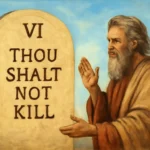
The 6th commandment stands as one of the most widely discussed moral imperatives in
the Judeo-Christian tradition. Broadly summarized as the prohibition on unlawfully taking human life,
it carries significant moral weight for individuals, families, communities, and even nations. Because
different religious traditions number the commandments in slightly different ways, this article will
emphasize the essential idea behind the commandment—protecting human life—while also noting
how translation choices shape our understanding. By tracing its history, unpacking its meaning,
and examining its contemporary relevance, we can better appreciate why this instruction
continues to influence ethics, law, theology, and public policy today.
Throughout this article, you will see variations of the phrase “6th commandment” and related terms.
We will use you shall not murder, you shall not kill, and the sixth commandment interchangeably when referring to the core prohibition,
while acknowledging that different traditions distinguish nuances in wording and application.
Historical roots: where the commandment comes from
The 6th commandment is traditionally traced to the biblical books of Exodus and Deuteronomy,
where it appears as part of the Decalogue, or the Ten Commandments. In the Hebrew Bible, the plain
reading is Lo tirtzach, often translated as “you shall not murder”. The
emphasis is clear: a serious prohibition on the deliberate, unlawful taking of another human life.
Textual origins in Exodus and Deuteronomy
Exodus 20:13 and Deuteronomy 5:17 form the canonical references for many traditions.
The Hebrew verb ratsach underpinning the commandment carries the sense of deliberate homicide
or murder rather than any form of killing. This distinction becomes important in later interpretations.
Across translations, scholars note small but meaningful shifts: “kill”, “murder”, or “put to death” depending on how one renders the verb and the surrounding moral framework.
Cross-cultural echoes and ancient law
The prohibition against unlawfully taking life is not unique to the Hebrew Bible. In
the broader ancient Near East, several legal codes condemned homicide and offered penalties
for murder. The Code of Hammurabi, for example, includes provisions that guard
against unjust murder and prescribe penalties for those who unlawfully end another life.
While these codes differ in scope and religious framing, the shared moral impulse—protecting life
and regulating violence—highlights a widespread concern with homicide as a grave social harm.
Meaning and interpretation: what the commandment is about
At its heart, the 6th commandment articulates a moral boundary: human life is to be
safeguarded, and taking life without just cause or due process is prohibited. Yet many readers and
scholars note that the precise application depends on interpretation, tradition, and context.
The distinction between murder and other forms of killing
A central interpretive question is what counts as murder versus other forms of killing (self-defense, war, execution, or killing in battle).
In many theological and ethical discussions, unlawful or intentional homicide
is the core target of the prohibition, while other contexts may be treated differently based on
moral, legal, and practical considerations.
Intent, circumstance, and proportionality
The meaning of the commandment is often discussed in terms of intent and circumstance. For example:
Intentional murder: clear, deliberate taking of life with malicious purpose.
Unintentional killing: may fall outside the strict prohibition, though moral and legal
questions about responsibility and reckoning remain.
Self-defense and just war: contexts where killing might be morally or legally sanctioned
under certain norms of necessity, proportionality, and protection of others.
The sanctity of life as a governing principle
Many interpreters argue that the sanctity of human life is the core value here.
This principle often informs debates about medical ethics, criminal justice, and social policy.
Yet it is not a single, monolithic position; different traditions weigh competing goods
(e.g., the protection of life vs. the prevention of greater harms) in nuanced ways.
Variations in numbering and translation
One reason the 6th commandment can feel differently framed is the variation in how
religious traditions number and translate the commandments. The same original text can
be rendered with different emphasis, leading to several common labels.
Jewish tradition: The commandment sequence differs from some Christian groupings,
but the core prohibition against harming others remains central.
Catholic tradition: Often numbered as the Sixth Commandment but rendered as You shall not kill, with nuanced discussions about the meaning of kill.
Protestant traditions: Many Protestant denominations render the commandment as You shall not murder, emphasizing a distinction between unlawful killing and sanctioned life-taking in specific contexts.
Language and translation notes
The Hebrew lo tirtzach is usually translated in contemporary English Bibles as You shall not murder or You shall not kill, depending on the
translator’s approach. The distinction matters for readers who want to think clearly about intent and context:
Rabbinic interpretation often emphasizes intent and moral equivalence rather than a blanket ban on all forms of killing.
Christian hermeneutics may explore the relationship between this commandment and passages about
justice, mercy, and lawful governance.
Philosophical ethics frequently distinguishes between homicide, manslaughter, and preventive or retaliatory killings.
Contemporary relevance: applying the 6th commandment today
The question of how the 6th commandment operates in modern life invites a broad, careful
inquiry. In our age of complex political ethics, biomedical advances, and rapidly changing social norms,
the prohibition against unlawfully taking life intersects with law, medicine, technology, and public policy.
Self-defense, just war, and capital punishment
Contemporary discussions often treat three related domains where the commandment might be tested:
Self-defense: Is killing in self-defense morally permissible if it is the only way to protect oneself or others?
Just war theory: In what circumstances can a state engage in war without violating the commandment, and how should violence be restrained?
Capital punishment: Do judicial killings violate the commandment, or can they be justified as lawful punishment for grave crimes?
There is no universal agreement, and theologians, jurists, and ethicists continue to debate the limits of force, proportionality, and due process in such matters.
Abortion, euthanasia, and assisted death
The question of whether actions related to ending a pregnancy or ending a life in terminal illness
are admissible within a framework that prioritizes the sanctity of life is intensely disputed
in many religious communities. Some positions argue that life begins at conception and that abortion
is morally unacceptable; others emphasize the compassionate consideration of suffering and
cases where the health and life of the mother or patient are at stake.
Similarly, debates about euthanasia and assisted suicide probe whether
deliberately aiding death contradicts or respectfully upholds the value of life under certain
conditions. The balance between relieving suffering and preserving life is a
central ethical tension in this area.
Modern technology, policing, and new forms of harm
Advances in technology raise fresh questions about harm, violence, and how to respond to it justly.
For example, debates about drone warfare, cyber threats, and state surveillance
touch on whether new modes of killing or coercion cannot be justified under traditional frameworks.
The commandment’s core aim—protecting life—remains a guiding principle, but its application must contend with
evolving means of harm and the ethical duties of states and individuals to minimize unnecessary suffering.
Social justice and systemic harm
Beyond individual acts, some readers extend the 6th commandment to examine systemic harms—
violence embedded in social, economic, and political structures. This perspective asks how public policy,
policing practices, and social inequality might reduce or exacerbate killings and whether collective efforts
to prevent harm are consistent with a robust respect for life.
Practical applications: living the commandment in everyday life
How does a faith-informed, ethically reflective person translate the prohibition against unlawful killing
into daily conduct? Several practical domains illustrate this bridging of ancient text and modern life.
Nonviolence and respect: cultivating attitudes and practices that honor human dignity in daily interactions.
Conflict resolution: seeking nonviolent means to settle disputes, whether at home, school, or work.
Protection of vulnerable life: supporting policies and behaviors that shield children, the elderly, and the sick from harm.
Community norms and religious communities
Sanctuary of life: communities may emphasize nonviolence, restorative justice, and care for those who have caused harm.
Faith-based advocacy: groups mobilize around issues of violence prevention, anti-poverty work, and reconciliation efforts.
Education and dialogue: teaching about the complexities of harm, self-defense, and justice to foster informed consciences.
Frequently asked questions about the 6th commandment
Is all killing forbidden? Most traditions distinguish between unlawful killing and actions taken in self-defense, war, or capital punishment, though the boundaries vary.
Does this commandment apply to animals? The primary focus is on human life, but many readers interpret the broader ethical message as a call to avoid causing unnecessary suffering to living beings, including animals.
How does this relate to abortion? Views differ widely. Some traditions argue life begins at conception and oppose abortion; others emphasize circumstances, health, and mercy, leading to more nuanced positions.
What about euthanasia or assisted suicide? Debates generally hinge on the value of suffering, patient autonomy, and the duty to protect life versus compassion for those in pain.
Can killing be considered justifiable? In some frameworks, yes—when conducted under strict criteria like self-defense, defense of others, or just war principles; in others, the emphasis remains on minimizing harm while pursuing justice through nonviolent means where possible.
Conclusion: enduring significance and ongoing dialogue
The 6th commandment continues to anchor discussions about life, violence, and justice in modern times.
Its core message—to protect life and reject unlawful killing—remains a compelling moral touchstone in
moral philosophy, religious practice, and public policy. Yet the ways people apply this commandment evolve in response
to new ethical challenges: how to balance safety with liberty, how to support healing for victims of violence,
and how to foster societies that minimize harm while still protecting communities.
By engaging with the history, exploring the nuances of meaning, and examining contemporary issues through the lens of this
commandment, readers can develop a richer, more informed perspective. In the end, the 6th commandment is
not just an ancient rule; it is a living principle that invites ongoing reflection about what it means to value human life
in a changing world.

 Por Laura Jara