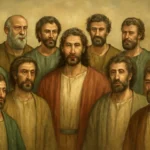
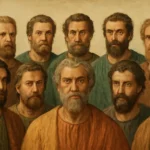
The topic Apostles Names Bible invites readers to explore how the names of the original twelve messengers appear in the biblical record, how they are varied across languages and gospel traditions, and what those names reveal about identity, role, and narrative purpose. This article offers a comprehensive guide to the names of the Twelve as they appear in the New Testament, clarifying common variants, and providing a framework for studying how scholars and translators handle these names in different contexts. Whether you are a student, a teacher, or a curious reader, understanding the names of the apostles helps illuminate character, mission, and the unfolding story of the early church.
The term “The Twelve” refers to a specific circle of disciples whom Jesus chose to accompany him, learn from him, witness his ministry, and receive the commission to preach and heal. The number twelve is symbolically meaningful in the biblical narrative, echoing the twelve tribes of Israel and pointing toward a renewed, inclusive community anchored in Jesus’ teaching. The canonical gospels—Matthew, Mark, Luke, and John—offer lists of the apostles with some minor variations in order and naming. In the Acts of the Apostles, the early church also refers to this core group as the foundation for missionary leadership and communal life.
In addition to the original twelve, later biblical usage sometimes includes other figures deemed apostles (for example, the Apostle Paul), but this article focuses on the twelve as they are commonly identified in the gospel accounts and in Acts 1. The source material reflects linguistic diversity (Greek, Aramaic, Hebrew), cultural context, and later interpretive traditions that shape how many readers today encounter these names.
The Original Twelve: Names and Key Roles
Here is a commonly accepted enumeration of the twelve, with brief notes on their roles and identifiers. Each entry presents the standard English rendering of the name, followed by well-known variants and notes about the person’s distinctive function in the gospel narratives.
Simon Peter — also known as Peter and Cephas (Aramaic for “Rock”).
Andrew — the brother of Peter, often described as a first disciple to encounter Jesus in some gospel accounts.
James son of Zebedee — frequently called James the Greater to distinguish him from another James in the circle; brother of John; part of Jesus’ inner circle.
John son of Zebedee — the other member of the inner trio along with James; often identified as the Disciple whom Jesus loved in the Fourth Gospel.
Philip — a pragmatic disciple who brings Nathanael to Jesus in the narrative; appears in several dialogue scenes and miracle accounts.
Bartholomew — traditionally identified with Nathanael in John’s gospel; the connection is a subject of scholarly discussion but widely accepted in patristic tradition.
Thomas — also known as Didymus (the twin in Greek); remembered for questions and the famous doubting episode regarding Jesus’ resurrection.
Matthew — also called Levi, the tax collector; identified as the author of the Gospel of Matthew in many traditions.
James son of Alphaeus — sometimes labeled James the Less to differentiate him from James the son of Zebedee.
Judas son of James — in many manuscripts referred to as Judas Thaddaeus or Judas Notis Judas (Less commonly used designations); he is sometimes conflated or confused with Judas Iscariot in popular references, so the distinction “Judas, not Iscariot” is often added in teaching materials.
Simon the Zealot — sometimes translated as Simon the Cananean or Simon the Canaanite in various manuscripts; the epithet highlights a zealot or nationalist association.
Judas Iscariot — the apostle who betrayed Jesus; in Peter’s and Paul’s lists he functions as the betrayer figure and is later replaced in Acts 1.
Note: Some translations label “James the Less” differently (e.g., “James the son of Alphaeus”) to distinguish him from the more prominent James, son of Zebedee. The internal identifiers help readers keep straight who is who in the narratives, especially when the same names recur across multiple gospels.
Name Variants Across the Gospels: A Guide to Variations and Significance
Across the Greek text of the New Testament and its Aramaic and Hebrew background, several apostles appear under different names or epithets. This section surveys the most common variants you’ll encounter, with notes on why these variants exist and how translators handle them in modern English Bibles.
Bartholomew and Nathanael: Are These Two Names for the Same Person?
The gospel tradition commonly identifies Bartholomew as the same person later named Nathanael in the Gospel of John. The pairing is not explicit in every text, but many scholars connect the two because the list in Matthew and Mark includes Bartholomew, while John mentions Nathanael without mention of Bartholomew in his own list.
In practice, readers should recognize the broader point: Bartholomew is often treated as the surname or household name, while Nathanael is a given name used in John’s account. The identity alignment is widely used in Christian tradition, and it matters for hymnody, art, and catechesis, even as some scholars debate the exact identification.
Thomas the Twin: Why “Didymus” Matters
Thomas appears in John 11:16 and John 20-21 as the one who expresses doubt about Jesus’ resurrection until he can touch the wounds. The name Didymus is the Greek equivalent of Tomas … a direct loan from the Aramaic term for “twin.”
The dual naming (Thomas / Didymus) emphasizes a cross-cultural translation issue: readers encounter a familiar personal name and a Greek descriptor, which helps explain why some manuscripts render him differently in cross-cultural Bibles.
Philip: The Practical Inquirer
Philip is consistently named as a thoughtful inquirer who helps connect people to Jesus (for example, telling Nathanael about Jesus and seeking Jesus’ guidance). In some traditions he is connected with missionary activity beyond the canonical text.
Simon the Zealot: The Political Epithets
In Greek, Simon the Zealot is sometimes rendered as Simon the Cananean or Simon the Canaanite. The term does not necessarily indicate a political party as in modern sense; rather, it has been understood to signal a zealous or devoted temperament or perhaps association with a distinct group in 1st-century Judaism. The exact nuance is debated, but the name functions to identify him among the twelve as a distinct personality.
Judas Thaddaeus (Judas, Not Iscariot)
One of the trickier name cases, because the figure is commonly distinguished from Judas Iscariot via epithet such as “Thaddaeus” or “Judas Not Iscariot”. In some manuscripts, this apostle is called Judas Lebbaeus or Lebbaeus, further complicating text-critical study. The presence of multiple names in this line of tradition underscores the need for careful reading in both synopsis lists and narrative contexts.
Matthew (Levi): The Tax Collector Turned Apostle
Matthew is frequently identified with the tax collector Levi, who sat at the tax booth when Jesus called him (as recounted in Matthew 9:9 and Mark 2:14). This dual naming reflects a typical pattern in first-century Jewish naming practices where a person would have both a given name and a family or occupational identifier that could appear as a surname in Greek renditions.
Judas Iscariot: The Betrayer Named
Judas Iscariot is the name most associated with betrayal in the gospel accounts. The surname Iscariot is often interpreted as denoting place of origin (e.g., Kerioth, a town in Judea) or could reflect other technonyms. In some traditions, the label becomes a shorthand for treachery in sermons and hymns. Because Judas is mentioned in multiple lists, readers benefit from noting the distinction between Judas Iscariot and the other apostle named Judas (Thaddaeus) in order to avoid confusion during study and discussion.
Replacement and Expansion: Matthias and the Post-Pentecost Apostolic Circle
The New Testament narrates a pivotal moment in Acts 1 when the eleven apostles realize they need to replace Judas Iscariot. The process and outcome offer important insights into early church governance, discernment, and the sense of ongoing apostolic authority.
After Jesus’ ascension, the apostles gather in Jerusalem and resolve the need to replace Judas to restore the number to twelve (Acts 1:15-26).
The two candidates chosen by the community are Matthias and a companion named Joseph called Barsabbas (also known as Barsabbas or Sabbatheus in some manuscripts). The casting of lots appoints Matthias to take the place of Judas, making the twelve once again complete.
This event is significant not only for numbers but also for signaling a transition from a purely dispersed following of Jesus to a formalized leadership structure under the apostles’ guidance and jurisdiction.
Paul and Other Apostolic Figures: A Broader Conversation about “Apostles”
In studies of the early church, readers often encounter a broader conception of apostles beyond the original twelve. The letters of Paul sometimes refer to him as an apostle in a special sense, distinct from the Twelve, while other churches recognize a wider circle of “apostles” who carried the gospel to gentile communities.
Paul the Apostle (also known as Saul of Tarsus) is called an apostle by letters in the New Testament, though he did not belong to the Twelve. His apostolic mission expands the geographic and cultural reach of early Christian teaching.
Other figures described as apostles or traveling missionaries in the early church include companions of Paul who are sometimes listed as apostles in various traditions, though their exact status and authority differ from the Twelve.
From the perspective of biblical names and identity, the distinction matters for readers who study the distinct callings and the way early Christian communities framed authority, succession, and mission across generations.
Practical Guide: How to Read the Names in Scripture and Through Translation
Understanding the names of the apostles requires careful attention to the way scripture was transmitted and translated. The Greek manuscripts of the New Testament frequently render Aramaic personal names in Greek forms, and different English Bible translations may choose distinct conventions for the same name. Here are some practical strategies for readers who want to engage with the names of the twelve in a thoughtful way:
When a name appears with multiple forms (for example, Simon Peter vs Peter), note the context to determine whether the text is emphasizing the apostle’s identity, role, or leadership.
Be aware of epithets such as the Zealot, the Less, or the Twin that help distinguish between individuals with the same basic given name.
Pay attention to cross-references across the four gospels. The lists of the Twelve do not appear in identical order in every account; recognizing the harmony and variance can deepen understanding of how the gospel writers organize their material.
When you encounter Nathanael and Bartholomew as potential identifications, consider the theory that the two names refer to the same person in different strands of tradition. Contextual reading can help you weigh the evidence in a balanced way.
In study or teaching contexts, use a quick reference list that includes the English name, alternative forms, a brief identifier, and a reference to the gospel or Acts passage where the name appears most prominently.
A Quick Reference: The Twelve Apostles with Variants and Context
The following compact guide is designed for readers who want a fast, high-level reference to the core twelve and a few important variants. It is not a complete textual apparatus, but it captures the most commonly cited forms in English Bible translations.
Peter (also Simon and Cephas) — leader among the Twelve; anchors many scenes in Matthew, Mark, Luke, and John.
Andrew — Peter’s brother; appears in multiple lists and participates in early mission episodes.
James the Greater — son of Zebedee; part of the inner circle with John; identified by the epithet “Greater.”
John — son of Zebedee; the other inner-circle member; associated with the Gospel of John and the Revelation tradition in later chapters.
Philip — a key interlocutor who helps connect people with Jesus’ ministry; features in several conversations and events.
Bartholomew — widely associated with Nathanael in John; identity is a conjunction of tradition and textual clues.
Didymus (Thomas) — the twin; famous for his initial doubt about the resurrection before eyewitness testimony.
Matthew (also Levi) — the tax collector who becomes a gospel writer in tradition; his calling scene occurs in several synoptic accounts.
James the Less (James son of Alphaeus) — an often overlooked member; distinguished from James the Greater.
Judas Thaddaeus (also Judas, not Iscariot, and sometimes Judas Lebbaeus) — a figure who appears in a few key lists and may be paired with Thaddaeus as a memory cue to keep distinct from Judas Iscariot.
Simon the Zealot (also Simon the Cananean) — a somewhat enigmatic figure whose epithet invites discussion about political or agrarian associations.
Judas Iscariot — the betrayer; his presence in gospel lists contrasts with the eventual replacement by Matthias in Acts.
Names in the Bible are not simply labels; they carry theological, historical, and literary weight. The way an apostle’s name is presented can signal a role in the narrative arc, indicate a source tradition, or emphasize a particular aspect of the early church’s self-understanding. Here are a few key points to consider when studying the names of the apostles in a Bible study or classroom setting:
Identity and mission: Names often reflect the person’s role or vocation, such as Levi becoming Matthew and entering Jesus’ circle as a tax collector, signaling a bridge between insider and outsider dynamics.
Tradition and memory: The pairing Bartholomew/Nathanael reveals how early Christian communities remembered and reconciled different name forms into a coherent list of witnesses.
Historical context: The epithet “the Zealot” or “the Cananean” points to possible social or political dimensions of the apostles’ identities in a complex first-century setting.
Textual variants: The presence of alternate spellings and epithets across manuscripts highlights the importance of text criticism and translation choices for modern readers.
For educators, pastors, and church leaders, a robust understanding of the apostles’ names enhances preaching, catechesis, and personal study. Here are practical ways to use this guide in a classroom or devotional setting:
Develop a name-focused study plan that pairs each apostle with a short meditation on their role in the gospel tradition and a linked Bible passage. This can help learners connect identity with narrative function.
Create a multimedia presentation that visually maps the apostles to the gospel passages in which they appear, highlighting name variants and cross-references to strengthen memory and understanding.
Offer a handout with a compact “quick reference” list (as provided above) for congregants or students who want to carry a durable summary into study time or group discussions.
In sermons or Bible studies, use name variants to illustrate how translations shape our perception of biblical figures and how early Christian communities navigated language barriers in the spread of the message.
Beyond scholarly study, the names of the apostles have motivated centuries of art, music, and literature. When artists name characters in paintings or compose hymns about the apostles, the familiar their names evokes can shape mood and interpretation. For example, Peter is often depicted as a steadfast leader; Thomas is a figure of doubt transformed into belief; Judas Iscariot remains a complex character whose name has become a symbol of betrayal in many cultures. Recognizing the variants, such as Nathanael and Bartholomew, also helps readers interpret depictions across different periods and traditions, where the same figure may be labeled with one name in one tradition and another name in a different one.
The study of Apostles Names Bible is more than cataloging: it’s a doorway into the way the early church understood mission, community, and witness. The twelve apostles form a foundational memory for Christian identity, and their names—along with the variants and epithets that accompany them—provide a lens through which to view the Gospel message, the early church’s structure, and the ongoing legacy of Scripture in contemporary life. By engaging with the names of the Twelve in their many forms, readers gain not only factual knowledge but also deeper appreciation for the linguistic, theological, and historical richness of the biblical text.

 Por Laura Jara