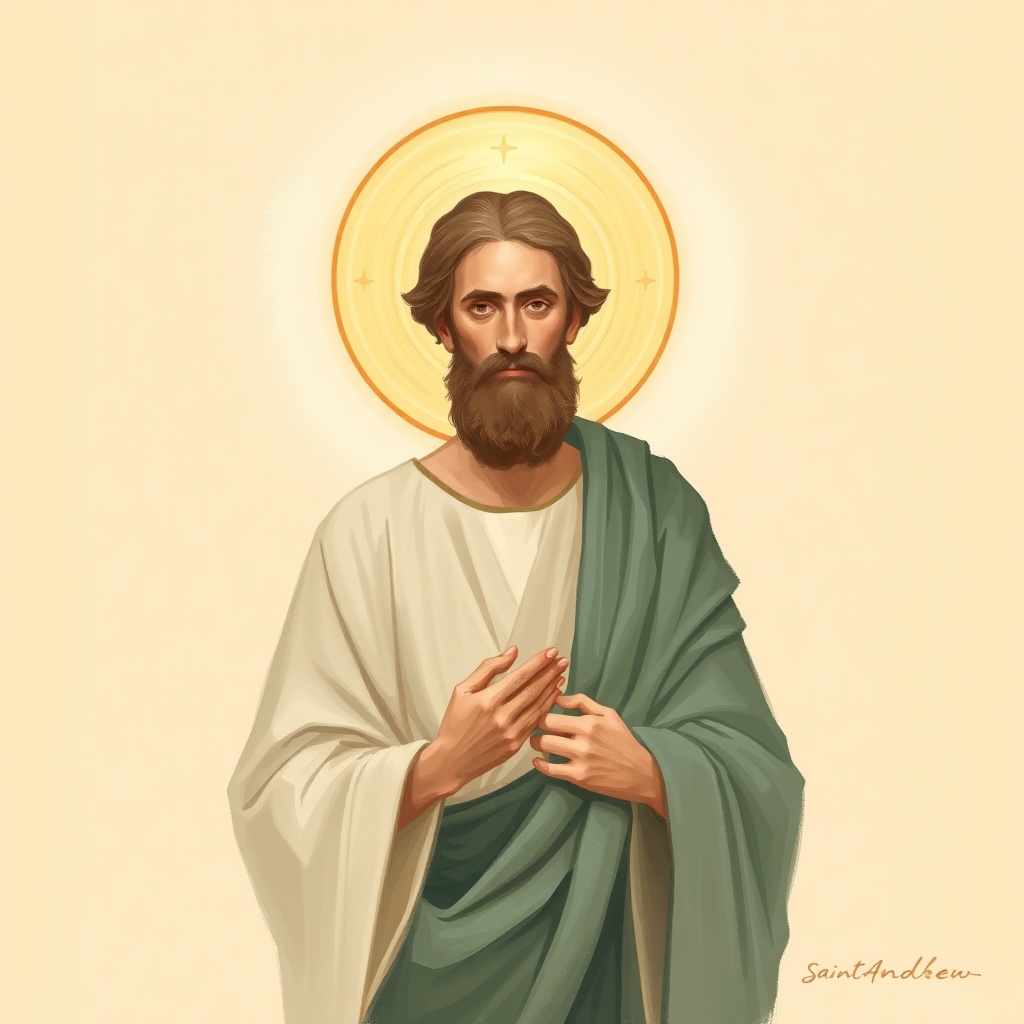
Saint Andrew — Apostle and Patron of Fishermen | Life, Miracles, and Feast Day
November 30
apóstoles Saint Andrew
Saint Andrew was one of the twelve apostles of Jesus Christ and the brother of Saint Peter. He lived during the 1st century in Galilee, in modern-day Israel. Known for his dedication to Christ and his role in spreading Christianity, Andrew is venerated as a martyr and a patron saint of fishermen and Greece. His life exemplifies humble service and unwavering faith amid challenging circumstances.
The name Andrew originates from the Greek name 'Andreas,' meaning 'manly' or 'brave.' This name reflects qualities of strength and courage, emphasizing the saint’s role as a courageous disciple of Christ. In Greek culture, the name was popular among warriors and leaders, highlighting Andrew’s spiritual and apostolic leadership. The name continues to symbolize valor and steadfastness in faith.
Feast Day
November 30
Related Bible Verses
John 1:40-42
Andrew, the disciple, introduces his brother Peter to Jesus, recognizing Him as the Messiah.
This verse highlights Andrew’s role as an evangelist who brought others to Christ, exemplifying his faith and familial devotion.
Matthew 4:18-20
Andrew and Peter are called by Jesus to become fishers of men, leaving their nets behind.
This passage reflects Andrew’s immediate response to Jesus’ call and his dedication to his spiritual mission.
John 6:8-9
Andrew finds the boy with five barley loaves and two fish to feed the multitude, demonstrating faith and resourcefulness.
This verse symbolizes Andrew’s recognition of Christ’s miracles and his role in witnessing divine provision.
Martyrdom and Canonization
Saint Andrew was martyred for his unwavering faith in Christ, crucified in Patras by Roman authorities. His cause for sainthood was officially opened centuries after his death, recognized for heroic virtue and steadfastness under persecution. The Catholic Church canonized him, acknowledging his martyrdom and the miracles attributed to his intercession. His death exemplifies the Christian ideal of sacrifice and fidelity to Jesus, inspiring generations to remain faithful amid trial. Miracles associated with Andrew include healings and conversions reported at his shrines, which supported his canonization and ongoing veneration.
Miracles and Apparitions
Many verified miracles are linked to Saint Andrew, especially healing cures at his relics and shrines. Apparitions have been reported in various regions, inspiring faith and devotion among pilgrims. Miraculous healings from illnesses and recoveries from despair are documented, with the Church officially recognizing some of these as evidence of divine intervention. These miracles continue to strengthen devotion to Saint Andrew as an intercessor in times of need.
Prayer and Devotion
Devotees pray to Saint Andrew for courage, perseverance, and guidance in their spiritual journey. Traditional prayers, novenas, and litanies are offered to invoke his intercession, especially on his feast day. Many wear medals or scapulars depicting him, seeking his protection and assistance. Shrines dedicated to Andrew attract pilgrims who seek healing and inspiration, trusting in his powerful intercession before God.
Saint Andrew is often depicted with an X-shaped cross, known as the Saltire or Saint Andrew’s Cross, which has become a national symbol of Scotland. His relics are believed to have miraculous powers, attracting countless pilgrims over centuries, and his feast day is celebrated with vibrant processions and traditional festivities worldwide.
Frequently Asked Questions
Why is Saint Andrew considered a patron of fishermen?
Because he was a fisherman by profession before following Jesus, and he is invoked by fishermen for safety and success at sea, as highlighted in the Gospel accounts.
What is the significance of Saint Andrew’s crucifixion?
Saint Andrew was crucified on an X-shaped cross, symbolizing his willingness to suffer and his faith in Christ, inspiring Christians to remain steadfast even in persecution.
Are there any relics of Saint Andrew?
Yes, relics purportedly belonging to Saint Andrew are kept in various locations, including the Basilica of Saint Andrew in Patras and the Cathedral of St. Andrew in Scotland, which have become pilgrimage sites.

 Por Laura Jara