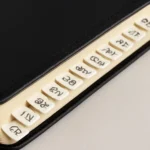
Bible index tabs are a simple yet powerful system for organizing Scripture for quick reference. They attach to the edges of pages or the spine of your Bible and reveal the names of books or sections as you flip through. In this guide, we’ll explore the best tabs for organizing your Bible, along with practical tips for choosing, applying, color-coding, and maintaining your tab system. Whether you study with a compact pocket Bible or a large study Bible with wide margins, the right set of tabs can transform your workflow and help you navigate the text with confidence.
At its core, a bible index tab is a small, decorative, or utilitarian piece of material that marks a page or a range of pages to signal the start of a book, section, or chapter. The term “index” emphasizes their role as an index to the content rather than a decorative flourish. Tabs can be placed on the edge, spine, or corners of pages, depending on the design and your preference. The primary benefits include:
Speed—you can flip directly to the book you need without paging through every section.
Organization—they create a consistent system that reduces confusion during study, memorization, or sermon prep.
Customization—you can tailor color codes, abbreviations, and tab placement to fit your study method.
Durability—well-made tabs resist wear and can last through years of use with proper care.
There are many styles, and the best approach depends on how you read, what Bible you own, and how you prefer to categorize the text. The concept of tabbed organization is universal across Bible editions, and you can adapt a system to match your translation, study notes, or devotional routines.
Types of tabs for Bible organization
Tab designs come in a range of forms. Here are the major categories you’ll encounter, along with the advantages of each approach:
Pre-printed tab sets
These are ready-made, with book-name labels or abbreviations for standard Bible books (Genesis, Exodus, Psalms, etc.).
Common layouts include top tabs (visible at the top edge), side tabs (along the page edge), and corner tabs (small squares or rectangles glued at a corner).
Plastic tabs (clear or colored) resist tearing and wear well.
Vinyl or PVC tabs offer durability with smooth edges that glide across pages.
Paper or cardstock tabs are inexpensive and quiet, though less durable.
Foil-embossed tabs add a premium look and can be highly durable with a protective coating.
Design considerations for choosing Bible index tabs
When selecting bible index tabs, several design considerations influence readability and longevity. Here are the key factors to weigh:
Page size and layout—smaller Bibles may benefit from smaller tabs that do not obscure text, while larger Bibles can accommodate bigger labels for legibility.
Ribbon and binding interference—tabs should not snag on ribbons, ephemera, or the spine. Choose tabs that won’t crack or peel when the book is opened widely.
Label clarity—opt for high-contrast colors and legible fonts. Short abbreviations (e.g., Gen, Exo, Ps) save space and speed recognition.
Durability—consider the wear that comes from turning pages and from oil, sweat, and dust. Durable materials extend the tabs’ life.
Removability and reusability—some people prefer tabs that can be relocated or replaced without damaging the page.
Aesthetics vs. function—you may want a stylish set, but prioritize legibility and practicality first if you’re using the Bible in class or teaching.
How to choose the best system for your Bible
Choosing the right tab system is a highly personal decision. Consider these practical questions to guide your selection:
What is your primary use? Study, devotional reading, sermon prep, or teaching may call for different tab emphases (e.g., large text labels for sermons, fine print for study notes).
What is your Bible format? Compact pocket Bibles benefit from tiny tabs, while study Bibles with wide margins can accommodate larger labels and more color coding.
Do you prefer ready-made or DIY? Pre-printed tabs save time; customizable tabs offer control over abbreviations and color schemes.
How will you apply them? Are you comfortable with glue, or do you prefer press-on adhesive that won’t damage pages?
What is your color preference? A cohesive color palette aids memory; choose colors that you’ll consistently associate with categories.
Practical setup: applying tabs to your Bible
Putting tabs on your Bible requires a careful approach to avoid misalignment or damage. Below is a practical, step-by-step guide tailored to bible index tab setup for optimal results:
Plan your layout—decide whether you want a simple set (Genesis through Revelation) or a more granular system (e.g., grouping by Pentateuch, Historical Books, Wisdom Literature, Prophets, Gospels, Paul’s letters, General Epistles, Revelation).
Choose your position—top, side, or corner tabs. Ensure consistency across the entire Bible for a uniform look and predictable navigation.
Test fit—before applying any adhesive, hold the tab to the edge to confirm it won’t cover text too heavily or obscure verse numbers.
Prepare clean pages—wipe the page edges lightly to remove dust or oils that could reduce adhesive grip. Use a soft cloth or tissue.
Apply tabs methodically—start at Genesis, proceed to Revelation, and align each tab with the corresponding edge of the page. For edge tabs, ensure the label is facing outward; for top tabs, the label should be visible when the Bible is closed.
Press firmly—after placement, press the tab to ensure a good seal. If your tabs have an adhesive backing, rub with a fingernail or a soft tool to secure.
Check readability—open the Bible and confirm that each tab’s label is clearly visible and does not obscure verses.
Color-coding discipline—keep to your chosen color scheme. Avoid adding too many colors if it reduces contrast or becomes visually overwhelming.
Maintenance—occasionally check for loose tabs and re-secure or replace as needed. Store your Bible away from direct sun to prevent color fading.
Color coding is a powerful feature of the bible index tab system, enabling rapid recognition. Here are several conventions you can adapt:
Testament-based colors—blue for the Old Testament, green for the New Testament, or any two-color scheme that makes sense to you.
Literary genre—use colors to distinguish law, history, poetry, prophecy, gospels, letters, and apocalypse.
Frequency of reference—reserve bold colors for frequently referenced sections and softer tones for less-used ones.
Special sections—designate a distinct color for small yet important sections like the Gospels, the Psalms, or the Epistles.
When implementing a color-coding plan, keep a simple reference guide inside the Bible (on the inside cover or a bookmark) so you and others can quickly learn the legend. A well-documented color scheme reduces confusion in group study and increases efficiency for repeated use.
Materials and durability considerations
Different tab materials offer different benefits for bible index tabs. Here are common choices and what to expect:
Plastic or vinyl tabs—durable, resistant to tearing, and easy to wipe clean. Ideal for daily use.
Foil-embossed or metal-toned tabs—premium look and high durability, but can be pricier and heavier.
Paper tabs—economical and quiet, but less durable and more prone to wear with repeated use.
Clear or transparent tabs—subtle and non-intrusive; good for readers who want minimal distraction.
Whenever you choose, ensure that the material does not cause pages to stick or warp over time. Quality adhesive is essential for stick-to-page performance, especially in Bibles with thin paper. If you expect heavy daily use, prioritize durability and a strong adhesive with a clean finish.
Common scenarios: tailored tab systems for different Bible formats
Recommendation: larger index tabs with bold labels to stand out on the page edge.
Color strategy: assign colors to themes (grace, salvation, covenant) for a meditative study approach.
Tip: leave space near the tab for quick notes or reflections as you study.
DIY vs. store-bought: which route should you take?
Both DIY and store-bought options have distinct advantages. Here’s a comparative view to help you decide which route aligns with your goals:
Store-bought tabs—fast, consistent, and reliable. Good for beginners who want a ready-to-use system without the planning overhead.
DIY tabs—full customization, perfect for complex study methods or unique Bible editions. Great for creative expression and personal alignment with study rituals.
Hybrid approach—start with a ready-made set to establish a baseline, then add DIY tabs for specialized sections (e.g., key theological terms, cross-references, or personal bookmarks).
Maintenance, replacement, and long-term care
Tabs can last for years, but they need occasional maintenance. Consider the following best practices for keeping your tabbed Bible in top shape:
Inspect regularly—check for loosening edges, peeling adhesive, or fading colors.
Replace when necessary—don’t let a partially detached tab interfere with page turning or damage the text.
Keep away from moisture—water exposure can detach adhesives and warp the page edges.
Clean handling—wash hands before use to reduce oil transfer, which can degrade adhesives over time.
Rotation strategy—infrequently used tabs can be rotated to a spare set to prevent wear on the most-used tabs.
Digital and hybrid approaches: integrating tabs with technology
While bible index tabs are a physical system, you can blend them with digital tools to maximize efficiency. Consider these options:
Digital cross-references—use a Bible app or study software to supplement your paper tabs with digital bookmarks that mirror your tab colors and categories.
Print-ready reference sheets—create printable color guides or micro-templates that align with your tab palette, then place them inside the cover for quick reference.
Hybrid workflow—keep physical tabs for quick page location, and use a digital note-taking app to capture insights, sermon outlines, and cross-references drawn from your tabbed navigation.
Common pitfalls and how to avoid them
Even the best tab system can fall prey to a few common issues. Here are frequent problems and practical fixes:
Clutter and visual overload—avoid too many colors or labels; simplify to a digestible palette and limit their use to essential categories.
Inconsistent labeling—establish a standard for abbreviations early and stick to it across the whole Bible.
Obstruction of text—select tab sizes that do not cover verses or critical text. If you must, consider corner tabs or minimal edge tabs.
Peeling adhesive—choose tabs with strong adhesive or double-sided tape designed for paper; avoid low-tack options in humid environments.
Color fading—store away from direct sunlight or UV sources; rotate tabs if possible to reduce constant exposure on a single color.
Here are succinct variants of the Bible index tab system tailored to particular needs. Use these as starting points or adapt them to your preferences:
Compact study variant — minimal color set, small edge tabs, simple book abbreviations, ideal for pocket Bibles.
Comprehensive study variant — multiple color tiers by testament and genre, top tabs with full book names, large labels for readability.
Church group variant — standardized color codes across all participants, laminated tabs for durability, shared legend in the inside cover.
Journaling/creative variant — decorative tabs with inspirational motifs, larger labels, and space for quick notes or reflections near tab edges.
Whether you are a student, a pastor, a teacher, or a Bible study leader, these practical tips help you maximize the benefits of bible index tabs in classroom or group settings:
Teach the legend—spend a few minutes at the start of a session explaining the color codes and abbreviations so everyone reads the same cues.
Use tabs during teaching—refer to tabs while presenting cross-references to help listeners locate passages quickly.
Encourage consistency—in group settings, require that all students use a shared tab scheme for easier collaboration and note-taking.
Incorporate into study plans—design study guides or worksheets that align with your tab colors, making it easier to follow the structure.
In sum, bible index tabs offer a practical, flexible, and durable method for organizing the Bible in a way that enhances speed, efficiency, and comprehension. By selecting the right type of tab (pre-printed vs customizable), deciding on a color-coding strategy, considering the unique format of your Bible, and applying best practices for maintenance, you can create a tabbed system that supports your study goals and teaching needs. The best tab index system is the one that remains consistent, legible, and comfortable to use day after day. Whether you adopt an off-the-shelf set or craft a bespoke arrangement, the result is a more intuitive, more navigable Bible. Embrace the idea of a tabbed index as a personal study companion—an understated but powerful tool to unlock faster access to Scripture and a deeper, more organized engagement with the text.

 Por Laura Jara