Overview: What is the Advent Wreath and Why It Matters
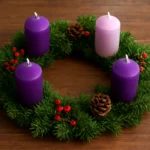
The Advent wreath—also known as the wreath of Advent or simply the Advent ring—is a symbolic centerpiece used during the weeks of preparation leading up to Christmas. At its most basic, it is a circular arrangement of evergreens adorned with candles, but its meaning runs far deeper than decoration. The evergreen branches symbolize eternal life and resilience in the face of winter, while the circle itself conveys eternity and continuity, a reminder that God’s promises extend beyond a single season. For many families and congregations, the ritual of lighting candles, saying prayers, and reading Scripture week by week turns the weeks of Advent into a lived practice of anticipation, reflection, and hope.
Across cultures and Christian traditions, the advent wreath is both a liturgical symbol and a home-centered ritual that invites participation. Some communities place the wreath on an altar in a church, while households transform a table or hearth with a personal Advent wreath, weaving together memory, faith, and family life. In both settings, the central idea is the same: preparing the heart for the coming of Christ while honoring the spiritual qualities associated with each Sunday of Advent.
Historical Roots and Evolution
The Advent wreath has a history that blends local practice with broader Christian liturgical development. Its origins are often traced to Northern Europe, where communities long observed the season with various symbolic rites as winter darkness deepened. The form that most people recognize today took a more defined shape in Germany and Scandinavia over several centuries, and it began to emerge in public life as a recognizable symbol in the 19th century.
Early gestures and local customs
In its early forms, communities sometimes created ring-shaped arrangements of evergreens or placed candles within seasonal garlands. These practices served both a practical and spiritual purpose: they highlighted a period of waiting for a special day in late December and offered a way to illuminate the dark days of winter with light, hope, and communal prayers.
The modern familiar wreath and the role of Johann Hinrich Wichern
A pivotal moment in Advent wreath history came with the work of a German pastor and social reformer named Johann Hinrich Wichern in the 19th century. In 1839, he established a charitable institution in Hamburg for distressed youth and created a large, wheel-shaped wooden device filled with candles as a visual calendar for the children. That public display—though far larger than a domestic wreath—captured the imagination of many and demonstrated how a simple arrangement of candles could teach time, patience, and readiness for Christmas.
From these beginnings, the Advent wreath spread through churches and homes in Europe and North America. By the late 19th and early 20th centuries, it had become a staple feature of Advent worship in many Christian communities. Over time, traditions varied by region, with differences in the number of candles, their colors, and the exact order of lighting. Yet the central idea—counting down to Christmas with light, Scripture, and prayer—remained consistent.
Symbolism of the Elements: Circle, Evergreen, and Candles
The symbols embedded in the Advent wreath are deliberate and meaningful. Each element points to a facet of the Advent season and the broader story of Christian faith.
The Circle: Eternity and God’s Everlasting Promise
The circular form has no beginning and no end, which makes it a natural emblem for the Christian concept of eternity. It suggests that God’s love and the promise of salvation flow without interruption through time. In many meditative readings and homilies, the circle invites believers to reflect on the continuity of God’s faithfulness from the Old Testament prophecies to the birth of Christ and beyond.
The Evergreens: Life That Persists Through Winter
Evergreen branches such as pine, fir, or yew speak to life that endures in the harshest season. They remind worshippers and families that faith remains green even when the world outside looks barren. This symbolism resonates with themes of hope and steadfastness, inviting people to cling to meaning when circumstances seem bleak.
Each candle on the wreath stands for a dimension of the Advent journey. The light breaking through darkness is a powerful image in Christian liturgy and in broader spiritual life. The act of lighting a candle invites reflection on what it means to be a people who wait for illumination, guidance, and reconciliation—light that points toward the coming of Christ.
Color Significance: Purple, Pink, and Occasionally Other Hues
In many churches and homes, the candles follow a color pattern that carries its own meaning:
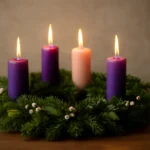
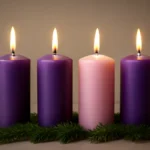
Purple (or Violet): Symbolizes penance, preparation, and expectation during the first and second weeks of Advent.
Pink (or Rose): Marks Gaudete Sunday, the third Sunday of Advent, a moment of rejoicing in the approaching Christmas feast.
White (often used as a central Christ candle in some traditions): Represents the nativity and the incarnation of Jesus; lit on Christmas Eve or Christmas Day.
Some traditions use blue instead of purple, reflecting regional liturgical preferences, while others may add a white central candle regardless of color patterns. The overall aim is to visually narrate the Advent arc: waiting, annoucement, rejoicing, and fulfillment.
The Four Weeks: Candle Meanings and Lighting Sequence
A hallmark of the Advent wreath is the progressive lighting of candles over four Sundays, with an optional fifth candle signifying the Christ event. The sequence is designed to guide a community through a structured season of hopeful anticipation.
Week 1 — The Candle of Hope (Prophecy and Expectation)
The first light introduces the season with a mood of hopeful expectation. It invites people to consider the prophecies of a coming Messiah and the sense that God’s promises are trustworthy. In many readings, this candle is associated with hope, the confidence that God has a plan even in uncertainty.
Week 2 — The Candle of Peace (Preparation and Reconciliation)
The second week emphasizes peace and preparation. It invites believers to examine brokenness, seek reconciliation, and work toward a world where justice and mercy take root. The flame represents the way light dispels the encroaching cold and darkness of conflict or despair.
Week 3 — The Candle of Joy (Gaudete Sunday)
The third Sunday is often marked by a color shift to pink or rose, signaling a shift from the penitential mood to growing rejoicing. The candle of joy acknowledges that news of the coming birth brings gladness and relief, even as Advent still requires patient waiting.
Week 4 — The Candle of Love (The Advent Call to Action)
The final week of the traditional four-candle wreath centers on love as a decisive energy in the life of the community. It is a time to reflect on how love is made tangible—through acts of service, generosity, and welcoming the stranger. The flame invites believers to live out the meaning of Christmas in daily relationships.
The Christ Candle: White Light at Christmas
In many traditions, a fifth candle—the Christ candle—is placed in the center of the wreath and lit on Christmas Eve or Christmas Day. This white candle represents the incarnation, the fullness of God becoming human in Jesus Christ, and it serves as the culminating symbol of the Advent journey.
Whether five candles or four with a central candle, the rhythm of lighting invites families and congregations to pause, reflect, and tell the story of Advent in a tangible, contemplative way.
Variations and Regional Practices
While the core symbolism remains consistent, there are rich regional and denominational variations in how Advent wreaths are designed and used. These differences reflect cultural heritage, theological emphasis, and practical considerations.
Number of candles: The standard setup often features four candles surrounding a central Christ candle. Some traditions use five candles from the outset, with the Christ candle integrated as one of the outer flames, while others place the Christ candle in the middle.
Color schemes: The traditional purple and pink palette is widespread, but some churches employ blue as the liturgical color for Advent, or alternate hues to emphasize regional customs.
Flower and greenery choices: Wreaths may incorporate fir, pine, holly, rosemary, or other evergreens, and the base can be a sturdy foam ring, a wooden hoop, a grapevine wreath, or a decorative metal frame.
Centerpiece variations: In some households, a white Christ candle sits in the center of the ring; in others, the central piece is a star, a crucifix, or a decorative cross that anchors the symbolism of Christmas’ meaning.
Placement and use: In churches, the wreath often sits on an altar or a chancel table as part of the liturgical setting. In homes, a freestanding wreath on a table or a mantel may accompany a family devotional, Bible readings, and seasonal songs.
Additional elements: Some Advent wreaths include small ornaments, pinecones, or symbolic tokens (like doves, stars, or angels) to enrich storytelling around the Advent narrative.
Regardless of the exact form, the essence of the Advent wreath lies in its function as a ritual object that fosters contemplation, invites communal participation, and makes the passage of time meaningful during the weeks before Christmas.
Advent Wreath in Churches vs Homes: Use, Prayers, and Rituals
The Advent wreath serves both liturgical purposes in churches and devotional purposes in homes. In each setting, it anchors a rhythm of prayer and Scripture readings, transforming ordinary evenings into moments of spiritual attention.
In churches: liturgy, sermon, and congregational engagement
In a congregational setting, the wreath is typically part of a formal service structure. A brief liturgy may accompany each lighting, including prayers, a Scripture passage (often a prophetic or Gospel reading), and a hymn or song. The candles’ colors guide the sermon topics or exhortations, offering a visual and audible cue for the year’s Advent themes.
In homes: family devotionals, storytelling, and shared traditions
In the domestic sphere, the Advent wreath often takes on a family-centered rhythm. Parents or grandparents light a candle each week, followed by a short reflection or Scripture reading. Songs, a short prayer, and a moment of gratitude become a recurring routine that deepens family bonds and foregrounds a shared sense of expectancy.
Crafting, Maintaining, and Safely Using an Advent Wreath
Building and caring for an Advent wreath is accessible to many households, schools, and faith communities. A few practical considerations help ensure the ritual remains meaningful and safe.
Materials and design basics
Base: Choose a stable ring or frame—foam, grapevine, or metal—large enough to hold four candles with space for wax and decoration.
Greenery: Fresh boughs or preserved greens can be used for fragrance and vivid color, though artificial greens offer long-lasting convenience.
Candles: Use unscented or lightly scented candles if you plan to practice prayers and readings near the flame. Consider electric LED candles for safety, especially around children or in shared spaces.
Protection and stability: A sturdy base, a non-flammable surface, and an adequate water reservoir or moisture barrier help resist tipping and reduce fire risk.
Step-by-step: assembling and blessing an advent wreath
Lay the ring on a non-flammable tray and arrange greenery evenly around the outer edge.
Place four evenly spaced candles around the wreath; if using a Christ candle, position it at the center.
Add decorative elements (bows, pinecones, berries) in a balanced way, avoiding clutter that could obstruct candle flames.
Light the first candle on the first Sunday of Advent, and recite a short prayer or read a verse. Repeat in subsequent weeks, adding one more candle at each step, and finally light the Christ candle on Christmas Eve or Christmas Day as tradition dictates.
Safely extinguish flames after the ritual or use a candle snuffer; never leave a lit candle unattended.
Maintenance tips
Keep candles trimmed to about a 1/4 inch to reduce smoke and ensure an even burn.
Replace any wilted greens promptly to maintain an attractive, fresh appearance.
Place the wreath away from drafts, heat sources, and flammable decorations to minimize fire risk.
Symbolic Meaning in Contemporary Life
In modern times, the Advent wreath has retained its core symbolism while expanding to encompass broader themes. Many families view the lighting ritual as a counterbalance to the busyness and commercialism often associated with Christmas. The practice invites people to slow down, reflect, and connect with others—neighbors, family, and communities—in shared acts of light and hope.
Light in the darkness: A universal message of guidance, healing, and courage during difficult times.
Patience and anticipation: The weeks of Advent resemble a season of waiting that fosters character development—humility, generosity, and trust.
Community and belonging: Lighting together can strengthen bonds within families and congregations, affirming a sense of belonging to a larger story.
Legacy and continuity: The wreath connects generations, linking the ancient prophetic expectation with modern celebrations and daily life.
Some communities also connect Advent wreaths with social and charitable aims, inviting people to light a candle as a pledge to acts of service, kindness, or outreach during the season. The symbolism of light and warmth thus extends beyond church walls into schools, hospitals, and local neighborhoods.
Practical Guide: Quick Reference for Creating Your Own Advent Ritual
Whether you are new to the tradition or returning after a hiatus, here is a concise guide to help you start or renew your Advent celebration with intention.
Decide on the wreath format: four candles around a ring, or a five-candle arrangement with a central Christ candle.
Choose colors and symbolism: purple and pink are common; consider blue if preferred by your community; decide whether to include a white Christ candle or other centerpiece.
Gather materials: base, greenery, candles, optional decorations, and a protective surface.
Plan readings and prayers: select a short Bible verse or devotional for each Sunday and a traditional Advent prayer for lighting time.
Establish a lighting routine: set a consistent day/time each week for lighting the candles and sharing reflection—ideally with the family or small group.
Document your journey: keep a simple journal or photo record of each week’s reflections to reflect back on later.
The beauty of the Advent wreath lies not only in its aesthetics but in its capacity to become a ritual of meaning—a structured space in which time is honored, hope is kept anew, and life is celebrated in anticipation of Christmas.
Glossary of Key Concepts and Terms
To help readers navigate the language around Advent wreaths, here is a short glossary of terms that frequently appear in discussions of Advent traditions.
Advent: The season of expectant waiting and preparation for the celebration of the birth of Jesus Christ at Christmas, generally observed during four weeks preceding Christmas.
Advent calendar: A related devotional practice that counts down the days of Advent, often with small treats or reflections for each day.
Gaudete Sunday: The third Sunday of Advent, when the liturgical color typically changes to pink to symbolize joy.
Christ candle: The central or final candle lit on Christmas Eve or Christmas Day, symbolizing the arrival of Christ.
Liturgy: The structure and conduct of public worship within a church service, often guiding how Advent wreaths are used in congregational settings.
Historical and Theological Reflections: Why a Wreath and Not a Tree?
Advent wreaths have grown from practical roots into a symbol-rich practice with theological nuance. The circular shape, evergreen life, and candlelight converge to tell a story about time, light, and grace. The tradition invites believers to consider not just what Christmas represents in a single day, but what it means to live in hopeful expectation over four weeks and beyond.
The Wreath as Catechesis
For many pastors and educators, the Advent wreath can function as a tool for catechesis—teaching the faithful, especially children, the elements of the Christmas narrative in a tangible way. By associating each week with a theme such as hope, peace, joy, and love, the wreath becomes a living timeline of faith formation.
While the Christmas tree is a cherished emblem in many homes, the Advent wreath emphasizes preparation rather than immediate celebration. The tree often signals the arrival of Christmas Day, whereas the wreath guides participants through the weeks leading up to Christmas. The two symbols can complement each other—one marking arrival, the other marking anticipation.
Across different communities, the Advent wreath takes on local significance. In some families, lighting the wreath becomes a shared moment between generations, with grandparents guiding grandchildren through the ritual and retelling Christmas stories. In schools, wreath-lighters may include songs, poems, or readings from the community’s diverse voices, making Advent a collective memory rather than a solitary practice. In churches with immigrant populations, the wreath can reflect a blend of traditions, incorporating elements from the cultural backgrounds of worshippers while preserving the core symbolism of lights breaking through darkness.
In the end, the practical purpose of the Advent wreath—igniting light, inviting reflection, and nourishing community—transcends differences in culture and denomination. It remains a powerful visual and ceremonial reminder that even in darkness, light is coming.
The Advent wreath stands as a durable and adaptable symbol of Christian faith. Its circular form, evergreen life, and candlelight offer a rhythmic cadence to the season, inviting believers to pace their expectations, cultivate hope, foster peace, celebrate joy, and practice love in concrete ways. Whether used in a grand church setting or a cozy family room, the wreath helps people slow down to listen for the story that is unfolding—an ancient promise renewed in the birth of Jesus Christ.
As you consider creating or enhancing your own Advent ritual, remember that the most meaningful aspect is not the perfection of the wreath itself but the intentional time spent together in reflection, prayer, and shared lights. The Advent wreath, in its many shapes and colors, remains a universal invitation to wait with purpose, to light the darkness with acts of mercy, and to anticipate the day when the story reaches its joyful climax in Christmas.

 Por Laura Jara