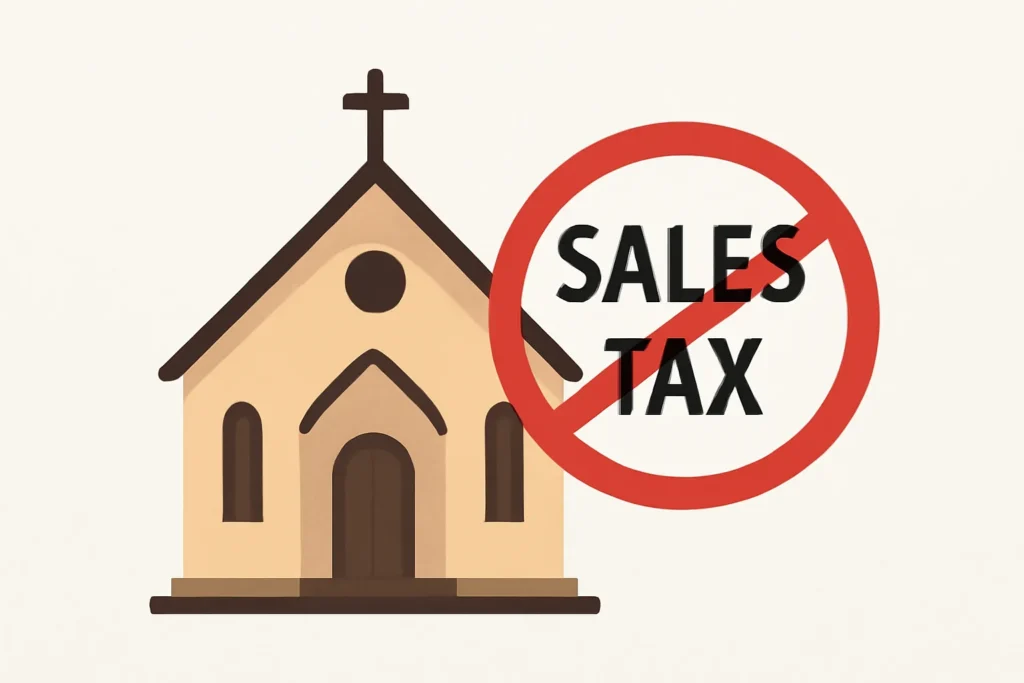
The question “are churches exempt from sales tax?” touches on a web of federal and state rules that govern how religious organizations operate financially. In the United States, there are multiple layers of tax law that intersect with church life. At the federal level, churches typically enjoy federal income tax exemptions through the Internal Revenue Code, most commonly under 501(c)(3). But sales tax is a state and local matter, and the rules vary widely from one state to another. This article explains how religious tax exemption works in practice, what it means for church purchases, fundraising activities, and the day-to-day operations of a congregation. It also highlights common misunderstandings and provides practical guidance for churches seeking to navigate the rules without sacrificing their missions.
Foundational Concepts: 501(c)(3) Status and Religious Exemption
What is a 501(c)(3) organization?
Most churches qualify as 501(c)(3) organizations under the Internal Revenue Code, which grants an exemption from federal income taxes for organizations organized and operated for charitable, religious, educational, or other specified purposes. This status signals to the federal government that the organization is not a for-profit enterprise and that contributions to it may be deductible for donors under certain conditions. However, federal tax exemption is separate from state sales tax treatment, and one does not automatically guarantee another kind of exemption.
Does 501(c)(3) automatically grant sales tax exemption?
No. Sales tax exemptions are generally determined by state and, sometimes, local jurisdictions. While a church’s federal tax-exempt status is important for ongoing fundraising and grant eligibility, each state has its own rules about whether religious organizations qualify for state sales tax exemptions, how to obtain them, and under what circumstances purchases or activities are exempt. In practice, many churches must apply for and maintain separate state exemption certificates to avoid paying sales tax on purchases that are used in the organization’s exempt purposes. In some states, a church is exempt automatically; in others, it must apply and periodically renew certificates. In still other states, exemptions may apply only to specific categories of purchases or activities.
State Sales Taxes and Religious Organizations
General rules: exemptions for purchases and use
Across the United States, state sales tax exemptions for religious organizations typically cover purchases that the church will use in conducting its exempt religious functions. Common examples include items like church furniture, sound systems, office supplies, and maintenance services, when those purchases are intended for the routine operation of the church and not for resale or unrelated business activities. Some states also extend exemptions to use tax on equipment and supplies bought out of state for church use, provided the purchase qualifies under state law. However, the exact threshold, documentation, and eligibility criteria vary widely from state to state.
Products and services that are commonly taxed or exempt
To illustrate the landscape, many states provide exemptions on tangible personal property and labor used in worship spaces, administrative offices, and charitable programs. But there are often important exceptions. For example, some states tax:
Sales of goods by the church at fundraising events that resemble commercial activity rather than charitable drives
Admissions or fees charged for events that are not substantially related to the church’s exempt purposes
Food or beverages sold at events that do not directly support worship or religious instruction
Rentals of space to non-exempt groups or for events beyond the church’s normal operations
Conversely, many states grant exemptions for:
Purchases of equipment, furniture, and supplies used in worship or administration
Maintenance, repair, and depreciation of the church’s property
Food prepared and served by the church for charitable activities in some circumstances
Because state-by-state variation matters, congregations often need to consult their own state tax authority or a qualified tax professional to determine exactly what qualifies for exemption in their jurisdiction.
Common Activities and the Risk of Tax on Church Revenues
Donations, tithes, and offerings
In most places, donations (tithes and offerings) given to churches are not subject to sales tax and are not considered taxable income for the donor. For the church, these funds are typically used to fund programs, maintenance, salaries, and outreach. It is important to distinguish between donations and the sale of goods or services. If a donor receives a tangible benefit in exchange for a contribution (for example, a high‑priced meal or a premium gift), the transaction may trigger sales tax on the portion of the price that is a purchase for goods or services, or the church may be required to collect tax on the entire transaction depending on state law.
Fundraisers are a common revenue source for churches. However, fundraising events can create tax questions. If the church is acting primarily as a charity and the fundraiser is within the scope of exempt activities, exemptions may apply to the sale of goods that support the mission. On the other hand, if the fundraisers resemble regular retail activities with substantial profit margins or broad commercial intent, they might attract sales tax obligations or licensing considerations in some jurisdictions. Churches often use a mix of tax-exempt fundraising and taxable sales, requiring careful planning and clear documentation.
Concessions at events
Concessions—catering, snacks, or beverages sold at church events—are another area where tax rules can diverge. States may tax these sales, tax only the non-exempt portion, or exempt them if the proceeds directly fund the church’s exempt purpose. In practice, many congregations treat event concessions with a cautious approach and obtain a exemption certificate or collect tax as required by state law to avoid errors that could be construed as unrelated business taxable income (UBTI) or political risk with the state revenue department.
Practical Guidance for Churches: How to Secure and Maintain Exemption
Apply for exemption with state revenue department
To obtain relief from sales tax on purchases, many churches must file with the state’s revenue department. The process typically involves submitting evidence of:
Legal status as a religious nonprofit (e.g., a church charter, bylaws, and 501(c)(3) determination letter in some states)
Proof that purchases are for church operations and not for private individuals or unrelated businesses
Identification of the church’s state tax ID and contact information
After approval, the church may receive an exemption certificate or resale certificate that the church can present to vendors to avoid charging sales tax on eligible purchases.
Use the correct exemption certificates
States may issue different forms for different purposes. Common types include:
Issuance of a standard exemption certificate for purchases used in the exempt function
Resale certificates for items sold in fundraising activities if the church is purchasing items to be resold
Use tax certificates or documentation to relieve the buyer from paying use tax on out-of-state purchases
Keeping the correct certificates on file and presenting them to vendors when requested helps minimize accidental tax collection and audit risk.
Keep records and avoid “spillage”
Documentation is the backbone of maintaining exemption status. Churches should maintain:
Receipts and invoices showing the quantity, price, and tax treatment of purchases
Records of how purchases relate to exempt activities
Names and addresses of vendors who supply exempt goods or services
Annual or periodic review of exemptions to ensure compliance with any changes in state law
Regular internal audits or reviews can help identify inadvertent tax collections or missed exemptions, reducing the risk of penalties or back taxes later on.
State-by-State Snapshot: Illustrative Examples
Because state laws vary, it can be helpful to see how some jurisdictions approach church sales tax exemptions in practice. The following is a high-level snapshot to illustrate patterns, not as legal advice. Always consult your state tax authority for the specifics.
California: California generally taxes most sales of tangible goods, but many religious organizations qualify for exemptions on purchases used directly in church operations. Some fundraising activities may be taxable unless specifically exempted. Churches often use a purchase exemption certificate; out-of-state purchases may be subject to use tax if no exemption is claimed.
New York: New York provides exemptions for certain purchases made by eligible organizations, including religious institutions, when those items are used in the course of the exempt function. Fundraising sales and admissions may have nuanced treatment depending on context and venue.
Texas: Texas commonly allows exemptions for purchases used in religious worship and administration, with separate rules on sales of goods at church events. A valid exemption certificate is typically required for vendors to waive tax on eligible purchases.
Florida: Florida often exempts items used for church operations, but fundraising activities and admissions may trigger tax depending on the nature of the event and the goods sold. A Florida exemption certificate is typically necessary for qualifying purchases.
Illinois: Illinois discussions emphasize exemptions on purchases used for the church’s exempt purpose; however, certain event-related sales could be taxable unless the church meets specific criteria for charitable or religious exemptions.
These examples illustrate a broader pattern: most states distinguish between purchases used to support worship and charitable activities versus commercial-style sales or admissions. The exact forms, documentation, and thresholds vary, so pastors, treasurers, and administrative staff should coordinate with a state tax professional or the state department of revenue to confirm application steps and ongoing compliance.
Common Misconceptions About Church Taxation
“If the church has 501(c)(3) status, it is fully tax-exempt in every respect.” Not necessarily. Federal exemption does not automatically create state sales tax exemptions in every jurisdiction. Each state may require separate qualifications and certificates.
“All fundraising events are tax-exempt.” Many fundraising activities can still trigger sales tax in some states, especially if goods are sold in a manner that resembles retail sales or includes admissions and fees unrelated to a charitable purpose.
“Donations are always tax-free for the donor.” While donors typically do not pay sales tax on donations, there can be exceptions if donors receive goods or services in return, or in rare cases where a state treats certain charitable gifts differently under specific circumstances.
“All church purchases are tax-exempt.” Only purchases that directly support the exempt purpose of the church and meet state criteria qualify for exemption. Industrial equipment, unrelated business activities, or purchases for private use may be taxable.
“The exemption is permanent and unchanging.” State tax law is subject to updates and administrative changes. Ongoing compliance requires periodic reviews of exemptions and renewal where required.
Frequently Asked Scenarios: Applying the Rules to Real-Life Church Life
Consider how the tax rules might apply in typical church settings. These scenarios underscore why clarity and documentation matter:
Scenario: A church purchases a new sound system for the sanctuary. If the system is used exclusively for worship and church administration, the purchase is typically exempt under state rules in many jurisdictions, with the appropriate exemption certificate provided to the vendor.
Scenario: The church hosts a bake sale after Sunday services to raise funds for mission trips. Depending on the state, the sale of baked goods may be exempt or taxable. If the sale is structured as a charitable activity closely tied to exempt purposes, exemptions may apply to some items, while others could be taxable.
Scenario: Members pay admission to a concert held at the church, featuring professional performers. Admission fees are often taxable in many states unless the event is clearly part of an exempt religious function or a carefully structured charitable activity that qualifies for exemption.
Scenario: The church rents space to a community group during the week. Rental income may be taxable in some states, or the rental may be exempt if it meets state criteria for exempt use of church property. The distinction between internal use and external use is important.
Scenario: A parent organization donates funds to the church, and the church uses the funds to purchase office supplies. If the supplies are used for church operations, they are typically exempt from sales tax under the state exemption; if a portion of the use is for private benefit, tax considerations may arise.
Practical Guidance and Best Practices for Congregations
Develop a tax compliance plan
Effective tax compliance planning helps a church stay on the right side of the law while continuing to support its ministry. Key steps include appointing a tax liaison or treasurer, scheduling annual reviews of exemption status, and maintaining up-to-date documentation of all eligibility criteria and certificates.
Consult professionals for important decisions
Because state tax laws change and vary, it is prudent for a church to consult with a qualified tax attorney or a nonprofit tax advisor when planning significant purchases, fundraising activities, or facility expansions. A professional can help interpret exemptions, identify potential UBTI concerns, and prevent inadvertent tax liabilities.
Ensure that church leadership and staff understand the basics of sales tax exemptions, what activities might trigger tax, and how to document purchases. Regular training reduces the likelihood of accidental noncompliance and helps maintain the church’s ability to fulfill its mission.
Implications for Donor Interactions and Financial Transparency
Transparency about tax matters can affect donor trust and community perception. Clear communication about how tax-exempt status supports the church’s mission, along with a straightforward explanation of fundraising activities and how funds are used, can foster donor confidence. It is important to distinguish:
What is exempt from sales tax for the church,
What is exempt from income tax at the federal level, and
What may or may not require separate state reporting or withholding, depending on local law.
Technology, E-Commerce, and Modern Congregations
As many churches adopt online gift platforms, digital storefronts for fundraising, and on-site events powered by event technology, the interplay with sales tax becomes more complex. States are increasingly scrutinizing online sales, event ticketing, and fundraising merchandise. Churches should ensure that:
They collect or exempt sales tax on online purchases and event admissions in accordance with state rules,
They use state-approved exemption certificates when vendors are not collecting tax, and
They document any tax collected or not collected for audit readiness.
Historical Context and Evolving Policy
Tax policy surrounding religious organizations has evolved over decades, influenced by court decisions and changes in state administrations. While the core concept remains that churches are separate from for-profit commerce and receive exemptions for activities aligned with their religious mission, the specifics—what is taxed, what is exempt, and how to prove eligibility—have shifted in response to tax reform, revenue needs, and economic conditions. For congregations, staying informed about these shifts is essential to ensure ongoing compliance and to protect the resources available for mission work.
Conclusion: Navigating the Question of Religious Tax Exemption
The answer to “are churches exempt from sales tax?” is not a single yes-or-no judgment; instead, it is a nuanced determination that depends on where a church operates and exactly what activity is in question. The broad American framework recognizes a powerful principle: religious organizations are respected as nonprofit entities that pursue charitable aims and worship. Yet sales tax exemptions are largely state-driven, with varied eligibility criteria and documentation requirements. A church’s exemption from sales tax on its routine purchases is common in many states, but there are important exceptions—especially when the church conducts fundraising events, sells goods and services, or rents facilities for non-exempt uses. The prudent path is to treat each purchase and each activity as a potential tax issue, secure the appropriate state exemption certificates, maintain meticulous records, and seek professional guidance when needed. By embracing a thoughtful, compliant approach, congregations can protect their financial health and stay focused on their spiritual and community missions.
If you are part of a church leadership team trying to determine whether your congregation qualifies for sales tax relief, start with your state department of revenue or equivalent agency, obtain the relevant exemption forms, and consider a consultation with a nonprofit tax specialist. The journey to religious tax exemption explained is not a one-time filing; it is an ongoing process of compliance, education, and stewardship that enables churches to maximize their impact while honoring the law.









Leave a Reply