Mary Wife of Clopas: A Devoted Witness at the Cross
📅 1st century AD, during the time of Jesus' ministry and crucifixion · 📜 Mary is derived from the Hebrew name Miriam, meaning 'beloved' or 'rebellious.' Clopas is possibly related to the Aramaic name Klopas, meaning 'busy' or 'tender.'
Mary Wife of ClopasNew Testament womenWomen at the Cross
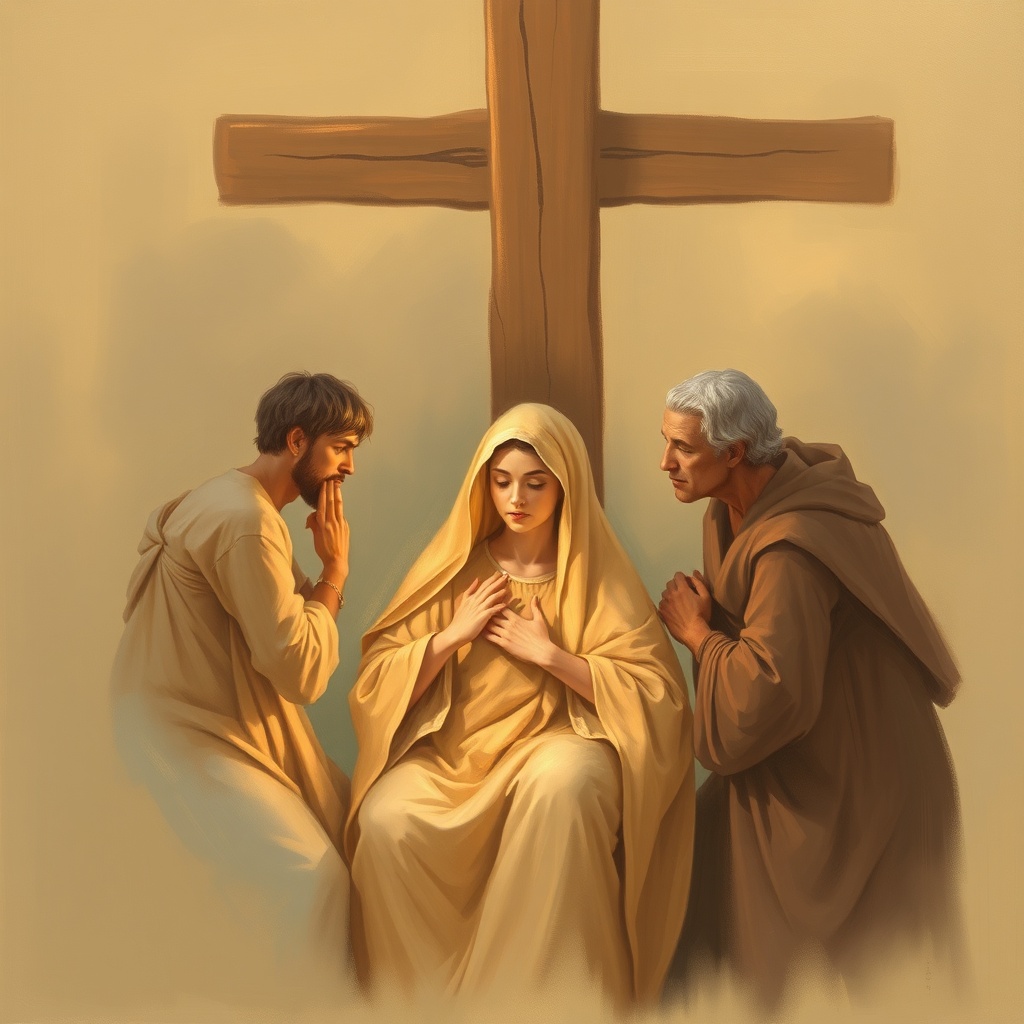
Near the cross of Jesus stood his mother, his mother's sister, Mary the wife of Clopas, and Mary Magdalene. When Jesus saw his mother there, and the disciple whom he loved standing nearby, he said to her, 'Woman, here is your son,' and to the disciple, 'Here is your mother.' John 19:25-27— John 19:25
Mary wife of Clopas emerges in the Gospel accounts as a devout woman present at pivotal moments of Jesus’ Passion. She is among the women standing near the cross, witnessing Jesus’ suffering and death (John 19:25). Her presence signifies her deep devotion and courage, standing by Jesus during His most agonizing hours. She later appears as part of the group that discovers the empty tomb and encounters the risen Christ in Luke 24:18. Though little is known of her personal life, her unwavering faith manifests the devoted follower who supports Jesus and honors His sacrifice. Her proximity to significant events underscores her role as a faithful disciple who bears witness to salvation’s unfolding in a time of crisis. Her quiet witness exemplifies steadfastness and loyalty, inspiring believers to remain faithful despite hardship.
In 1st-century Jewish society, women played vital roles in the spiritual and social life of the community, often acting as witnesses and supporters of religious figures. Women like Mary of Clopas exemplified loyalty and courage, standing by Jesus during His crucifixion in a culture that largely marginalized women’s public roles. Their presence at the cross and tomb challenged social conventions, emphasizing the importance of women as witnesses and active participants in salvation history. Women’s devotion was deeply rooted in cultural expectations of piety, loyalty, and community support, making their testimonies foundational to the early Christian movement and its understanding of faithfulness and witness.
👨👩👧 Family Connections
She is identified as the wife of Clopas, possibly a relative of Joseph of Arimathea, and is among the women who witnessed Jesus' crucifixion and resurrection. Her broader family ties remain mostly unrecorded in scripture.
✨ Character Traits
LoyaltyCourageFaithfulnessDevotion
⛪ Theological Significance
Mary wife of Clopas symbolizes faithful discipleship and unwavering devotion amid suffering and loss. Her presence at the cross and tomb highlights the vital role women played in witnessing Jesus’ sacrifice and resurrection, emphasizing that salvation history includes both men and women. Her example underscores themes of loyalty, perseverance, and the importance of witnessing to truth, serving as a model for believers today. Her silent yet steadfast witness affirms that faithfulness in the face of hardship is central to Christian discipleship, illustrating that God's grace calls all people—regardless of gender—to participate in the divine plan of redemption.
Remaining faithful during difficult times demonstrates true devotion and trust in God’s plan.
📖 Lesson 2
Loyalty and courage in witnessing to Christ can inspire others and foster community resilience.
📖 Lesson 3
Quiet perseverance in faith can have profound spiritual significance, even if unnoticed by others.
🔗 Connections to Other Biblical Women
Mary wife of Clopas shares her unwavering devotion with women like Mary Magdalene and the other female followers who supported Jesus. Unlike women of her time often confined to domestic roles, she exemplifies active faith and courageous witnessing, contrasting with societal limitations and highlighting women’s vital roles in salvation history. Her presence at the cross underscores the theme of faithful perseverance among women disciples, linking her to a broader biblical tradition of women as witnesses and messengers of God's salvation plan.
📜 Scripture References
Reference
John 19:25
Luke 24:18
❓ Frequently Asked Questions
Who was Mary wife of Clopas?
She was a woman mentioned in John 19:25 as one of the women present at Jesus’ crucifixion, likely a relative of Jesus’ family or part of his close circle of followers.
What was her role during Jesus’ death and resurrection?
Mary stood at the cross witnessing Jesus’ suffering and later was part of the women who discovered the empty tomb, showing her steadfast faith and devotion.
Is Mary wife of Clopas the same as Mary, mother of James?
The biblical texts do not explicitly confirm this, but some scholars suggest she may be the same as Mary, mother of James, emphasizing her close ties to Jesus’ family and followers.
✨ Did You Know?
The name Clopas appears in early Christian writings outside the Bible, suggesting he might have been a prominent figure or relative in early Christian communities. Linguistic analysis indicates his name could derive from Aramaic roots meaning 'tender' or 'busy,' reflecting a possibly caring or active personality.

 Por Mario Acevedo