The candles in an Advent wreath form a simple, contemplative ritual that marks the weeks leading up to Christmas. This article serves as a complete guide to understanding the symbolism, variations, and practicalities of lighting and using an Advent wreath in home worship, classrooms, churches, and community spaces. Whether you are assembling your first wreath or revising a long-standing tradition, you will find historical context, lighting sequences, material considerations, and meaningful ways to engage with the season.
An Advent wreath is a circular evergreen arrangement that holds a set number of candles, each representing a theme for the season of Advent. The circle itself is symbolic: it has no beginning and no end, mirroring the eternal nature of God and the continuous anticipation of Christ’s coming. The candles, lit week by week, provide a tangible rhythm for prayer, reflection, and family or community worship. In many homes and churches, the wreath becomes a focal point during Advent, inviting time for stillness amidst the bustle of the holiday season.
The historical roots of the Advent wreath lie in 16th-century Germany, where a bishop and missionary named Johann Hinrich Wichern designed an early version to teach children the concept of waiting for Christmas. His large wheel with dozens of lights evolved into the smaller, commonly used forms we see today: a circular greenery base with four or five candles. Over centuries, this practice spread across denominations and continents, adapting to local liturgical colors, customs, and worship styles.
Today, Advent wreaths come in many shapes and sizes, but the essential elements remain: a ring or oasis of evergreen, a set of candles, and a meaningful cadence that invites worship and reflection. Common places to display a wreath include a mantel, a coffee table centerpiece, a church sanctuary altar, or a classroom prayer space. Beyond decoration, the wreath is a spiritual tool—a visual countdown that makes the impending celebration of Christmas more concrete and memorable.
Colors, meanings, and candle variations
Many Advent wreaths use a combination of color symbolism to convey the themes of hope, preparation, joy, and love. While the exact colors can vary by tradition, the most common palette is four candles around the ring plus a possible central candle. Here are the typical variations and what they signify:
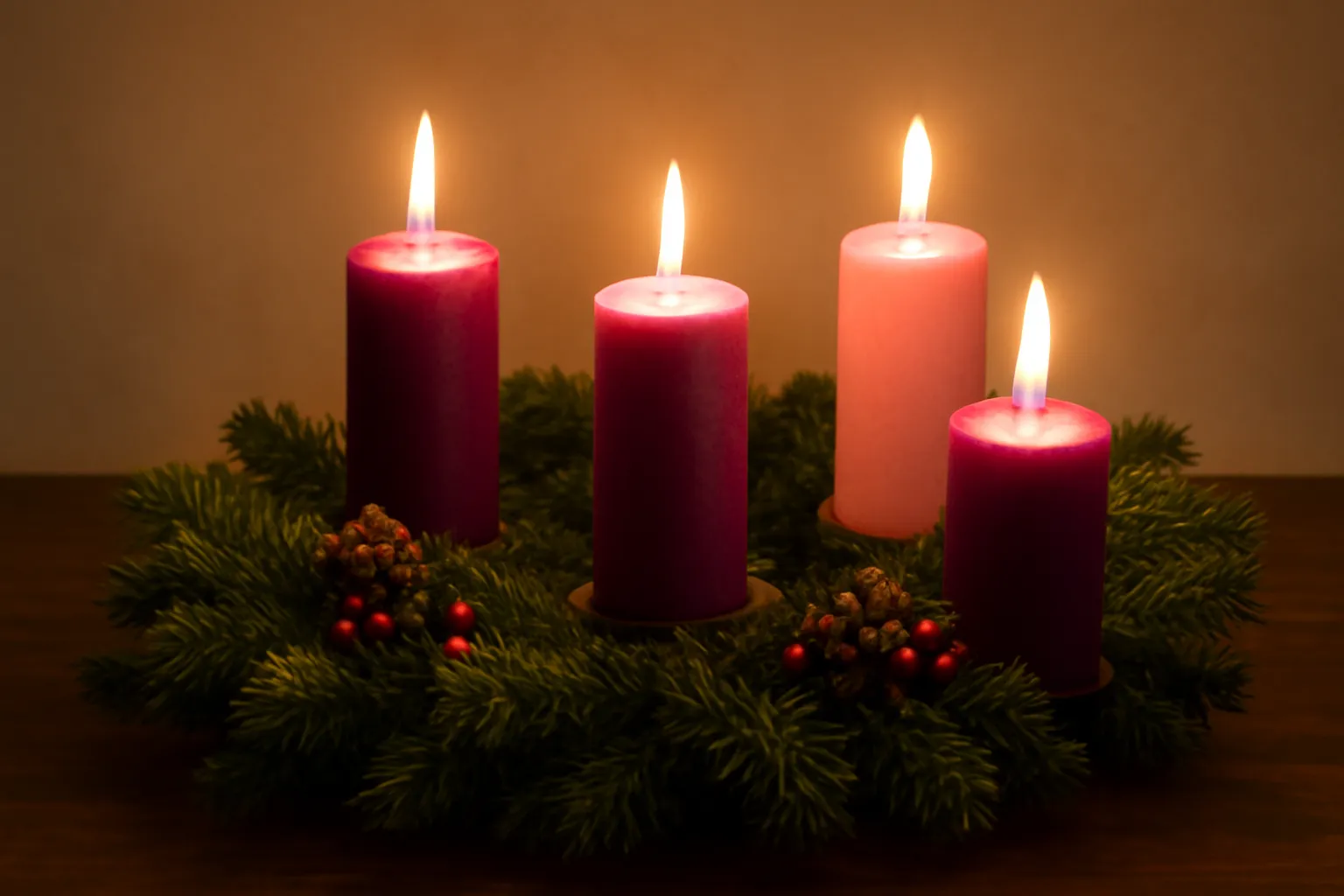
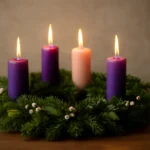
Three purple (or blue) candles and one pink (rose) candle around a wreath. Purple (or blue) signals penitence, expectant waiting, and preparation; pink marks a moment of hopeful joy in the middle of Advent.
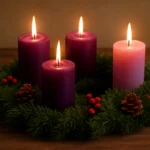
Four purple (or blue) candles with or without a pink candle. Some traditions use all purple or blue to emphasize penance and anticipation, reserving pink for Gaudete Sunday.
Five candles in total on a wreath, with a central Christ candle (often white). The four outer candles are the Advent candles, and the center candle is lit on Christmas Eve or Christmas Day to symbolize the Incarnation.
Blue candles instead of purple in some churches or homes, particularly in European and Orthodox-influenced traditions; blue is used to convey contemplation and longing during Advent.
In addition to color, candle types matter for symbolism and practicality. Common choices include:
Taper candles for a traditional look and a graceful flame height; especially popular in pewter or brass candle holders.
Beeswax candles for a natural scent, cleaner burn, and a sense of tradition. Beeswax tends to burn longer and drip less than some paraffin options.
Soy wax or blended candles for a renewable, cleaner burn and a range of colors and scents, though some purists prefer unscented options for contemplative prayer.
LED or battery-operated candles for safety, especially in homes with children or pets, or in spaces where smoke or open flame is impractical. Modern LEDs can closely mimic a real flame and come in a variety of colors.
When choosing your candles, consider the setting, the desired atmosphere, and safety. For families, a mix of dripless candles and sturdy holders can help maintain a neat space while you focus on the spiritual practice. For churches, durability, visibility, and uniformity in color can be essential for congregational clarity and pageantry.
Variations in the arrangement: what your wreath might look like
Advent wreaths come in a range of configurations. Here are several common shapes and arrangements you might encounter:
Classic four-candle ring with four outer candles evenly spaced around a circular base. The central position is left empty or reserved for a Christ candle depending on tradition.
Four outer candles with a central Christ candle (white), added to the middle of the ring. This central candle is lit on Christmas Eve or Christmas Day.
Five-candle wreath with four outer Advent candles and one central Christ candle, all encircling a base of evergreens.
Decorative variations may substitute different colors (e.g., blue and white for a wintery look) or integrate holly, pinecones, or dried botanicals for seasonal texture.
Wreaths can also differ in form beyond the circular shape. Some are cone-shaped or designed as wall-mounted garlands; others may be placed on a table with a built-in holder. The essential function, however, remains the same: to provide a quiet, meaningful cadence for the weeks of Advent through light and contemplation.
Lighting the wreath: a week-by-week guide
Most Western Advent calendars structure the lighting around four Sundays before Christmas. The central Christ candle, when used, is typically lit on Christmas Eve or Christmas Day. Here is a practical, commonly used sequence, along with brief prompts for reflection and prayer:
First Sunday of Advent — light the first outer candle (often purple or blue). Reflection: preparation, hope, and anticipation for the coming of Christ. Theme reminder: “We begin in hope.”
Second Sunday of Advent — light the second outer candle. Reflection: peace and confident expectation that God’s promises endure. Theme reminder: “God’s plan is unfolding.”
Third Sunday of Advent (Gaudete Sunday) — light the pink (rose) candle in addition to the two purples/blue candles. Reflection: joy within the season of waiting; a marker of progress and gratitude. Theme reminder: “Rejoice, for the Lord is near.”
Fourth Sunday of Advent — light the third or fourth outer candle, depending on tradition, completing the outer ring. Reflection: love in the anticipation of Christmas. Theme reminder: “Love comes to dwell among us.”
Christmas Eve or Christmas Day — light the Christ candle (center), if your tradition includes it. Reflection: the Incarnation—God with us in the world. Theme reminder: “The Word became flesh.”
Some communities light all four outer candles on Christmas Eve or Christmas Day in addition to, or instead of, the central Christ candle depending on local custom. It is helpful to include a short prayer or meditation for each lighting step to deepen the practice and make the ritual more than a ritual—it becomes a framework for reflection, gratitude, and shared expectation.
Alternative rhythms exist that align with different liturgical calendars. For example, some families prefer a daily lighting pace in December, starting at the first day of December, while others observe only on Sundays. The central principle is to create a deliberate rhythm that helps participants pause, reflect, and orient their hearts toward the meaning of Advent and Christmas.
Practical tips for lighting, safety, and maintenance
Advent wreaths involve flame, which requires mindful handling. Here are practical guidelines to keep your space safe while maintaining a meaningful practice:
Place the wreath on a stable, nonflammable surface away from curtains, paper, or other combustibles. Use a sturdy tray or base if your wreath sits directly on a table.
Trim wicks to about 1/4 inch before each lighting to promote steady burning and reduce soot or flare-ups.
Use appropriate holders for taper or pillar candles. Consider a drip tray or a glass hurricane for added safety and cleanliness.
Be mindful of wind and drafts, especially in open windows or near fans. Drafts can cause uneven burning or tipping of candles.
Have a plan for extinguishing candles—a snuffer or gently pinching out wicks—rather than blowing, to minimize smoke and splatter.
Consider alternatives for safety—battery-operated candles or LED votives can provide a similar visual effect without an open flame, especially in dwellings with small children, pets, or fire restrictions.
Choose high-quality, unscented options if you plan to use the wreath during quiet times of prayer or meditation, since strong scents can be distracting for some participants.
When using beeswax candles, you may notice a natural warmth and a gentle honey fragrance. Beeswax tends to burn longer and cleaner, and it often yields a soft, ambient glow that many people find especially suited to contemplation. If you select soy or paraffin candles, look for wicks designed for a steady flame and candles labeled as dripless to reduce mess and maintenance.
Choosing between different candle types: a quick guide
To help you decide what works best for your setting, here is a concise comparison of common candle types for Advent wreaths:
Taper candles — Elegant, traditional, and easy to place in classic holders; burn time varies with size, typically hours per candle. Best for formal or ceremonial spaces.
Votive candles — Shorter burn time but create intimate pools of light; good for smaller wreaths or stepping stones in a multi-candle setup.
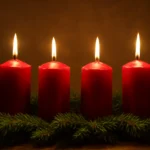
Pillar candles — Substantial and long-lasting; work well in larger wreaths or communal settings where candles are visible from a distance.
Beeswax candles — Natural scent, clean burn, and a traditional character; preferred by many for theological or liturgical reasons.
Soy or paraffin candles — Readily available, affordable, and available in a wide range of colors; consider selecting unscented if you plan to use the space for quiet reflection.
LED or battery-operated candles — Maximum safety and convenience; increasingly realistic in appearance; ideal for schools, classrooms, or shared community spaces.
Ultimately, the best choice balances symbolic intention, safety, and practical considerations for your environment. The right combination helps you sustain a meaningful Advent practice without worries about hazards or maintenance.
Ways to adapt the wreath for different settings
Advent wreaths are adaptable for homes, churches, classrooms, and community centers. Here are some practical adaptations to consider:
Home use — A compact wreath on a dining table or mantel can be illuminated with a simple weekly rhythm, inviting family dialogue, prayers, or short readings about the weeks of Advent.
Church use — A larger wreath on the altar or lectern can symbolize the communal journey toward Christmas. Reserve space for processional lighting or responsive readings after each candle is lit.
Classroom use — A wreath in a classroom can be accompanied by student-led readings or reflections on themes like hope, peace, joy, and love. Consider a classroom companion activity, such as writing reflections or drawing hints of the week’s theme.
Outdoor or entryway use — A weather-resistant wreath with LED candles can greet visitors with a sense of welcome and anticipation while remaining safe in entry corridors or porches.
When adapting, maintain the core symbolism of each candle and ensure that any changes preserve the pace and purpose of the season. The aim is not to novelty but to deepen the experience of Advent for participants.
Liturgical and cultural variations you might encounter
The Advent wreath appears in many Christian traditions, and its form and symbolism may differ slightly from one culture or denomination to another. Some common variations include:
Roman Catholic and Anglican/Lontan traditions often emphasize a central Christ candle in white, with four outer candles (purple or blue for Advent, pink for Gaudete Sunday) and a measured liturgical sequence that culminates in Christmas Eve lighting.
Protestant and Lutheran practices frequently feature four outer candles in purple or blue and may or may not include a central Christ candle, depending on local custom and the design of the wreath.
Orthodox-influenced contexts might prioritize blue and white hues or different symbolic associations, focusing on themes of longing, light, and the coming of Christ in a way that blends with regional liturgical calendars.
Home-centric and secular-adjacent uses often emphasize warmth, family time, and seasonal ambiance, while still reflecting the underlying ideas of waiting and preparation that Advent embodies.
Regardless of tradition, the underlying idea remains consistent: Advent is a deliberate season of watchfulness, humility, and expectancy, expressed through a ritual of light that invites participation and reflection.
Meaningful practices to accompany the lighting
Lighting the candles is a meaningful practice in itself, but most communities enrich the experience with accompanying prayers, readings, or songs. Here are some ideas to enhance your Advent wreath ritual:
Prayer prompts for each candle. For example, with the first candle you might offer a prayer for hope; with the second, a prayer for peace; with the pink candle, a prayer of joy; with the fourth, a prayer of love and readiness for the coming of Christ.
Scripture readings tied to each theme. Short passages from the Gospels or prophetic writings can anchor the weekly reflections in scripture.
Song or hymn snippets associated with Advent, such as verses that emphasize waiting and light, can accompany the lighting sequence and help participants enter a contemplative mood.
Journaling or reflection cards placed beside the wreath with a prompt for each week can invite family members or classroom students to write a brief reflection about what the candle’s theme means to them personally.
Community activity with a simple act of service or generosity, such as collecting donations for a local charity, to translate the season’s longing into outward expression of love.
In settings like churches or schools, a leader can narrate a short script for each lighting, inviting participants to read aloud, sing, or reflect in silence. The ritual does not have to be lengthy—often a few minutes per week suffice—yet the cadence is powerful enough to shape attitudes and expectations over the season.
Frequently asked questions about Advent wreath candles
What do the colors of the Advent candles symbolize?
The colors traditionally represent different aspects of the season: purple or blue for waiting and penitence, pink (rose) for joy in the midst of waiting, and sometimes white for the Christ candle in the center. In some traditions blue is used for all four outer candles, with pink highlighting Gaudete Sunday.
Why is there sometimes a pink candle?
The pink candle marks Gaudete Sunday, halfway through Advent, signaling a shift from penitence to joy as the season progresses toward Christmas.
Why is there a central Christ candle?
Many wreaths include a central Christ candle to symbolize the Incarnation—the moment God becomes flesh. It is typically lit on Christmas Eve or Christmas Day and serves as the culmination of the Advent journey.
Can I use LED candles?
Yes. LED candles offer safety and convenience, especially in homes with children, pets, or shared spaces. Many LED options closely resemble real flames and can be a practical alternative to open flames.
How long should I burn Advent candles each week?
The duration depends on the size of the candles, the environment, and personal preference. A brief, reverent lighting of approximately 5 to 15 minutes per candle is typical in many homes and churches. Some communities extend this time with readings or prayers.
Is there a standard order for lighting?
Most traditions light one candle on the first Sunday, two on the second, three or four (depending on the arrangement) on the third, and four candles by the fourth Sunday. The Christ candle, if present, is lit at Christmas Eve or Christmas Day. Always follow your local tradition or church guidance when in doubt.
Maintenance and long-term care for Advent wreaths
To ensure your Advent wreath remains a durable and meaningful centerpiece year after year, consider these maintenance tips:
Store in a cool, dry place away from direct sunlight to prevent fading and wax blooming on colored candles.
Inspect holders and structure for wear, loosening, or corrosion. Tighten any loose fittings, and replace damaged parts as needed.
Clean drips promptly to avoid staining the wreath base, especially if using natural evergreen and wax drips can affect the appearance and longevity of the decorations.
Rotate or replace candles as needed for even burning and to prevent uneven height that can destabilize the arrangement.
Opt for evergreen freshness by refreshing some greens if you plan to reuse the wreath for multiple Advent seasons, preserving the scent and vitality of the arrangement.
With thoughtful care, an Advent wreath can become a cherished family or community tradition, linking generations through the shared practice of lighting and reflection that Advent invites.
Décor and setting ideas for a meaningful Advent space
Beyond the candles themselves, the space around the wreath can reinforce the themes of Advent and create an inviting atmosphere for worship, study, or conversation. Consider these ideas to enhance the environment:
Natural materials such as pine branches, sprigs of holly, cedar, or eucalyptus add fragrance and texture while reminding participants of the season of greenery that accompanies Advent.
Seasonal color palette align with candle colors to create a cohesive look—soft purples/blues, a rose accent, and a white Christ candle for the center where applicable.
Readings and art displayed near the wreath can reflect the week’s theme—short Bible verses, prayers, or artwork that echoes hope, peace, joy, and love.
Inclusive practices invite all participants to light a candle or offer a small reflection, regardless of age or denomination, fostering a sense of shared anticipation.
In classrooms, consider a companion display that offers quick explanations of each candle’s meaning, along with student responses or drawings. In homes, a storytelling or family conversation guide can accompany each week’s lighting, turning the practice into a meaningful family tradition.
Conclusion: embracing light as a lived rhythm
Lighting candles in an Advent wreath is more than a seasonal decoration. It is a practical, symbolic rhythm that invites you to pause, reflect, and anticipate the celebration of Christmas. The practice invites a communal or familial ritual that can enrich a busy December with careful attention to the themes at the heart of the season: hope, peace, joy, and love. By choosing the right candles, honoring the liturgical or personal tradition you follow, and prioritizing safety and accessibility, you can cultivate a resilient practice that nourishes faith, family, and community year after year.
Whether you prefer the solemn beauty of traditional purple and pink outer candles with a white central candle, or you opt for blue and lavender with a rose, or you embrace a modern, LED-centered approach, the Advent wreath remains a powerful, portable classroom of anticipation. It teaches us to wait well, to light our way in small but steady acts of mercy, and to welcome the coming of Christ with open hearts and hands.

 Por Laura Jara