Orpah: The Woman Who Chose Homeland Over Hope in the Bible
📅 Twelfth century BCE, during the period of the Judges · 📜 The name 'Orpah' is of Hebrew origin, meaning 'fawn' or 'back of the neck,' symbolizing gentleness or perhaps wavering nature.
OrpahBible WomenRuthOld Testament
And Ruth said, 'Do not urge me to leave you or to return from following you. For where you go I will go, and where you lodge I will lodge. Your people shall be my people, and your God my God.'— Ruth 1:16
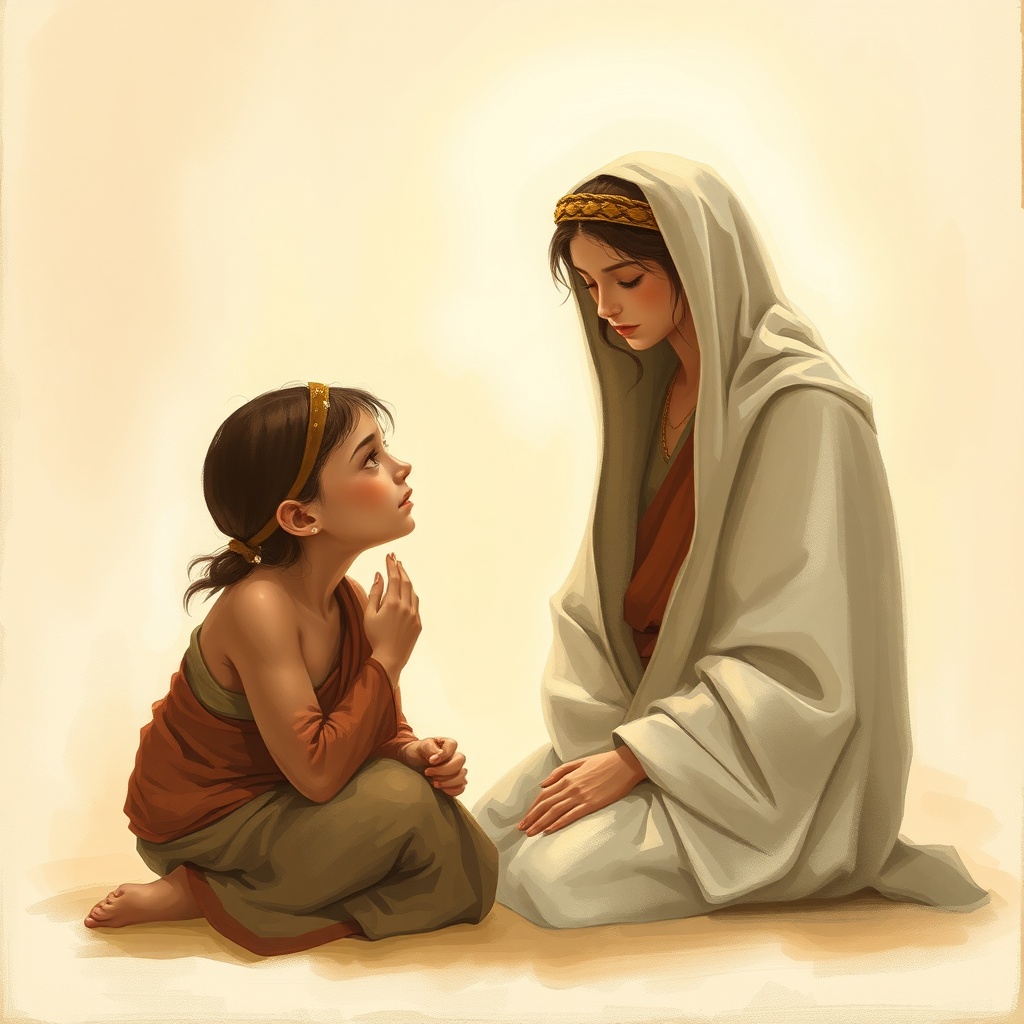
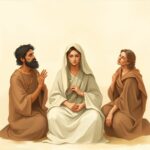
Orpah is introduced in the Book of Ruth as one of Naomi’s daughters-in-law, along with Ruth. After Naomi’s family experiences severe hardship due to famine and loss, she decides to return to Bethlehem. Naomi urges her daughters-in-law to stay behind and remarry in their homeland, Moab. While Ruth boldly commits herself to Naomi and the God of Israel, Orpah hesitates but ultimately chooses to stay in Moab, returning to her family and homeland. Her decision highlights her loyalty to her immediate family and her cultural attachment to her roots. Though her choice appears to separate her from Ruth and Naomi’s spiritual journey, her story underscores themes of loyalty, cultural identity, and the human tendency to choose familiar security over uncertain hope. Orpah’s story invites reflection on decisions made in difficult circumstances and the importance of personal choice within God’s larger plan.
Orpah lived in a patriarchal society where women's roles were largely centered around family and household stability. Women often depended on their husbands or male family members for security and social standing. Loyalty to kinship ties was paramount, influencing decisions to remarry or stay within the family. Moabite women like Orpah faced cultural pressures that valued loyalty to their homeland, which often conflicted with emerging spiritual commitments. In this context, her choice to return to Moab reflects societal values of loyalty and tradition, illustrating the difficult balancing act women faced between personal security and spiritual or cultural allegiance. Her story exemplifies a woman's navigation of social expectations within a patriarchal and tribal society, emphasizing the human aspect of biblical characters.
👨👩👧 Family Connections
Orpah was the daughter-in-law of Naomi and the sister-in-law of Ruth. She was married to Chilion, one of Naomi's sons. Her parents are not named in the Bible.
✨ Character Traits
LoyaltyWaveringFidelity to homelandHumility
⛪ Theological Significance
Orpah's story, while brief, emphasizes the human element of decision-making in the biblical narrative. Her choice to remain in Moab highlights the importance of personal agency within God's providence. Though she does not share Ruth's faith journey, her decision reminds believers that faith choices are personal and complex. Her story also underscores that God's plan can work through a variety of human responses—whether committed or wavering. Orpah's path contrasts with Ruth’s, illustrating themes of loyalty, devotion, and faithfulness that are central to salvation history. Her narrative invites reflection on the diversity of responses to God's call and illustrates that God's grace extends beyond our immediate choices, working through human imperfections.
Loyalty and faithfulness are vital, but personal decision-making is complex and deserves understanding.
📖 Lesson 2
Choosing security over uncertainty doesn’t diminish a person’s value; God works through every choice.
📖 Lesson 3
Faithfulness requires personal conviction, but respect for others’ journeys enriches our understanding of God’s plans.
🔗 Connections to Other Biblical Women
Orpah contrasts with Ruth’s unwavering commitment, illustrating different responses to life's crises. Unlike Ruth, who embarks on a faith journey, Orpah chooses familiar grounds, showing that women in the Bible display diverse reactions—courageous, wavering, loyal, or protective—each highlighting different aspects of faith, loyalty, and human choice. Their stories deepen understanding of women's roles and personal faith responses in biblical history.
📜 Scripture References
Reference
Ruth 1:4-14
❓ Frequently Asked Questions
What does Orpah’s story teach us?
Orpah’s story teaches us that human choices often involve loyalty to family and homeland. While her decision differed from Ruth’s, it reflects the importance of personal agency within God’s overarching plan.
Why did Orpah decide to stay in Moab?
Orpah chose to stay in Moab out of loyalty to her family and cultural familiarity. Her decision was driven by her desire for security and tradition, in contrast to Ruth’s spiritual commitment.
Is there spiritual significance in Orpah’s decision?
While Orpah’s decision may seem less significant spiritually, it highlights the human aspect of faith and loyalty. God’s reach extends beyond individual choices, and her story reminds us that faith involves personal decisions amid life’s uncertainties.
✨ Did You Know?
The name 'Orpah' is sometimes linked linguistically to the Hebrew word for 'back of the neck,' suggesting wavering or turning away. Historically, her story exemplifies the diversity of women’s responses in biblical narratives, emphasizing that even those who choose different paths are part of God's larger redemptive story.

 Por Mario Acevedo