Book Bible Covers: The Ultimate Guide to Protecting Your Bible in Style
Your Bible is more than a book—it’s a daily companion, a source of solace, and a record of faith. To keep it looking and functioning at its best, many readers turn to book Bible covers or Bible book covers that blend protection, practicality, and style. This guide explores the world of Bible covers for books, including materials, designs, sizes, and care tips. Whether you worship, study, travel, or gift, you’ll find practical advice for choosing a cover that suits your needs and your budget.
What Are Book Bible Covers?
Book Bible covers are protective sleeves, sleeves-with-closures, or cases designed to encase a Bible or Bible study book. They can shield the text from moisture, dirt, and wear while offering features that enhance convenience—such as pockets for notes, pens, and ribbons for marking passages. In everyday language, people may say bible covers for books or bible book covers, but the goal is the same: to extend the life of your sacred or study material and to present it in a way that aligns with your personal style.
Why You Might Choose a Bible Cover
There are several reasons to invest in a good cover for a Bible, and many readers use book Bible cases across different contexts. Here are the most common motivations:
Protection from wear and tear: Daily handling, bookmarks, zippers, and clasps can abrade the cover and corners. A protective Bible sleeve can mitigate damage.
Moisture and dirt resistance: Especially for travelers, students, or outdoor readers, durable Bible book covers guard against spills and dust.
Organization and convenience: Many covers include pockets for study notes, highlighters, prayer lists, and business cards, making study Bible covers practical companions.
Personal expression: With a range of colors, textures, and adornments, you can choose a style that reflects your faith and taste.
Giftability: A well-chosen cover makes a thoughtful present for graduations, confirmations, baptisms, or church events—it’s a durable, meaningful token.
Materials: What Are Your Options for Bible Covers?
One of the most important decisions when selecting Bible covers for books is the material. Each option brings a distinct look, feel, and level of protection. Here are the most common materials in the market today.
Leather and Genuine Leather
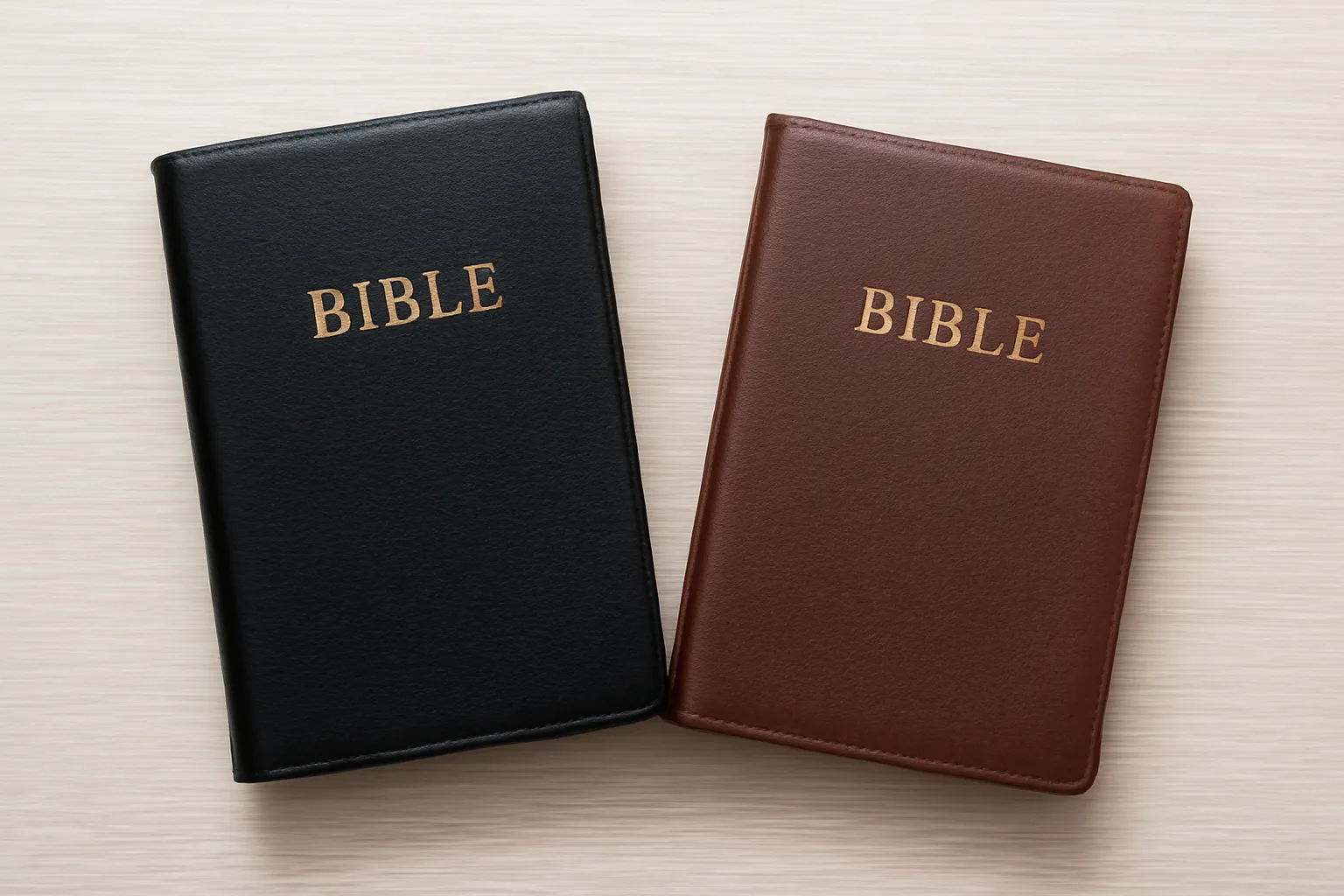
Leather Bible covers are a classic choice that combines durability with a timeless aesthetic. Genuine leather tends to patina beautifully over time and becomes more comfortable with use. Look for full-grain or top-grain leather for the best balance of durability and texture. If you prefer a softer, more supple feel, you may opt for a brown leather or black leather cover with careful stitching and quality lining.
For a similar look at a lower price or with animal-free materials, faux leather covers (also called vegan leather or PU leather) are a popular option. They can imitate the grain and finish of genuine leather while offering good water resistance, color consistency, and easy maintenance. Some vegan leather variants are more pliable, while others are stiffer for a rigid casing.
Fabric and Canvas
Fabric Bible covers, including cotton, linen, or canvas, provide a lighter-weight, breathable option. They’re often machine-washable and come in a wide range of patterns—from solid neutrals to bold prints. Fabric covers pair well with casual or modern styles and can be accented with leather tags or embroidery for a personal touch.
Vinyl and PVC
Vinyl or PVC covers are water-resistant and easy to wipe clean. They’re frequently found in inexpensive, everyday-use options and can be highly durable in low-moisture environments. They sometimes feature vibrant colors or printed patterns that stand out.
Hybrid Materials
Some covers blend materials—for example, a leather-look exterior with a fabric or microfleece lining, or a canvas exterior with a leather spine. These hybrid options aim to capture the best of multiple worlds: durability, grip, and aesthetic appeal.
Styles and Features: What to Look For in a Bible Cover
Beyond material, the style and features of Bible covers vary widely. The right combination depends on how you use the cover and what you value most: security, organization, or a certain look.
Closures: Keep It Secure
Snap closures provide quick, low-profile security
Zippers offer full enclosure and rain protection for travel
Magnetic clasps or Velcro closures deliver a sleek or discreet finish
Flap with strap closures combine classic style with security
Interior Layouts: How the Inside Supports Your Study
Pocketed interiors for pens, sticky notes, and business cards
Book-bound or loose-leaf pages to accommodate different Bible formats
Ribbon bookmarks to mark your current reading
Elastic pen loop to keep writing instruments handy
Card slots or small zipper pouches for small essentials
Aesthetic Details: Embellishment and Craftsmanship
Embossing or debossing adds a tactile and visual touch on the cover surface
Foil stamping produces metallic accents for a refined look
Stitching styles (contrast or tonal) influence the overall vibe
Color choices range from traditional earth tones to vibrant hues
Personalization with initials, names, or a short phrase
Sizes and Fit: Getting the Right Size for Your Bible
One of the most practical considerations when shopping for Bible covers for books is size. Bible dimensions vary across translations, editions, and study versions. A cover that’s too snug can strain bindings; one that’s too loose may slide around and not protect effectively. Here are guidelines to help you choose the right size.
Measure the Bible: length (top to bottom), width (across the spine), and thickness (when closed). If you have a study Bible with a large font, take its thickness into account.
Check the interior depth: some Bible sleeves are designed to accommodate extra pages or a notepad; ensure there’s a little extra room for comfort.
Consider the binding style: books with faux leather or flexible bindings may require a slightly different fit than rigid, full-grain leather covers.
Ask about inclusions: pockets, pen loops, or additional compartments may affect fit, so verify dimensions when purchasing.
Keep future purchases in mind: if you anticipate upgrading to a larger edition, you may want a cover with a bit of extra space or a size that scales.
Care and Maintenance: Keeping Your Bible Cover in Top Condition
Proper care extends the life of any book Bible cover. Different materials require different routines, but some practices are universal and help maintain aesthetics and function.
General Care Tips
Wipe down regularly to remove dust, dirt, and fingerprints with a soft, dry cloth.
Avoid prolonged sun exposure to prevent fading and drying out of materials like leather.
Keep away from sharp objects that could scratch the surface.
Store upright when not in use to maintain shape and avoid pressure on the spine.
Material-Specific Care
Leather: condition with a leather conditioner or balm designed for book bindings every 6–12 months, depending on climate and usage; avoid silicone-based products that can clog pores.
Faux leather: clean with a damp cloth and mild soap if needed; avoid harsh solvents that can degrade the surface.
Fabric: spot-clean with a gentle detergent; air-dry completely to prevent mildew, and consider a fabric protector spray for stain resistance.
Vinyl: wipe with a mild soap solution; avoid prolonged heat to prevent warping or cracking.
Design Considerations: How to Reflect Your Faith and Style
Your Bible cover can be a reflection of your spiritual aesthetics as well as your personal style. Here are design approaches to help you express meaning while staying practical.
Traditional and Elegant
In this vein, you’ll find classic leather covers in black, tan, chestnut, or mahogany with restrained stitching and subtle hardware. Embossed crosses or minimalist typography can provide a dignified, timeless look suitable for church, study, or ceremonial settings.
Contemporary and Casual
For a modern vibe, consider canvas or fabric covers in bold colors, geometric shapes, or floral patterns. Contemporary designs often feature streamlined pockets and modular interiors, making them ideal for on-the-go use in a classroom or coffee shop.
Religious Imagery and Symbolism
Some readers appreciate covers with religious motifs, such as crosses, doves, or scriptural quotes. If you choose symbolism, ensure that the placement and style align with your comfort level and the setting where you’ll carry the Bible.
Personalization and Customization
Monograms (initials) or engraved nameplates can transform a simple cover into a cherished personal item. Custom embossing or foil stamping can showcase a preferred scripture or meaningful date, creating a one-of-a-kind Bible sleeve that feels truly yours.
Practical Usage: When and Where to Use Book Bible Covers
Book Bible covers are not limited to home use. They adapt well to a variety of settings and activities, including:
Church services and group study where books are passed around or stored in pew racks.
Travel or road trips, offering protection from humidity, dust, and accidental spills in transit.
Education and study environments where students carry Bibles or study books between classes and libraries.
Gifting occasions such as confirmations, graduations, or first communions, where a well-made Bible cover marks a milestone.
Journaling and note-taking during sermons or prayers, thanks to pockets and compartments that hold pens and paper.
How to Choose the Right Bible Cover: A Simple Decision Guide
Choosing the best Bible cover for a book depends on several practical factors. Here’s a concise decision guide to help you narrow your options quickly.
Determine the Bible’s size and weight to pick a cover that fits snugly without cramping pages.
Choose the material based on your climate, maintenance willingness, and budget (leather and high-quality faux leather for durability; fabric for lighter weight and customization).
Set a budget and compare features that matter most to you (pockets, closures, personalization).
Decide on closure type based on daily use—zips for security, snaps for quick access, or magnetic clasps for sleekness.
Assess interior features—do you need extra sleeves, a pen loop, or a notepad pocket?
Consider care and longevity—materials that tolerate your lifestyle will save you time and money in the long run.
Careful Gifting: When a Bible Cover Makes a Thoughtful Present
Giving a cover for a Bible or a Bible sleeve as a gift is both practical and heartfelt. Here are gifting ideas to maximize impact:
Pair with a devotional or study guide to create a meaningful set.
Include a personal note with a brief scripture that holds significance for the recipient.
Choose a cover that matches their style, whether they prefer classic leather, modern fabric, or a vibrant canvas.
Consider monogramming to make the gift feel intentional and personal.
Ethical and Sustainability Considerations
As consumers increasingly seek responsible products, several book Bible covers emphasize ethical sourcing and sustainable practices. When evaluating options, you may consider:
Material sourcing: responsibly sourced leather or recycled fabrics
Manufacturing standards: fair labor practices and transparent supply chains
Longevity: durability that reduces waste by lasting many years
Repairability: options for refurbishment or replacement parts rather than full replacement
Frequently Asked Questions About Book Bible Covers
Here are some common questions readers ask when exploring Bible covers for books.
Will a leather cover fit a study Bible? It depends on the exact dimensions. Look for leather covers labeled as suitable for study Bibles or check measurements carefully.
Are fabric covers washable? Many fabric covers are machine-washable or spot-cleanable, but always check care instructions from the manufacturer.
Can I personalize a cover after purchase? Some brands offer engraving or embossing post-purchase; others require you to order a new customized cover.
Do Bible sleeves protect digital devices? If you’re carrying a digital device alongside your Bible, choose a cover with padding or a dedicated pocket for electronics.
What sizes are available? Covers range from compact to large, often described as “mini,” “standard,” “study,” and “large print” sizes to accommodate various Bible editions.
Conclusion: Finding Your Ideal Book Bible Cover
Choosing the right cover for a Bible or Bible book covers is a blend of practicality, protection, and personal expression. By considering material, style, fit, closures, and interior features, you can select a Bible sleeve that not only safeguards your sacred or study text but also complements your daily routine. Whether you call it a Bible cover for books, book Bible covers, or Bible case, the goal remains the same: to protect your Bible in a way that makes it easier to read, carry, and cherish. With thoughtful selection and proper care, your Bible cover can become a durable companion that stands by you through years of reading, reflection, and growth.
In sum, the world of book Bible covers offers a wide spectrum—from classic leather to vibrant fabric, from simple closures to rich personalization. No matter your faith tradition, study habits, or style preferences, there is a Bible cover designed to fit your Bible snugly, protect it from the rigors of daily life, and reflect who you are. By paying attention to size, material, interior layout, and care requirements, you’ll invest in a practical, timeless accessory that supports your spiritual practice and scholarly pursuits for years to come.

 Por Laura Jara