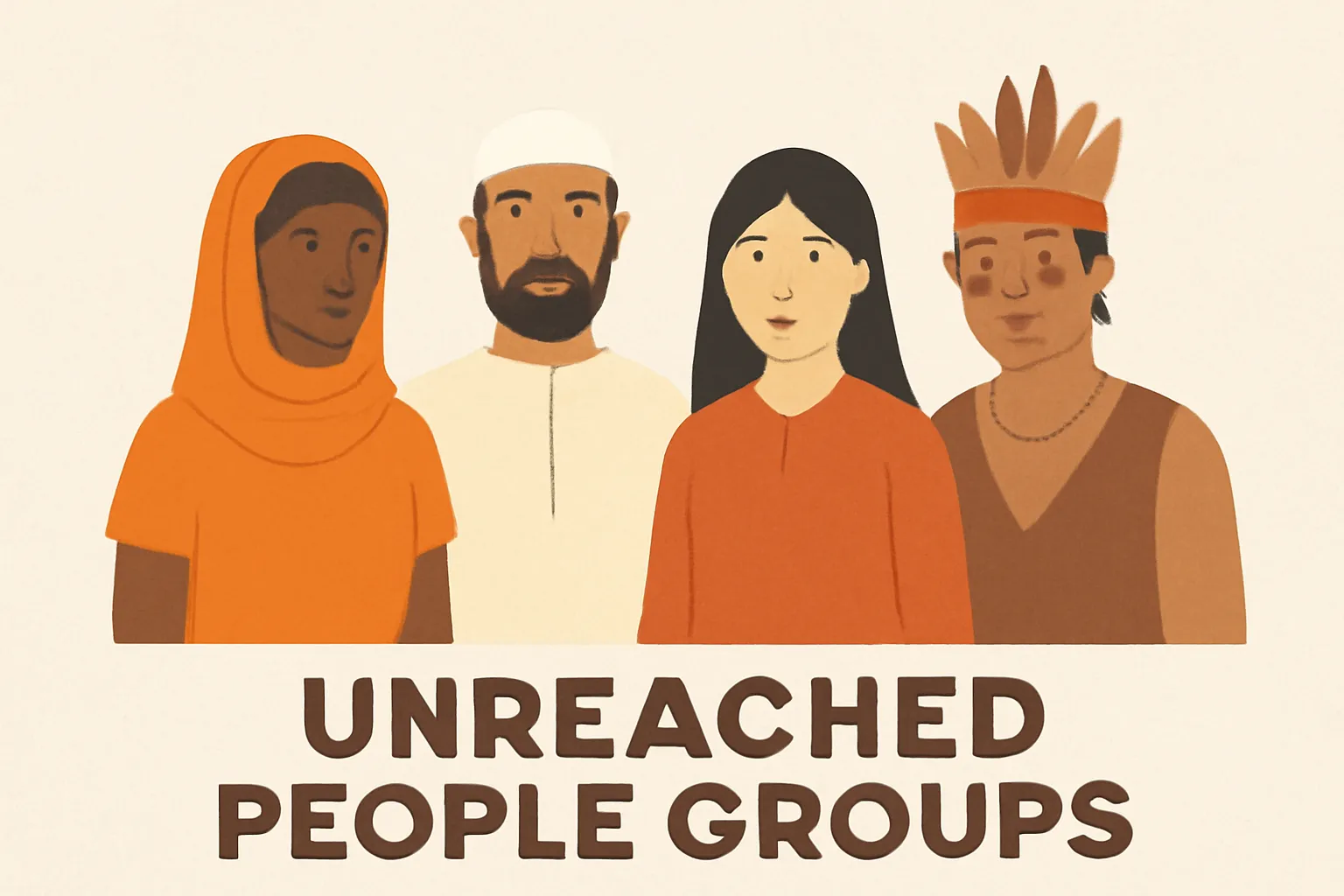
The term unreached people group or unreached people groups is a label used in global religion, missiology, and development discourse to describe certain segments of humanity that have not yet been exposed to the Christian message in a way that leads to sustained, local church life. This article explains the unreached people groups definition from multiple angles, clarifies why the phrase matters for researchers, policymakers, religious communities, and humanitarian workers, and surveys the practical implications of identifying and engaging with these populations. Because the idea rests at the intersection of sociology, linguistics, theology, and ethics, the wording of the concept evolves as data, strategy, and cultural understanding change. Below you will find a thorough overview that uses variations of the term to broaden semantic breadth while remaining anchored to a clear, descriptive meaning.
At its core, an unreached people group is a people group that does not yet have what many researchers call a sustained, indigenous church presence capable of evangelizing the entire group and discipling new believers without ongoing cross‑cultural support. In practical terms, this means that even if some individuals within the group come to faith, there is not yet a self‑multiplying church-planting movement that would ensure long‑term growth and spiritual leadership from within the group itself. Because definitions vary by researcher and organization, a precise threshold is often debated, but the central idea remains: a community large enough to require a coordinated, localized approach to evangelism and church growth, without that localized infrastructure in place.
To foreground the concept, many studies describe both the unreached and the reached in relative terms. The comparison is not simply about religious affiliation in the abstract; it is about access to the gospel, discipleship pathways, and the capacity for the community to sustain a church presence over time. When these components are lacking or inadequate, researchers and mission planners may label the group as unreached. It is important to acknowledge that unreached is not a judgment on the people themselves but a descriptor of the current religious ecosystem and resource availability within a given population.
Other ways to frame the same idea emphasize the structural elements that underlie the label. For example, some scholars point to language and culture barriers, limited literacy and media access, or political and geographic constraints as factors that hinder the emergence of an indigenous church. In this sense, the concept of unreached peoples interplays with ideas of access to Scripture, translation of sacred texts, and local leadership development.
How do organizations define an unreached people group?
The exact definition of unreached people groups is not universal. Different organizations apply particular criteria to identify and monitor groups. Some of the most widely cited definitions come from mission agencies and global Christian networks, which often publish lists and data dashboards. The following sections summarize the general approach and then contrast a few common definitions.
Two common criteria often highlighted
Evangelical access threshold: A frequently cited criterion is that less than a small percentage of the group’s population would identify as evangelical Christians, or that there is no viable church-planting movement within the group. A threshold commonly used in practice is 2% evangelical presence or less. This threshold is a pragmatic marker: it suggests that the current Christian presence is not sufficient to sustain church growth without external mission efforts.
Indigenous church viability: The group is considered unreached if there is no indigenous church leadership capable of initiating and sustaining evangelism, discipleship, and multiplication within the community itself. In other words, even if a handful of Christians exist, there is not yet a self-sustaining church-planting movement born from within the group.
In practice, many organizations pair these criteria with additional considerations, such as linguistic accessibility (whether Bible translation and Christian literature exist in the group’s language), religious restrictions (legal or social barriers to religious activity), and geographic isolation (remoteness or lack of cross‑cultural access).
The following descriptions illustrate how some well‑known groups define unreached or semi‑unreached populations. Note that these are illustrative rather than universal rules, and they reflect organizational priorities as well as data constraints.
Joshua Project: Defines unreached peoples as ethnic groups in which there is no indigenous church capable of reaching the group with the gospel and establishing a church-planting movement. They often classify groups by language and ethnicity and provide mission data to help coordinate outreach.
Operation World: Focuses on the distribution of Christian churches and missionary activity across the globe, with attention to access to the gospel, language availability, and the presence of active churches within a community.
World Christian Database and similar databases: Emphasize social complexity, religious pluralism, and church planting capacity as part of their metrics, integrating demographic and religious indicators to identify groups that lack a credible local church network.
Because definitions vary, the same group can appear as unreached in one framework and not in another. This variability does not imply inconsistency in data collection; rather, it reflects differing priorities, such as the emphasis on church multiplication versus access to Scripture or linguistic translation.
A spectrum of definitions and semantic variations
Beyond strict thresholds, a broader conversation about unreached people groups definition considers various semantic variants. These alternative phrasings can help scholars communicate nuances more precisely. Some common variants include:
Unreached peoples definition (singular or plural): Emphasizes the conceptual framing rather than a fixed numeric cutoff.
Definition of unreached people groups: A more formal label used in reports and research papers.
Unreached population groups: A broader phrasing that may include communities with partial access but lacking a self-contained church infrastructure.
Unreached communities definition: Focuses on społeczność, culture, and daily life, highlighting the lived experience of groups without a robust local church.
Unreached peoples and languages: Acknowledges the role of language barriers and translation needs in defining reachability.
These variations are not merely stylistic; they reflect the underlying complexity of the term. For researchers, journalists, and practitioners, recognizing these differences is essential to avoid conflating disparate situations and to communicate effectively with diverse audiences.
Why the label matters: reasons for care and action
Understanding what constitutes an unreached people group matters for multiple reasons. Below is a breakdown of the major motivations behind identifying and engaging with unreached communities.
Strategic funding and program design
Funding agencies and mission organizations rely on precise terminology to allocate resources. By accurately identifying unreached populations, they can prioritize strategies such as Scripture translation, community development, and church planting movements that are adapted to local contexts. A precise definition helps ensure that funds reach groups that lack sustainable religious infrastructure and that interventions are not duplicated in populations that already have robust local churches.
Public policy and humanitarian considerations
From a policy perspective, recognizing areas with limited religious access intersects with discussions about freedom of religion, educational access, and cultural preservation. Even for secular actors, understanding where educational and literacy outreach is scarce can inform multisector partnerships that support long‑term development goals.
Ethical considerations and respect for local contexts
Labeling a community as unreached carries ethical weight. It is essential to use the term as a descriptive tool that helps communities articulate their needs, rather than as a judgment about value or potential. Proponents stress that engaging with unreached groups should be guided by local consent, cultural sensitivity, and human rights considerations. In practice, this means prioritizing partnerships with local leaders, churches, and networks that already exist or can be nurtured in respectful ways.
Academic and sociological insight
From a scholarly perspective, the unreached concept contributes to debates about global religious landscapes, religious diffusion, and cross‑cultural exchange. It invites researchers to examine how language, migration, technology, and education influence the emergence of local religious communities. Thus, the term also serves as a doorway to broader inquiries about social change and cultural adaptation in multilingual societies.
Common criteria, debates, and caveats
While the core idea is straightforward, the criteria used to label groups as unreached are subject to legitimate debate. Here are some of the key questions and tensions that repeatedly arise in discussions about the definition of unreached or unreached‑like groups.
Thresholds vs. progress: Should the definition be a fixed threshold (e.g., 2% evangelical presence) or a dynamic measure that accounts for growth and potential within a group?
Access vs. impact: Is the emphasis on access to the gospel alone sufficient, or should it also consider the quality and durability of discipleship within the community?
Local leadership: How important is the presence of indigenous leadership in determining whether a group is unreached?
Language and literacy: Should Bible translation and religious materials in the local language be a prerequisite for reaching a group, or is literacy and media access within a broader sense of reach?
Interaction with other identities: How do ethnicity, nationality, religion, and migration influence how a group is categorized?
These debates are not merely academic; they influence how data is collected, how programs are designed, and how communities perceive external engagement. A careful approach recognizes that the unreached people groups definition is a tool, not a verdict, and that it should be used with humility and collaboration.
From unreached to reached: pathways and strategies
There is a broad field of practice aimed at transforming unreached groups into reached populations—that is, communities with a detectable, self-reproducing church presence and ongoing local leadership. Several common strategies appear across organizations, though they must be adapted to local culture and context. The following sections outline major pathways and typical considerations.
Language and translation initiatives
One of the most strategic barriers to outreach in many populations is the absence of religious text in the local language. Translating scripture, creating accessible educational materials, and supporting literacy are foundational steps that enable long‑term engagement. In many cases, these efforts are pooled with communities’ educational goals to ensure that literacy gains align with broader development aims. This approach often yields a multiplier effect: as people begin to read, hear, and discuss spiritual content in their mother tongue, the potential for genuine discipleship expands significantly.
Church planting and leadership development
At the heart of the transition from unreached to reached is the multiplication of churches by local leaders. This requires training, mentorship, and the creation of networks that support pastoral leadership, evangelism, and disciple making within the community. The concept of a church-planting movement is particularly central: it envisions rapid, organic growth that emerges from within the group and does not depend on continuous external personnel for long.
Media, technology, and creative outreach
In today’s information ecosystem, digital media, radio, print, and mobile messaging enable new forms of outreach even in remote contexts. Effective strategies often combine traditional face‑to‑face ministry with culturally appropriate media campaigns, local language programming, and targeted training for lay leaders. It is important that these modalities respect local norms and avoid cultural imperialism, ensuring that outreach methods are co‑authored by the community rather than imposed from outside.
Community development and service integration
For some groups, development initiatives—such as health, education, clean water, and livelihood programs—provide a legitimate bridge to deeper relationships and conversations about faith. Integrating service and spiritual exploration can help communities experience tangible benefits while gradually exploring religious ideas in a respectful environment. This approach emphasizes holistic engagement that aligns with local needs and capacities.
Data, interpretation, and resources for readers
Accurate information about unreached groups relies on reliable data sources, careful interpretation, and ongoing updates. Readers who want to explore this topic further can consult a variety of databases and reports, bearing in mind that figures may shift with new surveys, migration patterns, and changing religious landscapes.
Joshua Project online portal: Provides searchable profiles of unreached or less‑reached peoples, with language, location, and church presence data. It is widely used by practitioners to coordinate outreach and track progress.
World Christian Database (and similar scholarly compilations): Offers demographic and religious indicators across countries and ethno‑linguistic groups, useful for comparative analysis and policy planning.
Operation World: A reference work that synthesizes global religious demographics, mission themes, and practical guidance for prayer and engagement, including sections on unreached populations.
Ethnologue and linguistic databases: Important for understanding the linguistic dimensions of reach, including the availability of scriptures and literacy resources.
When interpreting data about unreached groups, readers should keep in mind several caveats. Data may be incomplete in hard‑to‑reach regions, definitions may differ across sources, and progress in one group may be offset by decline in another due to migration or conflict. A responsible reader will treat such figures as best‑available indicators rather than absolute counts, and will appreciate the need for ongoing fieldwork and culturally informed analysis.
A central feature of discussions about unreached groups is the ethical dimension of engagement. Respect for local autonomy, consent, and cultural values is essential when working with communities that have historically faced discrimination or colonial pressures. Ethical engagement emphasizes:
Participatory planning: Involving local leaders, believers, and community members from the outset to determine goals and methods.
Consent and transparency: Being clear about intentions, potential risks, and the scope of involvement.
Mutual benefit: Ensuring that outreach activities do not just extract resources or convert people, but also contribute to local well‑being and capacity building.
Respect for plurality: Recognizing that faith expressions vary and that some communities may welcome collaboration while others prefer to remain autonomous.
These ethical anchors help ensure that engagement with unreached groups is conducted in a way that honors human dignity and sustains ongoing trust between communities and external partners.
Terminology, semantics, and practical use
For writers, researchers, and practitioners, precise language matters. The unreached people groups definition and its variants shape how reports are read, how funders interpret need, and how communities interpret external involvement. When communicating about this topic, it is helpful to:
Use clear, descriptive language instead of pejoratives or paternalistic framing.
Avoid conflating ethnicity with religious status; distinguish between cultural identity and faith practice as needed.
Specify the criteria used in a given study (thresholds, indicators, geographic scope) to aid reproducibility and critique.
Highlight local voices and case studies to illustrate how a group moves from unreached to reached, rather than relying solely on abstract metrics.
As the global conversation about unreached groups evolves, new definitions may emerge or existing ones may be refined. This fluidity reflects the dynamic realities of language, migration, media access, and church development across diverse contexts.
Glossary of key terms
To support readers who are new to this topic, here is a concise glossary of terms frequently used alongside the unreached concept. Bold terms indicate core concepts discussed above.
Unreached: A descriptor indicating limited or no access to the gospel and to indigenous church growth within a population.
People group: A set of individuals who share a common language, culture, and identity that could be targeted as a unit for evangelism and church development.
Indigenous church: A church that is rooted in and led by people from the local context, capable of sustaining ministry without external help.
Church‑planting movement: A rapid, grassroots expansion of churches that originates within a community and multiplies through local leadership.
Access to Scripture: Availability of religious texts in a group’s native language, enabling reading and study within the community.
Discipleship pathways: The processes by which new believers are guided to grow in faith, knowledge, and leadership within a community.
Key takeaways: what readers should remember about unreached groups
To distill the main ideas, consider the following points that summarize the essential meaning and implications of the unreached people groups definition as discussed in this article:
Unreached is a descriptive label used to identify groups with limited gospel access and lacking sustainable local church leadership.
The definition of unreached varies by organization, reflecting differences in methodology, data, and mission objectives.
Understanding access to the gospel, indigenous leadership, and language availability helps clarify what is needed to move a group toward reachability.
Engagement with unreached groups should be guided by ethical principles, including respect for local autonomy, consent, and mutually beneficial collaboration.
Strategies to move groups toward reachability include translation work, leadership development, media outreach, and development partnerships.
Data sources like the Joshua Project, the World Christian Database, and Operation World provide useful, though variably defined, pictures of global reach and gaps.
Ultimately, the discussion about the unreached people group concept serves a broader aim: to understand, respect, and responsibly engage with the world’s diverse communities. By combining careful definitions with culturally informed practice, researchers and practitioners can contribute to a more accurate map of global religious landscapes and support efforts that are meaningful, ethical, and sustainable for the communities involved.

 Por Laura Jara