Origins and Emergence of Protestantism: From Reform to a Global Christian Movement
The story of Protestant Christianity begins in the early 16th century as a serious challenge to the dominant authority and practices of the Roman Catholic Church. What began as a call for reform within Western Christianity quickly grew into a distinct family of churches and traditions known today as Protestantism, Protestant churches, or more broadly, Protestant Christian movements. The term itself originates from the actions of reform-minded princes, scholars, and laypeople who publicly protested certain church practices and theological topics at that time. This section traces the roots, catalysts, and path by which reformers transformed religious life, politics, education, and culture across Europe and beyond.
In its origins, Protestantism was not a single church but a coalition of movements that shared key concerns: the authority of Scripture, the critique of what reformers saw as clerical abuses, and a desire to restore biblical teaching to the center of Christian life. The era featured a convergence of religious, social, and political factors, including the invention of the printing press, rising literacy, urban communication networks, and a new sense of individual conscience. The reform impulse differed from place to place, producing diverse streams such as Lutheran, Reformed, Anglican, Anabaptist, and later Evangelical and Pentecostal currents. Across these streams, certain core ideas emerged and were emphasized in varying degrees.
Key historical forces and figures
Martin Luther and the 95 Theses (1517) signaled a calculated challenge to practices such as indulgences and a call to return to the gospel of grace. Luther’s assertion that salvation is by grace through faith became a landmark articulation for many reformers.
John Calvin and the Reformed tradition introduced a robust framework of doctrine about predestination, the sovereignty of God, and a disciplined church order that would inform many Protestant churches in Europe and around the world.
Huldrych Zwingli and early Swiss reformers contributed to a distinct approach to Scripture, the Lord’s Supper, and the relationship between church and civil authority.
English Reformation under Henry VIII and later Thomas Cranmer led to the development of an Anglican identity that preserved liturgical elements while embracing Protestant theology.
The spread of reform ideas to Scandinavia and Central Europe created regional expressions of Protestantism, each shaped by local languages, traditions, and political contexts.
From reform to global movement
As these movements took root, they encountered resistance and adaptation. Some reformers faced persecution, others gained political protection. Over time, many Protestant churches migrated with settlers to the Americas and other regions, where they adapted to new cultures and created unique denominational identities. The global span of Protestant Christianity today includes millions of adherents across Africa, Asia, Europe, the Americas, and Oceania, reflecting both historical migrations and contemporary missionary efforts.
Core Beliefs of Protestant Christianity
Although there is substantial diversity among Protestant denominations, certain core convictions are widely recognized as foundational. These beliefs center on Scripture, salvation, church governance, sacraments, and the life of faith lived out in daily practice. Below is a structured overview highlighting the most influential ideas that have shaped Protestant Christian theology and practice.
The authority of Scripture and the role of tradition
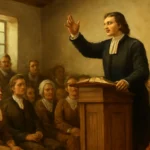
A central principle of Protestantism is the primacy of Scripture for faith and life. This is often summarized by the phrase “sola scriptura”, asserting that the Bible alone is the ultimate authority for what Christians are to believe and how they are to live. While Protestants affirm the value of historical creeds and doctrinal summaries, they typically resist elevating church tradition to an equal level with Scripture. This conviction interacts with historical confessions and the guidance of theologians, but it remains a defining feature that distinguishes Protestant teaching from certain forms of Catholic and Orthodox authority in which tradition plays a more prominent and normative role.
A foundational Protestant conviction is that people are justified by faith apart from works, a concept often summarized as “sola fide” and connected to “sola gratia” (grace alone). In Protestant theology, salvation is understood as God’s gift of grace received through faith in Jesus Christ, not earned by human effort or merit. The role of Christ’s atoning work is central, and believers are invited into a living relationship with God that manifests in obedience, service, and spiritual transformation.
Sacraments and worship practices
Most Protestants recognize two sacraments instituted by Christ: baptism and the Lord’s Supper (Communion). The understanding of these ordinances is typically less sacramental or materialized than in Catholic theology, and there is considerable diversity in how they are understood and celebrated:
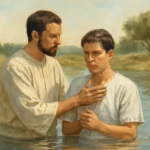
Baptism is usually viewed as a sign of inclusion in the covenant community or as a personal confession of faith. Infant baptism is common in many traditions, while others emphasize believer’s baptism (adult profession of faith).
Lord’s Supper is seen as a memorial, a symbolic act, or, in some traditions, a means of spiritual sustenance. The understanding of the presence of Christ in the elements varies among Protestants—from a symbolic remembrance to a real spiritual presence in some streams.
Church, ministry, and the priesthood of all believers
A durable theme in Protestant thought is the priesthood of all believers, which asserts that every Christian has direct access to God through faith and is called to participate in ministry according to gifts given by the Holy Spirit. This leads to diverse models of church governance, ranging from congregational democracy to presbyterian governance, and to episcopal structures in some Anglican and Methodist contexts. The idea challenges the notion that spiritual authority is reserved exclusively for a professional clergy.
Ethics, social witness, and mission
Protestant ethics have often linked faith to concrete social reform, education, charity, and global mission. The emphasis on personal conversion, moral responsibility, and a transformed life has driven initiatives in education, healthcare, humanitarian aid, and advocacy for justice. Across the movement, Christians are encouraged to participate in the transformation of society in light of biblical principles, while maintaining a distinct sense of humility and dependence on divine grace.
Major Traditions Within Protestantism
The umbrella of Protestant Christianity covers a wide array of traditions, each with its own distinctive emphases, worship styles, and ecclesial structures. The following subsections introduce representative streams, noting how they emerged, what they emphasize, and how they contribute to the broader Protestant landscape.
Lutheranism
Lutheranism traces its origin to Martin Luther and emphasizes the doctrine of justification by faith, the authority of Scripture, and the means of grace through Word and Sacrament. Lutherans typically hold to two sacraments—baptism and the Eucharist—as a divine ordinance. Worship is often liturgical, blending traditional hymnody with a strong confessional identity. The movement became a foundational tradition in Northern Europe and has since grown into a global community, including mission churches in the Americas, Africa, and Asia.
Reformed and Calvinist traditions
The Reformed family, associated with John Calvin and contemporaries such as Ulrich Zwingli, emphasizes the sovereignty of God, covenant theology, and a representative form of church government often organized around elders (presbyters). In practice, Reformed churches may emphasize a more simplified liturgy, a robust preaching ministry, and a theological framework that includes the doctrines of predestination and covenantal life. Sunday worship is typically centered on preaching, Scripture reading, prayer, and worship that aims to be biblically faithful and spiritually edifying.
Anglicanism
Anglican identity arose from the English Reformation and is often described as a via media—an attempt to hold together Catholic heritage and Protestant doctrine. The Anglican tradition includes a wide spectrum from high church, liturgical worship with elaborate sacraments, to low church, evangelical expressions with simpler forms. Governance is episcopal (bishops), and the range of practices reflects both why and how Anglican communities affirm the authority of Scripture, tradition, and reason in a balanced way.
Baptist churches emphasize believer’s baptism by immersion, congregational polity, and a commitment to religious liberty and the separation of church and state. The movement includes a broad family of Baptists with varied theological leanings, from evangelical to more theologically distinct groups. The Anabaptist tradition—often including Mennonites and Amish descendants—advocates radical discipleship, pacifism, and simple worship. Anabaptists have helped shape Christian social ethics and community life with a focus on nonviolence, mutual aid, and community integrity.
Methodism and Holiness movements
Methodism began as a revival movement within the Church of England led by John Wesley and others. It stresses personal faith, methodical discipline, and a strong emphasis on sanctification and spiritual renewal. The holiness and Wesleyan streams often emphasize experiential faith, social outreach, and a holistic approach to discipleship that integrates personal conversion with ongoing holy living.
In the 20th century, Pentecostal and later Charismatic movements brought a renewed emphasis on the gifts of the Spirit, such as speaking in tongues, prophecy, healing, and dynamic worship. These movements span many denominations and have contributed to vibrant worship styles, rapid church growth, and renewed missionary energy. They highlight a lived experience of faith in which spiritual gifts are considered for building up the church and equipping believers for mission.
While Protestantism shares core commitments, there are meaningful differences among its major traditions. Understanding these distinctions helps explain the variety of worship styles, governance structures, and theological emphases across Protestant churches today.
Authority and tradition
Sola scriptura is a common thread, but the place of tradition, creeds, and confessional documents varies. Some traditions model authority primarily through Scripture, while others affirm an authoritative role for historic creeds and church governance structures.
In Anglican and some Lutheran contexts, there is a broader acceptance of tradition and liturgical continuity, whereas some evangelical and Independent/congregational groups emphasize sola scriptura with minimal reliance on tradition.
Baptism and the Lord’s Supper
Baptism is a major point of divergence: infant baptism is common in many traditions (Lutheran, Anglican, Reformed), while others (most Baptist churches) emphasize believer’s baptism by immersion.
Lord’s Supper is interpreted differently: some view it as a memorial, others as a means of spiritual nourishment, and some hold a more sacramental presence of Christ within the elements. These nuances influence worship practice and catechetical emphasis.
Church governance and leadership
Episcopal or hierarchical structures (with bishops) are characteristic of Anglican and some Methodist churches.
Presbyterian polity emphasizes elders and a college of leaders rather than a single pastor or bishop.
Congregational governance is common among many Baptist and nonconformist communities, where local congregations make key decisions about doctrine, worship, and mission.
Worship style and liturgy
Some traditions prioritize a liturgical rhythm with set prayers, readings, and sacraments, while others emphasize informal preaching and contemporary worship.
Music, art, and ceremony vary widely; for example, hymn-led worship is common in many historic denominations, whereas Pentecostal and charismatic groups may emphasize spontaneous worship and expressive praise.
Theology of salvation and sanctification
While the core idea of salvation by grace through faith is shared, the role of sanctification—the growth in holiness after conversion—receives different emphasis. Some traditions highlight formal sanctification as a subsequent realignment with God’s will, while others stress ongoing justification and the new creation life.
Predestination and related topics are central in certain Reformed streams, leading to a nuanced debate about God’s sovereignty, human responsibility, and the scope of the gospel.
Protestantism’s Global Presence and Contemporary Trends
The Protestant Christian movement has grown far beyond its European beginnings. Today, vast networks of Protestant churches are found worldwide, shaping cultures through education, media, relief work, and community development. The global landscape includes rapid growth in parts of Africa, Asia, and Latin America, where evangelical and charismatic forms of Protestantism have often resonated with local communities and social needs.
In many countries, Protestant churches have become the fastest-growing segment of Christianity, particularly in regions where new denominations, house churches, and mission movements emphasize vibrant evangelism and social outreach. The diversity of Protestant expression—ranging from formal, liturgical communities to energetic, revival-oriented fellowships—reflects the adaptability of the movement to different languages, cultures, and urban contexts.
Ecumenism and dialogue
Despite differences among Protestant traditions, there is ongoing engagement with other Christian groups on matters of faith, moral teaching, and social justice. Ecumenical cooperation endeavors, such as shared humanitarian initiatives and joint worship services, illustrate a willingness to find common ground while maintaining doctrinal distinctives. These efforts reflect a broader trend toward unity in essential beliefs, even as particular churches retain distinct identities.
Contemporary challenges and opportunities
The rise of secularism in some regions has prompted Protestant communities to articulate faith in ways that are credible within modern pluralistic societies.
Urbanization and migration create new mission fields and cultural exchanges, encouraging churches to adapt worship styles and community life without compromising key theological commitments.
Digital media and online platforms offer opportunities for preaching, education, and global fellowship, while also presenting challenges regarding pastoral care and accountability.
Common Misconceptions and Clarifications
The broad umbrella of Protestant Christianity is frequently misunderstood. Here are some common misunderstandings, followed by clarifications:
Protestantism is a single denomination. In reality, the term covers a wide spectrum of churches and movements with diverse theological emphases, worship styles, and governance structures.
All Protestants reject tradition completely. While most claim sola scriptura as a guiding principle, many traditions value historical creeds, confessional documents, and learned theology as helpful guides for faith and practice.
Protestants do not revere the sacraments. Most Protestants recognize two sacraments or ordinances—baptism and the Lord’s Supper—and consider them to be meaningful signs of God’s grace, albeit interpreted differently from Catholic or Orthodox perspectives.
Predestination means no free will. In many Reformed and Calvinist frameworks, God’s sovereignty and human responsibility are held in tension; believers are called to respond in faith and obedience, while God orchestrates the overall plan.
Conclusion: The Living Tradition of Protestant Christianity
Protestant Christianity represents a dynamic and diverse family of faith communities formed through historical reform, theological reflection, and sustained commitment to the gospel. From the early controversies of the Reformation to contemporary discussions about social justice, church reform, and global mission, Protestant traditions have continually sought to articulate a faithful response to God in Christ within changing circumstances. Whether through Lutheran, Reformed, Anglican, Baptist, Methodist, Anabaptist, or Pentecostal expressions, the core convictions remain: the authority of Scripture, the gift of grace, the call to faith and holiness, and the responsibility to witness to God’s love in the world.
For readers exploring the topic, it is helpful to study how various Protestant traditions interpret the same foundational questions differently—questions about how God saves us, how the church should be governed, what constitutes true worship, and how Christians participate in the mission of God in daily life. The result is a rich and ongoing conversation about what it means to follow Christ in regions with different cultures, languages, and historical trajectories.
If you are new to Protestant Christianity, consider reading classic confessional documents such as the Augsburg Confession, the Westminster Confession of Faith, and the Thirty-Nine Articles, alongside contemporary statements from diverse Protestant communities. Engaging with the breadth of Protestant tradition can deepen understanding, foster respectful dialogue, and illuminate how faith can be lived out in a plural world with humility, courage, and hope.

 Por Laura Jara