A scripture timeline offers a structured way to understand the sequence of events, eras, and turning points that shape the biblical narrative.
Rather than treating each book in isolation, a chronological framework helps readers see how one era leads to another,
how covenants forge the identity of a people, and how prophetic expectation builds toward the coming of the Messiah in the New Testament.
This article presents a comprehensive guide to the biblical chronology, or timeline of Scripture, with emphasis on
major eras, key events, and the methodologies scholars use to harmonize data from canonical texts, historical sources, and archaeology.
What a timeline of Scripture seeks to accomplish
The goal of this canonical timeline is not to claim absolute precision for every date, but to provide a clear, well-supported map
of how biblical events unfold across centuries. As you read, you will encounter dates expressed in BCE (Before the Common Era) and CE (Common Era),
with the understanding that ancient dating varies by tradition and method. A robust sacred timeline helps readers:
Locate events within broader cultural, political, and religious contexts.
Track covenants and promises that define the relationship between God and humanity or a chosen people.
See literary transitions—from narrative to law, from prophets to gospels, from exile to return.
Integrate different strands of biblical material (historical books, prophetic writings, wisdom literature, and New Testament writings) into a coherent flow.
Major eras in the Scripture timeline: an overview
The narrative of Scripture unfolds through several broad eras. Each era contains distinctive motifs, leaders, and moments when divine purposes
are disclosed or renewed. The following sections outline these major periods and offer a compact, readable map of events that shape the canonical story.
The Patriarchs and the Ancient Near Eastern Setting
This early section of the timeline of Scripture centers on the founding figures of the faith tradition and the development of
a people under covenant promises. It sets the stage for God’s redemptive plan to unfold through a particular lineage.
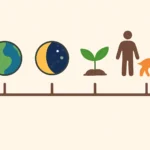
Creation and the Fall (Genesis 1–3) establish the world as God’s good creation and humanity’s first rebellion, a frame for the whole biblical drama.
Primeval narratives (Genesis 4–11) introduce themes of sin, judgment, mercy, and the spread of nations, culminating in the call of Abram.
Abram/Abrahamic covenant (Genesis 12–17) marks the birth of a people whom God intends to bless and through whom all nations will be blessed.
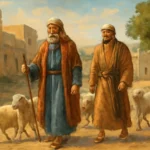
patriarchy and migration (Gen. 12–50) trace the journeys of Abraham’s descendants—Isaac, Jacob, and Joseph—into and around the land of Canaan.
In the scripture timeline of this era, the tests of faith, obedience, and divine promise set the theological trajectory for the rest of the Bible.
The Exodus and the Wilderness
The second major segment moves from patriarchal narratives to liberation and law. This section centers on Israel’s emergence as a people organized under
Yahweh, with a covenant that defines their identity and mission.
Bondage in Egypt and oppression that forms the backdrop for liberation narratives.
Moses and the plague series (Exodus 1–12) demonstrate God’s power and faithfulness to deliver his people.
Crossing the Red Sea and the journey to Sinai
Sinai Covenant with praise, laws (including the Ten Commandments), and instructions for worship and civil life
Wilderness wandering and formation of a distinct national and religious identity
This portion of the biblical chronology emphasizes obedience, trust, and the central role of divine law in shaping a people chosen to be a light to the nations.
The Conquest and Settlement
After Sinai, the narrative transitions toward land acquisition and settlement in Canaan, highlighting both divine initiative and human agency in
fulfilling promises.
Conquest under Joshua (Joshua 1–12) and campaigns to claim portions of the land
A settlement pattern as tribes receive allotments and organized life under a shared covenant
City-state dynamics and religious reform during the period of settlement and early national life
The timeline of Scripture during this era shows a tension between faithfulness to the covenant and the pressures of surrounding cultures, a tension that
continues to drive later prophetic messages.
The Judges and the United Monarchy
This expansive era narrates cycles of apostasy, repentance, and deliverance as Israel or Judah experiences
leadership transitions before and during the establishment of a centralized monarchy.
Judges as tribal leaders provide episodic leadership in a time of ongoing conflict and moral testing
Saul, then David, then Solomon—the united monarchy that consolidates political power, expands territory, and refines religious life
Temple installation in Jerusalem under Solomon as a focal point for worship and national identity
In this portion of the canonical timeline, political centralization accompanies theological centralization, with the temple
and proper worship at the center of national life.
The Divided Kingdom and Exile
The split of the kingdom after Solomon’s reign creates parallel narratives—the northern kingdom of Israel and the southern kingdom of Judah—each
with its own fate and prophets who speak into crisis.
The split after Solomon leads to distinct political trajectories and varying degrees of fidelity to the covenant
Israel falls to Assyria (c. 722 BCE), while Judah falls to Babylon (c. 586 BCE) and the temple is destroyed
Exile and diaspora shape identity, prayer, and hopes for restoration
This era of the biblical timeline emphasizes discipline through consequences and the persistent hope that God will restore his people.
Return, Restoration, and the Intertestamental Gap
The next phase moves from exile to return, rebuild, and reformation, followed by a broader intertestamental period—the time between the Old and New Testaments.
Cyrus’s decree and return from exile (538–516 BCE) facilitates construction of the Second Temple
Rebuilding the temple and reform efforts in Jerusalem shape religious life
Intertestamental developments include political shifts, cultural exchange, and the emergence of groups such as Pharisees and Sadducees
The sacred timeline between the Testaments is essential for understanding expectations surrounding the Messiah in the *New Testament* era.
The Life of Jesus and the Early Church
The final major section of the biblical chronology centers on the life, ministry, death, and resurrection of Jesus Christ and the
subsequent spread of the gospel by the early church.
Birth of Jesus in the context of Roman governance (commonly dated to 4–6 BCE)
Ministry, teaching, and miracles as recorded in the Gospels, with a focus on the Kingdom of God
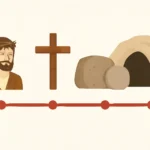
Crucifixion and Resurrection—central events that define Christian faith and the fulfillment of prophetic expectations
Early church movement and the apostolic mission, including Paul’s journeys and letters
New Testament writings and the emergence of a canon that shapes Christian belief across generations
The chronology of the New Testament ties historical settings to theological claims about salvation history and the expansion of the gospel to all nations.
Methods and challenges in constructing the Scripture timeline
Creating a coherent timeline of Scripture requires careful methodology. Different books originate in different genres, carry distinct
theological purposes, and present events with varied dating conventions. Here are key considerations that scholars use to build a credible biblical chronology.
Source materials and genre awareness
Biblical texts span genres such as narrative history, poetry, law, prophecy, and epistolary writing. Recognizing genre helps in interpreting time markers and
sequencing events. When evaluating a scripture timeline, readers distinguish historical narrative from theological reflection and symbol-bearing
language.
Historical books (Kings, Chronicles) provide broad chronological arcs with synchronisms to other nations
Prophetic books date primarily by context and fulfillment patterns rather than precise year-by-year markers
New Testament Gospels present an anchored sequence around the life of Jesus, but with interpretive framing that informs chronology
Chronological markers and synchronisms
To arrange events, scholars look for internal benchmarks such as reigns of rulers, temple desecrations, jubilees, exiles, and
synchronisms with external histories (e.g., Assyrian, Babylonian, Persian timelines). These markers help anchor the timeline of Scripture in a broader antiquity.
Archaeology, inscriptions, and extra-biblical data
Archaeology and inscriptional evidence provide cross-checks and sometimes clarifications for biblical dates. While not always definitive,
such data can support or challenge conventional datings and reveal cultural contexts that illuminate the biblical chronology.
Correlations with ancient Near Eastern chronologies
Evidence from monuments, letters, and inscriptions relevant to exilic or post-exilic periods
Geographic and ethnographic clues that refine the setting of various events
Theological framing and dating cautions
The authors of Scripture are not writing modern history textbooks. Their primary aim is the revelation of God, covenant faithfulness, and the shape of redemption.
Readers should approach dating with respect for theological aims, recognizing that some chronological details serve literary and theological purposes as much as historical ones.
Practical uses: reading the Bible with a timeline
How can a reader use a scripture timeline to enhance study and understanding? Here are practical approaches that integrate chronology with
literary and devotional reading.
Build a simple, visual timeline—a chronological outline that tracks major eras and turning points helps you see connections across books.
Cross-reference narrators and audience—note who is speaking to which audience and how the timeline influences the message.
Read with context—when approaching historical books, read alongside prophetic and wisdom literature to appreciate interwoven themes.
Use multiple date estimates—embrace ranges (e.g., c. 1250–1200 BCE for conquest) to reflect scholarly consensus and textual nuance.
Apply the timeline to sermons and studies—use the chronology to illustrate covenants, promises, and fulfillment in Christ.
Common questions about the sacred timeline
Because the biblical chronology touches faith, history, and interpretation, questions are natural. Here are some frequently asked items
and concise clarifications.
Is the Bible a single continuous timeline? No. The Bible contains multiple books written in different genres and historical contexts. A
unified timeline of Scripture is a synthesis that helps readers see overarching patterns while respecting literary variety.
Are dates precise? Often not. Most dates are approximate and based on textual cues, external histories, and archaeological evidence.
Why do different traditions have different dates? Variations arise from textual sources, calendars, and interpretive traditions. A responsible
approach notes ranges and explains the reasoning behind them.
How should I treat prophecies in relation to chronology? Prophetic writings frequently forecast future events in relation to present circumstances;
they often speak in terms that require harmonizing with the historical sequence while keeping their theological message intact.
What is the value of a sacred timeline for faith and study? It clarifies the logic of salvation history, highlights the continuity between
testaments, and deepens appreciation for the faithfulness of God across generations.
A few misunderstandings can hinder the learning process. A careful study helps avoid these pitfalls:
All biblical dates are exact—in reality, many dates are estimates that reflect textual, linguistic, and archaeological considerations.
The Bible is a single, linear history—the biblical authors often present events through layered narratives, genealogies, and theologies.
Chronology excludes theology—in Scripture, historical events are inseparable from divine purposes, promises, and redemptive plans.
Every book aligns perfectly in time—different books emphasize different times and may arrange information to suit literary design.
Constructing a personal study plan around the Scripture timeline
If you want to immerse yourself in the timeline of Scripture with clarity and purpose, consider the following approach, which balances reading,
reflection, and reference:
Choose a core sequence—identify major eras (Patriarchs, Exodus, Judges/United Monarchy, Exile/Return, Intertestamental, Jesus and the Church) and read primary sources within each era.
Annotate dates and markers—mark reigns, exiles, temple periods, and key covenant moments in a notebook or digital document.
Cross-check with maps and archaeology—use geography to understand movements, battles, and settlements, and, when helpful, note external historical markers.
Read in a layered way—pair narratives with prophets, poetry with wisdom, and gospel accounts with the rest of the New Testament to appreciate fulfillment themes.
Engage with secondary sources—commentaries, scholarly articles, and reputable timelines can offer valuable perspective; weigh them against the biblical text.
Resources for further exploration of the sacred timeline
A rich study of the biblical chronology benefits from diverse resources. The following categories can guide a thoughtful exploration:
Study Bibles and reference works that include timelines, maps, and notes on dating and authorship.
Commentaries that address historical context, literary structure, and theological themes across periods.
Academic surveys of the ancient Near East to situate biblical events within broader regional history.
Archaeological reports and inscriptions relevant to exile and post-exilic periods for corroborating data.
Online timelines that present chronological schemes with cross-referenced biblical books and chapters.
Conclusion: embracing a comprehensive Scripture timeline
A robust scripture timeline or timeline of Scripture is more than a listing of dates; it is a framework for grasping the continuity,
covenant, and fulfillment woven through the biblical story. By tracing the major eras—from the faith of the patriarchs to the inauguration of the church—readers gain
a richer sense of how God works through history to accomplish redemption. The biblical chronology invites careful reading, patient study,
and reverent wonder at the ways the sacred timeline unfolds across generations.
Appendix: a brief sample compact timeline (high-level)
The following compact outline is designed to be used as a quick reference or a starting point for note-taking as you study the broader scripture timeline.
Creation to Patriarchs — Creation, Fall, Flood, Nations, Call of Abraham
Patriarchs to Egypt — Isaac, Jacob, Joseph, migration to Egypt
Exodus and Sinai — Liberation, Law, Covenant at Sinai
Conquest and Settlement — Joshua, division of land
Judges and United Monarchy — Leadership transitions, Saul, David, Solomon
Divided Kingdom and Exile — Israel (north) and Judah (south) face conquest and exile
Return and Restoration — Return from exile, temple rebuilding, reforms
Intertestamental Period — Historical and cultural developments between Testaments
Life of Jesus and Early Church — Birth, ministry, crucifixion, resurrection, missions, canon formation
Whether you are studying for personal enrichment, teaching, or devotional reflection, a thoughtful approach to the scripture timeline can deepen
your understanding of how God’s promises unfold across time and how the Bible’s multiple voices converge into one overarching narrative of redemption.

 Por Laura Jara