The Bible has been translated into countless languages and into a wide variety of English editions. For readers, scholars, pastors, and students, navigating this landscape can feel overwhelming. What begins as a simple question—“Which Bible should I read?”—quickly expands into a broader conversation about the bible translations spectrum: a range of approaches to rendering ancient texts into modern languages, each with its own strengths, limitations, and intended audience.
Understanding the translation spectrum: what it means for your Bible reading
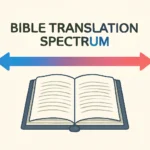
The translations spectrum describes how closely a translator tries to preserve the wording and structure of the original languages (Hebrew, Aramaic, and Greek) versus prioritizing clear, natural-sounding English, even if that means altering some grammatical features or idioms. At one end of the spectrum lie translations that aim for formal equivalence, attempting to mirror the wording and syntax of the original text as closely as possible. At the other end sit paraphrase versions that seek to convey meaning in everyday English, sometimes recasting sentences to express ideas rather than word-for-word correspondence. In between are various forms of dynamic equivalence, functional equivalence, and what scholars sometimes call optimal equivalence, each representing a different compromise between accuracy to the source and readability in the target language.
This spectrum is not a value judgment about devotion or spirituality; it is a description of translation philosophy and practice. When you pick a translation, you are choosing a particular approach to conveying the ancient text’s meaning, tone, and literary features to a modern reader. Understanding these choices helps readers use multiple translations responsibly, cross-check difficult passages, and tailor study methods to personal goals—whether devotional reading, academic study, or sermon preparation.
Key translation philosophies in the bible translations spectrum
What is formal equivalence?
Formal equivalence prioritizes a close, word-for-word rendering of the original languages. The aim is to preserve lexical choices, grammar, and structure, so readers can see how a text was built in Hebrew or Greek. This approach tends to produce translations that are more literal, sometimes at the expense of natural English flow. It is especially valued by scholars and readers who want to examine the text at a closer level.
What is dynamic equivalence or functional equivalence?
Dynamic equivalence (also called functional equivalence) emphasizes conveying the author’s meaning and impact in natural, contemporary English. This often requires rephrasing idioms, adjusting sentence order, and choosing vocabulary that resonates with modern readers. The result is typically stronger readability and comprehension, particularly for those new to biblical languages or who read at a lower grade level. Critics sometimes argue that too much reinterpretation can obscure original nuances, while proponents highlight accessibility and clarity.
What about paraphrase translations?
Paraphrase versions take a broader interpretive approach, prioritizing contemporary understanding and readability over strict linguistic alignment with the source text. They can be excellent for devotional reading, trend-setting introductions to biblical ideas, or quickly grasping themes. However, because they are highly interpretive, they are usually less suitable for precise exegesis or textual criticism without consulting more literal translations.
Where does optimal equivalence fit in?
Some scholars describe a continuum called optimal equivalence, which seeks a practical balance: it aims to preserve important grammatical and lexical features when they help illuminate meaning, while allowing for smoother English when literal rendering would impede understanding. Translations in this vein often position themselves as reliable for study and readable for daily use, offering a workable compromise between precision and accessibility.
In practice, most English Bible translations live somewhere along this spectrum. The key is to recognize which translation philosophy best serves your current goal—whether you want to study a theological term in its original linguistic context, prepare a sermon, lead a devotional, or simply read with spiritual nourishment in mind.
Textual bases and manuscript traditions behind the translations
The translation choices described above do not arise in a vacuum. They depend on the underlying manuscript evidence and the editors’ approach to textual criticism. Understanding the major source texts helps explain why translations differ in specific passages and how they handle verses with manuscript variants.
Masoretic Text (MT) for the Hebrew Bible: The MT serves as the principal base for most translations of the Old Testament. Critical editions like the Biblia Hebraica Stuttgartensia (BHS) and the Biblia Hebraica Quinta (BHQ) reflect a long history of Hebrew text study, textual variants, and scholarly notes.
Septuagint (LXX) and other ancient witnesses: The Greek translation of the Hebrew Scriptures, the LXX, has influenced many Christian traditions and translator decisions. Some translators consult the LXX to illuminate meaning or to resolve ambiguities in the MT, especially in books where the MT is uncertain.
Dead Sea Scrolls and other early manuscripts: Fragments from Qumran and other sources provide valuable insight into the original wording of various books and can affect translation choices, especially for wording, idioms, and verse boundaries.
Latin Vulgate and other ancient versions: For some Catholic and ecumenical translations, the Latin tradition remains a guide, and some textual decisions reflect patristic interpretation or Latin reading of certain terms.
Textus Receptus (TR) vs. Critical Greek Texts (e.g., NA28/UBS5) for the New Testament: The TR, used historically for the King James Version, reflects a particular manuscript tradition. Modern critical editions (NA28/UBS5) synthesize readings from a broad range of manuscripts and are often the basis for contemporary translations that aim for broad textual coverage and scholarly consensus.
Majority Text and Byzantine Text traditions: Some translators consider the majority of Greek manuscripts when making decisions, especially in places where the MT and early manuscripts diverge.
The result is a tapestry of textual stewardship. Some translations lean on a tighter control by a smaller group of manuscripts, while others rely on eclectic, evidence-based decisions that weigh thousands of textual variants. Readers benefit when the translation notes explain the basis for a key rendering, especially in difficult passages (for example, decisions around gender language, or phrases whose meaning relies on a single verb form).
A tour of the translation landscape: major versions and their positions on the spectrum
The English Bible has a long and diverse history. Here is a practical snapshot of representative translations, grouped by the broad approach they typically exemplify. This section is intended to help you see how the bible translations spectrum manifests in real-world editions.
Formal-equivalence and closely aligned renderings
King James Version (KJV) — A foundational historical translation based on the Textus Receptus for the New Testament and the MT for the Old Testament. It preserves archaic English syntax in many places but remains highly influential for literary and theological reasons.
New American Standard Bible (NASB) — A prominent example of formal equivalence, often praised for its precision and consistency in rendering verbs and grammar.
English Standard Version (ESV) — A modern form of formal equivalence with attention to literary quality, aiming for a balance between literal fidelity and readable English.
Revised Standard Version (RSV) and its revision, the NRSV — Both sit toward the formal end of the spectrum, with careful attention to scholarly scholarship and inclusive language considerations in later revisions.
New King James Version (NKJV) — A modernization of the KJV that retains much of the classic wording while updating grammar and typography to a contemporary audience.
Dynamic-equivalence and reader-friendly renderings
New International Version (NIV) — A hallmark of dynamic equivalence, prioritizing readability and accessibility while aiming to preserve meaning across diverse manuscripts.
NRSV — Although often thoughtful and precise, it leans more toward a readable, scholarly approach that incorporates contemporary scholarly consensus, making it popular in academic settings and churches seeking accuracy with clarity.
New Living Translation (NLT) — An explicit emphasis on natural, contemporary English and readability, suitable for devotional reading and broad audiences.
Today’s New International Version (TNIV) and later revisions influencing NIV targets a similar range of readability with ongoing attention to gender-inclusive language in consultation with scholarship.
Paraphrase and interpretive renderings
The Message — A popular paraphrase that seeks to capture the contemporary idiom and the tone of the original in modern language rather than literal rendering. Best used for overview reading, personal reflection, or cross-cultural engagement, not as the sole basis for formal study.
The Living Bible (TLB) — An earlier paraphrase with a focus on everyday speech, historically useful for building familiarity with biblical stories and themes.
The Passion Translation — A recent paraphrase that emphasizes narrative feel and emotional resonance, aimed at devotional use and worship contexts, with some readers seeking to pair it with more literal translations for study.
Catholic and ecumenical translations
New American Bible (NAB/NABRE) — A Catholic translation chosen for liturgy and study, with attention to the Greek and Hebrew sources and official church notes.
Jerusalem Bible (JB) and Douay-Rheims — Historic Catholic renderings that reflect patristic readings and Catholic translation philosophy, often used in Catholic worship and study.
Catholic Study Bible (NABRE-based editions) — Utilizes contemporary ecumenical scholarship, with extensive notes and cross-references that guide readers through doctrinal and literary aspects.
Guidelines for readers: choosing a translation for your purpose
The choice of translation should be guided by your goals, level of biblical literacy, and the context in which you read. Below are practical considerations to help you select the most appropriate edition for a given task.
Identify your primary goal: devotional reading, in-depth study, preaching/teaching, or translation practice. Each goal benefits from different ends of the spectrum.
Assess readability: if you are beginning with Bible reading or returning after a long gap, a dynamic-equivalence translation (e.g., NIV or NLT) can lower barriers to comprehension. For detailed study, a more formal-equivalence language (e.g., NASB, ESV) may be advantageous.
Check the manuscript basis: translations based on critical Greek texts and critical Hebrew texts (NA28/UBS5, BHS) reflect the latest scholarly consensus and a wide manuscript base. If you want to trace textual notes, look for editions that provide extensive apparatus, such as study Bibles or interlinear resources.
Consider the audience and ecumenical context: certain translations are favored in particular denominations due to tradition, liturgy, or theological emphasis. Being aware of these factors helps in choosing translations that best fit your community or study group.
Use multiple translations when studying: comparing a formal-equivalence and a dynamic-equivalence translation side by side can illuminate nuances that a single edition might miss. Parallel Bibles, interlinears, or digital tools can aid this approach.
Be mindful of translation notes and introduce biases: many translations come with notes, introductions, and commentary that reflect theological positions. While these are valuable, they can also influence interpretation; read notes critically and cross-check with other sources.
Practical strategies for engaging with the bible translations spectrum
To make the most of the spectrum of Bible translations, readers can adopt several practical strategies that respect both linguistic precision and spiritual insight.
Start with a readable base translation for daily reading or introductory study. A dynamic-equivalence edition can help you grasp the narrative, parables, and exhortations without getting bogged down in archaic language.
Consult a more literal counterpart to deepen understanding of phrasing and possible ambiguities. A formal-equivalence translation can help you notice word choices that may carry important nuances.
Use study aids such as concordances, commentaries, and lexical tools to explore key terms in their original languages. This is especially helpful with passages whose meaning hinges on a single word or a grammatical construction.
Explore textual criticism notes when you encounter passages with known manuscript variation. Look for how editors arrived at a particular rendering and what alternatives exist.
Be mindful of genre and context. Narrative sections, poetry, wisdom literature, prophecy, and letters each demand distinct interpretive approaches. Some translations handle poetry and parallelism with careful attention to form, while others prioritize smooth prose for readability.
Respect cultural and linguistic history. Bible translation is not only a linguistic task but also a cultural bridge. Recognize how language, era, and audience shape choices in every edition.
Examples of translation families and how they serve different readers
The bible translations spectrum is not simply a theoretical concept; it translates into real-world utility. Here are general profiles for common families of translations:
Formal-equivalence family (precision-forward): KJV, NASB, ESV, RSV, NKJV, and NRSV often appeal to readers who want to engage closely with wording and syntax. They are especially favored for word studies, sermon preparation, and academic use where fidelity to original phrasing matters.
Dynamic-equivalence family (readability-forward): NIV, NLT, NCV (and related paraphrase-ready editions) emphasize accessible English and smooth flow. They cater to readers seeking clarity and quick comprehension in devotional or introductory study contexts.
Paraphrase and interpretation family (meaning-forward): The Message, The Living Bible, and similar works aim to render impression and narrative in contemporary idiom. They are useful for gaining a sense of the text’s mood and meaning when time is limited or for cross-cultural engagement, but are not the primary choice for precise exegesis.
Catholic and ecumenical translations (institutional and liturgical use): NABRE, JB, Douay-Rheims, and related editions are designed to be read in congregational worship and study within Catholic settings, often with extensive notes on doctrine and liturgical alignment.
Readability, accuracy, and the Reading Experience
Readers often weigh readability against accuracy as a central tension in the translations spectrum. A translation that reads smoothly can foster sustained engagement and comprehension, yet it may require more careful cross-checking with literal renderings to avoid glossing over nuanced meanings. Conversely, a highly literal edition can reveal linguistic features and theological vocabulary that are valuable for in-depth study but may present challenges for everyday reading.
The trade-off is not inherently problematic; it simply reflects the translator’s priorities and the intended purpose of the edition. Some readers intentionally maintain a primary devotional practice with a readable translation and supplement it with a secondary study Bible that emphasizes textual notes and lexical detail. Others use parallel Bibles that present different translation philosophies side by side, enabling a cross-comparison without sacrificing flow in daily reading.
When a passage presents interpretive ambiguity or textual variation, consulting multiple translations can be especially enlightening. Here are practical steps for a thoughtful, spectrum-informed study approach:
Identify the core meaning in your primary translation and note any words or phrases that feel ambiguous or culturally distant.
Compare with a more literal edition to see how the original terms are rendered in another linguistic framework. Pay particular attention to nouns with strong semantic ranges or verbs with nuanced tense/aspect features.
Check textual notes in study Bibles or critical editions to understand why editors chose a particular rendering and what alternatives exist in the manuscript tradition.
Consult a paraphrase or commentary to explore how translators or theologians interpret the passage’s meaning in contemporary life, while keeping in mind that paraphrase should not substitute for original-language study when precise understanding is required.
Form a small reading panel with friends or colleagues who have different translation preferences. Discuss how the same passage communicates across versions and what implications may arise for doctrine, ethics, or liturgical use.
Common questions about the translation spectrum
Many readers wonder about the reliability of modern translations, how to evaluate a translation’s quality, and what to do with old editions. Here are some frequent questions that arise in the context of the bible translations spectrum.
Are newer translations more accurate than older ones? Not necessarily. Newer editions may reflect updated manuscript evidence and better understanding of ancient languages, but accuracy also depends on translation philosophy, editorial decisions, and theological commitments. Each edition has its purpose and audience.
Is a paraphrase unreliable for study? Paraphrases are typically designed for readability and devotional engagement. For rigorous study, they should be used alongside more literal translations and scholarly resources that illuminate original language meanings.
Why do translations differ on specific verses? Differences often arise from textual variants, grammar in the source languages, and translator choices about idioms and cultural context. Studying the notes and cross-references helps readers understand the rationale behind variants.
Resources and tools to navigate the spectrum
Today’s readers have access to a wide range of tools that help map the bible translations spectrum onto the text. The following resources can enhance understanding and enable more precise study:
Parallel Bible editions and interlinear translations that display the original language alongside translation, enabling word-by-word comparison.
Study Bibles with extensive notes on textual variants, translation philosophy, and theological context.
Lexicons and concordances that define Hebrew and Greek terms and reveal their range of meanings across different contexts.
Textual commentary on variant readings and their significance for doctrinal interpretation.
Digital platforms that provide cross-translation search and robust reference tools, allowing quick comparison across multiple editions.
Historical overview: how the spectrum evolved over time
The evolution of Bible translation is a story of linguistic progress, manuscript discovery, and theological reflection. From early vernacular efforts to modern ecumenical editions, translators have wrestled with the same core questions: How can an ancient text speak clearly to contemporary readers? How can we preserve the integrity of the original language without sacrificing accessibility? The journey includes notable milestones and shifts in translation philosophy that continue to influence how today’s readers encounter Scripture.
The early vernacular translations such as Wycliffe and Tyndale laid the groundwork for centuries of Bible access in the common language, emphasizing clarity and accessibility and often foregrounding a bridge between sacred text and public devotion.
Renaissance and Reformation-era editions expanded linguistic and theological exploration, with translations that reflect the period’s scholarly rigor and the push for broader readership, culminating in the emergence of the KJV and its enduring influence.
Modern critical editions and balanced translations (late 20th to 21st centuries) reflect advances in manuscript discovery, linguistic theory, and translation methodology, leading to a spectrum that accommodates both academic study and pastoral ministry.
Ecumenical and inclusive revisions address contemporary language use, gender considerations, and cultural sensitivity, while maintaining fidelity to historical manuscripts and theological integrity.
Conclusion: embracing the Bible translations spectrum responsibly
The bible translations spectrum is not simply a catalog of different editions; it is a framework for thoughtful engagement with Scripture. By recognizing the distinct goals behind formal equivalence, dynamic equivalence, paraphrase, and other approaches, readers can select translations that best fit their reading needs, study goals, and spiritual communities. The spectrum also invites humility and curiosity: no single edition captures every nuance of the original languages, and cross-referencing multiple translations—along with scholarly notes and lexical tools—enriches understanding and avoids overreliance on a single textual voice.
Whether you are preparing a sermon, guiding a Bible study, or simply seeking daily devotion, the wide range of Bible versions available today is a resource to be leveraged with discernment. By approaching translations with an awareness of their textual bases, readability trade-offs, and translation philosophy, you can experience the Bible in its fullness: its historical depth, its literary richness, and its ongoing relevance for life today.

 Por Laura Jara