Ascension dans la Bible: An English Guide to the Biblical Ascension
The event often titled the Ascension occupies a pivotal place in Christian theology and
practice. In English, and in many translations, it is described as the moment when Jesus Christ is
taken up to heaven after his Resurrection. The phrase Ascension dans la Bible signals
both a specific historical occurrence and a broader theological reality: that Jesus’ earthly mission
culminates in his heavenly triumph, and that his exaltation inaugurates a new phase of divine action in
the world. This guide explores what the biblical accounts say, how they are understood in
Christian tradition, and what the Ascension means for faith, worship, and daily living.
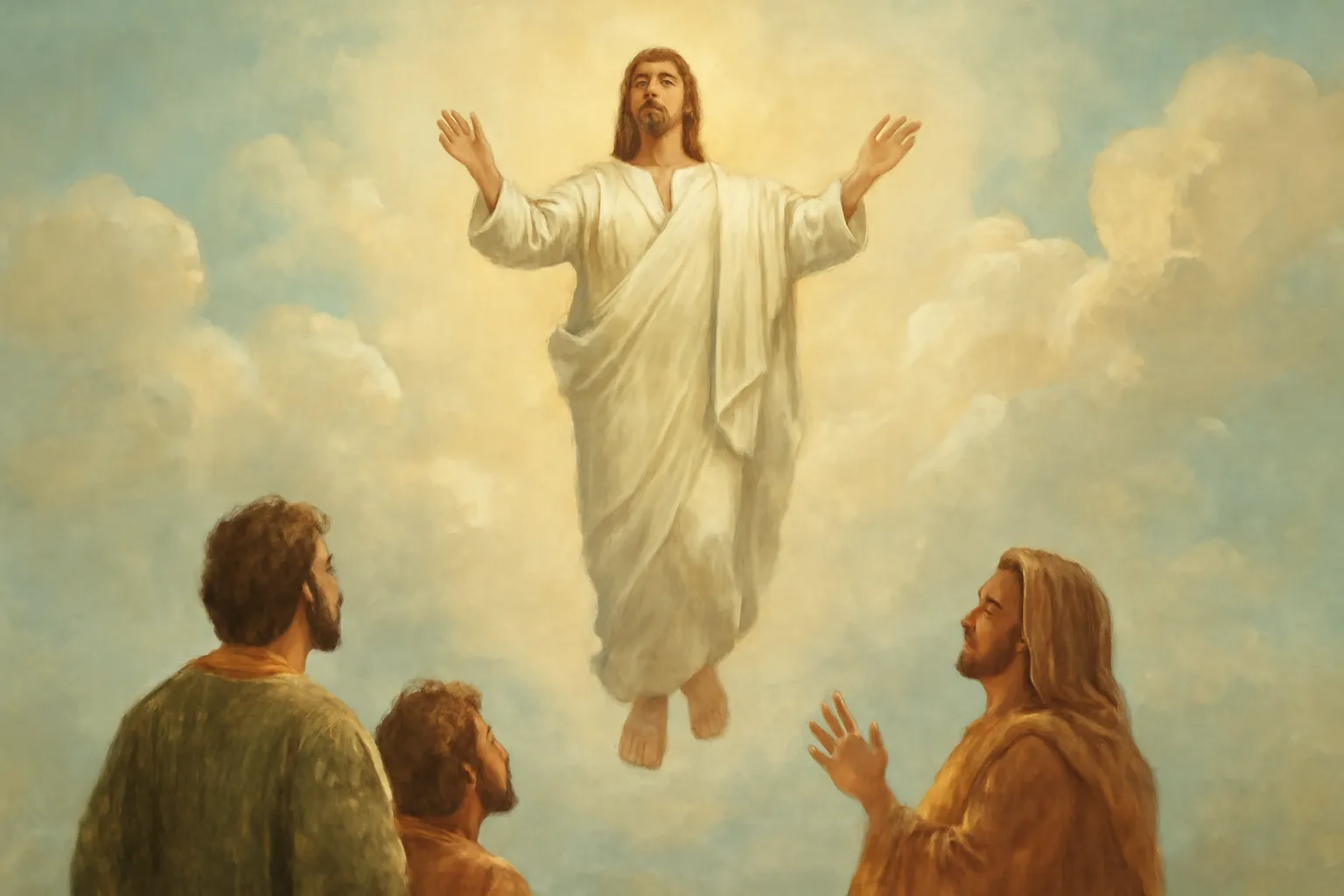
In Christian scripture, the Ascension refers to Jesus’ bodily departure from earth into
heaven, to sit at the right hand of God the Father. It occurs after the Resurrection and before the
expected return. Across the Gospel and Acts narratives, the Ascension marks the end of Jesus’ visible
earthly ministry and the beginning of his unseen, ongoing rule from the heavenly realm.
Temporal placement: the Ascension takes place after the Resurrection and after a period of >40 days of post-resurrection appearances.
Visibility: Jesus is seen ascending, often accompanied by a cloud, and his followers witness the event.
Incarnational shift: with the Ascension, Jesus’ work transitions to the non-embodied, ruling presence that enables the sending of the Spirit at Pentecost.
Key Biblical Passages about the Ascension
Luke and Acts: The narrative arc
The two books attributed to Luke provide the most detailed accounts of the Ascension and its immediate
consequences. Luke describes the Ascension in Luke 24:50-53, while the sequel in Acts 1:9-11 situates the event in
the early church’s mission and eschatology.
Luke 24:50-53 describes Jesus leading his disciples out as far as Bethany, blessing them, being
carried up into heaven, and the disciples returning with great joy to Jerusalem, continually praising God.
Acts 1:9-11 records a witnessed ascent, a cloud concealing him from their sight, and angels who remind the
disciples that Jesus will return in the same way as they saw him go into heaven.
Other Gospel details and the resurrection sequence
Mark 16:19 (in the longer endings) states that the Lord Jesus was taken up into heaven and sat at the right
hand of God, emphasizing Christ’s exalted position.
John 20:17 presents a post-resurrection dialogue in which Jesus speaks of ascending to the Father and
urges Mary Magdalene and the disciples toward a faith-filled mission.
While the canonical Ascension centers on Jesus, the broader biblical narrative contains stories of ascent that
illuminate the divine pattern of departure and reunion. Notable examples include the ascent of Elijah in 2 Kings 2 and the translation of Enoch in Genesis 5, which Christians often regard as types
or foreshadowings rather than direct precedents. These narratives illustrate the biblical motif of a hero who
is taken up by God, but they are distinct from the unique event of Christ’s Ascension.
Theological Significance of the Ascension
Christ’s enthronement and ministry
The Ascension is often read as the enthronement of Christ in heaven, where he now rules as Lord over all.
This exalted status, described in terms of being seated at the right hand of God, signals both victory and
ongoing royal authority. The language communicates that Jesus’ work continues, but in a new mode—through
heavenly mediation rather than a visible, earthly presence.
Fulfillment of mission and the Spirit’s sending
The Ascension preserves a sense of mission rather than closure. It completes Jesus’ earthly ministry while
simultaneously enabling the Spirit’s outpouring at Pentecost. In Acts 2, the Spirit’s descent empowers the
church to proclaim the gospel to every nation, a task that Jesus commissions in his earthly ministry and
that becomes possible through his ascent.
Intercession and mediation
A central consequence of the Ascension is the portrayal of Jesus as an ongoing intercessor. When
Christians speak of Jesus’ current work in heaven, they often describe him as mediating between God and
humanity, advocating for believers, and facilitating their relationship with the Father.
Cosmic reign and divine sovereignty
The Ascension underlines that Jesus’ authority extends beyond a single region or time. The heavenly realm
is the throne from which he governs the cosmos, upholding creation, directing history, and drawing all
things toward their future fulfillment in God’s kingdom.
Historical and Practical Implications
Liturgical and calendar aspects
The event is commemorated in many Christian traditions as Ascension Day, observed exactly
forty days after Easter. In some calendars, especially in Western churches, this day shifts to nearby
Sundays or Thursdays, but the theological emphasis remains constant: the celebration of Jesus’ return to
heaven and his ongoing rule.
Lived faith and witness
The Ascension motivates a life of witness. If Jesus has been exalted and sent the Spirit, believers are
called to testify to his risen and ascended lordship in every sphere of life—personal, familial, civic,
and global. The command to be witnesses to the ends of the earth (often connected to the moments immediately
following the Ascension in Acts 1) reflects a mission that endures across generations.
Prayer, worship, and hope
The idea of Christ’s heavenly enthronement shapes how Christians pray and worship. In many traditions,
prayers address Jesus as Lord in heaven, acknowledging his authority and seeking the Spirit’s power for
daily living. This devotional posture rests on the conviction that the Ascension is not a retreat but a
relocation—Christ now intercedes and reigns with fullness of glory.
Forms of Language: Variants Related to the Ascension
In talking about the biblical ascent, writers employ a variety of terms to convey nuance:
Ascension and ascendence: the act of going up, especially to the heavens.
Exaltation or exalted: emphasizes the elevated status of Christ after the ascent.
Going up, rise to heaven, or heavenly ascent: more everyday ways to describe the event in accessible language.
Enthronement: a theological angle focusing on Christ’s enthroned rule at God’s right hand.
Translation (in some theological discussions): the idea that Jesus was transferred from one domain to another, though this term is used cautiously in scripture studies.
In the phrase Ascension dans la Bible, we encounter a bridge between languages and
theological traditions. While English speakers use “Ascension,” some readers and scholars may discuss the
concept using the classic biblical language of anastasis (though that term more commonly refers to
resurrection) or anabaino (to go up). The important point is that the biblical ascent is about a
dignified, divinely appointed movement of Christ from earth to heaven, accompanied by profound
theological meaning.
Questions People Often Ask about the Ascension
Did Jesus physically ascend into heaven?
Yes. The accounts describe a bodily ascent, witnessed by the disciples, followed by a cloud receiving him from their sight.
Where did the Ascension happen?
The Lukean account places the event near Bethany, while Acts emphasizes the disciples watching the ascent from the ground, with the word “heaven” used to indicate Jesus’ dwelling place with the Father.
Why did Jesus ascend?
To complete his earthly mission, to sit at the Father’s right hand, and to inaugurate the Spirit’s power for the church’s mission.
How does the Ascension relate to Pentecost?
It is inseparably connected: the Ascension makes possible the Spirit’s coming at Pentecost, empowering the church to witness.
What is the practical impact for believers today?
Believers are invited to trust Christ’s ongoing reign, participate in mission, pray with confidence, and anticipate his return.
Common Misunderstandings and Clarifications
As with many biblical topics, there are popular misunderstandings associated with the Ascension. A careful reading
of the scriptural texts helps clarify common questions.
Ascension vs. Resurrection: The Resurrection describes Jesus rising from the dead in a new, glorified
body; the Ascension describes his departure from earth to heaven in that same risen body, now exalted and seated.
Is the Ascension a separation from the disciples?: Rather than a mere separation, it marks a transition into a new mode
of presence—Jesus remains with his followers through the Spirit, guiding the church from heaven.
Is the Ascension the same as the Second Coming?: No. The Ascension concerns Jesus’ ascent and enthronement; the Second Coming is a future event when
he returns visibly to finish history as we know it.
Historical Context and Theological Debates
Throughout church history, theologians have revisited the Ascension to articulate what it means for
anthropology, soteriology, and eschatology. Debates often focus on how the Ascension relates to the
person and work of the Holy Spirit, how the church understands its mission, and how Christ’s reign is
exercised in the present age.
Cross-cultural and interdenominational perspectives
Different Christian traditions emphasize various aspects of the Ascension. Some highlight the cosmic
sovereignty of Christ; others stress the practical implications for prayer and worship. Yet across
traditions, the Ascension is generally treated as a positive turning point—the moment when Jesus
ascends to heaven so that the Spirit can be poured out, empowering believers to live in light of the
resurrected and exalted Lord.
Ecumenical relevance
The core elements of the Ascension—divine enthronement, ongoing intercession, Spirit empowerment, and
future expectation—have broad appeal across Christian communions. This shared framework allows readers
to approach the topic with both reverence and curiosity, recognizing the unity and diversity that the
biblical text invites.
Living in light of Christ’s exalted status
Approach prayer with confidence, knowing Jesus intercedes for believers from the throne of grace.
Engage in mission with the Spirit’s power, as the Ascension makes Pentecost possible.
Practice worship that welcomes Christ’s ruling presence, both in confession and adoration.
The church’s missional calling
The Ascension does not signal a withdrawal of God from the world. Rather, it recasts the church’s
calling: to be a witness to the risen and ascended Christ, to testify to the gospel in every culture,
and to work toward the renewal of creation under Christ’s lordship.
Creedal and confessional implications
Many creeds and confessional statements reference the Ascension when affirming Christ’s full humanity and
divine glory, His identity as Lord, and the anticipation of his return. For believers, these
formulations anchor faith in a historic event with enduring significance.
To aid readers exploring Ascension dans la Bible or related topics in English, here is a brief
glossary of terms often connected to the event:
Ascension: the act of rising into heaven; commonly used to denote Jesus’ ascent to heaven.
Exaltation: emphasizes the elevation of Christ’s status and authority.
Going up / rising to heaven: plain-language alternatives for general readers.
Enthronement: highlights Jesus’ sovereign rule from the heavenly throne.
Heavenly ascent: a phrase used to describe the ascent in a devotional way.
The Ascension is not merely a conclusion to the Easter narrative; it is a transition to a new mode of divine
presence and action in the world. By ascending, Jesus inaugurates a phase in which he reigns from heaven,
mediates for believers, and empowers the church through the Spirit to fulfill its mission. The phrase Ascension dans la Bible captures a moment of decisive meaning—God’s plan for salvation reaches
beyond what Jesus did in the flesh to what he will do through the church and the Spirit in the ages to come.
In studying this topic, readers encounter a tapestry of biblical texts, theological reflections, and
living faith. The Ascension invites a posture of worship, anticipation, and active mission:
to proclaim the risen, ascended, and reigning Christ with clarity, humility, and courage.

 Por Laura Jara