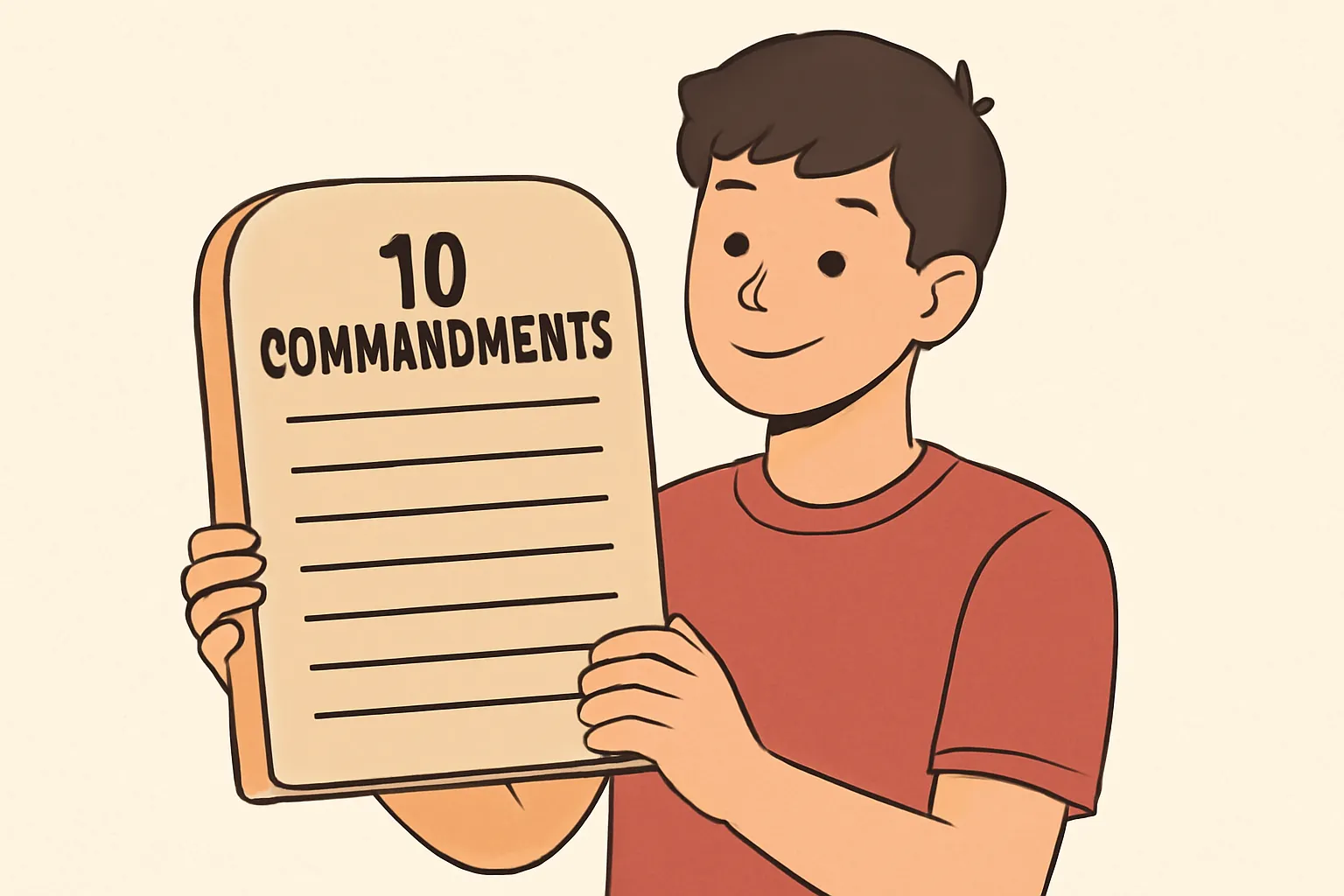
10 Commandments for Teens: Essential Rules for Growth & Responsibility
Adolescence is a period of rapid change, discovery, and growing independence.
These commandments are not about rigid rules, but about guiding principles that help teens navigate school, family life, friendships, digital spaces, and their own evolving identities.
Each commandment is expressed in a few alternatives to provide semantic breadth, while keeping the core idea intact. Use them as a toolkit: adapt them to your values, culture, and circumstances, and revisit them as you grow.
Commandment I: Be Honest, Own Your Actions
Why this matters
Honesty is the bedrock of trust and healthy relationships. When you tell the truth and acknowledge your mistakes, you preserve your integrity and create room for accountability. Teens who practice honesty develop stronger friendships, earn more responsibility from adults, and build a sense of self-respect.
In daily life, honesty isn’t only about avoiding lies; it’s about transparent communication. This includes admitting when you don’t know something, when you need help, or when your choices have consequences.
Practical steps
Keep your promises and follow through on commitments, even when it’s inconvenient.
Admit mistakes quickly and describe what you’ll do to fix them.
Speak with clarity about boundaries, expectations, and limits in friendships and dating.
Ask for feedback and use it to improve your behavior, not to defend yourself.
Variations in wording
Truthfulness first: let truth guide your choices and actions.
Accountability over excuses: own what you did and learn from it.
Reliability and integrity: be someone others can rely on, even when it’s hard.
Real-life example: If you miss a deadline for a project, explain what happened, apologize, and present a plan to complete it. This demonstrates responsibility and respect for others’ time, which strengthens your personal credibility.
Commandment II: Treat Others with Dignity, Online and Off
Why this matters
Every interaction is an opportunity to demonstrate respect and empathy. Strong character shows up when you choose kind, constructive communication rather than cruel humor or public shaming. The way you treat others—online or in person—shapes your reputation and your ability to collaborate, lead, and grow.
Courtesy and compassion guide your interactions with everyone.
Respectful communication builds bridges, not walls.
Online behavior mirrors character: think before you post, like, or share.
Real-life example: If you disagree with a classmate, explain your perspective without insults, invite their view, and look for common ground. This practice strengthens teamwork and develops emotional intelligence.
Commandment III: Value Learning and Curiosity
Why this matters
A curious mind is resilient in the face of challenges. When you prioritize learning, you build problem-solving skills, expand your horizons, and prepare for higher education or a chosen career. Curiosity also fosters perseverance as you chase understanding beyond grades.
Practical steps
Set a weekly learning goal outside your comfort zone (e.g., a documentary, a new topic, a DIY project).
Ask thoughtful questions in class and seek clarification when needed.
Keep a simple learning journal to track insights and mistakes.
Expose yourself to diverse perspectives and cultures to expand your thinking.
Variations in wording
Embrace curiosity as a habit, not a momentary interest.
Growth mindset: see challenges as opportunities to learn.
Knowledge is power, but wisdom comes from applying it thoughtfully.
Real-life example: If you’re stuck on a math problem, instead of giving up, try a different approach, explain your steps aloud, and seek help from a teacher or peer. This demonstrates tenacity and a commitment to mastery.
Commandment IV: Take Care of Your Body—Sleep, Nutrition, Movement
Why this matters
Physical health is closely linked to mood, focus, and energy. Adequate sleep, balanced nutrition, and regular activity support brain development, memory, and long-term wellness. When teens neglect health, performance in academics and social life suffers.
Practical steps
Aim for a consistent sleep schedule that matches your daytime needs and school demands.
Choose meals with a balance of protein, fiber, and micronutrients to fuel growth.
Incorporate daily activity—whether sports, dancing, walking, or a quick workout.
Limit highly processed snacks and excess screen time before bed to improve sleep quality.
Variations in wording
Healthy habits sustain both body and mind.
Rest and fuel empower daily performance.
Exercise is self-care with lasting benefits.
Real-life example: After a busy week of exams, choosing a balanced dinner and a 20-minute evening walk can improve concentration for a late-night study session and reduce irritability.
Commandment V: Build Healthy Relationships and Boundaries
Why this matters
Relationships are a key part of teen development. Learning to connect with family, friends, and potential romantic partners in respectful, honest ways builds trust and a sense of belonging. Clear boundaries protect your emotions and safety.
Practical steps
Communicate your limits and consent clearly in every relationship.
Choose friends who support your values and encourage your growth.
Balance time with family, school, and self-care to avoid burnout.
Respect others’ boundaries just as you expect them to respect yours.
Respectful boundaries are a sign of maturity, not distance.
Relationships built on consent and care support lasting trust.
Real-life example: If a friend pushes you to do something you’re uncomfortable with, assert your limit calmly and offer an alternative activity. This practice protects your emotional safety and models healthy behavior for others.
Commandment VI: Manage Time and Money Wisely
Why this matters
Time and money are scarce resources. Learning to manage them well creates agency, reduces stress, and lays the groundwork for future independence. Strong habits here pay off in college, careers, and personal life.
Practical steps
Set a realistic weekly schedule and protect time for study, rest, and activities.
Create a simple budget that tracks income, expenses, and savings.
Use needs vs. wants thinking before purchases, and delay gratification when possible.
Develop a plan to earn money through part-time work, tutoring, or gigs, while balancing school.
Variations in wording
Time as a currency you can invest or waste.
Money management is self-respect in disguise.
Thoughtful budgeting turns wishes into achievable goals.
Real-life example: If you want a new gadget, save toward it over several weeks. Track your savings and celebrate progress, reinforcing the habit of responsible spending.
Commandment VII: Develop Resilience and Self-Discipline
Why this matters
Life will test you with setbacks, deadlines, and unexpected changes. The ability to persevere, regulate impulses, and recover from disappointment is a key determinant of long-term success. Resilience and self-control help you stay on track with goals even when motivation wavers.
Practical steps
Break big tasks into smaller steps and celebrate small wins.
Create routines that support discipline, such as a consistent study time or a pre-sleep wind-down.
When you fail, practice reflection without self-flagellation; identify lessons and move forward.
Use stress-management techniques (breathing, short breaks) to maintain focus.
Variations in wording
Perseverance turns obstacles into opportunities.
Self-regulation creates freedom to choose your path.
Discipline is not punishment; it is self-respect in action.
Real-life example: When a test doesn’t go well, you review what went wrong, adjust your study plan, and try again with renewed focus. This demonstrates growth mindset and determination.
Commandment VIII: Be a Responsible Digital Citizen
Why this matters
The online world amplifies your voice and can amplify harm. Practicing safe, thoughtful digital citizenship protects your privacy, reduces risk, and models respectful behavior for peers. Critical thinking helps you spot misinformation and avoid online traps.
Practical steps
Protect your privacy by limiting personal information online.
Verify sources before sharing; question credibility and detect misinformation.
Avoid online harassment; report bullying and seek support when needed.
Consider the consequences of screenshots, edits, and permanence; think long-term.
Variations in wording
Digital hygiene keeps you safe and respected.
Critical thinking online protects truth and relationships.
Maintain privacy boundaries—even among friends.
Real-life example: Before posting a controversial opinion, pause to consider how it might be interpreted and whether it could harm someone. Choosing to pause or rephrase demonstrates maturity and responsibility.
Service builds empathy, broadens perspective, and connects you to your community. Contributing time, skills, or resources fosters a sense of purpose and helps you discover strengths you didn’t know you had. It also models generosity for peers and family.
Practical steps
Volunteer for a cause you care about, even in small ways.
Share your talents—tutoring, art, coding, music—to benefit others.
Participate in school or community projects that require teamwork and service.
Practice gratitude by acknowledging those who help you and paying it forward.
Variations in wording
Giving back builds a better community and a richer life.
Empathy in action translates kindness into tangible support.
Service as a habit creates lasting impact.
Real-life example: Organize a neighborhood clean-up or mentor younger students in a subject you enjoy. Seeing the positive outcomes strengthens your sense of belonging and demonstrates leadership.
Commandment X: Plan for the Future, Seek Mentors, and Grow
A forward-looking mindset helps you navigate the many choices ahead—college, career, vocational paths, or entrepreneurship. Mentorship and guided exploration offer perspective, resources, and accountability. When you invest in your future, you cultivate self-direction and confidence.
Practical steps
Identify one or two mentors—teachers, relatives, coaches, or community leaders—who can offer guidance.
Set clear, achievable goals with deadlines and check-ins.
Explore internships, clubs, or part-time work to gain experience and clarity about interests.
Reflect on your values and align activities with your long-term vision.
Variations in wording
Future planning begins with small, deliberate steps today.
Mentorship accelerates growth and expands possibilities.
Define your path by combining curiosity with discipline.
Real-life example: A student who seeks a mentor in a field they’re curious about may secure shadowing opportunities, receive practical advice on coursework, and gain a clearer picture of how to align school projects with future aspirations.
Putting It All into Practice: A Roadmap for Teens
These ten commandments form a comprehensive framework for growth, responsibility, and well-being. The goal is not perfection but consistent progress. Here are practical approaches to integrate them into daily life:
Construct a personal charter listing your values, the commandments you want to emphasize, and a plan to practice them weekly.
Design a simple habits dashboard—one page that tracks honesty, kindness, learning, health, boundaries, time management, resilience, digital citizenship, service, and future planning.
Schedule regular check-ins with a trusted adult or mentor to discuss challenges and celebrate progress.
Practice reflection after decisions: what went well, what could be improved, and what you learned about yourself.
Final Thoughts: The Path of Growing Responsibly
The teenage years are an opportunity to lay a solid foundation for adulthood. By embracing these commandments—framed in flexible, real-world language—you develop the character and habits that will carry you through school, relationships, work, and personal fulfillment. Remember that growth is a journey, not a destination. When you stay curious, act with integrity, and support others, you create a life marked by purpose, trust, and resilience.

 Por Laura Jara