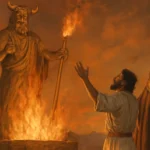
Jezebel: The Infamous Queen of Israel and Her Biblical Legacy
📅 9th century BC, during the reign of Ahab and Jehu in Israel · 📜 The name Jezebel is often interpreted as meaning 'not exalted' or 'exalting Baal' in Hebrew, with some scholars linking it to the Hebrew root 'yizbel' meaning 'to unhusband' or 'to deceive.' It carries connotations of impurity and idolatry.
JezebelQueen of IsraelBiblical WomenProphetsIdolatry
And it came to pass, when Joram saw Jehu, that he said, 'Is it peace, Jehu?' And he answered, 'What peace, so long as the whoredom and the Idolatry of your mother Jezebel are so many.'— 2 Kings 9:22
Jezebel was a Phoenician princess who became the wife of King Ahab of Israel, wielding significant political and religious influence. She promoted the worship of Baal and Asherah, leading Israel into idolatry and religious conflict with the prophets of Yahweh. Her aggressive opposition to the prophet Elijah culminated in a series of confrontations, notably the contest on Mount Carmel. Jezebel's persecution of Yahweh's prophets and her relentless push for idolatry led to her infamy. Her life ended violently as prophesied by Jehu, who had her thrown from a window and subsequently trampled by horses, symbolizing divine judgment. Jezebel’s story underscores the danger of idolatry, corruption, and moral decay in leadership, serving as a warning about the consequences of deviating from divine commandments and promoting false gods.
Jezebel lived in a period when Israel was divided and politically unstable, with strong influence from Phoenician culture through her background. Women in that era typically held subordinate roles, but Jezebel’s influence as a queen granted her considerable power, especially in religious matters. Her promotion of Baal worship marked a cultural clash with the Yahwistic tradition prevalent in Israel, reflecting broader tensions between pagan practices and biblical faith. Her story reveals the dangers women faced in wielding political and religious authority within patriarchal societies, often resorting to manipulation or force. Jezebel’s actions echo broader themes of foreign influence, religious conflict, and the precarious position of women in leadership during ancient times.
👨👩👧 Family Connections
Jezebel was the wife of King Ahab of Israel and daughter of Ethbaal, king of Tyre. She had at least one son, Ahaziah, who succeeded Ahab as king, and was involved in the political and religious affairs of Israel and Tyre.
✨ Character Traits
ManipulativeIdolatrousBoldRuthless
⛪ Theological Significance
Jezebel exemplifies the destructive power of idolatry and moral corruption, serving as a cautionary figure in salvation history. Her rejection of God's commandments and promotion of false gods highlight the consequences of spiritual unfaithfulness. Her story underscores divine justice and the importance of faithfulness to Yahweh, illustrating how individual and national sins can provoke divine discipline. Jezebel’s demise also symbolizes divine sovereignty over earthly powers and the eradication of false worship. Her biblical legacy warns believers against compromising faith for worldly gain and emphasizes that divine judgment is inevitable when righteousness is abandoned.
Prioritize faithfulness to God over worldly power or influence; compromise can lead to spiritual downfall.
📖 Lesson 2
Be wary of elevating personal ambition at the expense of moral integrity; leadership carried out without divine guidance can result in destruction.
📖 Lesson 3
Recognize the importance of standing against false teachings and idolatry, even when facing opposition or cultural pressures.
🔗 Connections to Other Biblical Women
Jezebel contrasts sharply with women like Abigail, who exemplify wisdom and faithfulness, and with Ruth, whose loyalty and righteousness highlight positive virtues. Unlike these women, Jezebel's story warns of the dangers of manipulation, idolatry, and moral decay. Both her and Ahab’s wives demonstrate how women's influence can sway national and spiritual directions—either for good or for evil—highlighting the importance of virtue in leadership roles.
📜 Scripture References
Reference
1 Kings 16:31–21:29
2 Kings 9:30–37
❓ Frequently Asked Questions
Was Jezebel truly wicked?
Yes, Jezebel is depicted in Scripture as a wicked figure due to her promotion of idolatry, persecution of prophets, and moral corruption, especially in 1 Kings and 2 Kings.
Did Jezebel have any positive qualities?
The Bible focuses mainly on her negative traits; some may see her as a strong, assertive woman, but her actions are primarily portrayed as sinful and destructive.
What is Jezebel’s legacy in the Bible?
Jezebel symbolizes the dangers of divine unfaithfulness, false worship, and moral corruption, serving as a warning about the consequences of deviating from God’s commandments.
✨ Did You Know?
The name Jezebel has become a cultural symbol of wickedness and manipulative femininity. Archaeological findings suggest her influence extended beyond Scripture, indicating she was a real historical figure whose deeds left a lasting impression in ancient Near Eastern history and culture.

 Por Mario Acevedo