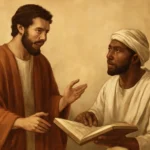
Overview: How Did Jesus Choose His Disciples? A Biblical Guide
Among the most studied questions in Christian theology is how did Jesus choose his disciples and what model of calling emerges from the Gospels. The answer is not a single formula but a tapestry of moments, conversations, and ongoing mentorship that reveals both the divine initiative and the human response. In the pages that narrate the calling of the Twelve, we encounter a combination of invitation, vocation, faith, and preparation. This article surveys the biblical record to illuminate the process by which Jesus selected his followers, the reasons behind the choices, and the implications for followers today. By examining the different scenes—from fishermen along the shore to tax collectors at their desks and beyond—we gain a richer sense of what it means to be invited into a mission, and what kind of transformation it entails.
The Call Narratives: Snapshots of Selection
In the canonical Gospels, the process by which Jesus called his disciples unfolds in a variety of settings. Each narrative offers a window into the criteria, the immediacy, and the dynamics of response. While the exact wording and sequence differ among Matthew, Mark, Luke, and John, the core pattern is recognizable: Jesus extends an invitation, and individuals respond—sometimes with hesitation, sometimes with immediate surrender.
Call at the Sea: Simon Peter and Andrew
One of the most iconic scenes presents Jesus encountering two fishermen who would become leaders of the early church. In the call of Simon Peter and Andrew, Jesus is walking by the Sea of Galilee and uttering a simple invitation: “Follow me, and I will make you fishers of men.” This moment is more than a casual chat; it is a catalytic summons that redefines purpose and vocation. The response is rapid: they leave their nets and follow Jesus. The decisive factors here include aquiring a new aim (from fishing to mission) and an immediate commitment to accompany Christ on a journey that would redefine their identity and destiny. The scene also underscores the dynamic of authority and trust, as Jesus speaks with authority and the brothers respond with a bold step forward.
Call of James and John: The Zebedee Brothers
In another memorable instance, the sons of Zebedee, James and John, are mending nets in the boat with their father when Jesus calls them. The retelling emphasizes the speed of their response; they immediately leave the boat and their father to follow Jesus. This episode highlights a theme that recurs in the gospel accounts: the cost of discipleship and the willingness to abandon security for the sake of the kingdom. It also raises questions about priority—how the reign of God takes precedence over family business and social standing—and about the trust that people place in a teacher whose authority invites such a decisive shift in life’s trajectory.
Call of Matthew: The Tax Collector
John, Mark, and Luke all preserve a striking moment: Jesus calls a man whose profession stood at odds with the religious and political expectations of the day. Matthew the tax collector is summoned to follow, and he does not hesitate to invite Jesus into his house, where others question the company he keeps. Here the narrative foregrounds that the invitation is not merely to a public role but to an intimate association. It emphasizes that discipleship polices no one by background or past occupation; rather, it offers a chance for a new identity in partnership with Jesus.
Calls in Other Gospels: Nathanael, Philip, and Others
Beyond the core quartet of Peter, Andrew, James, and John, other early encounters illustrate the breadth of Jesus’ recruiting. In John’s Gospel, Philip and Nathanael encounter Jesus in a sequence that blends personal knowledge, invitation, and discovery. In Luke and Mark, the calling of additional disciples expands the circle and helps us observe how early followers were drawn from diverse backgrounds—fishermen, tax collectors, zealots, and ordinary laborers. The thin thread that runs through these scenes is that the calling is personal: Jesus sees people, engages them in conversation, and communicates a vision of what their life could become in partnership with him.
What Was Jesus Looking For? Patterns in the Calling
When we ask what did Jesus seek in future apostles and followers, a few recurring patterns emerge from the Scripture that remind us how the sending and sending forth of his messengers operated. These patterns are not merely historical notes; they provide enduring principles for understanding discipleship in every era.
Willingness to respond to a call: The most evident trait is a readiness to follow when invited, even at great personal cost. The responses are bold and decisive, suggesting that genuine discipleship begins with a trust-filled yes.
Openness to transformation: The call is not just an invitation to join a movement but to undergo a reorientation of life, values, and priorities. The shift from net to mission signals a change of allegiance and purpose.
Availability and proximity: Many of Jesus’ earliest disciples were already in the social or occupational orbit where Jesus could reach them—fishermen by the lake, a tax collector at a desk. Proximity, rather than perfection, often paves the way for the encounter that changes everything.
Potential for leadership and mission: The Twelve, though diverse in temperament and background, are chosen not merely to accompany Jesus but to participate in the mission, to proclaim the kingdom, and to bear responsibility for the fledgling church.
Unity with a shared vision: The calls unfold in the context of a common mission—the proclamation of the kingdom of God, healing, teaching, and being sent to others. The disciples are bound together by a shared purpose that transcends individual interests.
Presence with Jesus as a pathway to authority: Following is not a purely transactional arrangement; it involves proximity to Jesus, learning from his teaching, observing his miracles, and participating in his ministry. This proximity is essential for the development of authority, wisdom, and discernment.
The Methods: How Jesus Engaged People to Become Followers
Understanding how Jesus engaged individuals—and not just what he offered—helps illuminate the deliberate character of his calling. The Gospels present a variety of methods that together constitute a holistic model of recruitment into a transformative apprenticeship.
Direct and Personal Invitation
Across the narratives, a hallmark is personal invitation. Jesus speaks to people individually or in small circles, addressing them as persons with histories, questions, and potential. He says, in effect, “Your life can become part of something bigger than yourselves.” The invitation is compelling because it resonates with the person’s sense of destiny and the human longing for meaning. This approach demonstrates that discipleship begins with a personal encounter rather than a generic call.
Authority Coupled with Compassion
The authority of Jesus—expressed in words, questions, and knowledge of the heart—meets compassion for those who are weary or burdened. In the call of Matthew, for instance, the invitation is not only authoritative but also relationally affirmative: Jesus meets him where he is and extends a path toward a more generous and purposeful life. The combination of telling truth with kindness is a pattern that resonates across the various call narratives.
Immediate Response and Sacrificial Commitment
A striking feature in the accounts is the speed of response—the disciples often abandon livelihoods, family, and comfort to follow Jesus. This immediacy signals that the call to discipleship is a radical reorientation of life. It is not merely about adopting new beliefs but about adopting a new way of life and a new master to whom allegiance is pledged.
Becoming a disciple is portrayed as a developmental journey. The initial call is the hinge, but the following period involves learning, testing, and growth. The Twelve are commissioned, given authority, and sent out, then journey with Jesus, witness his resurrection, and become leaders of the early church. Thus, the process of selection is inseparable from the process of formation. The path from invitation to mission is a continuum in which learning, apprenticeship, and empowerment unfold step by step.
Models of Selection: Diversity within a Shared Mission
The gospel accounts reveal that Jesus did not recruit a uniform team. He chose men and women from different walks of life, backgrounds, and temperaments, all brought together by a shared purpose. This diversity is intentional and instructive for how we think about leadership, community, and mission in a contemporary setting.
Diverse backgrounds: The early followers include fishermen, a tax collector, a zealot, and others who may have different social statuses and vocations. This diversity demonstrates that discipleship transcends social boundaries and that the kingdom of God brings together a people from varied life experiences.
Diverse temperaments: Some apostles are temperamentally bold ( Peter, James), while others are reflective and cautious (Philip, Nathanael). Yet all are united by mission and by obedience to Jesus’ leadership.
Different levels of readiness: Some are called at moments of obvious opportunity, others after extended dialogue or demonstrations of faith. The calling process respects various rhythms of discernment.
Shared authority: Though Jesus calls them, he also entrusts them with roles, commissions, and authority to heal, teach, and proclaim. The discipleship model thus includes apprenticeship toward leadership within the community.
Inclusive invitations: The calling narratives reveal that Jesus invites fishers, tax collectors, and others who were considered outsiders or marginal. This demonstrates that grace flows beyond conventional limits and that the invitation to follow is extended to all who respond in faith.
Scripture records occasions where Jesus spent time in prayer before selecting significant groups or sending the disciples on mission. The practice of prayerful discernment suggests that the choosing of leaders is, at least in part, a divine deliberation that requires human obedience. The text invites readers to consider the importance of seeking God’s direction when forming teams, appointing leaders, or discerning vocational paths within a faith community.
Implications for Today: What Modern Readers Can Learn
As readers reflect on how did Jesus choose his disciples, several practical and theological implications emerge for contemporary Christians, churches, and communities seeking to cultivate ministry and leadership that reflect the spirit of these ancient calls.
Call precedes competence: The disciples’ journey shows that belonging to Jesus is not contingent on resume-like qualifications. The invitation itself creates the space for growth, learning, and empowerment.
Grace addresses diversity: The inclusion of people from different walks of life demonstrates that a healthy faith community welcomes varied gifts, talents, and experiences. Diversity becomes a strength when united by a shared mission.
Formation matters: The process from call to commission underscores the importance of ongoing formation—teaching, commissioning, practice, and reflection—as essential to effective ministry.
Leadership models are collaborative: Jesus models both authority and relational mentorship. Modern leadership can learn from this balance: give direction while staying connected to the people you guide.
Response shapes destiny: The immediate and decisive responses in the narratives remind readers that faith involves action. Following Christ invites bold steps that redefine a person’s life trajectory.
Prayer as a framework for discernment: Luke and others highlight times of prayer before major decisions. Prayer remains a vital discipline for individuals and communities discerning who to appoint for leadership or mission.
How to Apply the Biblical Model to Personal Faith and Community Life
For individuals who want to live out the call to follow Christ or for communities seeking to raise up leaders, the gospel model offers practical steps that echo the narrative patterns discussed above.
Discern your own call: Reflect on where your gifts intersect with the needs of your community. A personal sense of vocation often emerges from prayer, Scripture, and conversation with trusted mentors.
Be willing to leave behind comfort: Just as the first disciples left nets and boats, consider what attachments you might need to loosen to pursue a higher purpose or a broader mission.
Invite others into the journey: Create space for others to respond to invitations to grow, serve, and lead. A healthy community invites people to try new roles and develop leadership skills gradually.
Encourage diverse talents: Seek to form teams that bring different perspectives and strengths. A mixed group often yields richer insight and more resilient ministry outcomes.
Pair invitation with formation: Pair the call withtraining, mentorship, and accountability. The seed of call must be nurtured with knowledge, practice, and community support.
Center on the mission: Keep the central aim in sight—the proclamation of the kingdom, compassion for the needy, and a life modeled after Jesus. This unity of purpose sustains the community through challenges.
Scholars and readers often search for precise terminology to describe the phenomenon of Jesus choosing followers. The literature uses a range of phrases to capture this phenomenon, and employing variations on the core idea helps to articulate a broad semantic field. Some recurring expressions include:
Calling and following (as in “calling someone to follow”)
Invitation to discipleship (the invitation to become a learner and practitioner of Jesus’ way)
Commissioning of the Twelve (the formal sending of chosen leaders)
Formation for mission (the ongoing process of becoming equipped to serve)
Selection of apostles (the explicit choosing of leaders tasked with particular roles)
Encounter before assent (the personal encounter that precedes agreement to follow)
The biblical account of how Jesus chose his disciples carries deep theological significance beyond historical curiosity. It speaks to the nature of divine initiative, human response, and the formation of a community entrusted with mission. Several themes emerge that shape Christian doctrine and practice:
Divine sovereignty and human response: The narratives illustrate that God calls people, yet the response remains a genuine human act of faith and commitment.
Grace in the midst of ordinary life: The calling takes place among everyday settings—work, family, and social networks—reminding believers that sanctification happens where they are.
Ordinary people, extraordinary purposes: The chosen disciples were ordinary by worldly standards, which affirms that God’s purposes can work through unlikely vessels.
Community formation for mission: The Twelve form a community that bears witness, teaches, and sustains the church. Their example calls contemporary churches to cultivate healthy, mission-driven communities.
Leadership as service: The model of leadership presented in the Gospels emphasizes service, humility, and the bearing of responsibility for others’ growth and well-being.
Each Gospel writer adds unique emphases to the story of calling. A comparative reading can deepen understanding of how Jesus chose his disciples and why the method mattered for the early church and for readers today. Some differentiating notes include:
Matthew’s portrait: Emphasizes fulfillment of prophecy and the improvisation of a new community around Jesus’ authority. The language often highlights the ethical call to righteousness and obedience.
Mark’s brisk narrative: Focuses on immediacy and action. The call stories in Mark move quickly to the response and the beginning of mission, underscoring the urgency of the gospel.
Luke’s social context: Highlights inclusive invitations and the reversal of expectations—the marginalized are part of the movement. Luke often frames calling in the language of joy and divine visitation.
John’s intimate encounters: Presents more personal dialogues that reveal the character and discernment of those who encounter Jesus. John’s gospel emphasizes personal recognition and faith as a response to revelation.
When we ask how did Jesus choose his disciples, the answer is neither a single technique nor a one-size-fits-all plan. It is a multi-faceted pattern that includes intimate invitation, observable obedience, and ongoing formation. The stories teach that:
The call to follow Christ begins with an invitation that meets a person’s life at its point of need and possibility.
The response to that invitation may involve sacrifice, risk, and a reorientation of life toward God’s purposes.
Discipleship is a communal project, not a solo endeavor. Jesus forms a people who will bear witness, teach, and carry forward the mission.
The process of selection is accompanied by prayer, discernment, and a reliance on grace. The ultimate aim is a life conformed to Christ, equipped to serve in his name.
Today’s readers are invited to observe the same dynamics in their personal journey and in how churches recognize and empower leaders for mission.
In sum, the biblical guide to how Jesus chose his disciples reveals a model that is both profoundly practical and spiritually rich. It shows a teacher who meets people where they are, invites them into a life of transformation, and entrusts them with responsibilities that extend far beyond their initial encounter. It is a pattern that challenges individuals and communities to answer with courage, openness, and faith, trusting that the Spirit who moved in the first century continues to work in the world today.

 Por Laura Jara