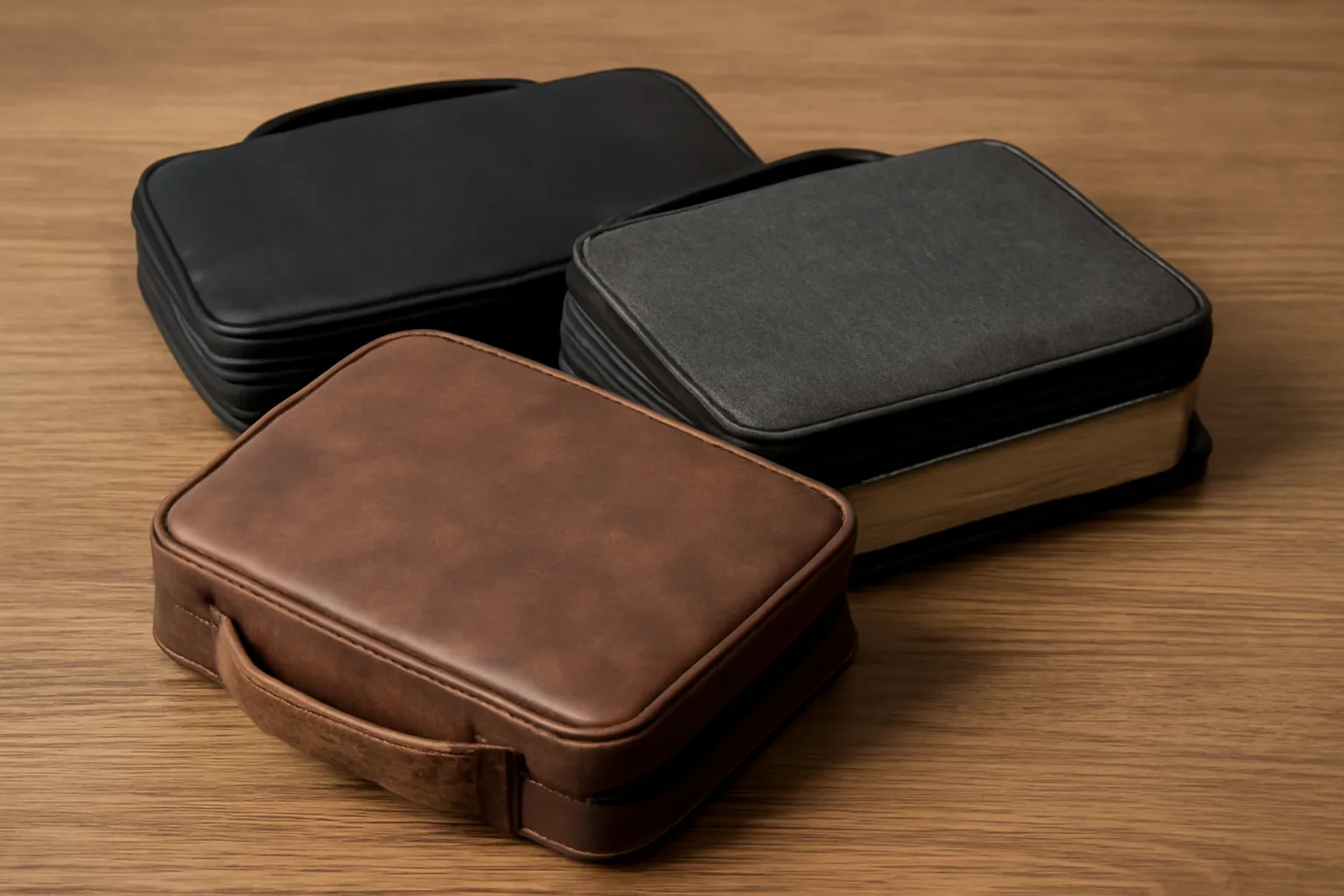
When believers carry scriptures, they often want a durable, protective solution that guards sacred text while remaining practical for daily life. Bible cases and covers come in a wide range of materials, designs, and features, each aimed at different environments—from church pews and classrooms to travel bags and student desks. In this article, we explore the full spectrum of bible cases and covers, explain what makes them sturdy and functional, and offer guidance on choosing the right model for your needs. Whether you call it a bible cover, a bible case, or a study bible sleeve, this guide will help you understand the options and make an informed purchase.
Carrying a Bible or study edition without protection can lead to scuffs, bent corners, or moisture damage. A high-quality case or cover does more than merely cap the book; it acts as a shield against daily wear and tear, water exposure, and accidental drops. The best bible cases balance protection with portability, offering features such as padding, secure closures, and interior pockets for notes, pens, and bookmarks. The right cover can extend the life of your Bible and preserve its readability, while also enhancing grip and readability in various settings—whether in a classroom, a church, or on the road.
As you shop, you will encounter varieties of bible cases and covers designed for different weights, sizes, and user preferences. Some people prefer a soft leather bible cover that ages beautifully; others opt for a water-resistant nylon sleeve for travel. Some want a clamshell style that protects both the cover and the pages when the book is closed; others favor a slim sleeve that fits easily into a backpack. This article will walk you through the common types, features, and practical considerations to help you choose a model that is both durable and easy to use.
Durable Materials and Construction for Bible Covers
Material choice is foundational to durability. Different bible cover materials offer distinct advantages for various situations. Here are the most common materials, along with what makes them sturdy and reliable.
Leather and Genuine Leather Bible Covers
Leather bible covers are favored for their classic appearance, strength, and ability to withstand daily use. Genuine leather tends to patina over time, developing a unique character while remaining resilient. Features to look for include:
Full-grain or top-grain leather for maximum durability that resists cracking.
Reinforced seams and double-stitched edges to prevent wear at stress points.
Solid hardware (zippers or clasps) that operate smoothly and resist rust.
Leather covers are particularly well-suited for everyday carry, formal settings, and long-term use. They can be more expensive, but their longevity often justifies the price for those who want a timeless, premium option.
Faux Leather and Vegan Leather Bible Covers
For those seeking a luxurious look without animal products, faux leather or vegan leather options provide a comparable aesthetic with excellent durability. Key benefits include:
Cost-effectiveness relative to genuine leather
Consistent texture and color across the entire cover
To maximize longevity, choose models with quality stitching and well-fitted edges, as synthetic materials can crack if neglected or subjected to rough handling over time.
Vinyl and Synthetic Covers
Vinyl bible covers are lightweight, affordable, and highly water-resistant. They are popular among students and travelers who want a simple, wipe-clean solution. Consider features such as:
Water resistance for accidental spills
Flexible construction that fits a range of sizes
Minimal bulk for easier transport
Vinyl is a practical choice when you prioritize protection and easy maintenance, though it may not provide the same tactile appeal as leather.
Canvas and Fabric Bible Covers
Canvas and other fabrics offer casual, sturdy protection with an outdoorsy or academic look. They can be reinforced with padding and water-resistant coatings. Features to look for include:
Padded interiors to cushion pages
Adjustable straps or carry handles for easy transport
Durable double-stitched seams to resist fraying
Fabric options are versatile and can include decorative patterns or colors, making them appealing for gift-giving and church groups.
Composite and Hybrid Covers
Some bible covers blend materials (for example, leather accents with a canvas body) to balance aesthetics, weight, and durability. These hybrids often optimize:
Weight and bulk
Grip and handling
Visual appeal with durable construction
Types of Bible Covers and Cases: Understanding the Options
The market offers a broad spectrum of designs to fit different environments, from personal carry to formal presentation. Below is a categorized view of the most common options, with notes on typical use cases and the trade-offs involved.
Soft Padded Bible Covers
Soft padded bible covers provide protection against impact while preserving a slim profile. They are ideal for students and everyday readers who want light, unobtrusive protection. Advantages include:
Low weight and bulk
Easy access to pages with a flexible opening
Good grip to prevent slipping from hands or desks
Look for covers with at least a few millimeters of foam padding and reinforced spine corners to prevent wear at stress points.
Clamshell and Zip-Top Bible Covers
Clamshell and zip-top designs offer robust protection when the book is closed. They shield the cover and pages from dust, moisture, and impact. Key characteristics:
Full enclosure that closes around the Bible
Secure zipper or snap closure to keep contents intact
Often includes interior pockets for notes and markers
Belt-Loop, Strap, and Handle Styles
For mobility, some bible covers incorporate carrying options that align with personal routines.
Shoulder straps and crossbody designs for travel
Handle grips on the spine for quick pickup
Back-panel pockets for tickets, receipts, or business cards
Study Bible Covers and Large-Format Options
Large or study Bibles require specialized protection. These study bible covers or large-format bible cases typically offer:
Extra interior padding for larger page counts
Rigid or semi-rigid shells to resist bending
Extra room for highlighters, pens, and study aids
Desktop and Library-Style Bible Covers
For home libraries or church study rooms, there are library-style bible covers that emphasize elegance and display. These may feature:
Elegant stitching and decorative detailing
Sturdy lids or shells that protect the Bible on a shelf
Flat, accessible interiors for easy note-taking
Protective Features: What to Look For in a Bible Cover
Protection is more than just a cover; it is a combination of materials, design, and construction. Here are protective features that greatly influence the longevity and usefulness of a bible cover.
Padding and cushioning around the cover to absorb impact
Corner protection to resist bends and tears at vulnerable points
Water resistance or repellency to guard against spills and humidity
Durable closures such as high-quality zippers, magnetic clasps, or robust snaps
Interior pockets for organizing bookmarks, notes, and pens
Size compatibility to ensure a snug, secure fit
Grip-friendly textures to prevent slipping from hands
Dust protection by providing a tight seal or lid when stored
In addition to these features, consider a cover with care instructions that match your lifestyle. Some materials are more forgiving of moisture and fingerprints, while others require regular conditioning or spot-cleaning to maintain appearance and longevity.
Sizing and Compatibility: Matching Bible Covers to Bible Formats
Bibles come in many formats—compact, medium, and large study editions. A good bible cover should fit the intended edition closely enough to prevent movement but not so tightly that it strains seams when inserting or removing the book. Here are common size families and what to expect.
Compact or travel Bibles: These are slim and light. Look for slim sleeves or small outcomes with minimal padding for easy carry in pockets or purses.
Standard Bibles (e.g., KJV, NIV): These typically fit in mid-sized covers with optional padding and interior pockets.
Study Bibles and large formats: Require more space, extra padding, stronger stitching, and sometimes a larger exterior profile.
Large print Bibles and devotional editions: Demand broader coverage and reinforced seams due to the added weight.
When selecting, check the product measurements and compare them with your Bible’s dimensions: height, width, and thickness. A cover should accommodate the book with a small margin for air and movement, while still being easy to remove and reinsert.
How to Measure Your Bible for a Case
To ensure a proper fit, measure:
Height: from top to bottom of the closed Bible
Width: the widest point across the spine or covers when closed
Thickness: the depth when the Bible is closed
Use these numbers to compare with product dimensions. If you are between sizes, favor the smaller size for a snug fit that keeps contents secure, or choose a flexible cover designed to accommodate a range.
Practical Advice: Choosing a Bible Cover for Different Lifestyles
Different environments require different protective solutions. Here are practical recommendations based on lifestyle, routine, and setting.
For Students and Teachers
In academic settings, you want a cover that is lightweight, robust, and easy to clean. Consider:
Canvas or synthetic leather for durability and easy maintenance
Interior pockets for highlighters and sticky notes
Secure zippers and reinforced spine corners to withstand daily handling
For Church and Community Groups
In congregational settings, looks matter as much as practicality. Consider covers that balance aesthetics with functionality:
Classic leather or faux leather for a formal appearance
Elegant stitching and subtle branding
Multiple color options to match church colors or decor
For Travelers and Commuters
Protection from moisture, dust, and bumps is essential. Choose:
Water-resistant or water-repellent materials
Compact sleeve designs that fit in backpacks or briefcases
Strong closures and extra padding on the spine to absorb impact during transit
Care and Longevity: Keeping Bible Covers Beautiful and Durable
Proper care extends the life of a bible cover beyond initial expectations. Here are maintenance tips tailored to different materials:
Leather Covers
Keep away from direct sunlight to prevent fading
Wipe with a dry or slightly damp cloth and apply a conditioner appropriate for the leather type
Avoid exposing leather to excessive moisture and heat
Faux Leather and Vinyl Covers
Wipe clean with mild soap and water; avoid harsh solvents
Dry promptly to prevent water spots
Inspect stitching for wear and repair as needed
Fabric and Canvas Covers
Spot-clean with mild detergent; air-dry away from direct heat
Apply fabric protectant if recommended by the manufacturer
Check straps and buckles for fraying and replace if necessary
Bible covers come in a range of price points. Your choice may reflect your budget, but also your priorities for durability, aesthetics, and convenience. Here are practical pointers to help you budget wisely.
Entry-level options usually include vinyl or basic fabric sleeves with simple closures. These are affordable and functional for casual use or gifting.
Mid-range selections often feature better materials (synthetic leather, premium canvas) and reinforced seams, offering improved durability without breaking the bank.
Premium models may use genuine leather, high-grade hardware, and additional features (inner organizers, built-in pen loops, and premium finishes). These are ideal for long-term use and professional settings.
When shopping, consider purchasing from retailers that offer:
For gift-giving or bulk purchases, look for options that offer batch pricing or customizable branding, which can add a thoughtful touch for church groups, schools, or book clubs.
Variations and Semantic breadth: Understanding the Nomenclature
In conversations about Bible protection, you may encounter several terms that refer to similar products but emphasize different uses or styles. Here are common variations and what they typically imply:
Bible sleeve or tablet sleeve: A slim, protective envelope designed for portability and minimal bulk.
Study bible case or reference bible case: A larger or more feature-rich option tailored for study versions with notes and highlighters.
Leather journal cover adapted to fit a Bible; blends journal-style aesthetics with scripture protection.
Library-style cover: Often more formal, intended for display or formal presentation settings.
Travel binder: Combines a protective shell with sections to hold multiple study aids or cards.
By understanding these terms, you can navigate catalogs and online stores more effectively and select a product that matches your intended use and environment. Regardless of the vocabulary, the core goal remains: protecting the Bible without compromising readability or accessibility.
Conclusion: Choosing the Right Bible Case or Cover for You
In the broad world of bible cases and covers, the best choice is the one that harmonizes durability, protection, and convenience with your personal routine. Some readers value the classic feel of a genuine leather cover that ages gracefully; others prefer the pragmatic ease of a water-resistant canvas sleeve that rides easily in a backpack. The key elements to keep in mind are:
Assess your typical environment and how you carry your Bible—pew, desk, backpack, or travel bag.
Choose a material that aligns with your maintenance capacity and aesthetic preference.
Prioritize protective features that prevent damage to pages, spine, and bindings.
Verify size compatibility with your Bible’s exact dimensions to avoid a loose or forced fit.
Consider additional pockets or accessories that support your study routine, such as space for highlighters, bookmarks, and notes.
Ultimately, a well-chosen bible case or cover is a small but meaningful investment in the lifelong care of your scriptures. It protects not only the physical book but also the time you invest in daily study, reflection, and worship. By selecting a model that matches your lifestyle—whether a durable leather case, a lightweight nylon sleeve, a clamshell protective cover, or a study bible carrier—you ensure that your Bible remains a reliable companion for years to come.
Durability, practicality, and care are the pillars of a great Bible cover. With the right choice, you gain a protective companion that travels well, looks good, and stands up to the demands of daily use.

 Por Laura Jara