Since the early 19th century, families have kept a small, meaningful ritual in December: counting down to Christmas with a calendar that reveals a little surprise each day. The concept known today as the Advent calendar has a rich history, evolving from simple devotional practices in German-speaking regions to a worldwide tradition that includes art, chocolate, books, and DIY projects. In this article, we explore the origins of the first Advent calendar, examine how it has changed over time, and offer practical guidance for creating your own version of this beloved holiday tradition. Whether you call it the first advent calendar, the original Advent calendar, or simply the countdown calendar, the idea remains the same: a small moment of anticipation each day in December.
The story of the first advent calendar begins in the Germanic world where Advent rituals flourished long before the calendar itself appeared in popular culture. In the early Advent calendar tradition, families marked the days of December with quiet acts of devotion, ladders of faith, and visual reminders. These early practices often involved simple, non-commercial methods such as chalk marks on a door or wall, or a devotional image you could follow from December 1 onward. The purpose was not consumerism but reflection, prayer, and preparation for the celebration of Christmas. This form of the old Advent calendar laid the groundwork for what would become a cultural phenomenon in the next century.
In many accounts, the earliest Advent calendar as a recognizable tradition is associated with 19th-century Germany and neighboring regions where Protestant and Catholic households alike observed Advent with special calendars. A popular narrative emphasizes a devotional practice in which parents would draw a daily image or a cross on a chalk line while reciting a short prayer or reading. These activities were not standardized into a single format, but they shared a common aim: to create a tangible, daily reminder of the Advent season. For this reason, some historians refer to this era as the birth of the Advent calendar concept in its most intimate, family-centered form.
The first modern Advent calendar—the turning point that moved the tradition from a homemade practice to a commercial product—appears in the early 20th century. The name most often linked to this shift is Gerhard Lang, a German lithographer from the city of Munich (and sometimes associated with Hamburg). In 1903, Lang produced what many regard as the inaugural Advent calendar with 24 small doors that opened to reveal pictures or scenes. Lang’s idea was inspired by a personal family memory: his mother had once created a hand-made calendar that used individual pictures behind a door for each day. Lang adapted that sentiment into a prefab, mass-adaptable design by printing a calendar with doors that could be opened on each day of December. This is why this milestone is often cited as the first widely recognized Advent calendar and a prototype for the modern version we recognize today.
Lang’s 1903 concept did more than present a decorative object; it introduced a structured countdown with a daily reveal. This combination of structure and surprise became the core appeal of the Advent calendar. The original design emphasized not only the visual appeal but also the sense of anticipation it created. As printing technology and distribution improved, the idea spread beyond Lang’s workshop and into the hands of other printers and retailers. By the 1910s and 1920s, smaller publishers in Germany, Austria, and neighboring countries began producing their own versions, often featuring religious imagery, scripture verses, or seasonal scenes behind each door.
In the interwar period and after World War II, the Advent calendar entered a phase of rapid expansion. In addition to religious calendars, secular versions began to appear—some featuring charming illustrations, others showcasing children’s favorite characters. The broadening market helped to cement the first advent calendar as a popular holiday item beyond church use. It is worth noting that there is also a widely cited development in the mid-20th century involving the introduction of chocolate behind the doors. The emergence of the first chocolate Advent calendar is commonly credited to European confectioners in the 1930s, with Rowntree’s in the United Kingdom often highlighted as a pioneer. This adaptation married the countdown concept with a tasty treat, accelerating the calendar’s appeal among families and children alike.
Throughout the century, the origins of the first Advent calendar have been the subject of both myth and history. Some sources emphasize the 1839 chalk-board practice as a spiritual ancestor, while others point to the 1903 Lang calendar as the true birth of the modern, mass-produced format. In any case, the continuity is clear: a simple countdown evolved into a cultural staple that blends devotion, play, and daily anticipation. The original Advent calendar set a template for later developers to explore themes, materials, and formats that would keep the tradition fresh for new generations.
Ideas and variations: what the Advent calendar can be
Around the world, communities and families have reinterpreted the Advent calendar to fit different interests, ages, and values. The core idea remains the same—one small surprise for each day of December leading up to Christmas or Christmas Eve—but the form, contents, and spirit vary widely. Here are several well-established directions in which the first advent calendar idea has evolved, along with contemporary twists you can borrow for your own creation.
Religious and reflective calendars
Biblical verse calendars: Each day presents a short Bible passage or reflection tied to Advent themes such as hope, peace, joy, and love.
Saints and stories calendars: A daily card telling a saint’s story or a key moment from the Christmas narrative.
Prayer and contemplation calendars: Quick guided prayers or prompts for quiet time, meditation, or gratitude journaling.
Chocolates, treats, and edible calendars
Traditional chocolate calendars: The doors conceal small chocolate pieces, often shaped to reflect the season or the calendar’s artwork.
Healthy or themed edible calendars: Nuts, dried fruit, or allergen-friendly treats behind each vent, designed for dietary needs.
Mini-recipe calendars: Each day reveals a tiny recipe card and a seasoning or spice sample to experiment with.
Non-food calendars and experiences
Activity calendars: A daily activity or family challenge—like a board game, craft, or outdoor walk.
Book calendars: Each day brings a short story excerpt, a poem, or a page from a serialized tale for the month.
Craft calendars: A small material or instruction for a daily DIY project (ornaments, cards, or decor).
Art, photography, and memory calendars
Photo calendars: Daily or weekly photos that capture memories from the past year or favorite moments with loved ones.
Art calendars: Original sketches, prints, or seasonal illustrations behind each door; perfect for artists and collectors.
Memory calendars: A daily prompt that invites family members to share a memory or story.
Eco-friendly and sustainable calendars
Reusable fabric calendars: A fabric wall hanging with pockets or flaps that can be refilled for many years.
Wooden calendar boxes: Drawer-style or pegboard designs where you swap out contents and reuse frames.
Upcycled materials calendars: Calendars made from recycled paper, fabric scraps, or repurposed packaging.
No matter which path you choose, the first advent calendar you design can reflect your values, interests, and household size. The essential benefit is not the material value but the ritual: daily anticipation, a moment of togetherness, and a small joy to punctuate the December days. By offering a mix of imagination and practicality, you can craft a calendar that becomes a cherished part of your seasonal traditions—a modern take on an enduring custom.
How to create your own Advent calendar: a practical guide
Whether you want a traditional calendar that emphasizes the religious roots of the season or a playful, contemporary version, building your own Advent calendar is a wonderful project. Here is a practical, step-by-step guide to help you design and realize a calendar that fits your space, budget, and family culture. We’ll cover planning, materials, construction, filling, and display, along with tips to tailor the first advent calendar to your household.
Define the purpose and theme. Decide what you want the calendar to express. Is it a devotional calendar grounded in faith, a family activity calendar, a chocolate calendar, or a mixed-format calendar that blends several ideas? A clear theme helps you stay consistent and makes it easier to source contents.
Choose the size and format. Common formats include:
25 days for December 1–25, or 24 days for December 1–24
A wall-hanging calendar with pockets or doors
A tabletop or shelf calendar with small boxes or envelopes
A fabric or wooden calendar that you can reuse in future years
Select materials and a budget. Decide whether you want a temporary paper calendar, a reusable fabric calendar, or a wooden calendar with drawers. Consider sourcing from recycled materials when possible to keep the project sustainable. Set a realistic budget for contents and construction basics.
Design the layout. Create a simple plan or sketch of how the 24 (or 25) days will be arranged. If you’re using doors, decide whether they reveal a picture, a verse, or a small gift. If you’re using pockets, map the pocket positions and sizes. For digital calendars, design a simple content plan and decide how you’ll deliver daily messages.
Gather contents. Prepare a mix of items that align with your theme. If you include edible treats, ensure they are shelf-stable and age-appropriate. For non-food calendars, collect small gifts, notes, or activities. A balanced calendar often includes a combination of inspiration, practical tips, and tiny rewards.
Construct the calendar. Build or assemble the structure first, then test the opening mechanism (doors, pockets, flaps). Ensure the calendar is sturdy enough to withstand daily handling. If you’re sharing the project with children, choose safe, non-sharp components and avoid small pieces that could be a choking hazard.
Fill and personalize. Place daily contents in their respective slots. Personalize with names, dates, or family jokes to increase the sense of ownership and anticipation. If your calendar is intended as a shared activity, you can rotate leadership for unveiling the daily item or prompt.
Display and maintain. Put your calendar in a central location where everyone can see it and access it. Consider lighting, visibility, and how the daily reveal will fit into your routine. If you’re building a reusable calendar, plan for easy replenishment of contents in subsequent years.
Evaluate and adapt. After the season, reflect on what worked well and what surprised you. Note which contents were especially popular or least used, and consider refinements for next year. The best-designed first advent calendar is one you can improve over time.
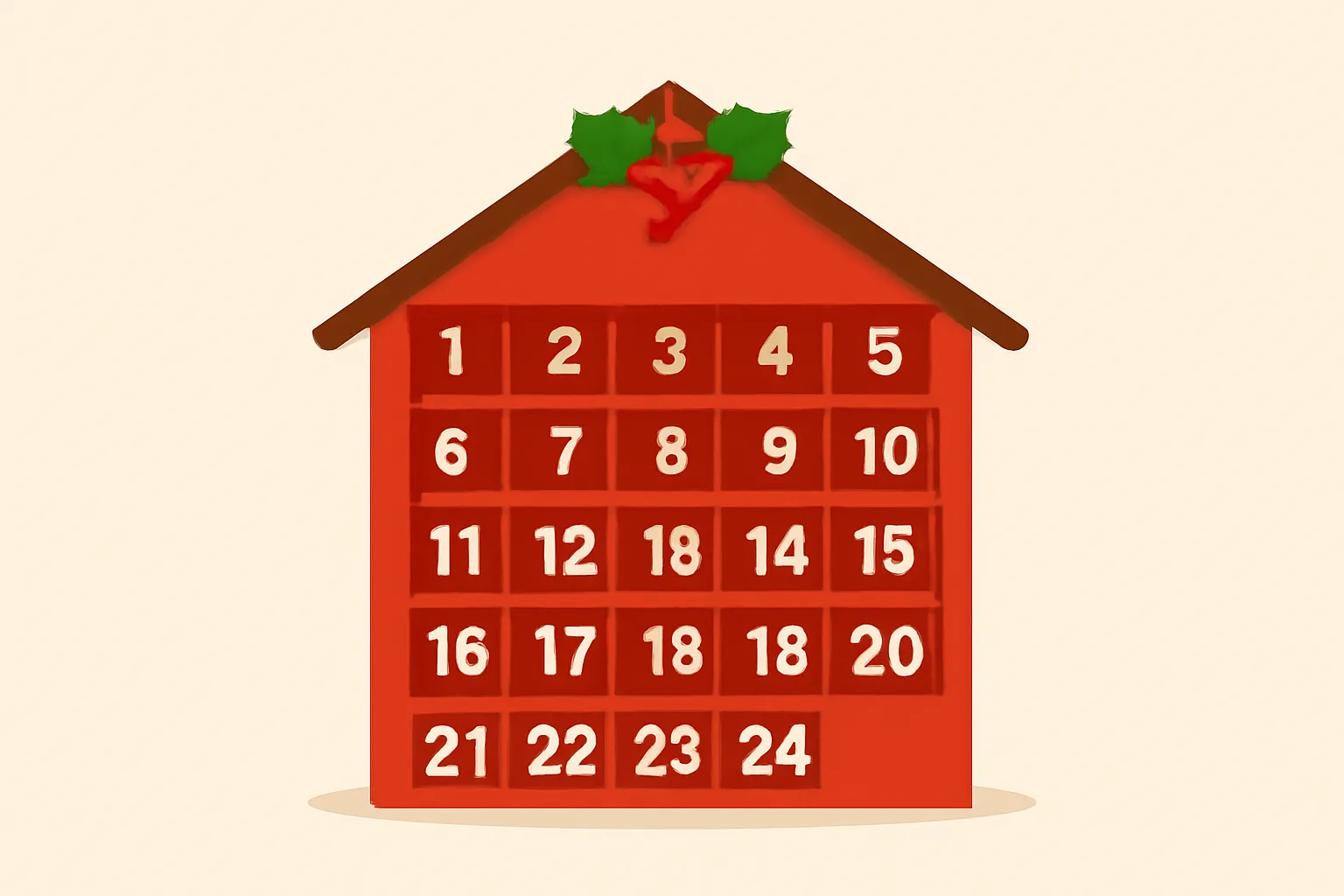
Door-based wall calendar: A poster or card stock calendar with 24 doors that swing open to reveal a tiny surprise behind each one.
Pocket calendar: An arrangement of fabric or paper pockets labeled 1–24, each containing a small item or note.
Box or tin calendar: A set of 24 mini boxes or tins arranged in a grid, suitable for chocolates, trinkets, or mini notes.
Printable calendar: A digital design you print at home, with doors or envelopes that you cut and assemble.
Reusable calendar: A wooden or fabric frame with removable tiles, drawers, or envelopes that can be refilled annually.
Filling ideas by theme
Religious or reflective: Short prompts, Bible verses, prayers, or devotional micro-reflections.
Toy and trinket: Tiny figurines, mini puzzles, or charm tokens that pair with a larger daily activity.
Craft and creativity: Small art supplies, stickers, or a daily craft instruction.
Books and stories: A serialized passage, a poem, or a one-page story fragment per day.
Experiences and acts of kindness: A family challenge (watch a holiday film together, bake cookies), or a small act of service (leave a kind note for a neighbor).
Practical tips for a successful first Advent calendar project
Whether you’re recreating a first advent calendar for your family or starting a new holiday tradition, a few practical tips can help ensure success and joy. The following are common considerations that seasoned makers keep in mind as they design and assemble their calendars.
Balance time and cost: Start planning early to spread costs and labor. A smaller, high-quality calendar made with sustainable materials can be more meaningful than a large, extravagant one.
Safety first: For households with young children, avoid small pieces that could be choking hazards. Use larger items or keep smaller pieces in a secure container until the right moment.
Allergies and dietary needs: If you include edible items, label contents clearly and consider allergen-free options or options suitable for common dietary restrictions.
Reusability: Consider designing a calendar you can reuse for several years. A durable wooden or fabric calendar can become a family heirloom that carries new contents year after year.
Customization: Personalize the calendar with family photos, inside jokes, or local traditions to increase engagement and meaning.
Storage and replenishment: Plan how you’ll store the calendar when not in use and how you’ll replenish contents for future Decembers.
Accessibility: Make sure the opening mechanism is easy to use for all ages, including older family members or guests who might visit during the season.
Digital and hybrid approaches: expanding the idea of the first Advent calendar
In the digital age, the Advent calendar idea has extended beyond physical objects. A digital advent calendar can deliver daily prompts, audio clips, short videos, or interactive experiences directly to smartphones, tablets, or computers. A hybrid calendar blends physical and digital elements—for example, a wall calendar that reveals a daily QR code, which leads to a short video, a printable activity, or an online devotional. The flexibility of the first advent calendar concept allows communities to adapt it for classrooms, workplaces, or online communities while preserving the essence of anticipation and daily engagement.
Some educators and organizers use the calendar to encourage learning or service. A community calendar might feature a daily challenge related to environmental stewardship, charitable acts, or local history. The key idea remains the same: provide a small, meaningful daily moment that fosters connection and reflection during the busy December period.
Historical notes: what to remember about the origin story
When discussing the origins of the first Advent calendar, it’s important to acknowledge that sources differ on precise dates and names. Some accounts emphasize the 1839 chalk-mark practice as the earliest verifiable custom, while others highlight the 1903 Lang calendar as the crucial breakthrough that made the Advent calendar a reproducible, commercial format. The narrative of a pioneer calendar who introduced doors behind which pictures or verses could be revealed is widely taught, yet the broader 19th-century culture of Advent devotion provided essential soil for that breakthrough. In any case, the impact is clear: the first Advent calendar became a multi-faceted cultural object, evolving with technology, economics, and consumer taste over the decades.
Beyond the specific dates and people, the enduring lesson of the first advent calendar is about ritual, anticipation, and shared experience. The concept’s resilience comes from its ability to adapt to new formats while preserving a simple structure: a countdown, a daily moment of delight, and a sense of connection to something larger than daily routine. Whether you frame your own project around faith-based reflections, playful chocolate treats, or creative activities, you’re continuing a tradition that has grown and diversified for more than a century.
Conclusion: the enduring appeal of the Advent calendar
The Advent calendar—in its earliest form and in countless later interpretations—captured a powerful human impulse: to slow down a busy season and create meaningful moments together. The first advent calendar opened a door, literally and figuratively, to a daily glimpse of Christmas wonder. Today, families around the world honor that impulse in diverse ways: by sharing a chocolate treat, reading a short verse, completing a small craft, or engaging in a daily act of kindness. The basic idea remains intact: a tiny daily ritual that offers anticipation, delight, and shared memory. If you’re looking to bring that magic into your own home, you can start with a small project, choose a format that suits your space, and fill it with contents that reflect your values and your loved ones. No matter which path you choose, you are participating in a long lineage of practice that connects generations through a simple, beautiful tradition—the countdown to Christmas that begins with an opening door or a pocket and ends in warmth, gratitude, and communal joy.

 Por Laura Jara