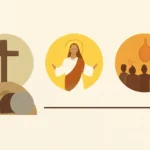
Across Christian communities around the world, Ascension Day is a milestone that blends history, doctrine, and lived faith. It commemorates a pivotal moment in the life of Jesus and in the unfolding story of the Church. The phrase ascension day meaning can be explored from many angles: as a scriptural event, as a theological teaching about heavenly authority, as a liturgical season marker, and as a cultural memory that shapes prayer, art, and public life. This article surveys the meaning of Ascension Day in its historical roots, its enduring significance, and the diverse ways people observe it today. We will use variations like meaning of Ascension Day, Ascension celebration significance, and the Ascension feast to highlight the breadth of interpretation while keeping the core sense intact: a moment when Jesus is said to have ascended to heaven, inaugurating new possibilities for humanity and the church.
To understand the Ascension Day meaning, it helps to begin with the core event described in the Christian scriptures. In the Acts of the Apostles and the Gospel narratives, the risen Jesus returns to the Father in heaven. This is not a disappearing act but a transforming moment that signals a new phase in God’s redemptive plan. The ascension signals triumph and vindication: Jesus completes his earthly mission and takes his place at the right hand of God, a place of authority and intercession. In many Christian theologies, the Ascension confirms the truth that Jesus now reigns as Lord over creation, powerfully present through the Spirit, and commissioned to empower his followers for mission.
Scriptural anchors
Acts 1:9-11 describes Jesus’ ascent from the sight of the disciples and the promise that he will return.
Luke 24:50-53 presents the account of Jesus blessing his disciples, then being carried up, and the disciples returning with joy to Jerusalem.
Other gospel and epistolary passages connect the ascent with the sending of the Holy Spirit at Pentecost, tying the event to a dynamic continuity in faith, proclamation, and power.
The meaning of Ascension Day thus operates on several levels. Theologically, it expresses victory over death, authority over the cosmos, and the fulfilled promise that Jesus is alive and ruling. Pragmatically, it explains why Christians pray in the name of the exalted Christ, why the church emphasizes mission, and why the church year marks a distinct moment in the Easter season. The festival is not merely a memory; it is a proclamation that heaven is opened, and humanity is invited to share in a new relationship with God through the risen and glorified Christ.
Theological implications and daily life
For many believers, the meaning of Ascension Day translates into a lived sense of two realities at once: the already-present risen Christ and the not-yet-completed work of reconciliation and restoration. This dual awareness shapes prayer life, devotion, and worship. Some of the key implications include:
Intercession and mediation: Christians often understand Jesus as interceding for humanity from the heavenly throne, a reality celebrated in prayers and hymns.
Authority for mission: With Christ exalted, the church is commissioned to preach the gospel to all nations.
Hope in heavenly hope: The ascent points toward a future fulfillment where heaven and earth are fully united.
In secular or plural contexts, the term ascension day meaning may be used to describe the shift from an earthly, hazard-filled existence to a more expansive sense of purpose and moral order that comes from faith in a transcendent authority. While the language differs across traditions, the core idea remains: the event marks a turning point that enlarges what it means to live as a follower of Christ.
Historical development and variations in practice
The meaning of Ascension Day has been explored, celebrated, and sometimes adapted across centuries and cultures. Its origins lie in early Christian communities who witnessed and proclaimed the risen Christ. Over time, how the day was observed—ritually and culturally—developed in response to linguistic contexts, liturgical calendars, and local customs. The ascension meaning thus also maps a history of Christian piety and institutional life.
Early church and patristic reflections
In the earliest centuries, Ascension Day emerged from the flight from Jerusalem of the Ascended One into heaven, a vivid doctrine reinforced by apostolic preaching. Early church writers emphasized the exaltation of Christ, the restoration of creation’s lordship, and the promise of ongoing presence through the Spirit. The celebration often intersected with the paschal mystery—the crucifixion, resurrection, and the coming of the Spirit—creating a season in which believers reflect on the continuity between Jesus’ earthly ministry and his heavenly reign.
In medieval Europe, Ascension Day took on a liturgical depth that included processions, readings from Acts and Luke, and hymns that celebrated Christ’s ascent. It also began to assume a public dimension—public holidays, fairs, and community rituals layered meaning onto the day beyond temple walls. During the Reformation, Protestant communities retained the core meaning of the ascent while reinterpreting accompanying practices and lections to emphasize scriptural authority and missionary impulse. Across denominations, the universal theme remained: Christ’s rule is now manifested from heaven, and believers participate in that rule through witness and service.
Modern observances and adaptations
Today, Ascension Day is celebrated in many places as a church festival with special services, sermons, and often some form of civic observance. In some regions it coincides with local public holidays, turning a sacred event into a shared cultural occasion. In other places, the day is observed primarily within churches, with quieter, contemplative liturgies that center on prayer, Scripture, and reflection on the meaning of divine encroachment into human history. The Ascension meaning remains consistent across eras, even as the outward forms shift with language, music, and social custom.
Timing and date: why it falls when it does
Understanding the date and season helps illuminate the meaning of Ascension Day for many believers. The event is connected to Easter and the broader Easter season, but its exact date depends on calendrical calculations that differ between Western and Eastern Christian traditions.
40 days after Easter
The traditional count is that Ascension Day occurs on the 40th day after Easter Sunday. In Western Christianity, this typically means a Thursday. The causation is biblical: Jesus’ post-resurrection appearances lasted 40 days before he ascended. The number 40 also has symbolic resonance in Christian thought, echoing periods of testing, preparation, and formation found in biblical narratives.
Western and Eastern differences
In Western churches, Ascension Day is often celebrated on Thursday, with many countries granting a public holiday, while in some places the following Sunday is observed as Ascension Sunday to accommodate labor and school schedules. In many Eastern Christian traditions (such as the Eastern Orthodox Church), the date is calculated differently because their liturgical calendar uses the Julian calendar or a revised method for aligning Pascha (Easter) with the rest of the year. Consequently, the meaning of Ascension Day remains the same, but the day of observance can differ by about a week or more. Across traditions, however, the feast continues to be a high point that marks Jesus’ enthronement and his ongoing presence with the church through the Spirit.
Global perspectives: how communities celebrate today
Across continents, Ascension Day is a living tradition that blends faith with local custom. The meaning of Ascension Day is expressed not only in words but in songs, art, meals, and community life. Here are representative patterns from different contexts to illustrate the breadth of the feast’s significance.
Central Europe and the German-speaking world
In countries like Germany, Austria, and parts of Switzerland, Ascension Day (often called Christi Himmelfahrt in German) is a public holiday. It is commonly celebrated with church services in the morning, followed by family gatherings, nature walks, or organized hiking trips. The holiday is also connected to vacation timing, as many people take a long weekend to travel. In rural areas, you may see processions or small fairs, making the day both a sacred and communal celebration. The ascension meaning here blends heartfelt devotion with shared public life, illustrating how faith can enrich everyday rhythms.
Catholic and Anglican worlds
In Catholic contexts, Ascension Day is a Holy Day of Obligation in some places, inviting the faithful to attend Mass and participate in prayers that reflect Christ’s glorified reign. Anglican and Episcopal churches often hold solemn liturgies that emphasize scripture readings about the Ascension, intercession, and mission. The ascension meaning in these settings is connected to governance of the church, pastoral care, and the church’s mission to be witnesses in the world, empowered by the Spirit.
France, Spain, Italy, and beyond
Across Southern Europe, the day is observed with particular reverence, often blending religious rites with regional customs. In some Catholic parishes, you may hear celebratory organ music, choirs singing Latin or vernacular hymns, and homilies focusing on Jesus’ ascent and the hope of his return. In addition to church services, families frequently share meals or stage small community events that reflect hospitality and fellowship—the Ascension Day meaning as a call to care for others in light of faith.
In North America, Africa, Asia, and Oceania, Ascension Day appears in a variety of church cultures—from quiet, reflective services to vibrant processions and concerts. The meaning of Ascension Day in these settings often highlights hospitality, outreach, and ecumenical friendship as expressions of the church’s mission in a plural society. The day serves as a reminder that the risen Christ is present in communities of many languages and traditions, drawing diverse people into shared worship and service.
The Ascension Day meaning in modern life
In contemporary faith communities, the ascension day meaning is invoked to connect ancient doctrine with present-day questions. How should a 21st-century believer live in light of the exalted Christ? How does a community carry forward the mission of Christ when the world faces environmental challenges, social divisions, and rapid cultural change? The answer, as often expressed in sermons and spiritual practices, centers on three ideas: recognition of divine authority, reliance on the Spirit for courage and creativity, and commitment to mission and service in everyday life.
Authority with humility: The ascent confirms Jesus’ authority, yet this authority is expressed through servant leadership that serves others’ needs.
Spirit-enabled witness: The church’s mission is energized by the Spirit who empowers proclamation, compassion, and justice.
Hopeful patience: The ascent invites believers to live with a confident hope for future fulfillment while working for justice in the present.
Many communities frame Ascension as a hinge moment—opening the gap between the crucifixion and the Pentecost outpouring of the Spirit—inviting believers to reflect on how their lives bear witness to a reign of peace and reconciliation. The Ascension Day meaning thus becomes a call to spiritual formation, communal solidarity, and public virtue.
Observance, rituals, and devotional practices
What people actually do on Ascension Day varies widely, but several common elements recur across traditions. These practices help believers experience the meaning of Ascension Day more fully and live it out in daily life.
Most communities gather for worship that includes readings from Acts and Luke, prayers of intercession, and songs that celebrate Christ’s exaltation. The sermon typically centers on Christ’s heavenly enthronement, his ongoing presence through the Spirit, and the mission entrusted to the church. The use of imagery such as the “right hand of God” or the “glory of the ascended Lord” is common in liturgical texts and hymns, reinforcing the theological heartbeat of the day.
Processions, pilgrimages, and outdoor prayer
In many places, processions or short pilgrimages reflect a desire to move from simple contemplation to shared action. Outdoor prayer walks, meditations in nature, and mercy projects are common ways to embody the Ascension’s call to live as witnesses in the world. The act of walking together can symbolize the journey of Christ’s church toward its mission and the renewal of creation under divine authority.
Feasts, meals, and hospitality
In various cultures, Ascension Day is accompanied by meals or hospitality that welcome neighbors, strangers, and newcomers. Sharing food becomes a practical expression of reconciliation and fellowship, echoing the universal scope of Christ’s reign. The meaning of Ascension Day broadens into acts of generosity and service that reach beyond church walls into neighborhoods and communities.
Common questions and clarifications
As with any major feast, there are questions and occasional misconceptions about Ascension Day. Clarifying these can help a reader appreciate both the depth and the breadth of its meaning.
Is Ascension Day the same as Pentecost? No. Ascension Day marks Jesus’ ascent into heaven, while Pentecost marks the outpouring of the Holy Spirit upon the followers of Jesus, enabling mission and grace for the church.
Why does the date vary? The date depends on the calculation of Easter in different traditions (Western vs. Eastern calendars) and whether the celebration is kept on the traditional Thursday or moved to a Sunday for public life reasons.
Is Ascension Day a universal holiday? Observance varies by country. In many European nations, it is a public holiday; in others, it is celebrated primarily within church communities.
What is emphasized in liturgy? The exaltation of Christ, his authority, intercession, and the commission to witness and serve are common liturgical emphases.
Even for readers who do not share the Christian faith, Ascension Day can carry meanings that resonate beyond doctrinal boundaries. Themes of ascent, leadership, hope, and service speak to universal human experiences: the longing for guidance, the call to responsibility, and the dream of a better world. The meaning of Ascension Day in an ecumenical or interfaith conversation often centers on how communities interpret authority, how power is exercised for the common good, and how people of faith cooperate to care for the vulnerable. In many interfaith settings, Ascension Day is discussed as an expression of faith in a higher order that transcends individual circumstance, while still inviting concrete acts of charity and justice.
Preservation of heritage and cultural expressions
Over time, Ascension Day has become a repository of cultural memory, artistic expression, and regional identity. Paintings, music, and literature have explored the ascent as symbol and event—portraying the risen Christ in majesty, the heavenly throne, or the reconciliation of heaven and earth. The ascension meaning thereby participates in shaping regional art, architecture, and folklore, as communities tell the story of faith through their languages, tunes, and ceremonies. From ancient chant to contemporary gospel and hymns, the day invites creators to reflect on what it means for human beings to participate in divine life through worship and service.
Myths, legends, and factual clarifications
Like any major religious festival, Ascension Day is occasionally the subject of myths or oversimplifications. It is important to distinguish between symbolic language and historical claim, between ritual practice and doctrinal statement. The core facts in traditional Christian teaching are straightforward: Jesus rose from the dead, appeared to his followers post-resurrection, and then ascended to heaven where he rules. The day does not celebrate the end of Jesus’ presence with humanity; rather, it proclaims a new mode of presence—through the Holy Spirit and the community of faith. The meaning of Ascension Day is thus twofold: a memory of a historical event and a living invitation to participate in God’s ongoing mission in the world.
If you are seeking to understand the ascension day meaning in personal life, consider these reflective prompts and practical ideas. They can help translate doctrine into daily practice and nurture a faith that grows through worship, learning, and service.
Reflect on the image of Christ exalted and reigning—how does this affect your sense of purpose and leadership in your community?
Pray for the empowerment of the Spirit in your personal life and in the life of your church or faith community.
Engage in acts of service that demonstrate the reign of God in tangible ways—helps for the poor, hospitality to strangers, care for creation.
Study the Scripture readings assigned for Ascension Day in your tradition to deepen understanding of the theology of ascent and intercession.
Participate in or organize a regional pilgrimage or outdoor gathering that emphasizes fellowship and mission.
Across centuries and cultures, the meaning of Ascension Day remains a unifying thread in Christian faith. It is a day that holds together submission to divine sovereignty, confidence in the risen Christ, and urgency about mission in the power of the Spirit. It invites believers to praise God for the victory of Christ, to trust in his heavenly authority, and to answer the call to share that good news with neighbors near and far. The day thus functions as both a theological affirmation and a practical invitation: to live in light of Christ’s glory, to serve in a world longing for justice and peace, and to anticipate the fulfillment of God’s promises when heaven and earth are renewed. Whether approached through liturgy, art, poetry, or community service, Ascension Day remains a touchstone for faith that seeks understanding, courage, and compassion in equal measure.
In sum, the Ascension Day meaning can be seen as a synthesis of ascent and mission: Christ’s ascent to glory confirms his universal sovereignty, while the ongoing mission of the church embodies his presence in a broken world. The feast invites believers to recognize the divine horizon that surrounds ordinary life and to participate in God’s redemptive work with hope, courage, and love.

 Por Laura Jara