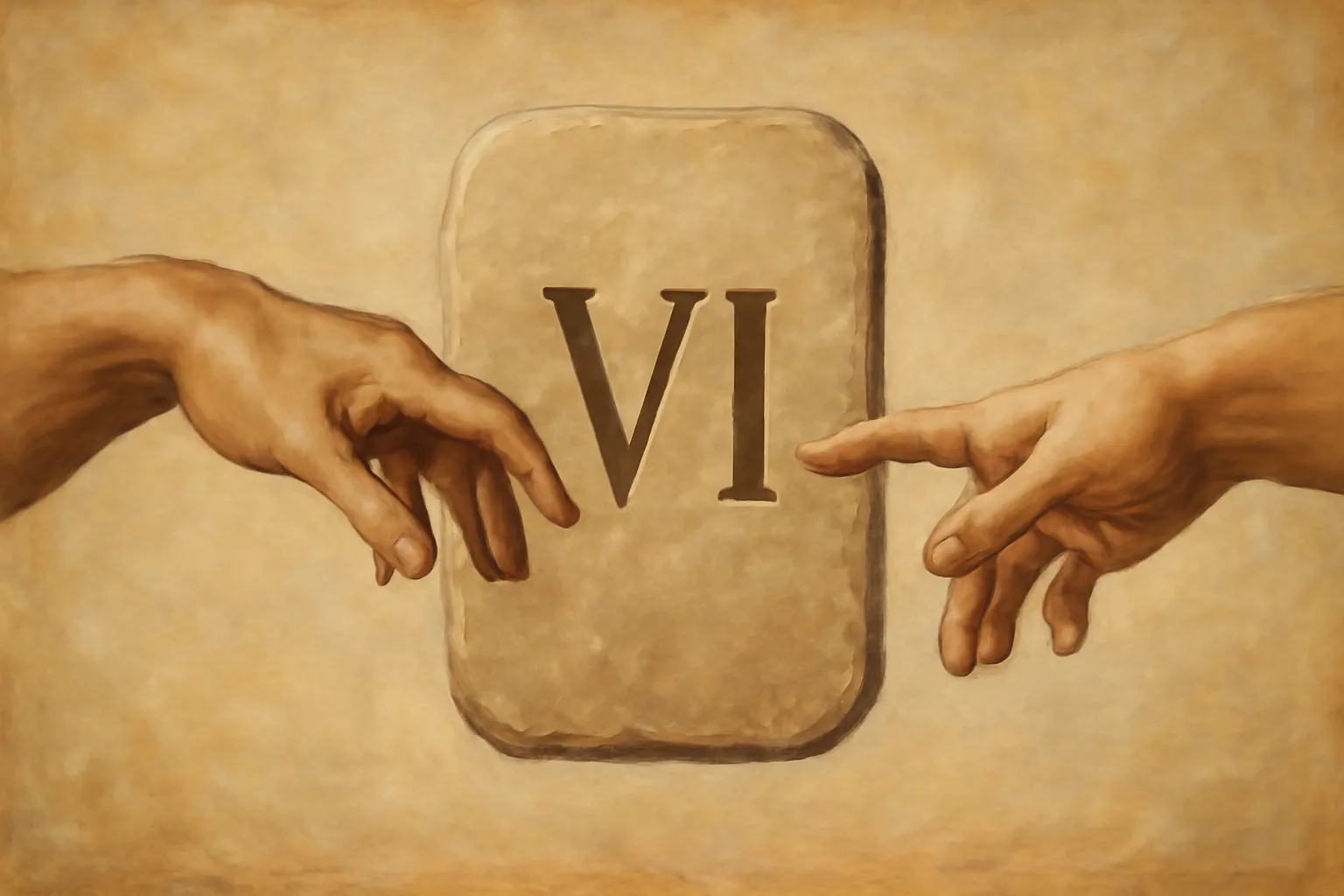
The Sixth Commandment is one of the most widely discussed items in the Decalogue, the compact set of divine laws that appears in the Hebrew Bible and the Christian Old Testament. When people speak about the 6th commandment bible, they are often comparing how different religious traditions read a single injunction about human life, violence, and moral responsibility. This article uses Sixth Commandment language, but it also consistently uses variations like the 6th commandment, the sixth commandment, and the sixth commandment bible to reflect the variety of ways readers refer to this ancient directive. The core issue is simple in form but profound in scope: what does it mean to safeguard life, and under what circumstances, if any, is the taking of life permissible?
Across centuries and cultures, scholars, theologians, clergy, and lay readers have asked: Is this commandment a universal moral norm, or does it admit exceptions? How has the wording shifted in different languages and manuscripts? And how do interpretations change when we place the commandment in contexts such as war, self-defense, capital punishment, abortion, euthanasia, or medical ethics? The successive sections below explore meaning, history, and interpretive traditions in a way that emphasizes contextual reading, translation, and ethical nuance.
Meaning: What does the Sixth Commandment really prohibit?
The canonical phrase most often cited in English is «You shall not murder», though many readers encounter the commonly used version «You shall not kill» in older English Bibles or in translations that adopt a broader or narrower sense of the original term. The distinction is important for thoughtful readers: the Hebrew term behind the commandment is not a blanket ban on all killing or ending life in every possible circumstance. Rather, it is a prohibition against the intentional and unlawful taking of an innocent human life.
In biblical languages, the key term is ratsach (רָצַח), usually translated as murder or unlawful killing in modern translations, rather than a general act of killing in war or capital punishment. The nuance matters because a broad prohibition on killing would have sweeping implications for warfare, judicial executions, or sanctioned acts carried out by a state. The typical scholarly understanding is that the commandment targets premeditated or unjustified homicide, especially when it involves an innocent person.
Across traditions, the precise scope of the commandment is debated. Some readers emphasize a strong moral imperative against taking life in almost all circumstances. Others hold that the biblical law recognizes situational ethics—that is, that certain contexts require the protection of life or the administration of just penalties, while still upholding the fundamental value of life.
In modern discussions, you will often see phrases such as the 6th commandment and murder, the sixth commandment in ethics, or the sixth commandment and violence used to anchor conversations about how this ancient law translates into contemporary debates. The central frame remains: the law seeks to preserve life and to limit violent wrongdoing, while allowing for carefully defined exceptions under moral, legal, or theological reasoning.
Key concepts to remember
Sanctity of life: The commandment contributes to a broader biblical vision that life is precious and belongs to God.
Intention and innocence: The prohibition centers on unlawful or intentional homicide, rather than unintentional killing or acts of self-defense judged morally justifiable.
Difference between murder and killing: Translational choices shape public understanding; some traditions emphasize a stricter line against murder while making allowances for war or capital punishment under strict criteria.
Ethical nuance: The commandment invites reflection on justice, mercy, and the preservation of communal order.
Historical roots: Where does the Sixth Commandment come from?
The Sixth Commandment Bible finds its origin in the broader Deuteronomic and Priestly traditions of the ancient Near East. In the biblical narrative, the Decalogue arises as a covenant document that clarifies the moral obligations of a people who wish to live under divine instruction. The two primary textual placements are the books of Exodus and Deuteronomy, with slight textual differences that have implications for numbering and emphasis.
In Exodus 20:13 and Deuteronomy 5:17, many English readers encounter the core prohibition. In the Jewish tradition, the numbering of commandments is organized a bit differently than in later Christian traditions, which leads to variations in what is counted as the sixth commandment versus the seventh or fifth depending on whether one uses a traditional Jewish arrangement or a Christian adaptation.
Translations and the evolution of language
Early translations often used verbs and phrases that reflected the linguistic conventions of their times. The shift from “kill” to “murder” in many modern translations is not merely stylistic; it signals a deeper attempt to distinguish between harm that is unlawful and harm that may be legally or morally regulated within a community. Throughout the history of interpretation, scholars have noted that the original Hebrew term emphasizes the unlawfulness of an intentional taking of an innocent life rather than a blanket prohibition on all forms of killing.
The Catholic, Orthodox, and Protestant trajectories
The medieval and early modern periods saw the Sixth Commandment in Catholic and Orthodox catechesis paired with other moral injunctions in a comprehensive moral code. In Protestant traditions, questions about the commandment’s scope were often tied to debates about just war, civil government, and individual conscience. The result is a family of readings that share a concern for life with divergent conclusions about legitimate uses of force.
Interpretations across traditions: How different communities read this commandment
Judaism: A prohibition focused on unlawful killing
In Judaism, the commandment is typically understood as «You shall not murder,» reflecting a strong imperative against taking an innocent life. Jewish readers place weight on the rabbinic tradition that develops nuanced categories for permissible acts, such as self-defense, the execution of capital punishment in certain historical contexts, and the preservation of community safety. While some modern readers debate capital punishment, others emphasize life-preserving ethics and the sanctity of every human being.
The Jewish emphasis on human dignity and moral agency often leads to careful distinctions between motives, method, and outcome. For many Jewish scholars, the heart of the commandment lies in a commitment to respect for life and a prohibition that guards against premeditated harm to an innocent person.
Christianity: Catholic, Protestant, and Orthodox readings
Christianity presents a spectrum of interpretations, with notable differences in how the commandment is numbered and how exceptions are treated. In Catholic teaching, the phrase «You shall not kill» is often rendered as “You shall not commit murder” in English translations, reflecting a distinction between killing and murder. The Catholic catechism and official documents typically allow for justifiable defense of life and, in historical contexts, capital punishment under certain conditions, though there is ongoing debate about its legitimacy in modern times.
Protestant traditions tend to emphasize personal conscience and the moral economy of justice in the state. Some Protestant voices argue that war, self-defense, and legal penalties may be morally permissible under carefully defined criteria, whereas others advocate for stricter limitations on taking life. The Orthodox Church tends to balance the sanctity of life with a consideration of church-based pastoral guidance and the criteria for just warfare, often emphasizing mercy and repentance even in cases of violence.
Other religious and ethical perspectives
Beyond the three major Abrahamic families, readers in interfaith and secular contexts examine the principle behind the Sixth Commandment: the dignity of human life, the limits of violence, and the moral economy of punishment. Some ethical frameworks invoke the commandment as a foundational voice for criminal justice reform, nonviolence movements, or humanitarian policies that reduce harm and protect vulnerable communities.
Modern interpretations and debates
In contemporary discourse, people frequently reference the sixth commandment bible as a starting point for debates about abortion, euthanasia, assisted suicide, capital punishment, and medical decision-making at the end of life. While the core prohibition against taking innocent life remains central, many scholars and theologians explore whether new bioethical challenges require reinterpreting the scope of this commandment or reinforcing its underlying call to cherish life.
Ethical and legal implications: How the commandment informs public and private life
The Sixth Commandment has long influenced not only private moral decision-making but also public law and policy. The ethical questions raised by this commandment intersect with issues like defense of life, punishment for wrongdoing, and the protection of vulnerable populations. When someone asks, what does the sixth commandment teach about violence?, the answer often involves layered considerations: intent, necessity, proportionality, and the possibility of repentance and reform.
Self-defense and the protection of life
In many religious and ethical traditions, self-defense is acknowledged as a legitimate reason for using force under strict criteria. The principle of necessity and the avoidance of unnecessary harm are central. Readers frequently encounter the question: can one preserve life by using force, and if so, how can it be justified within the ethical framework of the sixth commandment?
War and capital punishment
The provisions of just war theory, and debates about capital punishment, test the flexibility of the sixth commandment in public life. Some traditions argue that war, if declared under just causes and conducted with proportionate means, does not necessarily violate the commandment in a broad sense, though it raises questions about complicity in killing and the moral psychology of violence. Others hold that a strict reading of the commandment would disallow battlefield killings altogether.
Contemporary bioethics
In medical ethics, the debate over abortion, abortion rights, euthanasia, and physician-assisted death often references the sanctity-of-life principle embedded in this commandment. The contrast between protecting life and preventing suffering leads to nuanced positions. Some argue for maximum protection of life, while others emphasize patient autonomy, compassionate care, and moral responsibility in the face of terminal illness or severe fetal anomalies.
Textual variants and translation notes
The phrase commonly rendered as “You shall not murder” reflects a particular English translation of the Hebrew ratsach and the broader context of biblical law. Other translations choose “you shall not kill”, which aligns with a broader lexicon but risks obscuring the intended restriction against unjust or unlawful homicide. The word choice matters for preaching, catechesis, and public policy, because it shapes people’s understanding of what is legally permissible in different circumstances.
In Greek and Latin Christian traditions, the commandment is sometimes numbered differently, which affects how readers refer to the Sixth Commandment Bible in cross-cultural conversations. The important thing, though, is to recognize the shared ethical aim: to protect human life while acknowledging that the ancient law operates within a framework of human authority, divine sovereignty, and communal order.
Primary biblical references to study
Exodus 20:13 – A primary citation in the Hebrew Bible and a cornerstone for the Christian Old Testament, often cited as the source of the Sixth Commandment.
Deuteronomy 5:17 – The parallel placement in the Deuteronomic retelling, reinforcing the same prohibition with slightly different emphasis in the law’s recitation.
Relevant rabbinic and patristic exegesis discusses ratsach versus harag (to murder vs. to kill) and the implications for ethical deliberation.
Translations and interpretive choices
“You shall not murder” (common in modern English Bibles) emphasizes intent and innocence.
“You shall not kill” (older or some traditional translations) reflects a broader, sometimes ambiguous scope that can include war or capital punishment depending on context.
Variations in language affect theological emphasis, pastoral teaching, and public policy discussions in different Christian communities.
Variations of the phrase: how readers talk about the Sixth Commandment
Throughout this article you will notice a recurring practice: referring to the same commandment with different expressions. This helps capture semantic breadth and invites readers to appreciate the nuance embedded in historical translations. Some useful phrases include:
Sixth Commandment (traditional numbering in Catholic and Orthodox traditions)
Sixth Commandment Bible (as a framing device for study and discussion)
6th commandment (informal shorthand in modern discussions)
the sixth commandment (lowercase for generic references)
You shall not murder (textual rendering often used in catechesis)
You shall not kill (older or different translation choices)
The variety of expressions is not a sign of contradiction, but of interpretive plurality that has long shaped how communities teach, debate, and apply biblical law in daily life.
In contemporary discourse, the Sixth Commandment remains a live source of ethical reflection. People ask how this ancient law applies to modern life, including questions about technology, warfare, and social policy. The modern reader may hear references to the sixth commandment and technology, the 6th commandment in bioethics, or the sixth commandment and social justice—each reflecting a different facet of the same foundational principle: respect for life and restraint against violence where life is at stake.
In complex medical situations, some clinicians and theologians view the commandment as a call to preserve life, while others emphasize compassionate care and patient autonomy. The debate often centers on whether ending life to relieve suffering is a form of mercy or a violation of the moral order that protects life. Both sides may draw on the same base text, but they diverge in application to end-of-life care, abortion, or palliative interventions.
Criminal justice and public policy
Public policy designers grapple with the meaning of the Sixth Commandment in the realm of law enforcement, criminal punishment, and the balance between protecting citizens and preserving human life. Some advocate for policies that minimize lethal outcomes, promote rehabilitation, and reduce violence, while others defend legal consequences for grave offenses, arguing that certain forms of harm are unacceptable within a just society.
Interfaith dialogue and education
In interfaith contexts, the 6th commandment serves as a bridge for conversations about the value of life, ethics, and the role of law in governing human behavior. Educational materials often present a comparative view, showing how Judaism, Christianity, and Islam, among others, articulate the protection of life and the prohibition of unwarranted harm, while allowing for differences in practice and policy.
How to approach the Sixth Commandment Bible in study and teaching
If you are studying this commandment for personal enrichment or for teaching, consider a layered approach that includes language, history, interpretation, and application. Here is a practical framework to deepen understanding.
Study the original language: Look at the Hebrew term ratsach and the Greek Septuagint and Latin Vulgate to understand how translators rendered the commandment.
Compare translations: Examine several English renderings (e.g., You shall not murder, You shall not kill) to see how wording shifts influence interpretation.
Explore historical context: Read about the social, political, and legal milieus in which the Decalogue was given and later reformulated in various traditions.
Survey diverse traditions: Look at Jewish, Catholic, Orthodox, and Protestant teachings to appreciate how each tradition understands exceptions and duties.
Discuss ethical scenarios: Use case studies—self-defense, war, capital punishment, abortion, euthanasia, and end-of-life care—to apply the commandment to real-life decisions.
For educators, presenting the Sixth Commandment as a living conversation—rather than a fixed rule—helps students grasp its relevance today. Encourage critical thinking about how the commandment intersects with human dignity, justice, and mercy in a pluralistic society.
Conclusion: The enduring significance of the Sixth Commandment Bible
The Sixth Commandment Bible is more than a line in a scriptural document. It is a window into how communities understand the sanctity of life, the legitimacy of force, and the moral limits of harm. While translations vary and interpretive traditions diverge, the underlying impulse remains remarkably consistent: to safeguard the vulnerable, to restrain violence, and to guide human beings toward justice and peace. The discussion about the sixth commandment continues to evolve as new ethical questions arise—whether in medicine, technology, politics, or international relations. Readers today can engage with this topic by exploring linguistic nuances, historical development, religious interpretations, and practical implications, thereby cultivating a more informed, compassionate, and responsible approach to life and law.
In sum, the Sixth Commandment—in all its versions and readings—invites us to reflect on what it means to honor life while navigating the complexities of a world that often tests our moral commitments. From the ancient covenantal context to modern debates about bioethics and justice, the commandment remains a touchstone for conversations about ethics, humanity, and communal responsibility. Whether you encounter it as the 6th commandment in a devotional study or as part of a broader legal or philosophical debate, its central message endures: life is precious, and violence must be weighed with caution, restraint, and mercy.

 Por Laura Jara