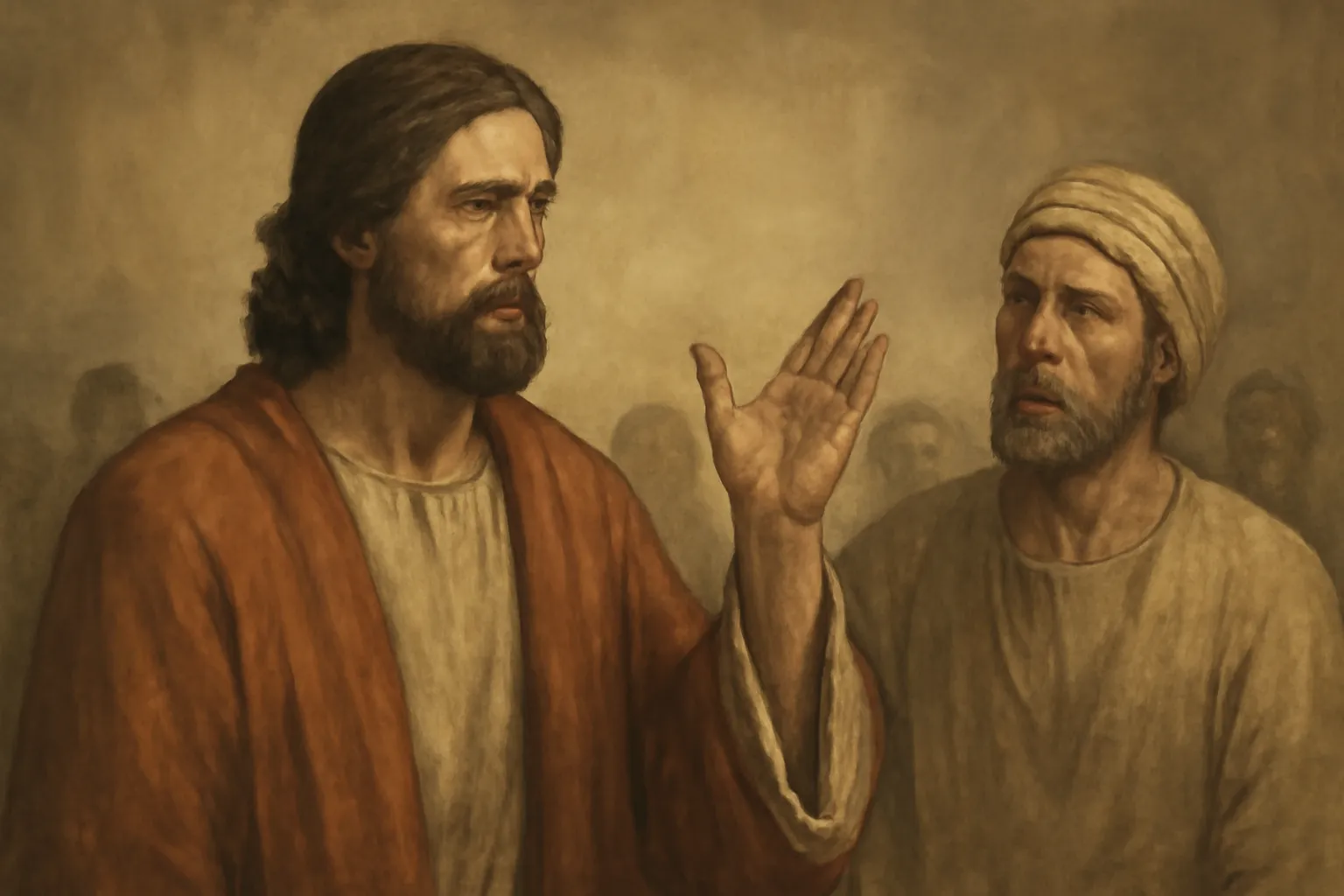
Not Everyone Who Says ‘Lord, Lord’: What It Means for Faith
The phrase often quoted in Christian circles—“Not everyone who says Lord, Lord will enter the kingdom of heaven”—appears in a moment of sharp moral clarity. It is an invitation to look beyond verbal confession and toward the real shape of a life lived in accord with divine will. In this article, we explore the meaning of this statement, its historical context, and what it asks of people of faith today. We will consider what distinguishes a genuine, transforming faith from a mere verbal profession, why words alone can be insufficient, and how communities can nurture faith that endures beyond public declarations.
This discussion uses variations of the core idea—that saying the right words does not automatically guarantee the right outcome. We will examine how language about faith interacts with actions, beliefs, and relationships, and we will offer practical guidance for readers seeking a deeper, more authentic devotion. Throughout, bolded terms will highlight key ideas so readers can grasp the central concepts quickly, while the narrative remains thorough for those who want to study more deeply.
Understanding the Core Message
At its heart, the claim is a warning about lip service in matters of faith. A person may utter the reverent phrase “Lord, Lord” as a sign of acknowledgment, reverence, or tradition, yet the underlying life may not reflect the will of God. The passage invites readers to distinguish between verbal confession and genuine obedience.
The language emphasizes two ideas that recur in biblical ethics: recognizing Jesus as Master or Lord and aligning one’s life to the will of the Father. In the scriptural context, to call Jesus “Lord” is not a mere label; it is a claim about authority, lordship, and the direction of one’s life. But saying “Lord” without being shaped by that authority can be a form of spiritual pretense. This distinction is central to why not everyone who affirms Jesus in word will be found faithful in the end.
Historical and Theological Context
Scriptural Roots: What “Lord” Signifies
In first-century Judaism and early Christian discourse, Lord functions as a title of authority, divine sovereignty, and reverence. The term in Greek is Kyríos, often rendered as “Lord” in English translations. The phrase “Lord, Lord” doubles the address, signaling emphasis and urgency. It is not merely a textual flourish; it is a rhetorical and theological device that presses the listener to consider the depth of their commitment.
Context within the Gospel Narrative
The teaching sits within a broader section of Matthew that contrasts outward religious behavior with the inner life of discipleship. Immediately surrounding this verse are exhortations about discernment, obedience, humility, and practical righteousness. The warning about not everyone who says “Lord, Lord” who will enter the kingdom of heaven resonates with Jesus’ ongoing critique of superficial religiosity. It is a call to evaluate personal faith in light of the will of the Father, not merely public proclamation.
A genuine faith is more than a moment of assent or an emotional experience. It is an ongoing pattern of trust, obedience, and love that shapes decisions, relationships, and priorities. In practical terms, genuine faith manifests as a life that seeks to do the will of God, even when it costs something, and even when it is not publicly celebrated.
When we say “not everyone who professes faith verbally” will be saved, we are not denying the necessity of confession. Instead, we are underscoring that confession without transformation is incomplete. The question is not only what you say, but how you live.
Key Markers of Real Faith
Obedience to the Father’s will: The life is governed by divine commands, even when it’s inconvenient.
Love in action: Love for neighbor, mercy, generosity, and practical care for those in need.
Humility and teachability: Readiness to be corrected, to grow, and to follow faithful guidance.
Consistency under pressure: Reliability in trials, suffering, and temptation, not just in favorable circumstances.
Integrity of worship: Worship that translates into daily life, not just ritual participation.
Dependence on God: A posture of prayer, gratitude, and dependence rather than self-reliance.
It is important to note that genuine faith is not about perfect performance or moral superiority. It is about a living relationship with God that continuously seeks alignment with God’s will, grounded in humility and repentance when failure occurs.
Common Misconceptions About Faith and Profession
Misconception 1: Faith Is Only About Belief, Not Behavior
A frequent misnomer is to separate belief from behavior—thinking that mental agreement alone suffices. In reality, robust Christian teaching connects belief with behavior. The idea that “you are saved by saying the right words” is challenged by the insistence that a saved life is characterized by ongoing transformation, ethical action, and obedience to God.
Misconception 2: Attendance Equals Authentication
Another common belief is that regular church attendance, sacraments, or formal membership automatically guarantees faith. While these practices can nurture faith, they do not replace the need for inward repentance, love, and consistent obedience. A vital test is whether worship and communal life stir a person toward humility, service, and justice.
Misconception 3: Anyone Who Speaks theRight Words Is in Good Standing
Verbal assent is necessary but not sufficient for salvation if it does not lead to a transformed life. It is possible to speak of Jesus as Lord while living in ways that contradict his teachings. The challenge is to reconcile what is confessed with what is practiced and to invite the Holy Spirit to reform harmful patterns.
Misconception 4: Faith Is Static
Some people treat faith as a one-time event rather than an ongoing journey. Not everyone who initially professes belief remains faithful. The biblical witness repeatedly underscores perseverance, repentance, and renewal as essential elements of a living faith that endures to the end.
Practical Applications: How to Cultivate Faith That Holds Up
Personal Reflection and Self-Examination
Regular self-examination is a valuable discipline. Consider asking:
Is my life aligned with the will of the Father as revealed in Scripture?
Am I willing to adjust my choices when they conflict with God’s commands?
Do I demonstrate love toward people who are hard to love, including enemies or strangers?
Do my prayers, worship, and daily rhythms reflect dependence on God rather than self-reliance?
Community and Accountability
Faith is not a solo enterprise. It thrives in community where people speak truth in love, provide accountability, and encourage spiritual growth. Engaging with mentors, joining groups that study Scripture, and participating in acts of service can help transform verbal confession into lived discipleship.
Scriptural Engagement: Reading for Transformation
A robust practice involves reading stories and teachings about faith and obedience. You can focus on passages such as James 1:22-25 (the doer of the word), Luke 6:46-49 (the wise builder who acts), and Matthew 7:21-23 (a warning against empty professions). The aim is not merely to accumulate knowledge but to invite knowledge to shape behavior.
Prayer and Spiritual Formation
Prayer invites God to search the heart and renew inner motives. A healthy rhythm may include confession, intercession for others, gratitude, and supplication for wisdom to discern God’s will. As believers grow in prayer, their desires align more closely with divine purposes, reducing hypocrisy and fostering authenticity.
Ethical and Social Practice
Faith that endures often expresses itself in concrete actions: advocating for justice, caring for the marginalized, pursuing reconciliation, and practicing mercy. These outward deeds reflect an interior transformation and bear witness to the sincerity of one’s profession.
To convey the breadth of the idea, scholars and preachers use various phrasings that point to the same core truth:
Not all who declare Jesus as Lord are truly his followers.
Not every person who calls him Lord demonstrates authentic discipleship.
Verbal proclamation without obedience does not guarantee entry into God’s realm.
Professing faith without transformation is not equivalent to genuine faith.
A public confession of belief must be matched by a life shaped by God’s will.
Each variation keeps the emphasis on the same warning: true faith is tested by how one lives, especially in moments of trial, temptation, and moral ambiguity. The repeated theme—that words alone cannot substitute for obedience—serves as a guard against spiritual complacency.
Faith, Works, and Salvation
The longstanding debate about faith and works is nuanced. Many Christian traditions affirm that salvation is by grace through faith, not by works, yet true faith naturally yields good works as its fruit. In the context of “Lord, Lord”, the emphasis is not to minimize works but to ensure that works arise from a living relationship with God, not from a need to earn favor.
Repentance is not a one-time moment but an ongoing practice. The call to repentance accompanies every invitation to live differently. A life marked by repentance shows a readiness to turn away from self-centered desires and toward God-centered aims, which is a hallmark of authentic faith.
Hope and Humility in Community
The claim about not everyone who says the words will enter is also a reminder that the journey toward belonging in God’s kingdom is communal as well as personal. Believers are invited to remain teachable, to support one another in truth, and to pursue a shared vision of justice, mercy, and faithfulness.
The statement about not everyone who says “Lord, Lord” entering the kingdom is a powerful reminder that faith is more than rhetoric. It is a life oriented toward God’s will, characterized by love, humility, integrity, and persistent obedience. Verbal confession, no matter how heartfelt, stands or falls based on whether it translates into a life of action that reflects the teachings of Jesus. This is not a condemnation of sincere worship or the complex realities of human life; rather, it is an invitation to examine our hearts and to pursue a faith that endures—one that is proven in small choices, daily acts of mercy, and steadfast trust in God.
For readers seeking a practical path forward, the core message remains clear: nurture a faith that moves from words to deeds, from momentary conviction to ongoing transformation. By cultivating genuine obedience to the Father, maintaining authentic worship, and participating in a supportive faith community, individuals can grow into the kind of faith that stands firm when tested and remains hopeful in the face of uncertainty. In that sense, the phrase “Not everyone who says Lord Lord” is less a verdict and more a gracious invitation to align life with God’s purposes—today, tomorrow, and for the days to come.
If you are exploring these questions for yourself, consider starting with a quiet time of reflection on your daily choices, a moment to read a scriptural passage that emphasizes obedience (such as Matthew 7:21-23 or James 1:22-25), and a commitment to act in love toward others, especially those who are overlooked. The journey from verbal confession to living faith is one that unfolds in ordinary moments. And in those moments, the truth of this biblical warning can become the fuel for a more faithful, more compassionate, and more transformative life.

 Por Laura Jara