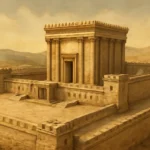
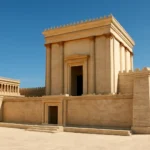
The history of the Second Temple is not a single moment in which a building rose from the ground. Rather, it is a layered story of exile, return, reconstruction, expansion, and eventual destruction. For readers wondering when was the second temple built, the short answer is that the core sanctuary was completed in the Persian period, while the broader complex we associate with the Second Temple era was dramatically transformed by Herod the Great in the late Roman period. To understand the full arc, we must walk through a long historical timeline that begins with the fall of the First Temple and continues into the late second temple era.
Origins: The First Temple’s Destruction and the Persian Return
Before asking when was the second temple built, it helps to recall the world in which a rebuilding project could take root. The First Temple, built by Solomon, stood in Jerusalem for centuries but was destroyed by Babylonian forces in 586 BCE. This marked a cataclysmic end to an era and initiated a long period of exile for many Judeans.
In 539–538 BCE, Cyrus the Great conquered Babylon and issued a decree that allowed exiled peoples, including the Judeans, to return to their homeland and to establish an altar and sacrifices. The return to Zion set the stage for a reconstruction project that would eventually be known as the Second Temple—though the exact phrasing and dating would become nuanced as later phases unfolded.
539–538 BCE: Cyrus’s decree permits return from exile.
537–515 BCE: Early phases of reestablishing worship and beginning construction.
515 BCE: Completion and dedication of what is commonly called the Second Temple in its basic sanctuary form.
Historically, the moment many scholars point to as when was the second temple built in its most basic form is the completion around 515 BCE, when the rebuilt sanctuary was dedicated after years of work led by leaders such as Zerubbabel and the priesthood. This initial phase produced a temple that, while more modest than later expansions, restored central worship and reinstituted the daily sacrifices that had defined Jewish life in Jerusalem for generations.
The Persian Period: A Rebuilt Sanctuary and Its Early Life
After the initial restoration, the temple stood as a functioning center of Jewish life through the remainder of the Persian period. Its status within the broader empire was shaped by local leadership, ecclesiastical reform, and the returnees’ efforts to reconstitute religious practice. The question when was the second temple built takes on a nuanced answer here: the sacred building existed by the mid-6th century BCE, but its role and size were not yet what later generations would envision.
During this era, the temple complex included the sanctuary itself, the altar of burnt offerings, and courtyards that supported worship and pilgrim activity. It is essential to note that the architectural footprint at this stage was not yet the vast platform and colonnaded precincts that would come with later renovations. Yet even in its early form, the Second Temple represented a significant renewal of Jewish religious life after exile.
515 BCE: The temple sanctuary is completed and rededicated.
5th century BCE: Ezra and Nehemiah-era reforms help reestablish religious and communal life in Jerusalem.
For readers exploring which year was the Second Temple constructed in its earliest form, 515 BCE is a critical milestone. It is the anchor point for the rebuilding narrative, even though the structure would undergo further transformation in the centuries ahead.
Under Ezra and Nehemiah: Administrative and Spiritual Reforms
The books of Ezra and Nehemiah describe a period when leaders worked to restore not only the temple and its service but also the walls of the city and the broader community. This era helped consolidate the temple’s role as a religious heart of the people, even as foreign dominions and internal politics shaped how the temple was funded, maintained, and used.
From Persian Stability to Hellenistic Turmoil: The Temple in a Changing World
As the Persian Empire waned and the Hellenistic world expanded after Alexander the Great, the temple’s status and architecture began to reflect new influences and challenges. The question when was the second temple built therefore divides into at least two meaningful periods: the initial Persian-era sanctuary (completed in 515 BCE) and the temple’s evolving role during later centuries when foreign rulers hurriedly, uncertainly, or opportunistically leveraged religious space for political ends.
During the subsequent centuries, the temple remained a continually significant site for Jewish worship. Its rituals, festivals, and priestly functions continued to anchor Jewish identity, even as the surrounding political landscape shifted from Persian to Hellenistic control and then to Roman dominance. The temple’s place in Jewish life persisted as a living institution even as external powers debated how to manage Jerusalem and its sacred precincts.
332–323 BCE: Conquests by Alexander the Great and the early Hellenistic period influence religious life in Jerusalem.
2nd century BCE: The Maccabean era begins to evolve around issues of temple purity, iconography, and religious autonomy.
One of the most consequential episodes in this era was the Maccabean revolt, which would dramatically affect the temple’s integrity and its relationship with political power, culminating in rededication rituals and renewed temple service during the late 2nd century BCE. When readers ask how the second temple began to take on its later form, the answer lies in this period of upheaval and reform that set the stage for a more monumental expansion decades later.
Hanukkah, Desecration, and the Road to a Major Expansion
The 2nd century BCE was a time of both spiritual renewal and political conflict. In 168 BCE, the temple’s sanctity was compromised under the rule of Antiochus IV Epiphanes, who attempted to suppress Jewish worship and erect altars to pagan gods within the sacred precincts. This episode is remembered in Jewish history and liturgy as a time of persecution and resistance, culminating in the rededication of the temple and the celebration remembered as Hanukkah.
In terms of the temple’s architectural scale, this era did not yet witness the grand platform expansion associated with Herod the Great. Instead, it emphasizes the temple’s moral and religious resilience—the ability of the Jewish community to maintain ritual life and to restore the sanctity of the Holy Site even under oppression.
167–164 BCE: Maccabean revolt and rededication of the Temple.
164 BCE: Rededication festival commemorated in Jewish tradition.
For readers seeking to understand when was the second temple built” in the sense of foundational religious life during the Hellenistic period, the answer centers on the continuation of worship and the eventual move toward a broader architectural project led by a prominent ruler who would reshape Jerusalem’s sacred landscape.
The Cultural and Religious Significance of a Growing Temple Complex
Even before Herod’s intervention, the Temple complex functioned as more than a single sanctuary. It manifested as a growing complex with courts for different classes of worshippers, spaces for processions during festivals, and administrative zones tied to priestly and Levite activities. The Temple Mount emerged as the focal point of a sprawling sacred landscape, even though its formal appearance would be transformed later.
Herod the Great: A Massive Expansion That Redefined the Temple
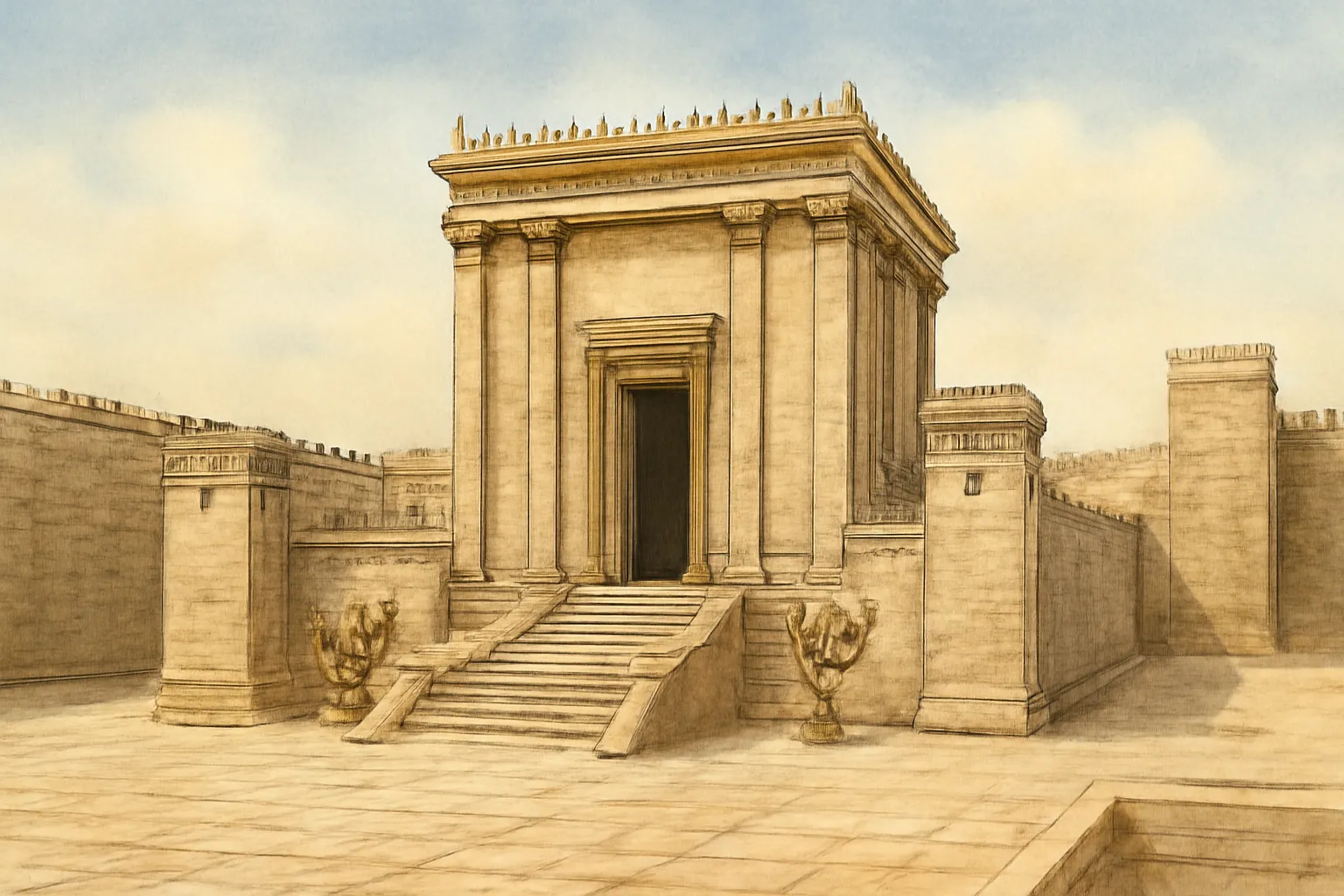
The most dramatic chapter in the second-temple story is the era of Herod the Great, who undertook one of the most ambitious architectural programs in ancient Jerusalem. The project, often called the Great Temple Restoration or Herod’s Temple, was not a simple reconstruction; it was a wholesale remaking of the temple precincts and the platform that supported them.
When addressing when was the second temple built in the sense of its large-scale transformation, historians point to the starting point of Herod’s work around c. 20–19 BCE. The program continued for decades and significantly altered the scale, appearance, and prestige of the temple complex. The ambitious plan included expanding the entire platform to accommodate large crowds, erecting colonnaded porticoes, constructing a new single-reed main sanctuary, enlarging the court of the Gentiles, and augmenting the expenditures for ceremonial services.
The architectural footprint of Herod’s modification was monumental. The Temple Mount platform was expanded dramatically, turning a modest sanctuary into a vast open space engineered to symbolize Jewish religious authority and civic pride under Roman oversight. Although the core sanctuary remained sacred and functional, the surrounding precincts, walls, and gates became as important for religious life as the sanctuary itself.
Key Phases of the Expansion
Ca. 20–19 BCE: Initiation of the expansion project under Herodian leadership.
Ca. 1 CE–60s CE: Ongoing construction and refinement, with multiple courtyards, porticoes, and retaining walls added or rebuilt.
70 CE: The temple complex is finally subjected to Roman siege and destruction under Titus, ending the second temple period in its architectural form.
For readers exploring when was the second temple constructed to its famed, fluted grandeur, the answer is that the foundational rebuilding occurred in the Persian period (515 BCE), but the defining, monumental expansion that people associate with the Second Temple era occurred under Herod, culminating (in its devastating destruction) during the First Jewish–Roman War in 70 CE.
Destruction and Aftermath: 70 CE as a Turning Point
The end of the Second Temple era is marked by the Roman destruction in 70 CE, during the siege of Jerusalem led by Titus. The temple complex was largely destroyed, including the sanctum and the various courtyards, and much of the infrastructure of the Temple Mount was razed or repurposed.
The catastrophe did not erase the memory or the religious significance of the Second Temple. Instead, it shifted the center of Jewish religious life toward synagogues, study, and the evolving Rabbinic tradition. The destruction also had lasting implications for Jewish political identity, diaspora, and the eventual emergence of rabbinic authority that would reinterpret temple worship in a post-Temple world.
70 CE: Destruction of the Second Temple by Roman armies during the First Jewish–Roman War.
Post-70 CE: The Western Wall remains as a surviving remnant of the Temple complex; the site continues to hold profound religious meaning.
Subsequent centuries: The temple’s memory shapes Jewish liturgy, calendar, and theology, even as a physical rebuilding would not occur in the same form for centuries.
Architectural Features and Significance
To understand when the second temple stood in its most recognizable form, one must appreciate the architectural innovations of Herod’s expansion and the earlier Persian baseline. The Holy of Holies—the inner sanctum believed to house the Ark in the First Temple era—became a symbol around which access and ritual practice were organized in the Second Temple era. While the exact interior layout varied over time, the following features were central to the complex’s identity:
Temple Mount platform: A massive raised platform that supported the entire complex, allowing thousands of worshippers to gather for festivals.
Great Court and Double Colonnade: A sequence of courts for priests, lectors, and lay worshippers, with porticoes designed to accommodate processions and public rituals.
The Holy Sanctuary and Sanctuary precincts: The core spaces where sacrifices, prayers, and priestly rites were performed.
Herodian stonework and architectural detailing that reflect the scale, precision, and resource investment of a royal project.
For readers tracing the question when was the second temple rebuilt to meet a larger standard of magnificence, the Herodian expansion is the decisive answer. The project reflected both religious devotion and political engineering, as the temple complex was designed to be monumental enough to project a sense of Jewish sovereignty under Roman suzerainty.
To provide a quick reference for those seeking a chronological anchor, here is a compact timeline that synthesizes the main milestones of the Second Temple period. It highlights the varied phases and helps address the core question when was the Second Temple built across different meanings and scales.
586 BCE: Destruction of the First Temple (Solomon’s Temple) by Babylonian forces.
539–538 BCE: Cyrus the Great’s conquest and decree permitting return from exile.
537–515 BCE: Early rebuilding and the laying of the foundations for the Second Temple sanctuary.
515 BCE: Completion and dedication of the core temple sanctuary (the initial form of the Second Temple).
5th century BCE: Ezra and Nehemiah influence religious life and the community structure in Jerusalem.
168–164 BCE: Desecration under Antiochus IV and the Maccabean uprising; later rededication.
164 BCE: Rededication festival commemorated in Jewish memory (Hanukkah’s historical backdrop).
c. 20–19 BCE: Start of the Herodian expansion to enlarge and elevate the temple precincts.
1 CE–60s CE: Continued construction and refinement of the expansion, the platform, and associated structures.
70 CE: Destruction of the Second Temple by Roman forces under Titus.
These dates illustrate how the timeline for the Second Temple’s construction involves both foundational rebuilding and later expansion. Depending on whether one emphasizes the completion of the sanctuary itself (515 BCE) or the grand architectural program that defined the era (late 1st century BCE to 1st century CE), the answer to when was the second temple built can point to multiple turning points.
Historical dating of the Second Temple is not only a matter of construction dates; it also influences how scholars understand Jewish identity, ritual practice, and the political-religious relationship with imperial authorities. A few key interpretive questions shape how people answer when was the second temple built:
What counts as “building”? Do we count the completion of the sanctuary itself (515 BCE) or the expansion of the entire precinct under Herod (c. 20 BCE onward), or both?
What counts as “the Second Temple era”? Some scholars emphasize the temple’s sanctuaries and rituals; others emphasize the broader temple complex and its public spaces.
How does the destruction date affect symbolism? The 70 CE destruction reshaped Jewish religious life and memory, influencing how later generations interpreted the temple’s role in salvation history.
In popular discourse, people often ask when was the Second Temple built in its most famous form. The clear answer is tied to the Herodian project, which created a monumental landmark that continues to capture imagination in modern discussions about the ancient world, archaeology, and biblical history. Yet the earlier completion in 515 BCE remains a foundational moment—the point at which a restored temple began to function as a locus of worship after the exile.
How do historians date the temple’s initial completion?
Archaeology, biblical texts, and imperial records converge to place the completion of the early Second Temple around 515 BCE. This marks the moment when the sanctuary was ready for regular worship and official ordinances could be observed again in Jerusalem.
Was the Second Temple one building or a complex?
It evolved into a large architectural complex. The core sanctuary was surrounded by courts, gates, and administrative zones. The later Herodian expansion transformed the site into a monumental platform with public spaces for pilgrims and priests alike.
Is it accurate to call the late-era temple “Herod’s Temple”?
Yes. The name Herod’s Temple is commonly used to refer to the dramatic expansion and redesign undertaken under Herod the Great, starting around 20 BCE. It is the form that most people associate with the term “Second Temple” in popular and scholarly discussions.
What happened to the temple after 70 CE?
After the destruction in 70 CE, the temple was not rebuilt in the same form. The destruction reshaped Jewish religious life, leading to enhanced synagogue-based practice and the emergence of Rabbinic authority as the central channel for religious study and ritual life.
The history of the Second Temple era is not a simple chronology of construction dates. It is a story about a people maintaining religious identity across exiles, re-establishing a sacred space after centuries of disruption, and then reimagining that space in response to political power and cultural change. The remains of the Temple Mount became a symbol of national memory, religious aspiration, and ancient engineering prowess. The question when was the second temple built therefore has multiple answers depending on whether one emphasizes the sanctuary’s initial completion, the later grandeur of the Herodian program, or the lasting memory of a transformed religious center in Jewish consciousness.
Beyond religious history, the Second Temple period offers valuable insights into:
Architectural innovation and the scale of project management in antiquity.
Religious nationalism as a force shaping urban planning and ritual life.
Interaction with imperial powers and how sacred spaces served as expressions of sovereignty and identity.
Transition to Rabbinic Judaism and how post-Temple life preserved traditions through study, prayer, and community organization.
So, when asked when was the second temple built, the most precise answer is: the foundational sanctuary was completed in 515 BCE after the exile, while the most famous architectural identity—the monumental expansion overseen by Herod the Great—emerged in the late 1st century BCE, culminating before the destruction in 70 CE. The Second Temple era, then, is best understood as a continuum: a post-exilic sanctuary built by returnees, followed by centuries of worship, reform, expansion, and finally abrupt destruction. This layered approach to the dating helps scholars and readers appreciate how a single sacred site can carry centuries of religious, political, and cultural meaning.
If you are researching for a paper, a museum exhibit, or a secondary-school project, consider framing the question with distinct phrases to reflect the multiple moments of construction and renovation:
When was the Second Temple first completed? (515 BCE)
When did Herod begin the major expansion? (c. 20–19 BCE)
When did the Second Temple era end? (70 CE, with destruction by Rome)
Understanding these nuances helps avoid oversimplification and invites a richer discussion about ancient Jerusalem, sacred space, and the long arc of Jewish memory.

 Por Laura Jara